

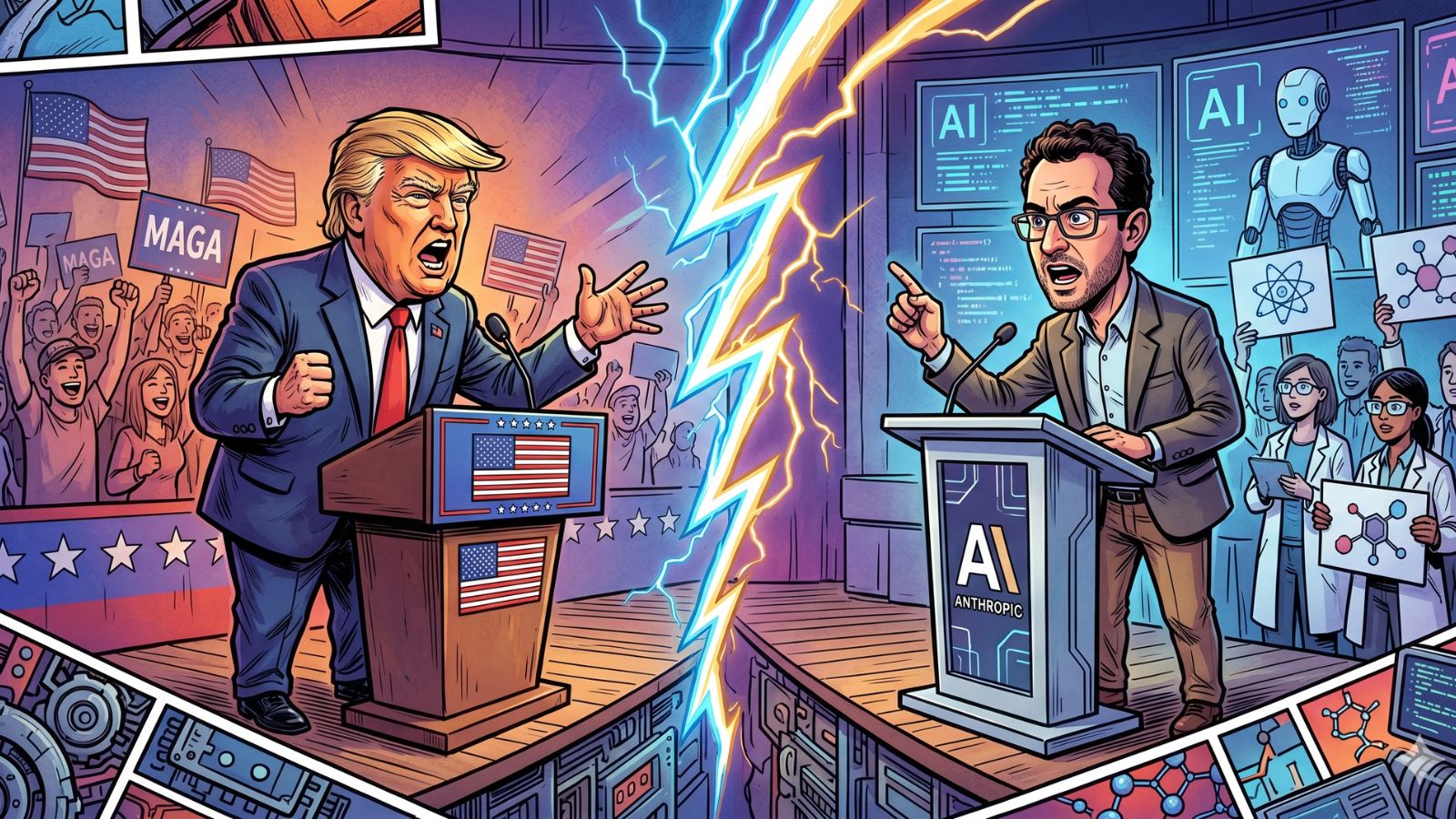
The White House is developing guidance that could allow federal agencies to sidestep Anthropic’s supply-chain risk designation and onboard new artificial intelligence models, including Mythos, as first reported by Axios and confirmed by Reuters on April 28, 2026. The significance of this White House Anthropic guidance cannot be overstated. It represents a potential off-ramp from one of the most consequential AI policy confrontations in modern American history — one that has already triggered two federal lawsuits, an unprecedented Pentagon blacklisting, and a federal court ruling calling the administration’s moves “Orwellian.” Anthropic declined to comment, while the White House did not immediately respond to Reuters’ request for comment.
This is not a minor bureaucratic adjustment. It is a fundamental shift in how the Trump administration intends to handle the most powerful AI company it tried — and largely failed — to bring to heel. The full story involves a clash over AI safety principles, a courtroom battle still in progress, and a new model so capable it changed the political calculus in Washington almost overnight.
How the Anthropic Supply Chain Risk Update Unfolded
The roots of this Anthropic supply chain risk update stretch back to late February 2026. On February 27, 2026, President Donald Trump directed all federal agencies to cease using Anthropic’s artificial intelligence technology, and Defense Secretary Pete Hegseth designated Anthropic a “supply chain risk” — a designation which follows weeks of failed negotiations over the military’s use of Anthropic’s Claude model.
The core disagreement was narrow but explosive. This action followed months of negotiations that reached an impasse over two exceptions Anthropic requested to the lawful use of Claude: the mass domestic surveillance of Americans and fully autonomous weapons. The Pentagon, for its part, wanted no restrictions. From the very beginning, this has been about one fundamental principle: the military being able to use technology for all lawful purposes,” a senior DOD official told CNBC.
The parties engaged in weeks of failed negotiations, culminating with the Pentagon setting a deadline of 5:01 p.m. on Friday, February 27, for Anthropic to agree to the government’s terms. When Anthropic did not agree, President Trump ordered agencies to cease using Anthropic, giving some agencies a six-month transition period. Secretary Hegseth also issued a statement declaring that no military contractor “may conduct any commercial activity with Anthropic.” The General Services Administration has also removed Anthropic from USAi.gov, the government’s centralized platform for agencies to test AI models.
Anthropic fought back immediately. Anthropic filed two federal lawsuits against the Trump administration alleging that Pentagon officials illegally retaliated against the company for its position on artificial intelligence safety. Defense Department officials designated Anthropic a supply chain risk, citing national security concerns. Anthropic is the first American company to be given the designation, which has historically been reserved for foreign adversaries.
The courts offered Anthropic partial relief. A ruling prevents the government from enforcing its supply chain risk designation against Anthropic, a move that aimed to stop private government contractors from using the company’s powerful Claude AI model. In the ruling, the judge called the administration’s moves “Orwellian” and said they could “cripple” the company. “At bottom, Anthropic has shown that these broad punitive measures were likely unlawful and that it is suffering irreparable harm from them,” she wrote. However, a federal appeals court in Washington, D.C., denied Anthropic’s request to temporarily block the Department of Defense’s blacklisting of the artificial intelligence company as a lawsuit challenging that sanction plays out.
The designation carries sweeping implications: Secretary Hegseth stated that “[e]ffective immediately, no contractor, supplier, or partner that does business with the United States military may conduct any commercial activity with Anthropic.” Legal analysts at Just Security noted that meeting the statutory requirements for this designation against Anthropic would be highly difficult to justify under existing law, since both parties acknowledged negotiations broke down over terms of use, not adversarial threats to defense systems.
The Trump Administration Anthropic Mythos Model: The Game Changer
The Trump administration Anthropic Mythos model dynamic is at the center of everything that has happened since early April. The politics of this dispute shifted dramatically the moment Anthropic unveiled Mythos to the world.
A draft blog post described the new model as Claude Mythos and said the company believes it poses unprecedented cybersecurity risks. An Anthropic spokesperson described it as representing “a step change” in AI performance and said it is “the most capable we’ve built to date.” Anthropic released a preview of Mythos on April 7, 2026, to be used by a small group of partner organizations for cybersecurity work.
The capabilities are genuinely alarming. Over a period of weeks, Anthropic used Claude Mythos Preview to identify thousands of zero-day vulnerabilities, many of them critical, in every major operating system and every major web browser. The model operates like a senior software engineer, demonstrating an ability to spot subtle bugs and self-correct mistakes. It also scored 31 percentage points higher than Anthropic’s previous cutting-edge model, Opus 4.6, on the USAMO 2026 Mathematical Olympiad.
It is the first time in nearly seven years that a leading AI company has so publicly withheld a model over safety concerns. In 2019, OpenAI decided to withhold its GPT-2 system “due to concerns about large language models being used to generate deceptive, biased, or abusive language at scale.”
Rather than a public release, Anthropic launched Project Glasswing. Anthropic committed up to $100 million in usage credits for Mythos Preview, as well as $4 million in direct donations to open-source security organizations. The partner organizations previewing Mythos as part of Project Glasswing include Amazon, Apple, Broadcom, Cisco, CrowdStrike, the Linux Foundation, Microsoft, and Palo Alto Networks.
That combination of raw capability and controlled deployment put the Trump administration in an impossible position. The Trump administration recognizes the power of Anthropic’s new Claude model, Mythos, and its highly sophisticated — and potentially dangerous — ability to breach cybersecurity defenses. “It would be grossly irresponsible for the U.S. government to deprive itself of the technological leaps that the new model presents,” a source close to negotiations told Axios. “It would be a gift to China.”
White House Bypass Anthropic Risk Flag: Inside the Diplomatic Shift
The White House bypass Anthropic risk flag strategy has been quietly taking shape for weeks. On April 17, 2026, Anthropic CEO Dario Amodei met with White House Chief of Staff Susie Wiles to discuss the company’s new Mythos AI model. Treasury Secretary Scott Bessent was also present. The White House said talks were “productive and constructive” and addressed innovation and safety.
The meeting took place as the U.S. government is trying to balance its hardline approach to Anthropic with the national security implications of turning its back on the company’s breakthrough technology — including its Mythos tool that can identify cybersecurity threats but also present a roadmap for hackers to attack companies or the government.
Trump publicly shifted tone shortly after. President Trump last week said Anthropic was “shaping up” in the eyes of his administration, after CEO Dario Amodei met White House officials in an attempt to repair the strained relationship. Asked about a potential Pentagon deal on CNBC’s “Squawk Box,” Trump said “It’s possible. We want the smartest people.”
Claude AI federal agency guidance today is the direct policy consequence of that shift. The draft executive action under consideration could provide the Trump administration with a pathway to de-escalate its dispute with Anthropic. This approach is politically clever: it sidesteps the supply chain risk designation rather than formally revoking it, allowing Pentagon hardliners to save face while pragmatists gain access to the technology they want. The Office of Management and Budget has already told agencies it is preparing to give them access to Mythos, Bloomberg reported.
The White House has held discussions with Anthropic CEO Dario Amodei about Mythos, with officials saying they talked about collaboration, cybersecurity and balancing AI innovation with safety. The talks were held despite the Pentagon having slapped a formal supply-chain risk designation on Anthropic.
Axios Anthropic AI News Breaking: Divisions Run Deep
The Axios Anthropic AI news breaking on April 28 presents a more cautious picture than the diplomatic signals suggest. While key players in the Pentagon are dug in on the issue with Anthropic, other stakeholders believe the fight has been counterproductive and are ready to find an offramp. It is possible that both sides could end up right back in contentious negotiations.
One U.S. official told Axios: “They’re using this Mythos cyber weapon to find friendly ears in the government. They’re succeeding.” That quote cuts two ways — it acknowledges Mythos as leverage, but also signals continued institutional resistance within the Pentagon. The Axios Anthropic AI news breaking report is clear that this draft guidance is not yet a done deal.
The legal battle also adds layers of complexity. The appeals court will be hearing more evidence in the D.C. case in May. “We’re grateful the court recognized these issues need to be resolved quickly and remain confident the courts will ultimately agree that these supply chain designations were unlawful,” Anthropic said in a statement to the Associated Press. Any executive-level deal would need to coexist with — or supersede — the ongoing litigation.
Anthropic National Security Risk Latest: What Federal Contractors Must Know
For the many government contractors caught in the middle, the Anthropic national security risk latest picture requires careful attention. The legal framework governing this dispute is layered and specific.
Although the supply chain risk designation technically applies only to certain covered defense contracts, contractors should be prepared to respond to directives and inquiries from customers on their other government contracts as well. The Mayer Brown and Goodwin Law guidance notes have both outlined practical steps for affected contractors.
The software and services provider Palantir, which counts on government contracts for about 60% of its U.S. revenue, collaborates with Anthropic for its work with military and defense agencies. Analysts at Piper Sandler wrote that Anthropic is “heavily embedded in the Military and the Intelligence community” and that moving off the company’s technology could “pose some short-term disruptions.”
Key points for contractors navigating the Anthropic national security risk latest developments:
- The preliminary injunction from U.S. District Judge Rita Lin protects civilian agencies from being forced to drop Anthropic under Trump’s original directive. Pentagon work remains under a different legal cloud.
- In July 2025, the Department of War’s Chief Digital and Artificial Intelligence Office had awarded Anthropic a two-year prototype agreement with a $200 million ceiling. Under this agreement, Anthropic was tasked with developing prototype AI capabilities that would advance aspects of U.S. national security.
- The White House Anthropic guidance, once finalized, will likely provide a formal procurement pathway for civilian agencies to access Mythos. Until then, contractors should await official guidance.
- Maintaining documentation of any Anthropic usage and evaluating alternatives remains prudent — regardless of how the White House Anthropic guidance ultimately develops.
The Bottom Line
The draft White House Anthropic guidance is a signal, not a settlement. It tells you the administration has concluded that access to Mythos matters more than winning an internal political argument with a private AI company. It tells you Anthropic’s principled stand on safety guardrails — expensive and legally grueling as it has been — now functions as powerful strategic leverage.
What it does not yet tell you is whether a durable deal is coming, or whether Pentagon hardliners will drag both sides back into conflict. The courts, the Pentagon’s internal divisions, and Anthropic’s commitment to challenging the supply chain designation all remain live variables. The Claude AI federal agency guidance today is a beginning. Stay close to the story — it is far from over.
Frequently Asked Questions
What is the White House Anthropic guidance, and what would it do?
The White House is developing guidance that could allow federal agencies to sidestep Anthropic’s supply-chain risk designation and onboard new artificial intelligence models, including Mythos.In practice, it would give agencies a formal policy pathway to use Anthropic’s newest models without the administration first having to formally revoke the Pentagon’s supply chain risk label.
Why was Anthropic designated a supply chain risk in the first place?
Anthropic faced a fallout with the Pentagon earlier in the year after the startup refused to remove guardrails against using its AI for autonomous weapons or domestic surveillance, and the department designated the Claude-maker as a supply-chain risk. The designation made Anthropic the first U.S. company ever to receive such a label, previously reserved for foreign adversaries.
What is Claude Mythos, and why does it matter to this dispute?
A draft internal document described Claude Mythos as “by far the most powerful AI model we’ve ever developed.” Over recent weeks, Anthropic used Mythos Preview to identify thousands of zero-day vulnerabilities, many of them critical, in every major operating system and every major web browser. Its capabilities are so advanced — and strategically valuable — that the administration now wants access to it despite its ongoing blacklisting of Anthropic.
What legal actions has Anthropic taken against the Trump administration?
The lawsuit says the administration’s decision to place the firm on what is effectively a blacklist is an attempt to punish the company over its AI guardrails. The lawsuits, filed in the U.S. District Court for the Northern District of California and the federal appeals court in Washington, D.C., allege the Trump administration violated the company’s First Amendment rights and exceeded the scope of supply chain risk law.
Has any court sided with Anthropic so far?
Partially. A ruling prevents the government from enforcing its supply chain risk designation against Anthropic, a move that aimed to stop private government contractors from using Claude. It also halts an order by President Trump for every federal agency to “IMMEDIATELY CEASE all use of Anthropic’s technology.” However, a federal appeals court in Washington, D.C., denied Anthropic’s request to temporarily block the Department of Defense’s blacklisting while the lawsuit plays out.
What is Project Glasswing?
The model’s limited debut is part of a new security initiative, dubbed Project Glasswing, in which 12 partner organizations will deploy the model for the purposes of “defensive security work” and to secure critical software. Anthropic committed up to $100 million in usage credits for Mythos Preview across these efforts, as well as $4 million in direct donations to open-source security organizations.
Could the negotiations still fall apart?
Yes. While key players in the Pentagon are dug in on the issue with Anthropic, other stakeholders believe the fight has been counterproductive and are ready to find an offramp. It is possible that both sides could end up right back in contentious negotiations. The two ongoing federal lawsuits, and Anthropic’s pledge to challenge the supply chain designation in court, add further uncertainty.