
How AI Copper Mining Is Being Redefined: Mariana Minerals and Pronto Automate Utah’s Copper One

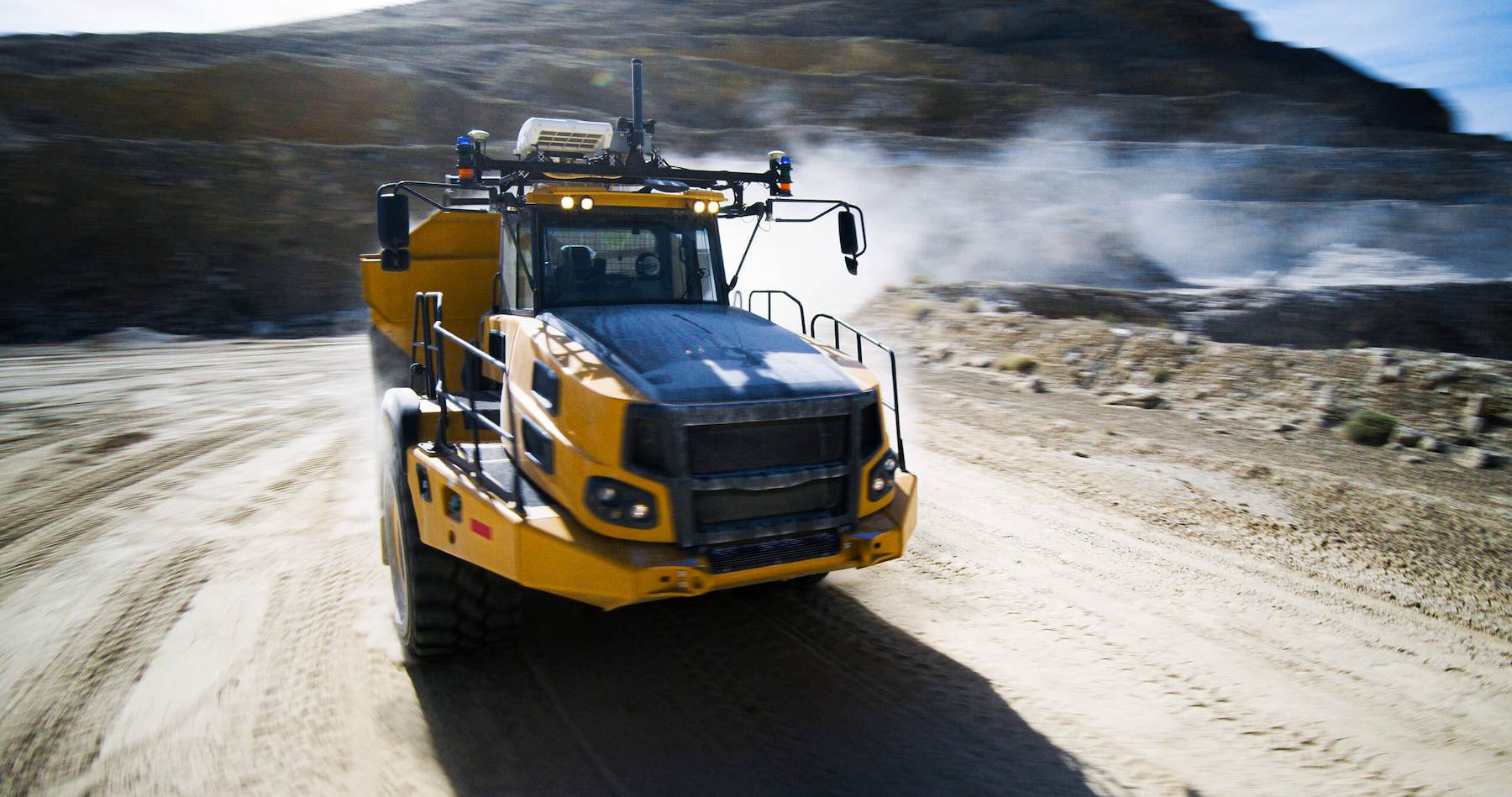
The United States currently imports approximately 50% of its refined copper — and a former Tesla executive is betting that AI copper mining can change that equation for good. On April 9, 2026, Mariana Minerals announced a landmark partnership with Pronto, deploying autonomous haulage trucks at its Copper One facility in southeastern Utah. It is the first commercial deal Pronto has struck since being acquired by Travis Kalanick’s Atoms Inc., and it puts AI copper mining squarely at the center of America’s critical minerals strategy.
Turner Caldwell, Mariana Minerals, and the Tesla Blueprint for the Mining Industry
The Turner Caldwell Mariana Minerals Tesla connection runs deep. Caldwell spent nearly a decade at Tesla managing the company’s battery minerals division — the part of the business responsible for securing the raw inputs that make EVs possible at scale. What he witnessed there disturbed him: mountains of innovation happening at the vehicle level, while the actual supply of the metals powering those vehicles remained locked in a pre-digital age.
So in 2024, he left and founded Mariana Minerals. His mission is to become the world’s most modern, software-native mining operator. Mariana describes itself as “the world’s only software-first vertically integrated minerals company,” and every decision it makes reflects that identity. Rather than retrofitting creaking legacy systems, Caldwell is building from scratch — integrating AI, autonomy, and real-time data at every layer of the mining stack.
The startup has attracted serious capital. Mariana raised $85 million in a Series A led by Andreessen Horowitz in July 2025, with participation from Breakthrough Energy Ventures and Khosla Ventures. Andreessen Horowitz general partner Erin Price-Wright framed the bet plainly: “The companies that move now — software-native, vertically integrated and built for speed — will define the future of mining.” That’s the Turner Caldwell Mariana Minerals Tesla thesis made real: production discipline borrowed from a world-class manufacturer, software instincts of a tech startup, and the urgency of someone trying to disrupt an industry that has moved at a geological pace.
Anthony Levandowski Pronto Mining News: The Autonomy Pioneer Behind the Deal
Anthony Levandowski Pronto mining news has been building for years. Levandowski co-founded Pronto in 2018 after a chapter that included leading Google’s self-driving car project, founding autonomous trucking startup Otto (acquired by Uber for a reported $680 million), and eventually facing federal trade secrets charges. Pronto was his pivot. Instead of chaotic urban robotaxis, he targeted controlled industrial environments where autonomous tech could prove its economics right now.
The pivot has paid off. Pronto acquired SafeAI in July 2025, significantly expanding its off-road autonomy capabilities. In August 2025, Pronto partnered with Komatsu to deploy autonomous haulage systems in quarries across North America. Then in February 2026, Pronto unveiled a tiered AHS Editions portfolio — Vision, VLR, and VLR 360 — designed to serve every mining environment from a regional quarry to a 400-ton ultra-class operation.
Levandowski put the Mariana deal in sharp terms: “Restarting a major domestic copper operation requires technology that actually works in the dirt, not just in a simulation or demo.” That is the whole Pronto AI mining automation update philosophy: physics-first, deployment-ready, commercially viable today.
Mariana Minerals Copper One Automation: Inside the Pronto Integration
The Mariana Minerals Copper One automation deal is more sophisticated than a standard autonomous truck deployment. Yes, autonomous trucks will roll across the Utah mine site. But the technical integration runs far deeper.
Pronto’s Autonomous Haulage System (AHS) feeds data directly into MineOS, Mariana’s proprietary software platform for managing site-wide operations. The data informs planning, dispatch, and fleet optimization — without a human in the loop at any decision point. These trucks are not simply driving themselves. They are intelligent nodes inside a larger, AI-driven operational brain.
Caldwell envisions multiple operating systems using reinforcement learning to coordinate all activities across the mine. The Pronto integration is one piece. More technology additions are planned in the coming weeks. The analogy Caldwell keeps returning to:
“The big Western mining companies look exactly like Ford and GM before Tesla. They look a lot like NASA before SpaceX.”
That disruption playbook is precisely what he watched up close at Tesla — and what he is now running at Copper One.
How Pronto Autonomous Haulage Trucks Utah Operations Will Actually Work
Pronto’s system is OEM-agnostic — meaning it can be retrofitted onto existing trucks rather than requiring purpose-built equipment. This approach cuts deployment time and upfront capital significantly compared to competitors like Caterpillar and Komatsu, who rely on integrated, purpose-built autonomous systems.
The Pronto autonomous haulage trucks Utah deployment at Copper One leverages computer vision and machine learning to navigate mine roads, with the system handling route coordination and dispatch autonomously. The Copper One environment is ideal for this: no pedestrians, no traffic signals, and predictable, contained haul routes. That’s exactly the controlled terrain where AI copper mining technology can generate real ROI today.
The Copper One mine, acquired from Lisbon Valley Mining, previously produced around 2,500 tons of copper per year. Mariana’s target is 50,000 tons of copper cathode annually by 2030 — a 20x increase — and autonomous trucks are foundational to hitting that number with a lean workforce.
Why AI Copper Mining Is Now a National Security Imperative
The timing of this Pronto AI mining automation update could not be sharper. The IEA’s Global Critical Minerals Outlook 2025 warns of a potential 30% copper supply shortfall by 2035, driven by declining ore grades, rising capital costs, and notoriously long mine development lead times.
Demand is accelerating from multiple directions simultaneously:
- Electric vehicles: An EV uses approximately 53 kilograms of copper — about 2.4 times more than a conventional combustion vehicle.
- Renewable energy: The IEA reports that solar and wind infrastructure requires 2.5 to 7 times more copper than fossil fuel-based technologies, depending on installation type.
- AI data centers: The IEA estimates copper use in data centers could range from 250,000 to 550,000 tonnes by 2030 alone.
- Grid modernization: Wood Mackenzie projects copper demand for grid infrastructure will reach 1.1 million tonnes per year by 2030.
The US workforce challenge makes automation even more urgent. Over 200,000 people in the current US mining workforce are expected to retire this decade, while fewer than 400 mining engineering students graduate annually in the US. Autonomous trucks fill shifts that simply have no available human operators.
What the Autonomous Mining Trucks Pronto Latest Deal Means for the Sector
The autonomous mining trucks Pronto latest deployment at Copper One matters well beyond a single Utah mine. It validates a thesis that industrial environments with contained, predictable conditions offer the fastest and most commercially viable path to autonomous vehicle profitability. Robotaxi companies are still burning billions navigating city streets. Pronto’s trucks are already moving copper.
Incumbents like Caterpillar and Komatsu dominate purpose-built mining automation. Komatsu alone reported a fleet of over 750 autonomous haul trucks in 2024. Pronto’s retrofit-first, OEM-agnostic model competes on different terms: it activates any existing truck fleet faster, at lower cost, with the same core AI capabilities.
If the Mariana Minerals Copper One automation project succeeds at scale, the implications ripple outward. Mariana is already considering licensing MineOS to other mines if the Pronto integration delivers — transforming from a mining operator into a mining software platform. That is a textbook Tesla-style play: prove the model vertically, then monetize the stack horizontally.
Conclusion: The AI Copper Mining Race Has Officially Begun
AI copper mining is no longer a conference slide deck — it is running trucks at a live Utah mine right now. The Mariana Minerals and Pronto partnership represents a rare and potent convergence: Andreessen Horowitz capital, ex-Tesla operational discipline from Turner Caldwell, and a self-driving pioneer in Anthony Levandowski who has spent nearly two decades proving that autonomy works in dirt. This is what the future of America’s critical minerals supply chain looks like.
The stakes could not be higher. The country’s clean energy buildout, defense supply chain, and grid infrastructure all depend on reliable domestic copper. AI copper mining systems — Pronto’s AHS integrated with MineOS — could be the lever that makes a 20x production increase not just ambitious, but achievable.
Frequently Asked Questions
Who is Turner Caldwell, and why does his Tesla background matter for Mariana Minerals?
Turner Caldwell spent nearly a decade at Tesla managing the battery minerals division before founding Mariana Minerals in 2024. The Turner Caldwell Mariana Minerals Tesla connection is crucial because his experience gave him firsthand visibility into how dangerously underdeveloped the critical metals supply chain was relative to the EV industry it supports. He left Tesla specifically to modernize that supply chain from the ground up.
What is Pronto’s Autonomous Haulage System, and how does it work at Copper One?
Pronto’s AHS is an OEM-agnostic autonomous driving system that retrofits existing haul trucks with sensors and AI software using computer vision and machine learning. At Copper One, the AHS integrates directly with Mariana’s MineOS platform, enabling fully autonomous dispatch and route coordination without a human operator in the decision loop.
Why is this deal significant for Pronto specifically?
This is Pronto’s first commercial deal since being acquired by Travis Kalanick’s Atoms Inc. For Anthony Levandowski, the Pronto mining news validates his long-held thesis that constrained industrial environments are where autonomous vehicle technology can generate real revenue today — faster and more reliably than consumer robotaxi applications.
What is Mariana Minerals’ production target for Copper One?
The Copper One mine previously produced about 2,500 tons of copper per year under Lisbon Valley Mining’s ownership. Mariana Minerals’ target is to scale output to 50,000 tons of copper cathode annually by 2030 — a roughly 20x increase, made possible through AI copper mining and automation at every operational layer.
What is MineOS, and how does it differ from traditional mine software?
MineOS is Mariana’s proprietary, AI-driven operating platform that integrates planning, dispatch, fleet optimization, and production control into a single continuously learning system. Unlike traditional mining software — fragmented tools and manual data handoffs between teams — MineOS uses reinforcement learning to coordinate operations across the entire mine in real time, with Pronto’s AHS feeding directly into it.
Why is copper so critical to the energy transition?
An electric vehicle uses approximately 53 kilograms of copper — about 2.4 times more than a conventional car. Solar and wind infrastructure requires 2.5 to 7 times more copper than fossil fuel-based equivalents. The IEA has projected a potential 30% copper supply shortfall by 2035, making AI copper mining an urgent national and geopolitical priority, not just a business opportunity.
Who are Mariana Minerals’ investors?
Mariana Minerals raised $85 million in a Series A round led by Andreessen Horowitz (a16z) in July 2025, with participation from Bill Gates’ Breakthrough Energy Ventures and Khosla Ventures. Andreessen Horowitz framed the investment as a bet on software-native, vertically integrated mining companies capable of redefining the pace at which the US can develop domestic critical minerals supply chains.