
Joby Aviation NYC Test Flight Makes History: JFK to Manhattan in Under 10 Minutes

New York City’s most punishing commute just got a credible rival. On April 27, 2026, Joby Aviation completed the first-ever point-to-point eVTOL air taxi demonstration flights in New York City history, turning a road trip that routinely swallows 60 to 120 minutes into a sub-10-minute skyline sprint. The Joby Aviation NYC test flight didn’t just move an aircraft. It moved the goalposts on what urban transportation can look like — and New York was watching.
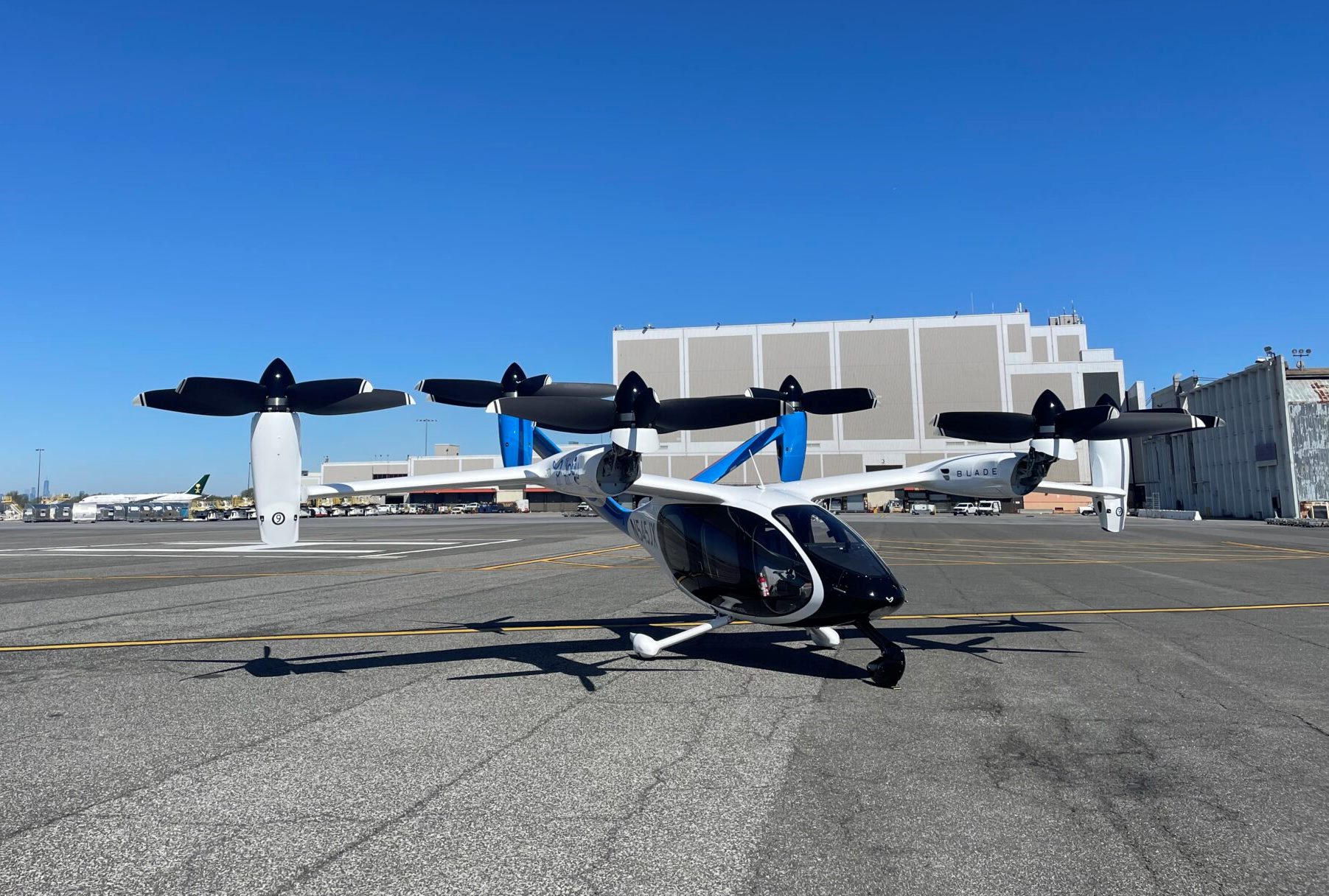
Aircraft N545JX lifted off from John F. Kennedy International Airport and touched down at Manhattan’s West 30th Street Heliport, completing a route that has frustrated commuters for generations. Reporters, Joby officials, and Blade Air Mobility customers were on the ground when the quiet, all-electric craft crossed the city’s skyline. One eyewitness reportedly asked if they could skip their scheduled helicopter and take the Joby instead. That reaction says everything.
Inside the Joby Aviation NYC Test Flight: The JFK-to-Manhattan Route Explained
The flying car test flights NYC 2026 campaign is a structured, week-long public operation — not a one-off stunt. Joby’s aircraft N545JX departed from JFK and landed across the city’s existing heliport network, including Downtown Skyport and the West 30th Street and East 34th Street Heliports in Midtown, tracing the exact commercial routes the company envisions for everyday service. Each leg was completed in under 10 minutes, compared to a typical car trip of 60 to 120 minutes.
Didier Papadopoulos, Joby’s president of aircraft OEM, described the demonstration as “a real-life simulation of what we expect to deliver as an end-to-end service” — and the infrastructure backing it up was serious. The flights were supported by TruWeather for real-time operational weather intelligence and NUAIR for live airspace tracking, ensuring safe integration into some of the most complex managed airspace in the world.
Joby has already completed over 50,000 miles of total flight testing across its fleet before this campaign launched, covering active controlled airspace in three countries. The electric air taxi New York update fits into Joby’s broader 2026 Electric Skies Tour, a national showcase timed to celebrate the United States’ 250th anniversary, following a landmark earlier flight over the Golden Gate Bridge in the Bay Area.
What the Aircraft Can Actually Do
The Joby S4 is not a drone scaled up for passengers. It carries one pilot and four passengers, reaches speeds of up to 200 mph, and covers approximately 100 miles on a single charge. Six tilting electric propellers alternate between vertical lift and forward cruise modes — launching and landing like a helicopter, then cruising on fixed-wing aerodynamics at speed. The result is an aircraft that fits into an existing heliport footprint without needing a runway.
The all-electric propulsion system produces zero operating emissions and generates a lower noise footprint than conventional helicopters of similar size. For a city where helicopter noise has generated decades of community opposition, that distinction matters. Flying car test flights NYC 2026 in this context means the aircraft can potentially operate at locations where traditional rotorcraft have always been unwelcome — opening entirely new urban coverage zones.
FAA eVTOL Integration Pilot Program News: The Federal Framework Driving These Flights
The Joby Aviation NYC test flight doesn’t exist in a regulatory vacuum. The FAA eVTOL Integration Pilot Program news is the backbone of the entire operation. The eIPP was established under Executive Order 14307 in June 2025, with the explicit goal of accelerating the safe deployment of Advanced Air Mobility vehicles into the U.S. National Airspace System. It is not a grant program or a research study. It is a live operational framework for flying pre-certified aircraft in real commercial airspace under federal oversight.
On March 9, 2026, the U.S. Department of Transportation selected eight projects spanning 26 states to participate in the eIPP. The Port Authority of New York and New Jersey was among the eight winners — and its partnership with Joby made the JFK demonstrations possible. The Port Authority’s selected project alone covers 12 different operational concepts across New England, including eVTOL passenger operations at the Manhattan heliport.
The American public was expected to begin seeing eIPP operations by summer 2026 — and the NYC campaign is already ahead of that schedule. The FAA eVTOL Integration Pilot Program covers a wide range of use cases beyond passenger taxis, including cargo logistics, emergency medical response, offshore energy operations, and autonomous flight testing. The data generated feeds directly into the regulatory framework that will govern commercial eVTOL operations nationwide.
The electric air taxi New York update on infrastructure is accelerating in parallel. Port Authority Executive Director Kathryn Garcia has confirmed the agency is actively seeking partners to design, build, and operate a vertiport at LaGuardia Airport, expanding the network beyond JFK and Manhattan’s existing heliports. Archer Aviation, Beta Technologies, Boeing’s Wisk Aero, and Electra are all expected to begin their own NYC demonstration flights later this year under the same program.
Joby Aviation Toyota Partnership Latest: The Manufacturing Firepower Behind the Aircraft
The Joby Aviation NYC test flight is the headline. The Joby Aviation Toyota partnership latest developments are what give the business case structural credibility.
Toyota has committed nearly $1 billion in total investment in Joby, recently closing the first $250 million tranche of a new $500 million agreement. This isn’t passive capital. Toyota has been officially designated Joby’s “preferred manufacturing partner,” with rights to build, maintain, repair, overhaul, and potentially operate Joby aircraft, particularly in Japan. More than 200 Toyota engineers are embedded at Joby’s California production facility, applying the Toyota Production System — the lean manufacturing philosophy behind Toyota’s global dominance — directly to eVTOL aircraft output.
The Joby Aviation Toyota partnership latest chapter has a specific strategic logic. Toyota’s deeper involvement gives Joby more than capital — it puts an experienced, high-volume manufacturer inside the eVTOL factory at a time when the company is trying to move from prototypes to repeatable production. Joby’s Dayton, Ohio facility, designed with Toyota’s input, is targeting capacity for up to 500 aircraft per year. No competitor in the eVTOL space has a manufacturing partner as operationally embedded as Toyota is in Joby’s facilities.
The collaboration is specifically intended to support Joby’s FAA certification efforts and increase future production capacity ahead of commercial operations — tightening quality control at the exact moment regulators are scrutinizing every process.
Joby Aviation Stock News Today: Investor Reaction and Revenue Outlook
The Joby Aviation stock news today runs two tracks simultaneously. Short-term: the market loved the NYC flights. Joby Aviation stock climbed 3.8% on Monday following the demonstration — its best single-day gain in three months. Retail investor sentiment was described as “extremely bullish” with “extremely high” message volumes on trading platforms.
The longer-term Joby Aviation stock news today picture carries more nuance. The company’s shares remain roughly 36% below their year-to-date starting point, and full FAA type certification — the regulatory gate between demonstration flights and paying U.S. passengers — has not yet been granted. Wall Street analysts project Joby’s revenue at approximately $110 million in 2026, rising to roughly $1.1 billion by 2029 and $2 billion by 2030. The company posted $53.4 million in total revenue in 2025, most of which came from its Blade Air Mobility acquisition and government defense contracts.
The global eVTOL market is projected to grow at a compound annual growth rate of 36.8% from 2026 to 2034, according to Fortune Business Insights. Joby is positioned to capture a meaningful share of that growth through its ecosystem of partnerships: Toyota on manufacturing, Delta Air Lines on U.S. airport shuttle service, Uber on consumer booking, and the federal eIPP program on regulatory groundwork.
What Comes Next: Dubai, U.S. Certification, and a Global Launch
The Joby Aviation NYC test flight is one chapter in a fast-moving story. Joby and Uber have confirmed that Uber Air powered by Joby will carry its first commercial passengers in Dubai in 2026, bookable directly through the Uber app with a single tap. Four vertiports are planned across Dubai, including Dubai International Airport, a hotel on Palm Jumeirah, and the American University of Dubai. Dubai goes first because the UAE’s aviation regulator is working on a parallel qualification program that could enable passenger flights before U.S. FAA certification is finalized — giving Joby live operational data that may also count toward its American certification progress.
Eric Allison, Joby’s chief product officer, has confirmed the company is targeting commercial passenger flights in the United States as soon as the second half of 2026. The Joby Aviation NYC test flight campaign is the most public and visible proof of concept yet. The route works. The technology performs. The federal framework is in place.
The question isn’t whether electric air taxis are coming to New York City. The Joby Aviation NYC test flight already answered that on April 27, 2026. The only question left is how quickly the certification clock ticks down — and whether the Joby Aviation JFK to Manhattan flight you watched on the news becomes the one you book through an app.
Key Takeaways:
- On April 27, 2026, Joby Aviation completed NYC’s first-ever point-to-point eVTOL flights, flying from JFK to Manhattan in under 10 minutes
- The aircraft carries one pilot and four passengers at up to 200 mph with zero operating emissions
- The flights are part of the FAA eVTOL Integration Pilot Program, with 8 selected projects spanning 26 states
- Toyota has committed nearly $1 billion as Joby’s preferred manufacturing partner, with engineers embedded on the factory floor
- Commercial flights are targeted for the second half of 2026, beginning in Dubai via the Uber app
- Wall Street projects Joby’s revenue growing from ~$110 million in 2026 to $2 billion by 2030
Frequently Asked Questions
What was the Joby Aviation NYC test flight on April 27, 2026?
Joby Aviation completed the first-ever point-to-point eVTOL air taxi demonstration flights in New York City’s history. Aircraft N545JX flew from John F. Kennedy International Airport to multiple Manhattan heliports, including Downtown Skyport and the West 30th Street and East 34th Street Heliports in Midtown, completing the Joby Aviation JFK to Manhattan flight in under 10 minutes. The flights are part of a 10-day public campaign under the FAA’s eVTOL Integration Pilot Program.
How does the Joby Aviation JFK to Manhattan flight compare to driving?
A typical car trip from JFK to Manhattan takes between 60 and 120 minutes depending on traffic. The Joby Aviation JFK to Manhattan flight covered the same distance in under 10 minutes during the April 2026 demonstration — a potential reduction of up to 92% in travel time for one of the most congested routes in the country.
What is the FAA eVTOL Integration Pilot Program, and why does it matter?
The FAA eVTOL Integration Pilot Program (eIPP) was established under Executive Order 14307 in June 2025 to accelerate the safe integration of electric air mobility vehicles into the U.S. National Airspace System. On March 9, 2026, the DOT selected eight projects spanning 26 states. The Port Authority of New York and New Jersey, partnered with Joby, was one of those eight winners. FAA eVTOL Integration Pilot Program news is significant because it allows pre-certified aircraft to operate in real commercial airspace, generating the regulatory data needed to shape national eVTOL rules.
How much has Toyota invested in Joby Aviation?
Toyota has committed nearly $1 billion in total investment in Joby Aviation. The Joby Aviation Toyota partnership latest development is the closure of a first $250 million tranche of a new $500 million agreement. Toyota has been designated Joby’s “preferred manufacturing partner,” with over 200 engineers embedded at Joby’s California facility applying the Toyota Production System to eVTOL aircraft production.
When will Joby Aviation begin commercial passenger flights?
Joby’s chief product officer, Eric Allison, has stated the company is targeting commercial passenger flights as soon as the second half of 2026. The first commercial market is Dubai, UAE, in partnership with Uber, where passengers can book via the Uber app. U.S. commercial service requires full FAA type certification, which Joby is pursuing through its Type Inspection Authorization process.
What are the specifications of the Joby S4 aircraft?
The Joby S4 eVTOL carries one pilot and four passengers, reaches a top speed of 200 mph, and covers approximately 100 miles on a single charge. Six tilting electric propellers handle both vertical lift and forward cruise modes. The aircraft produces zero operating emissions and runs quieter than conventional helicopters of comparable size, making it viable for dense urban environments.
What does Joby Aviation stock news today show about investor sentiment?
Joby Aviation stock rose approximately 3.8% on Monday following the NYC demonstration flights — its best single-day gain in three months. However, the Joby Aviation stock news today also reflects a stock that is roughly 36% below its year-to-date starting point as investors await full FAA type certification. Wall Street projects revenue growing from approximately $110 million in 2026 to $2 billion by 2030, but certification timing remains the key variable for the investment case.