

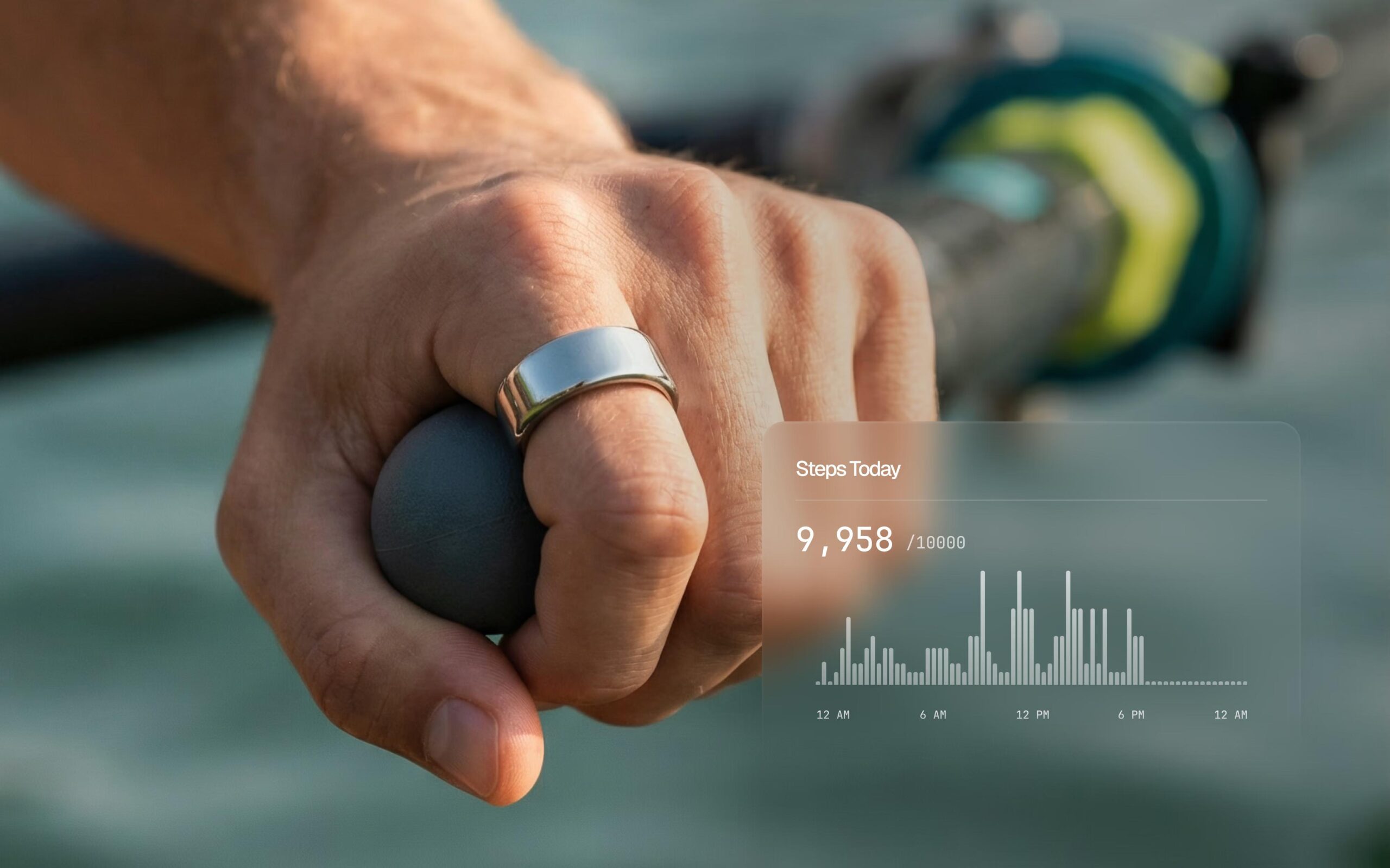
Bengaluru-based Ultrahuman closed a $70 million Series C round on September 3, 2026, with Qualcomm Ventures leading the syndicate alongside Labcorp, Alpha Wave, Blume Ventures, Nexus Venture Partners, and Alteria Capital. The raise triples the startup’s 2023 valuation to $365 million and sets off a hardware roadmap that goes well beyond sleep scores.
The Ultrahuman Qualcomm funding deal is about more than capital. Ultrahuman is building a Qualcomm-silicon-powered ring to run software and algorithms on the device itself, replacing its current reliance on Nordic Semiconductor chips and cloud processing. Before that hardware ships, a software update arriving on existing Ring Air and Ring Pro units by the end of September will unlock game controller input, AI application interactions, and a third-party developer platform, the first concrete proof that the company’s ambient computing ambitions are real.
What Does the Qualcomm Investment Actually Mean for the Ring?
Short answer: it means the ring gets a brain of its own. Right now, both the Ring Air and Ring Pro use Nordic Semiconductor chips primarily built for low-power Bluetooth communication. They capture biometric signals and push most of the heavy processing to your phone or the cloud.
Qualcomm’s silicon changes that equation at the hardware level. “All ring devices today are like trackers,” CEO Mohit Kumar told . “You put on the ring, it measures your heart rate, your movement, your sleep.” The Qualcomm chip enables on-device machine learning, meaning algorithms can run directly on the ring with less latency, no internet connection required, and better privacy by default. That’s a qualitative shift: from a passive sensor to an edge AI processor sitting on your finger.
Qualcomm’s own motivation is clear. Quinn Li, global head of Qualcomm Ventures, said the firm sees Ultrahuman “pioneering a new generation of personal AI devices.” This is not a passive financial bet. Qualcomm has a direct commercial interest in seeing ring-class wearables become a meaningful category for its chips.
Worth being honest about the limits here: the Qualcomm-powered ring has no confirmed release date. Ultrahuman’s product timeline is a two-stage play, and the hardware stage is still ahead. What ships this September is software only, running on the existing Nordic Semiconductor architecture.
Smart Ring Game Controller September Update: What Ships and When
The September software update is the first tangible deliverable from the Ultrahuman Series C $70M round, and it arrives on hardware you can already buy.
By end of September, Ring Air and Ring Pro users will get game controller functionality, direct interaction with AI applications, and the ability for third-party developers to build features on the platform. Kumar described the ring’s structural advantage for this precisely. Unlike a smartwatch, which he called “a phone on the wrist,” a ring occupies a finger, making it a natural pointing device. It can act as a cursor, a car key, or a controller, all while simultaneously reading your biometric state.
That last point is the core differentiation. “A game controller never reads your heart rate and your temperature, but this one does,” Kumar said. Imagine a game that adjusts difficulty based on detected stress or slows its pacing when your heart rate spikes. Whether developers actually build those experiences depends on uptake of the third-party SDK, which Ultrahuman is releasing alongside the update. That developer ecosystem is the long-term moat, and its success is not guaranteed by the funding alone.
Ultrahuman vs Oura Latest 2026: A Valuation Gap That Tells a Story
The Ultrahuman valuation $365 million today sits at roughly 44 times below Oura’s expected IPO valuation. Oura filed its S-1 on September 3, reporting $1.21 billion in revenue for the nine months ending June 30, 2026, and is targeting a valuation above $16 billion.
For investors trying to read Ultrahuman’s trajectory against Oura, the comparison is instructive but not straightforward. These are structurally different businesses at different stages.
| Metric | Ultrahuman | Oura |
|---|---|---|
| Current valuation | $365M | $16B+ (IPO target) |
| Annual revenue run rate | $140M | ~$1.6B annualized |
| Rings sold | ~800,000 | 3.6M (last 12 months) |
| Subscription model | Optional (PowerPlugs, 12% uptake) | Required membership ($5.99/month) |
| Profitability | Not yet profitable | Net loss of $924M (9 months to June 2026) |
| US market status | Ring Pro only (Ring Air still banned) | Fully available |
Ultrahuman’s $140 million annual revenue run rate, up 45% year-over-year, is genuine momentum for a company that lost its entire US distribution for much of the past year due to the ITC import ban. The US remains its largest market, and demand for Ring Pro since its US return in March 2026 is running at 18x to 20x available supply.
Oura’s dominant market share (Ultrahuman holds roughly 9% versus Oura’s approximately 74%) means the comparison favors Oura on almost every revenue metric today. What Ultrahuman is betting on is that the next computing cycle shifts from wrist to finger, and that a Qualcomm-backed edge-AI ring has a structural advantage that a subscription-tracker business does not.
Is Ultrahuman Ring Pro Back in the US? Yes, With Caveats
The short answer for US buyers: Ring Pro is fully available and shipping. Ring Air is not.
The ITC issued exclusion and cease-and-desist orders against Ultrahuman’s Ring Air in August 2025 following Oura’s patent infringement case. Unlike RingConn, which settled with a royalties agreement, Ultrahuman redesigned the product. Ring Pro’s unibody architecture cleared US Customs and Border Protection in March 2026, and US pre-orders opened the same day.
The ban cost Ultrahuman up to $50 million in lost US sales. Ring Air remains off the table in the United States. If you bought a Ring Air before the ban, it still works; you just cannot replace it with the same model in the US. Ring Pro is the only Ultrahuman product legally sold here now.
The Three-Layer Strategy No Other Article Maps Out
Current coverage of the Ultrahuman Qualcomm funding round treats this as a straightforward financing story. It is not. Ultrahuman is running three simultaneous bets with distinct timelines.
The first layer is the September software update, shipping on existing hardware and testing whether current Ring Pro and Ring Air users will actually use gaming and AI features. The second layer is the Qualcomm-powered ring itself, which adds on-device machine learning and edge AI processing at the silicon level, removing cloud dependency. The third layer is Pulsomics, Ultrahuman’s opt-in research platform launched earlier this year, which lets ring users contribute longitudinal biometric data to clinical studies covering sleep, VO2 max, and glucose metabolism. Labcorp’s participation in this funding round connects directly to that third layer, as the two companies are exploring whether continuous ring-captured blood-flow signals, paired with Labcorp’s diagnostic blood test data, can surface cardiovascular and metabolic health risks earlier than either dataset alone could.
That last piece matters for where Ultrahuman is actually trying to compete. The Oura rivalry is real, but Ultrahuman’s stated mission is a human-computer interface platform for health. “For the longest time, computers have understood almost everything about the world except the person using them,” Kumar said. The Pulsomics and Labcorp partnership shows how the company is trying to generate defensible health intelligence data at scale, which no gaming feature or chip upgrade can replicate.
Ultrahuman IPO Plans: Mohit Kumar’s 2028 Target
On the Ultrahuman IPO plans, Kumar has been specific. He wants to demonstrate approximately eight quarters of profitability before going public, a track record he estimates will take eight to ten quarters to build. His earliest window is 2028.
Ultrahuman is not yet profitable. Revenue is growing at 45% year-over-year and the company expects its run rate to hit $200 million by January 2027. The Ultrahuman Ring Pro Qualcomm chip update and the September software release will determine whether the company can accelerate the subscription and platform revenue needed to reach those profitability targets on that schedule.
The counter-argument is worth stating plainly. Oura is filing for a $3 billion IPO while still posting a $924 million net loss. A path to profitability is not a prerequisite for going public in this market. Kumar’s eight-quarter condition may be self-imposed discipline, or it may shift if the competitive window around ambient computing moves faster than expected.
If you own a Ring Air or Ring Pro, the September software update is the thing to watch closely. It will tell you more about whether Ultrahuman’s vision of the ring as a computer is a product reality or a fundraising narrative. If the game controller and AI interaction features land with genuine developer uptake, the Qualcomm hardware ring will be a credible next step. If they arrive as gimmicks with no ecosystem, the chip strategy becomes a harder sell.
The Ultrahuman Qualcomm funding round is real money with a real technical thesis. Whether the thesis holds is a September answer, not a September story.
Frequently Asked Questions
What will the Qualcomm-powered Ultrahuman ring be able to do that current rings cannot?
The Qualcomm-powered ring will run software and machine learning algorithms directly on the device without relying on a phone or the cloud. This enables lower latency AI responses, better privacy through edge processing, and use cases like gesture control, game controller input, and car key functionality, all running while the ring simultaneously reads your biometric data.
When is Ultrahuman releasing its software update with gaming and AI features?
Ultrahuman plans to release the update to existing Ring Air and Ring Pro devices by the end of September 2026. The update will enable game controller mode, AI application interaction, and a third-party developer platform. This arrives before any new Qualcomm-powered hardware ships.
How does Ultrahuman’s $365M valuation compare to Oura’s $16B valuation?
Oura’s IPO target valuation is roughly 44 times higher than Ultrahuman’s current $365 million. Oura reported $1.21 billion in revenue for the nine months ending June 2026 and has sold over 3.6 million rings in the past year. Ultrahuman’s $140 million annual run rate and 800,000 total rings sold reflect a company at an earlier commercial stage.
Is Ultrahuman Ring Pro available to buy in the US after the Oura patent dispute?
Yes. Ring Pro cleared US Customs and Border Protection in March 2026 and is fully available to order in the United States. Ring Air remains banned under the ITC exclusion order. Ring Pro was redesigned with a unibody architecture that avoids the patent claims that led to the original ban.
What is Ultrahuman’s annual revenue and is it profitable?
Ultrahuman is running at a $140 million annual revenue rate, up approximately 45% year-over-year, and expects that figure to reach $200 million by January 2027. The company is not yet profitable. About 12% of users subscribe to PowerPlugs, its optional software add-on tier.
How does the Ultrahuman Ring Pro compare to the Oura Ring 5 in 2026?
Ring Pro offers up to 15 days of battery life, a subscription-free core tracking experience, and the incoming AI and gaming software update. Oura Ring 5 requires a $5.99 per month membership for full feature access and benefits from a larger established ecosystem. Ring Pro starts at $479; Oura rings range from $350 to $400 before membership costs.
What is Pulsomics and how does it use Ultrahuman ring data?
Pulsomics is Ultrahuman’s opt-in decentralized research platform, launched in 2026. It lets ring users volunteer their longitudinal biometric data for large-scale clinical studies. Current research programs examine individual sleep requirements, VO2 max, and glucose metabolism. Labcorp’s participation in this funding round is connected to exploring how ring data paired with blood test results could identify cardiovascular and metabolic risks earlier.
When does Ultrahuman plan to go public and what are its IPO conditions?
Mohit Kumar has stated he wants to show approximately eight consecutive profitable quarters before filing for an IPO, a milestone he expects will take eight to ten quarters to reach. He sees 2028 as the earliest realistic window. The company is not yet profitable, though revenue is growing at 45% year-over-year.