
German Robotics Startup RobCo Crosses $1B Valuation, RobCo Unicorn Valuation 2026 Explained

Munich-based RobCo announced it had surpassed a $1 billion valuation, becoming a unicorn through a transaction that pairs new investment in the company with an employee secondary share sale. The RobCo unicorn valuation 2026 milestone did not come from a traditional fundraise. Employees sold existing shares in a $40 million secondary transaction, and the company itself received none of that money.
That distinction matters. Buyers agreed to terms implying a valuation above $1 billion, compared with roughly $500 million in January 2026, and RobCo went from a half-billion-dollar valuation to unicorn territory in about nine months, without a fresh priced primary round. The $40 million figure reflects what a specific block of shares changed hands for, not new capital added to RobCo’s balance sheet. Employees who joined early can now cash out part of their holdings without waiting for an IPO or an acquisition, a retention tool in a market where robotics talent is sought by well-funded US rivals.
How Did RobCo Reach a $1B Valuation Without Raising a New Primary Round? The RobCo Unicorn Valuation 2026 Answer
Most of the headlines treat the $1 billion mark as a funding story. It is not. RobCo became Europe’s newest robotics unicorn in early October 2026 through a transaction that pairs new investment with a $40 million employee secondary sale, where most of that stock came from employees selling existing shares rather than RobCo issuing new ones. The RobCo $1 billion funding latest coverage rarely pauses on that distinction, but it changes what the number actually means.
The secondary component gives long-standing employees the opportunity to realize part of the value they have helped create since the company’s founding. CEO Roman Hölzl framed it that way directly: “There was strong demand to invest in RobCo, so we used that moment to strengthen the company.” The deal did include a tranche of new primary capital going into RobCo’s accounts alongside the employee sale, though the company has not disclosed the precise split between the two components.
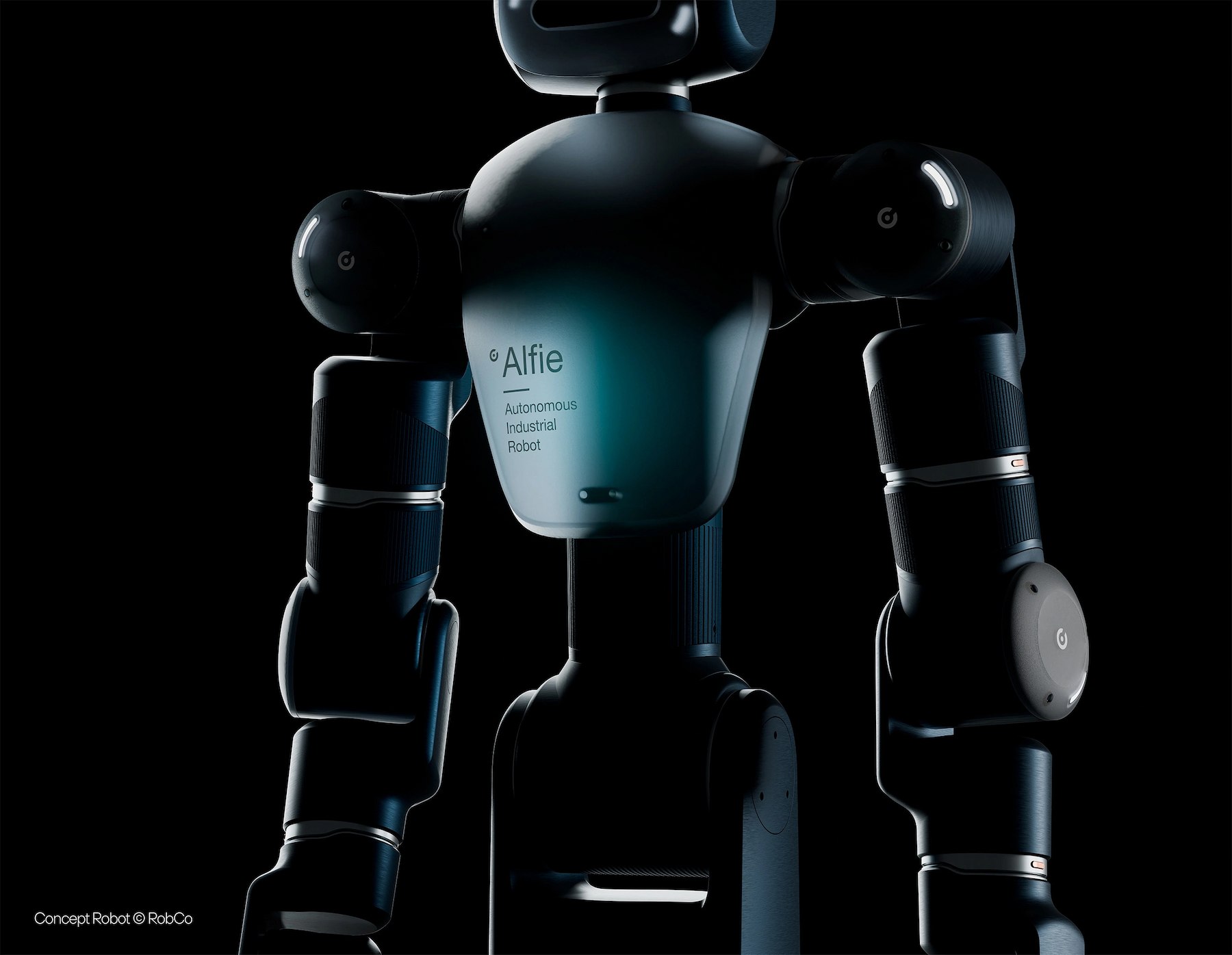
The transaction doubles the company’s valuation in nine months, building on a $100 million Series C round in January that valued the business at roughly $500 million. That progression sets up the RobCo Alfie robot launch 2027 as the moment the market will test whether a secondary-implied price holds under commercial scrutiny. European robotics unicorn news rarely features a company that doubled its valuation without a traditional priced round, which makes the mechanism worth understanding precisely.
What Is a Secondary Share Sale and Why It Differs From a Primary Round
In a primary round, a company issues new shares and receives the proceeds directly, increasing its cash position and diluting existing holders. A secondary sale works differently. A secondary sale transfers existing shares between holders, so the company issues no new equity and buyers do not dilute anyone. It is a cheaper way to set a headline price than a primary round, because the company sells nothing and the buyer is not underwriting a growth plan. The valuation is still a real data point, since investors paid it for stock they now hold.
RobCo’s $40 million secondary sale let employees cash out existing shares, with new backers Cherry Ventures and European Tech Collective joining returning investors Sequoia Capital, Lightspeed, Lingotto, and Leitmotif. The company itself received none of that money.
The practical limit of this mechanism is worth flagging: a secondary-implied valuation reflects what a specific buyer group paid for a specific block of shares on a single day. It is not stress-tested across the full cap table the way a priced primary round is, and it carries no obligation for the company to perform at that level before the next capital raise. RobCo’s unicorn status is a real market signal, but investors watching the US expansion and the commercial rollout of Alfie will want a primary round at or above $1 billion to confirm it.
RobCo $1 Billion Funding Latest: The Deal’s Investors and Structure
RobCo sold $40 million of shares in a secondary transaction that valued the company at more than $1 billion, double the approximately $500 million valuation it held after raising $100 million in January 2026. That nine-month doubling is the headline, but the investor roster behind it tells a more interesting story about where the physical AI investment 2026 wave is actually coming from.
Existing investors Sequoia, Lightspeed, Greenfield, Kindred, Lingotto, and Promus Ventures participated alongside new investors including Cherry Ventures and European Tech Collective, a group of founders behind some of Europe’s most successful technology companies. European Tech Collective is a fund backed by limited partners that include founders of Wiz, the cybersecurity firm Google bought for $32 billion, along with figures from payments company Adyen. That LP base matters: when operators who built and sold category-defining European companies choose to back an industrial robotics startup, it signals conviction that physical AI can produce the same kind of outcome.
The transaction consists of at least two components: RobCo received additional capital for further business development, and it included a secondary offering through which long-term employees could sell their existing shares. Most headlines stop there. What they skip is that the new primary tranche is undisclosed in size, only the $40 million employee secondary component has been confirmed publicly, meaning the company’s actual cash infusion from this deal is smaller than the total transaction figure implies. Investors tracking the German robotics startup unicorn update should note that RobCo’s balance sheet did not grow by $40 million on October 5.
The valuation milestone follows the $100 million Series C RobCo announced on January 29, 2026, co-led by Lightspeed Venture Partners and Lingotto Innovation alongside Sequoia Capital, Greenfield Partners, Kindred Capital, Leitmotif, and The Friedkin Group. That round set the $500 million baseline. The October transaction did not replace it; the two rounds stack, and the October price implies the company has roughly doubled in perceived value in the time it took to deploy the Series C capital.
Sequoia partner Luciana Lixandru, whose firm has backed RobCo since Series A, offered the clearest articulation of the thesis: “RobCo is building for a future in which AI doesn’t just reason and generate, but acts in the physical world. The progress the company has made over the past few years is impressive, but we believe this is still the beginning.”
The one structural trade-off worth flagging for investors: returning backers like Sequoia and Lightspeed bought employee shares at the $1 billion price, not discounted primary shares. That means their new exposure in this round carries no built-in markup cushion, if RobCo’s next primary round prices below $1 billion, those secondary purchases are immediately underwater. It is a vote of confidence, but it is also a position with less structural protection than a typical primary entry.
German Robotics Startup Unicorn Update: RobCo’s Business and Track Record Before the Milestone
Roman Hölzl, Paul Maroldt, and Constantin Dresel founded RobCo in 2020 after meeting at the Chair of Robotics and Artificial Intelligence at the Technical University of Munich. Hölzl had been pursuing a robotics PhD at the lab before dropping out to start the company. Maroldt leads robot hardware engineering, responsible for the mechanical modularity that lets a customer configure a 5-axis, 5 kg arm today and swap in an 8-axis, 40 kg configuration tomorrow. That academic spine matters: RobCo was not a software pivot into hardware but a hardware-first company built by people who spent years studying how robots actually fail on factory floors.
The startup made its name with modular robot arms that snap together like building blocks for different tasks, meant to make automation easier for midsize manufacturers. Its robots are deployed in industrial environments ranging from BMW to DynaEnergetics, Fabricated Extrusion Company, T-Systems, and Rosenberger, supporting workflows that include machine tending, palletizing, dispensing, and welding. Its customers include BMW, and it has sold more than 1,000 robots to date, per the Wall Street Journal.
One detail most coverage skips: that 1,000-unit figure spans individual robot modules rather than complete cells, so the true count of fully integrated deployments at customer sites is smaller, a distinction worth understanding before treating the headline number as a direct measure of factory footprint. Revenue was approaching $10 million as of February 2024 per Forbes, on a growing RaaS book.
As of August 2026, RobCo’s employee count stood at 204, up from just 26 at year-end 2023 per German corporate filings, roughly an eightfold increase in under three years. The US expansion is the primary driver of that acceleration. The United States is already RobCo’s fastest-growing market, with customer operations now spanning more than a dozen states, supported by manufacturing and assembly operations in Austin, Texas, and a lab in San Francisco, and Hölzl has relocated to the United States to drive that expansion personally.
That RobCo CEO moves to US development is the most consequential operational signal in the October announcement. Moving the founder-CEO across the Atlantic concentrates leadership attention on a market where RobCo has no brand recognition, no Mittelstand relationships to lean on, and well-funded local competitors. The RobCo Alfie robot launch 2027 will be the first real test of whether that bet pays off on American factory floors rather than European ones where the company’s track record was built.
What Is RobCo’s Robotics-as-a-Service Model and How Does It Differ From Buying Robots Outright?
RobCo’s RaaS model means customers pay a recurring subscription that bundles hardware, software, autonomy, and on-site service, no purchase order, no capital budget. Traditional industrial robot ownership works the opposite way: a manufacturer writes a six- or seven-figure check, hires an integrator to install and program the system, and then absorbs every future reprogramming cost, spare part, and firmware upgrade itself.
CEO Roman Hölzl has described the legacy approach as marked by “long implementation timelines, high six to seven-figure CapEx investment costs,” and solutions accessible only to expert robotics users, problems RobCo addresses by pricing its subscription at roughly the cost of a human worker per shift per month, ranging from a few thousand dollars to $10,000 a month. Deployment happens in weeks rather than quarters. For a small or mid-sized manufacturer that cannot lock up $150,000 in a single automation cell, that difference is the entire decision.
The RaaS global market was worth $13.7 billion in 2025, growing at a projected 16.7% annually. The subscription model now accounts for 35–40% of commercial robot deployments in 2026, driven by lower upfront costs and included maintenance. RobCo sits in that current, alongside US rivals with different structures. Formic, for example, targets small and mid-size job shops and contract manufacturers, deploying cobots on a simple hourly pricing model at $8–$24 per hour depending on application complexity. Universal Robots, by contrast, relies primarily on an indirect global distribution model, partnering with certified automation distributors, system integrators, and OEM partners across more than 50 countries, meaning the buyer still owns the hardware and responsibility for uptime, while the integrator charges separately for programming and changes.
In traditional sales, robotics companies sell the machine and step aside, leaving maintenance, upgrades, and operational success to the buyer. RaaS is a managed service: providers stay involved across the robot’s lifecycle, bundling hardware, autonomy software, support, and performance guarantees into one subscription. That recurring contract structure is valued differently by investors, predictable revenue at a software-like cadence commands a higher multiple than lumpy one-time equipment sales, which is one reason physical AI investment 2026 has concentrated on RaaS-native companies.
The trade-off that most European robotics unicorn news coverage skips: RobCo carries the hardware on its own balance sheet, meaning its $100M Series C has to fund not just people and R&D but a growing rented fleet, making it closer to a hardware-financing business than a pure software company. Gross margin compresses versus a one-time sale until each deployed arm’s on-site duration amortizes its manufacturing cost well past break-even. That is the RaaS math every industrial subscription business eventually meets.
RaaS is not the right answer for every buyer. A large-volume factory running thousands of identical cycles on a decade-long production run will likely reach lower total cost of ownership through outright purchase once the asset is fully amortized. The model earns its keep for high-mix, variable-volume operations where retooling costs under traditional ownership would eat the margin on any individual batch.
RobCo frames this as bringing physical AI into real production environments by combining proven deployment with a clear path toward higher autonomy, with hundreds of robots operating inside real facilities feeding learning systems that support workers where it matters most on the factory floor. The RobCo $1 billion
