
Startup Summit Nepal 2026 Launches Nationwide Youth Entrepreneurship Push

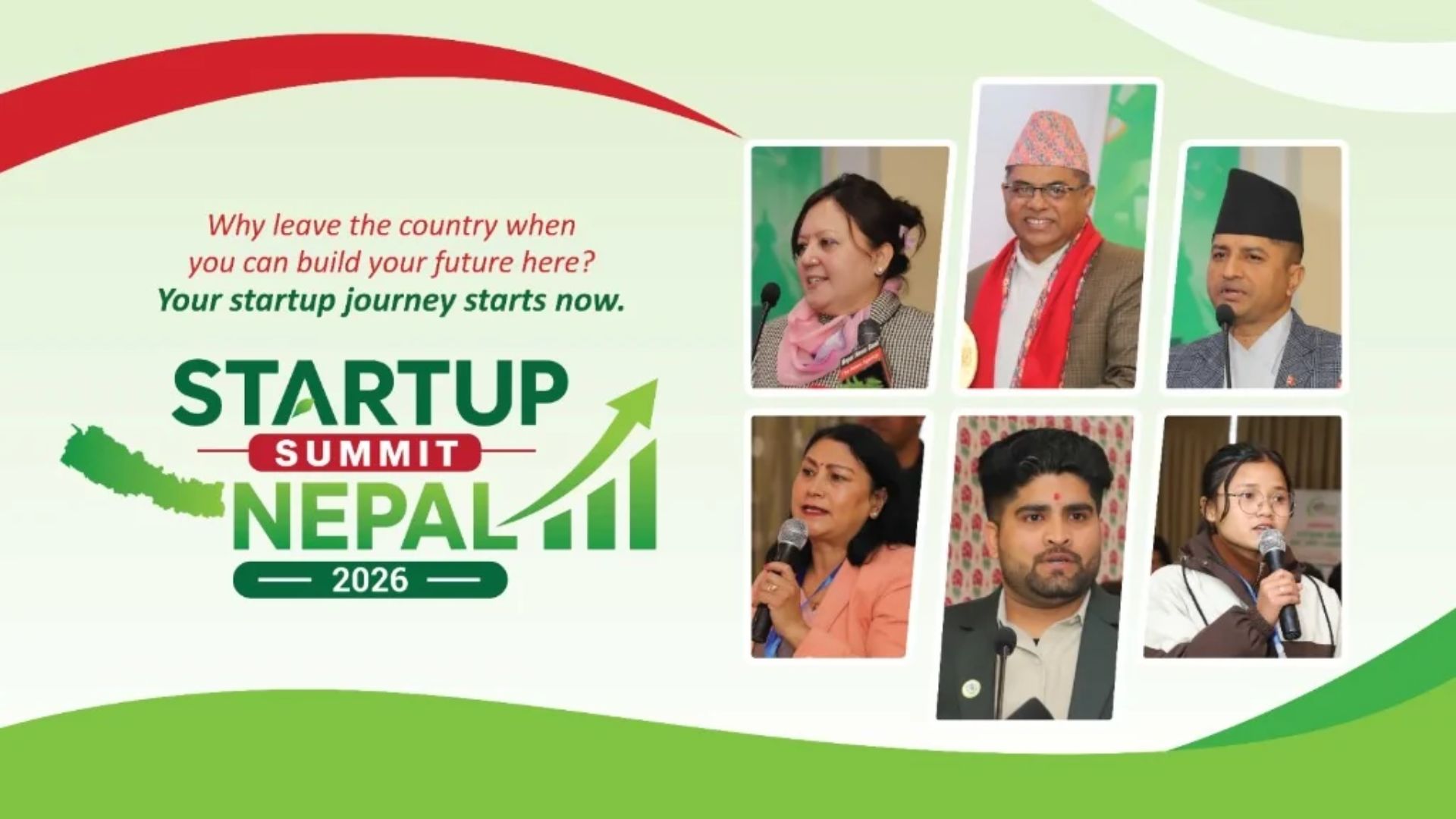
Startup Summit Nepal 2026 is a nationwide youth entrepreneurship campaign launched Aug. 6 at Tribhuvan University in Kathmandu. Chaired by Shova Gyawali, it plans events at universities and in all seven provinces. It offers guidance on business registration, planning and finance, and aims to connect promising startups with investors in Nepal and abroad.
What is Startup Summit Nepal 2026?
Startup Summit Nepal 2026 runs as a long-term campaign rather than a one-day conference. The launch, held at the Central Library Hall of Tribhuvan University under the theme “The Role of Startups in Nation Building,” drew students, academics, entrepreneurs, investors and media.
Gyawali framed the effort around migration. She called brain drain the country’s biggest challenge and said at the launch, “We must now transform it into brain gain.” Organizers said they plan to reach all seven provinces and 77 districts, working with universities, colleges, schools, government agencies, the private sector and financial institutions.
The program content is practical. Organizers said sessions will cover:
- startup development and business registration
- business planning and market research
- access to finance, including startup loans
- market expansion and the day-to-day work of running a company
Tribhuvan University Vice Chancellor Bhola Thapa said university education should prepare students for jobs and also encourage entrepreneurship, and he pledged the university’s support. Founders who had returned from foreign employment to start businesses in Nepal also shared their stories, a pointed choice for an audience weighing the same decision.
Why is Nepal pushing youth entrepreneurship now?
Foreign employment still absorbs a large share of Nepal’s young workforce, and the money it sends home props up the economy. Remittance inflows reached roughly NPR 2.18 trillion in fiscal year 2025/26, about 33% of GDP, according to an analysis by the Nepal Economic Forum.
That dependence cuts both ways. Remittances keep foreign exchange reserves healthy and household spending steady. They also mean the country sends abroad many of the people who could build local firms. Tensions in West Asia slowed departures for a few months in early 2026. Even so, the full-year permit count finished above 700,000.
This is the problem Startup Summit Nepal 2026 was built to address. Gyawali has said the campaign aims to keep the talent and creativity of young Nepalis at home instead of losing it to overseas migration.
The destination mix is shifting, too. Romania accounted for 22,266 permits last fiscal year, followed by Cyprus with 13,069 and Croatia with 8,701. A youth entrepreneurship campaign competes with those offers, and many of them pay more than an early-stage Nepali startup can.
How the Startup Summit Nepal 2026 provincial roadshow works
The campaign’s first provincial phase took place in Pokhara on Nov. 4. Billed as Start-Up Nepal Summit 2026 and organized by the Policy Research Institute, which Gyawali chairs, it ran under the theme “Stay in Nepal, Produce in Nepal and Create Jobs.” The Pokhara session featured the Gandaki Province chief minister, the Pokhara mayor, provincial bank chiefs and Pakistan’s ambassador to Nepal.
Gyawali said at the summit that the goal was “not to look for jobs, but to create jobs.” She asked the government to simplify business registration, expand concessional loans, raise loan limits and offer collateral-free lending.
The format works as a funnel. Six other provinces will host similar phases, and organizers plan to pick four to five promising startup ideas from each province for a concluding summit in Kathmandu. If that plan holds, 28 to 35 ventures would reach the final stage.
Diplomatic outreach for Startup Summit Nepal 2026 has run alongside. Gyawali’s team met the UAE ambassador in August to discuss linking UAE investors with Nepali startups, and ILO Nepal Country Director Numan Ozcan offered the agency’s expertise during an Aug. 17 meeting. In the UAE talks, Gyawali said the aim was to make promising projects investment-ready rather than simply hand students information.
Who can take part in Startup Summit Nepal 2026?
The campaign targets students and young people with early business ideas. So far, Startup Summit Nepal 2026 has worked through universities and provincial events rather than an open application. Coverage so far does not describe a public sign-up process or entry criteria.
Its pitch rests on a gap Gyawali has described more than once. In her meeting with the ILO, she said educated, skilled young Nepalis have strong potential as founders. What they often lack is information, guidance and a real chance to build a venture at home. In the UAE talks, she cited limited access to capital, technology, markets, skills and mentorship as the reasons many new firms stall.
Local support already exists in some places. Pokhara Mayor Dhanraj Acharya told the Pokhara audience that the city’s Business Promotion Centre offers training, seed money and a business clinic. He urged students to consider building a company in Nepal before looking abroad.
The longer plan is bigger. Organizers want the provincial and university campaign to grow into a national and international investment summit. That event would give selected Nepali startups access to capital, technology, expertise and markets. For a student outside Kathmandu, that would mean a route from a classroom session to an investor meeting.
Two events share the Startup Summit Nepal name
Anyone searching for Startup Summit Nepal 2026 will find a second event. The Startup Network Nepal, which has run a Startup Summit Nepal conference since 2023, has scheduled its 2026 edition for Dec. 16, with NIMB Ace Capital and NIBL Equity Partners returning as title sponsors for a fourth year.
The two efforts differ in design. Gyawali’s campaign is a multi-province roadshow aimed at students and first-time founders, backed by university and diplomatic partners. The Startup Network Nepal’s summit is a one-day Kathmandu conference built around keynotes, pitches and investor networking; its 2025 edition took place at the Royal Tulip on Dec. 20. Coverage of the two events does not indicate any link between the organizers.
For founders and investors, the distinction matters. Applications, sponsorships and pitch slots run through different teams, and press coverage sometimes uses the names interchangeably.
Does Nepal’s startup loan scheme support the summit’s goals?
Partly. The government offers collateral-free startup loans of up to Rs 2.5 million at 3% interest. Startup Summit Nepal 2026’s push for easier credit builds on that program. Demand far exceeds supply: 5,158 project proposals came in for fiscal year 2081/82 against a Rs 1 billion allocation, the Ministry of Industry, Commerce and Supplies said.
Approvals remain small by comparison. The government funded 600 projects under the scheme in the previous fiscal year, according to the Industrial Enterprise Development Institute. A Rs 1 billion pot covers at most 400 loans at the Rs 2.5 million ceiling.
That gap shapes what Startup Summit Nepal 2026 can deliver. A student who leaves a Pokhara session with a business plan still faces long odds at the loan window. Gyawali’s call to raise loan limits and widen collateral-free lending speaks to this, though it would require new budget commitments from the federal government.
The case for caution on youth entrepreneurship in Nepal
Officials at the Pokhara event offered a sober counterweight. Gandaki Province Chief Minister Surendra Raj Pandey said past provincial grants had not been used as effectively as expected, noting that some recipient startups never took part in the program and others failed to deliver. The province has since introduced production-based and matching grants.
Banks signaled limits as well. Provincial chiefs of Nabil Bank and Machhapuchchhre Bank said lenders offer collateral-free loans to strong proposals, but only after assessing business plans, prospects and repayment capacity. Students in the room pushed back, asking why parents will pay for study abroad yet resist funding a local venture.
Credit is only one constraint. A joint ILO and FNCCI study of Nepal’s entrepreneurship ecosystems set out recommendations for clearing the obstacles that keep young entrepreneurs from reaching their potential. Umesh Kumar Gupta Rauniyar, a former executive director of the Industrial Enterprise Development Institute and the campaign’s keynote speaker, made a related point at the launch: planning, determination and steady effort matter more than large amounts of capital.
Awareness campaigns work best when the bottleneck is information. Where the real constraint is wages, the case gets harder. A worker weighing a permit for Romania against a startup with uncertain income faces a choice no seminar can settle. Startup Summit Nepal 2026 has not published targets for jobs created or migration avoided, which will make its results hard to judge.
What to watch next for Startup Summit Nepal 2026
Startup Summit Nepal 2026 has drawn an ambitious map: seven provinces, 77 districts and a Kathmandu finale for the strongest ideas. These markers will show whether it moves beyond events:
- dates for the remaining six provincial phases and the Kathmandu summit
- whether UAE, Pakistani or other foreign investors commit capital to selected startups
- any change to startup loan limits or allocations in the next federal budget
The Startup Network Nepal’s Dec. 16 conference will offer a separate, near-term read on investor appetite. For now, Nepal’s youth entrepreneurship push sits beside a labor-permit count above 700,000 a year, and narrowing that gap will take capital as well as conviction.
Frequently Asked Questions
What is Startup Summit Nepal 2026?
Startup Summit Nepal 2026 is a nationwide youth entrepreneurship campaign launched on Aug. 6, 2026, at Tribhuvan University in Kathmandu. Chaired by Shova Gyawali, it runs provincial and university events that teach business registration, planning and finance, and it plans to link promising startups with domestic and foreign investors.
Who chairs Startup Summit Nepal 2026?
Shova Gyawali chairs Startup Summit Nepal 2026. She also chairs the Policy Research Institute, which organized the campaign’s first provincial phase in Pokhara on Nov. 4. Gyawali has led meetings with the UAE and Pakistani ambassadors and the ILO’s Nepal office to build support for the initiative.
Where did the first provincial phase take place?
The first provincial phase took place in Pokhara, Gandaki Province, on Nov. 4, 2026, under the theme “Stay in Nepal, Produce in Nepal and Create Jobs.” Organizers plan similar phases in the other six provinces, followed by a final summit in Kathmandu for the strongest startup ideas.
Is it the same event as The Startup Network Nepal’s summit?
No. The Startup Network Nepal runs a separate Startup Summit Nepal conference, with its 2026 edition scheduled for Dec. 16 in Kathmandu. That event is a one-day conference with keynotes, pitches and investor networking. Gyawali’s campaign is a multi-province roadshow aimed mainly at students and first-time founders.
How can young Nepalis get startup funding?
The main government option is the Startup Enterprise Loan program, which offers collateral-free loans of up to Rs 2.5 million at 3% interest. Competition is stiff, with thousands of proposals for limited funds. Some banks and city programs, such as Pokhara’s Business Promotion Centre, offer seed money, training or collateral-free loans for strong plans.
Why does Nepal want to slow youth migration?
Nepal relies heavily on labor migration, with more than 700,000 labor permits issued in fiscal year 2025/26. Remittances support the economy but also draw away young workers who could build local firms. Campaigns like Startup Summit Nepal 2026 aim to keep that talent working on businesses at home.