
Nothing But Seed Funding: How Five International Student Founders Landed Backing from India’s Most Celebrated Consumer Brand Builders

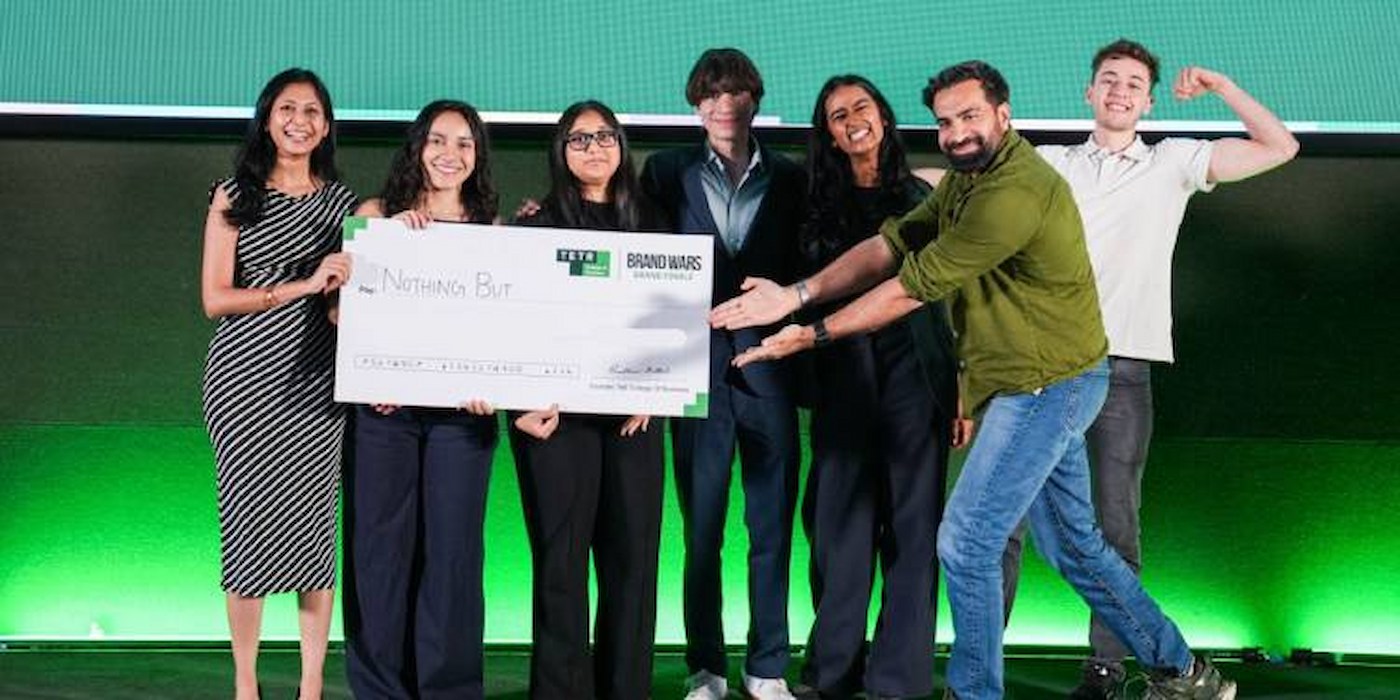
Nothing But, a fruit-snacking startup built by five international student entrepreneurs from India, Mexico, Bolivia, and Ecuador, has closed its Nothing But seed funding round — backed by an extraordinary lineup of consumer brand founders who have collectively built some of India’s most celebrated D2C companies. The Nothing But seed round investors include the co-founders of Noise, Innovist, Arata, The Be Life, and DailyObjects, making this one of the most founder-rich early-stage bets in India’s better-for-you snacking space. This Nothing But startup funding today positions the brand squarely at the intersection of two of India’s biggest growth stories: health-conscious eating and quick commerce.
The broader market context makes the timing sharp. India’s healthy snacks market generated USD 4,419.4 million in revenue in 2025 and is expected to reach USD 8,183.3 million by 2033, growing at a CAGR of 8.1%. Within that market, fruit, nuts, and seeds is already the largest revenue-generating product segment at 41.19% market share in 2025 — precisely the category Nothing But is building in.
Who Founded Nothing But — and Why Their Story Is Extraordinary
Nothing But wasn’t born in a corporate incubator or an established founder’s second venture. It was built by five students from four different countries, united by a shared belief that wholesome, fruit-first snacking deserves a serious brand behind it.
The startup was founded by five international student entrepreneurs from India, Mexico, Bolivia, and Ecuador. That founding team composition alone is unusual — genuinely cross-border, with diverse cultural palates informing a product category that is inherently universal. Nothing But fruit snacks funding story isn’t just about money; it’s about the kind of early-stage credibility that experienced consumer brand founders bring when they write a cheque.
The Nothing But healthy snacking update making waves in India’s startup ecosystem is that the brand’s student-founder identity is one of its key differentiators. These aren’t career entrepreneurs pivoting from adjacent sectors. They’re building from first principles, with direct access to investors who’ve already navigated the same terrain — and won.
Nothing But Seed Round Investors: A Who’s Who of Indian D2C Royalty
The investor lineup behind this Nothing But seed round is what sets this deal apart. The round was led by Atul Rajani and Deeksha Rajani, co-founders of The Be Life; Sifat Khurana, Founder & CBO of Innovist; and Dhruv Bhasin, Co-Founder of Arata — with participation from Gaurav Khatri, CEO & Co-Founder of Noise, and Saurav Adlakha, Founder & COO of DailyObjects.com.
Let’s put that in context. Each of these names represents a verified, scaled Indian consumer brand:
- Gaurav Khatri is the co-founder and CEO of Noise, India’s leading wearable tech brand. Noise clocked over Rs 2,000 crore in revenue in FY23, posting over 100% growth year-on-year. Gaurav Khatri Nothing But investment reflects his pattern of backing early-stage consumer brands with clear product differentiation.
- Sifat Khurana is the co-founder and CBO of Innovist, the science-first personal care house behind Bare Anatomy, Chemist at Play, and SunScoop. Innovist crossed INR 300 crore in revenue in FY25 and has raised $19.2 million in total funding. Sifat’s brand-building expertise specifically in the D2C clean-ingredient category makes her a deeply strategic backer for Nothing But.
- Dhruv Bhasin is the co-founder of Arata, the natural hair care D2C brand that appeared on Shark Tank India Season 3 and raised $4 million in a Series A led by Unilever Ventures, with participation from L’Oréal’s corporate venture fund. Arata currently serves more than 1.5 million customers annually and has achieved INR 72 crore in annual revenue run rate.
- Atul Rajani and Deeksha Rajani are the co-founders of The Be Life, a science-backed wellness brand. Together, they’re increasingly active early-stage investors in consumer startups built by young, globally-minded founders.
This isn’t passive angel money. In food and drink, capital partners are often more important than the cash itself. A founder who has built and scaled an exit brings more than capital — they bring shelf-level insight, distribution credibility, and the kind of network that opens doors. For Nothing But, that’s precisely what this investor syndicate delivers. The Nothing But seed round investors are, collectively, a masterclass in strategic capital.
Nothing But Healthy Snacking Update: What the Brand Is Building
Nothing But sits in one of the fastest-moving product niches within healthy snacking. Fruit, nuts, and seeds registered as the most lucrative segment of India’s healthy snacks market in 2025, with the highest growth projected through 2033. This isn’t a coincidence — it’s a structural shift in how Indian consumers relate to snacking.
India’s urban population is projected to add about 70 million new consumers by 2030, many of whom will enter organized retail and e-commerce ecosystems where healthy snacks are prominently merchandised. Meanwhile, household-level disposable income is rising by an estimated 7–9% annually in real terms, enabling occasional premium snack purchases to become habitual among middle-class consumers.
For Nothing But, this tailwind is the playing field. The brand’s product focus — built around clean, fruit-forward snacking — is explicitly designed for consumers who want real food without the label gymnastics. And the Nothing But healthy snacking update, delivered through this seed funding, signals that the brand is ready to scale that thesis with production capabilities and distribution muscle to match.
Nothing But Quick Commerce Expansion: Why Q-Commerce Is the Strategic Priority
The deployment of the Nothing But seed funding is telling. The capital will be used to strengthen manufacturing and supply capabilities, expand distribution across quick commerce and online marketplaces, and support new product development. The emphasis on quick commerce first is deliberate — and smart.
India’s quick commerce market crossed ₹64,000 crore in 2025 and is racing toward ₹1 lakh crore by 2030. Quick commerce platforms like Blinkit, Zepto, and Swiggy Instamart are now the primary discovery and purchase channel for impulse-friendly, health-oriented snacks in Indian metros. E-commerce and quick commerce platforms are likely to capture an increasing share of routine snack purchases, with some forecasts suggesting online penetration could reach 30–35% of healthy snack sales by 2030.
The Nothing But quick commerce expansion isn’t just about speed of delivery — it’s about positioning. On Blinkit or Zepto, a well-designed fruit snack pack competes directly in the consumer’s moment of impulse. That’s far more powerful than waiting for a planned grocery trip. For D2C brands with impulse-friendly price points, Zepto’s urban Gen Z and millennial user base is a natural match. Nothing But is built precisely for that audience.
The Nothing But quick commerce expansion strategy is backed by structural market evidence:
- Blinkit delivers within 10–20 minutes across Indian metros, serving snacks, beverages, and personal care products at scale
- Zepto maintains dense, high-performing dark stores concentrated in metros, targeting urban millennials with impulse-friendly categories
- Swiggy Instamart benefits from 24.3 million+ monthly transacting food users, enabling discovery at scale
- In 2026, quick commerce players including Blinkit, Instamart, and Zepto are expected to add nearly 2,000–2,500 new dark stores, deepening the opportunity for brands like Nothing But to secure valuable shelf positions in high-demand locations
Why Consumer Brand Founders Back Early-Stage Food Startups
The pattern here is significant. India’s most successful D2C consumer brand builders — from wearables to personal care to wellness — are increasingly turning their expertise toward early-stage food and snacking bets.
Why? Because they understand something institutional VCs often miss: the distribution-first insight. In food and drink, seed funding often underwrites the entire supply chain — from manufacturing minimum order quantities to costly certifications, product sampling, and packaging. Knowing how to navigate that terrain requires more than money. It requires someone who’s already done it.
Gaurav Khatri built Noise into a ₹2,000-crore wearable brand by understanding consumer behavior in digital-native India. Sifat Khurana and the Innovist team scaled three brands simultaneously while maintaining in-house R&D and rigorous clinical testing. Dhruv Bhasin took Arata from a kitchen experiment to a Unilever Ventures-backed brand with ₹195 crore valuation. These founders don’t just bring credentials. They bring pattern recognition — knowing what works at the shelf level, what doesn’t scale, and where young brands typically break.
For Nothing But, that means the real value of the Nothing But fruit snacks funding isn’t just the capital — it’s the compressed learning that arrives with every investor call.
The Competitive Arena Nothing But Must Navigate
The Indian healthy snacking space is fiercely contested. Yoga Bar, The Whole Truth Foods, TagZ, True Elements, and Beyond Snack are among the brands competing for the same health-conscious urban consumer. The India snacks market generated USD 22,783.2 million in revenue in 2024 and is expected to reach USD 33,487.3 million by 2030, growing at a CAGR of 6.7%.
That’s a large market — but the fruit-snacking niche within it is specific. Over the 2026–2035 forecast period, India’s healthy snacks market is expected to sustain a CAGR of 13–16%, driven by penetration into tier-2 and tier-3 cities, product innovation, and the mainstreaming of health-oriented snacking among younger demographics. That’s the tailwind Nothing But is riding.
Differentiation in this market ultimately hinges on three things: product purity, clean-label credibility, and distribution velocity. A five-founder international team with fruit-first DNA and a backer network of brand-building legends is an unusual starting position. Unusual, in this context, is an asset.
Conclusion: What the Nothing But Seed Funding Tells India’s Snacking Market
Nothing But seed funding is more than a headline. It’s a signal — about the kinds of brands winning early-stage investor attention in India right now, about the growing sophistication of angel networks made up of proven operator-founders, and about the real commercial opportunity that fruit-forward snacking represents in a market where health-consciousness is no longer a trend but a permanent behavioral shift.
The Nothing But startup funding today reflects a market moment where the best investors aren’t institutional VCs deploying from a fund mandate — they’re founders who built real brands and want to compound their knowledge into the next generation of Indian consumer companies.
The capital will be deployed into manufacturing strength, quick commerce penetration, and new product development. The Nothing But healthy snacking update to watch for: as the brand scales its distribution across Blinkit, Zepto, and Instamart, it will become increasingly clear whether this investor-backed fruit snacks play can convert category tailwinds into sustainable brand equity.
Frequently Asked Questions (FAQs)
Q1. What is Nothing But, and what products does it sell?
Nothing But is an Indian fruit-snacking startup focused on clean, fruit-forward snack products. The brand is built around the philosophy of wholesome, real-ingredient snacking — without unnecessary additives, preservatives, or “label gymnastics.” Its product positioning sits squarely within the fruit, nuts, and seeds category, which is the largest revenue-generating segment of India’s healthy snacks market, commanding 41.19% market share in 2025.
Q2. Who founded Nothing But?
Nothing But was founded by five international student entrepreneurs from India, Mexico, Bolivia, and Ecuador. The founding team’s genuinely cross-border composition is central to the brand’s identity — bringing together diverse cultural palates and a shared conviction that fruit-first snacking deserves serious brand building. Unlike second-time founders pivoting from adjacent sectors, the Nothing But team is building from first principles at the earliest stage of their entrepreneurial journey.
Q3. Who are the investors in the Nothing But seed round?
The Nothing But seed round features one of the most operator-dense investor lineups in India’s early-stage consumer space. The round was led by Atul Rajani and Deeksha Rajani, co-founders of The Be Life; Sifat Khurana, Founder & CBO of Innovist; and Dhruv Bhasin, Co-Founder of Arata — with participation from Gaurav Khatri, CEO & Co-Founder of Noise, and Saurav Adlakha, Founder & COO of DailyObjects.com. Every investor in this round has built and scaled a recognized Indian consumer brand, making this a syndicate of strategic operators rather than passive capital.
Q4. What will Nothing But use the seed funding for?
The capital will be used to strengthen manufacturing and supply capabilities, expand distribution across quick commerce and online marketplaces, and support new product development. The strategic priority is quick commerce penetration — getting Nothing But products listed on platforms like Blinkit, Zepto, and Swiggy Instamart, where health-conscious urban consumers are making impulse-driven snack purchases every day.
Q5. How large is India’s healthy snacks market, and why does it matter for Nothing But?
India’s healthy snacks market generated USD 4,419.4 million in revenue in 2025 and is projected to reach USD 8,183.3 million by 2033, growing at a CAGR of 8.1%. Within this, the fruit, nuts, and seeds segment holds the largest share at 41.19% in 2025 — the precise category Nothing But operates in. Meanwhile, over the 2026–2035 forecast period, India’s healthy snacks market is expected to sustain a CAGR of 13–16%, driven by tier-2 and tier-3 city penetration and the mainstreaming of health-oriented snacking among younger Indians. This structural growth makes Nothing But’s entry timing highly strategic.
Q6. Why is Nothing But prioritizing quick commerce over traditional retail?
Quick commerce has become the dominant discovery and purchase channel for impulse-friendly snacks in Indian metro markets. India’s quick commerce market is projected to grow at a CAGR of 17.6% from 2025 to 2029, reaching approximately USD 12.97 billion by 2029. Blinkit alone leads the sector with over 50% market share and operates 2,200+ dark stores across 35+ metros and tier-1 cities, while Zepto and Swiggy Instamart compete aggressively for second position. For a fruit snack brand like Nothing But, a listing on Blinkit or Zepto means competing directly in the consumer’s moment of impulse — far more powerful than waiting for a planned grocery trip.
Q7. Who are Nothing But’s main competitors in India’s healthy snacking space?
The Indian healthy snacking market is fiercely competitive. Major players include Yoga Bar, The Whole Truth Foods, TagZ, True Elements, and Beyond Snack — all targeting health-conscious urban consumers. The broader India snacks market generated USD 22,783.2 million in 2024 and is projected to reach USD 33,487.3 million by 2030 at a CAGR of 6.7%. However, Nothing But’s specific focus on fruit-forward, clean-label snacking — backed by a strategically curated investor network — gives it a differentiated positioning within this crowded field. Differentiation in this market hinges on product purity, clean-label credibility, and distribution velocity.
Q8. Why are consumer brand founders — rather than institutional VCs — backing Nothing But?
Operator-founders bring something institutional VCs often cannot: distribution-level pattern recognition. In food and drink, seed funding often underwrites the entire supply chain — from manufacturing minimum order quantities to costly certifications, product sampling, and packaging. Founders who’ve scaled brands like Noise (₹2,000+ crore revenue), Innovist (₹300+ crore revenue in FY25), and Arata ($4 million Series A from Unilever Ventures) already know where young consumer brands break — and can intervene before those breaking points arrive. For Nothing But, the investor syndicate delivers compressed learning alongside capital.
Q9. Is Nothing But’s founding team unusual for an Indian D2C startup?
Yes, significantly so. Most early-stage Indian D2C brands are founded by solo founders or domestic co-founding teams with prior corporate or startup experience. Nothing But stands apart as a genuinely cross-border student founding team — five individuals from four countries, building in a market where diverse cultural perspectives on food and snacking are a competitive advantage. The “Label Padhega India” movement has raised consumer awareness, with 73% of consumers now scrutinizing ingredients for hidden additives — a trend that directly benefits clean-label-first brands built by founders who understand global food cultures.
Q10. What is the long-term opportunity for Nothing But in India’s snacking market?
The long-term opportunity is substantial. India’s urban population is projected to add around 70 million new consumers by 2030, many of whom will enter organized retail and e-commerce ecosystems where healthy snacks are prominently merchandised. Household disposable income is also rising by an estimated 7–9% annually in real terms, turning occasional premium snack purchases into habitual behavior among middle-class consumers. Combined with the structural shift toward clean-label eating — with 73% of Indian urban consumers now actively scrutinizing ingredient labels — Nothing But is positioned to ride a durable, multi-decade behavioral trend rather than a short-term wellness fad.