
CGC100 Youth Entrepreneurship Programme Malaysia: 100 Graduates, 58 Businesses, 86 New Jobs

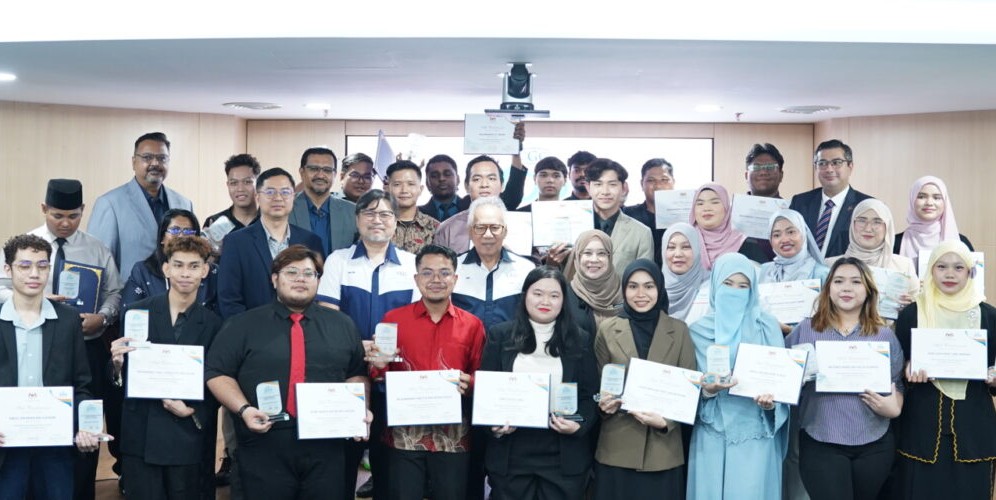
Petaling Jaya, September 21, 2026 — Credit Guarantee Corporation Malaysia Berhad (CGC) graduated the final cohort of its CGC100 Youth Entrepreneurship Programme today, bringing the total number of young Malaysians who have completed the three-year initiative to 100. Across all three cohorts, 58 graduates have since registered their own businesses and collectively created 86 new jobs, with a growing number now generating between RM10,000 and RM50,000 in monthly revenue.
The CGC100 youth entrepreneurship programme Malaysia ran from 2022 to 2026 in collaboration with PINTAR Foundation, with support from the Ministry of Education. It targeted Malaysians aged 18 to 23 from unserved and underserved communities, with a particular focus on Technical and Vocational Education and Training (TVET) graduates. The six-month curriculum covered business fundamentals, branding, digital skills, financial literacy, sustainability, and live pitching practice. Put simply: young Malaysians arrived with ideas and left with registered companies.
What Is the CGC100 Programme and Who Did It Serve?
CGC100 was designed specifically for aspiring entrepreneurs who faced two compounding barriers — limited access to formal business networks and the near-total absence of financial literacy education in TVET pathways. The programme ran three cohorts in total, with the third and final group of 30 participants completing their training between August 2025 and February 2026.
The TVET youth business training Malaysia angle was deliberate. TVET graduates develop trade skills in fields from culinary arts to mechatronics, yet Malaysia’s TVET policy framework has historically prioritised employment readiness over enterprise creation. CGC100 filled that gap directly, giving participants not just the knowledge to start a business but also the confidence to walk into a bank and argue for financing.
Kaliswaran Seran, 23, from Penang, arrived without a business plan. “I started the programme with only an interest in entrepreneurship,” he said at the September 21 ceremony. “Today, I have not only gained valuable entrepreneurial knowledge and skills, but also the confidence, direction and mindset needed to pursue my business aspirations.” His experience reflects the wider outcome data: the programme did not just count bodies through a door; it converted raw interest into structured commercial activity.
Graduates now run businesses across agriculture, food and beverage, fashion, and services sectors — precisely the industries where B40 community members have the closest existing skills.
What the Numbers Actually Mean
58 registered businesses from 100 graduates is a 58% formalisation rate. That figure matters more than it may appear. Many Malaysian youth entrepreneurship initiatives report “interest” or “completion” rates without counting how many participants actually formed a legal entity. CGC100 tracked company registration as a hard outcome, not a soft aspiration.
The 86 jobs created by those 58 companies works out to roughly 1.5 jobs per registered business — small, but structurally meaningful in communities where youth unemployment sits alongside underemployment. Malaysia’s unemployment rate declined to 2.9% in the first quarter of 2026, yet youth and low-income segments remain disproportionately exposed to informal or precarious work. Businesses run by CGC100 graduates create employment for peers from the same communities they came from.
The revenue data is the most telling signal. PINTAR Foundation’s post-programme impact assessment recorded an increasing share of graduates entering the RM10,000 to RM50,000 monthly revenue bracket. That range, while modest for a mature SME, represents genuine commercial sustainability for a business less than two years old, run by a founder under 25 with no prior trading history.
CGC Chairman Dato’ Mohammed Hussein addressed the Cohort 3 graduates directly: “One of the greatest advantages of being young is that you can afford to fail. No successful entrepreneur reaches the top without experiencing setbacks along the way.” He added a Malay phrase that landed with particular weight in the room: “Kita kena susah dahulu, baru senang. Bukan terus senang tanpa susah.” — roughly, you must endure difficulty before ease; ease does not come without it first.
PINTAR Foundation General Manager Norzalina Masom framed the purpose in broader terms: “CGC100 is more than an entrepreneurship programme; it is a platform for young people to discover their potential, turn ideas into opportunities and take their first steps towards creating a meaningful future.”
How CGC100 Compared to Other Malaysian Youth Entrepreneurship Initiatives
The Malaysian government runs several parallel programmes targeting young Malaysians starting their own business. PROTÉGÉ (Professional Training and Education for Growing Entrepreneurs), supervised by the Ministry of Entrepreneur and Cooperative Development (KUSKOP), focuses on diploma graduates and above and offers monthly allowances alongside industry mentorship. The N-GENE online bootcamp under PROTÉGÉ targets unemployed graduates who want to start businesses through a shorter, digital-first format.
Where CGC100 differed was in its depth and its institutional backing. A six-month residential-style programme with structured mentorship from the CGC Developmental Programme ecosystem is materially different from a bootcamp or a soft-skills course. CGC brought its MSME ecosystem relationships into the room — meaning participants got exposure to actual financial institutions and their financing criteria, not just motivational frameworks.
The CGC developmental programme entrepreneurs joining through CGC100 also benefited from PINTAR Foundation’s community network, which has a track record of reaching schools and youth in underserved areas rather than self-selecting high-achieving urban participants. That targeting shapes the outcome data in ways that straight completion numbers obscure.
The honest trade-off: CGC100 was small by design. One hundred graduates over four years is not a mass-market solution to youth unemployment. PROTÉGÉ serves thousands annually; N-GENE is fully online and infinitely scalable. CGC100 made a different bet — depth over breadth, with measurable commercial outcomes as the proof point.
What Comes Next: CGC YEP and Why It Matters for Anyone Who Missed CGC100
CGC100 has now formally concluded. The successor programme, the CGC Youth Entrepreneurship Programme (CGC YEP), officially launched at Sasana Kijang, Bank Negara Malaysia in September 2026, with Cohort 1 already graduating 50 young entrepreneurs from its Early Stage and Growth Stage tracks.
The eligibility shift is significant. CGC100 was restricted to TVET students aged 18 to 23. CGC YEP opens to anyone aged 18 to 35 from any educational background. That change alone triples the addressable audience and removes the TVET gate that excluded many aspiring entrepreneurs from underserved community entrepreneurship support.
The structure also changed. CGC YEP runs on a three-month model rather than six months, combining online and physical sessions within the Klang Valley. The curriculum covers business fundamentals, financial management, marketing, market access, and financing readiness. Partners for CGC YEP Cohort 1 included INSKEN, Universiti Malaya, Sunway University, TVET institutions, and AKPK (Agensi Kaunseling dan Pengurusan Kredit), bringing a richer institutional network than CGC100 had at launch.
Cohort 2 of CGC YEP runs August to October 2026. The programme is free of charge.
For any young Malaysian who missed CGC100 and has been asking how TVET students start businesses in Malaysia — or simply how to cross the gap from idea to registered entity — CGC YEP is the practical answer available right now.
| Feature | CGC100 | CGC YEP |
|---|---|---|
| Duration | 6 months | 3 months |
| Age range | 18-23 | 18-35 |
| Target background | TVET / underserved | Open to all backgrounds |
| Programme cost | Free | Free |
| Format | Structured in-person | Online + physical (Klang Valley) |
| Status as of Sept 2026 | Concluded (3 cohorts) | Active (Cohort 2 underway) |
The Bigger Picture: Why Financial Literacy for Young Entrepreneurs Stays the Central Problem
Every piece of feedback from CGC100 participants points back to the same gap: financial literacy for young entrepreneurs from B40 households is not a supplement to business education, it is the precondition for everything else. A 19-year-old from Sarawak with a viable food-and-beverage concept cannot access SME financing if she cannot read a basic cash flow statement or explain her receivables cycle to a loan officer.
As of August 2026, CGC has provided over 551,000 guarantees and financing to MSMEs valued at more than RM107 billion since 1972. That institutional weight means CGC YEP participants get financial literacy training from an organisation that genuinely understands how Malaysian banks evaluate creditworthiness — not a generic curriculum designed elsewhere.
CGC President and CEO Mohamad Nazri Omar has been consistent on this point: financing readiness and business capability must develop together. A guarantee scheme solves one side of the equation. A structured youth programme solves the other.
For young Malaysians starting their own business in 2026, the lesson from CGC100’s outcome data is specific: structured programmes that combine skills training, mentorship, and financial literacy produce registered companies and real jobs at a measurable rate. Interest alone does not. Motivation alone does not. The programme architecture matters.
A Note on What CGC100 Did Not Solve
No programme this size can solve structural barriers alone. The 42 graduates out of 100 who did not register a business after CGC100 are not failures of the programme design — they reflect the genuine difficulty of converting training into a viable venture when access to seed capital, reliable suppliers, and paying customers remains unequal across geographies. A graduate in Kota Belud faces a different market than one in Petaling Jaya, regardless of the quality of their training.
CGC YEP’s Klang Valley physical-session requirement is worth noting as a limitation too. Aspiring entrepreneurs in Sabah, Sarawak, or rural Peninsular Malaysia can access online components, but the networking and mentorship value of face-to-face sessions skews toward urban participants for now.
If you are aged 18 to 35 and want to turn a business idea into a registered company with mentorship and financial literacy support from Credit Guarantee Corporation Malaysia Berhad, CGC YEP Cohort 2 is currently running through October 2026 at no cost. Visit cgc.com.my for programme details and upcoming cohort timelines.
Frequently Asked Questions
What is the CGC100 Youth Entrepreneurship Programme and who is it for?
CGC100 was a six-month programme run by Credit Guarantee Corporation Malaysia Berhad in collaboration with PINTAR Foundation. It targeted young Malaysians aged 18 to 23 from unserved and underserved communities, with a specific focus on TVET graduates. The programme combined structured business training, mentoring, financial literacy education, and hands-on pitching experience across three cohorts from 2022 to 2026.
How many CGC100 graduates have registered their businesses?
As of September 21, 2026, 58 out of 100 total CGC100 graduates have registered their businesses. Those 58 companies have collectively created 86 new jobs. This 58% formalisation rate is notable because it tracks company registration as a hard outcome, not simply programme completion or stated business interest.
What is the difference between CGC100 and CGC YEP?
CGC100 ran for six months, targeted TVET students aged 18 to 23, and has now concluded after three cohorts. CGC YEP is the successor programme — it runs for three months, is free, open to anyone aged 18 to 35 regardless of educational background, and combines online and physical sessions. CGC YEP Cohort 2 is currently running through October 2026.
Can TVET students apply for CGC’s new Youth Entrepreneurship Programme?
Yes. CGC YEP is open to aspiring entrepreneurs from all educational backgrounds, including TVET graduates. Unlike CGC100, which was specifically designed for TVET students, CGC YEP has broader eligibility covering anyone aged 18 to 35. TVET institutions are listed as active delivery partners in the programme.
What kind of training does CGC100 provide to young entrepreneurs?
CGC100 covered business fundamentals, branding, digital skills, financial literacy, sustainability, and live business pitching. The programme combined structured classroom instruction with mentoring from CGC’s developmental programme network and hands-on exercises. Participants practised pitching their own business ideas as part of the final assessment requirements.
How do young entrepreneurs from underserved communities get financing in Malaysia?
CGC provides guarantee schemes that help MSMEs access financing from partner financial institutions even without traditional collateral. CGC YEP specifically prepares participants for financing readiness — teaching them how to present their businesses to banks. AKPK (the Credit Counselling and Debt Management Agency) is also a CGC YEP delivery partner offering financial advisory support.
What is the PINTAR Foundation’s role in the CGC100 programme?
PINTAR Foundation was the implementation partner for CGC100, responsible for community outreach, participant recruitment from underserved areas, and post-programme impact assessment. PINTAR’s General Manager Norzalina Masom described CGC100 as “a platform for young people to discover their potential, turn ideas into opportunities and take their first steps towards creating a meaningful future.” PINTAR’s impact data tracked the revenue outcomes reported for graduates.
How much monthly revenue are CGC100 graduates earning after completing the programme?
PINTAR Foundation’s post-programme impact assessment shows an increasing number of CGC100 graduates have entered the RM10,000 to RM50,000 monthly revenue bracket. This reflects improved business resilience and commercial sustainability for ventures typically less than two years old. Not all graduates reach this range; the assessment tracks trend direction rather than a single average figure.