
Zulu Defence’s Tactical Drones Are Taking Global Battlefields by Storm — Starting in Bengaluru

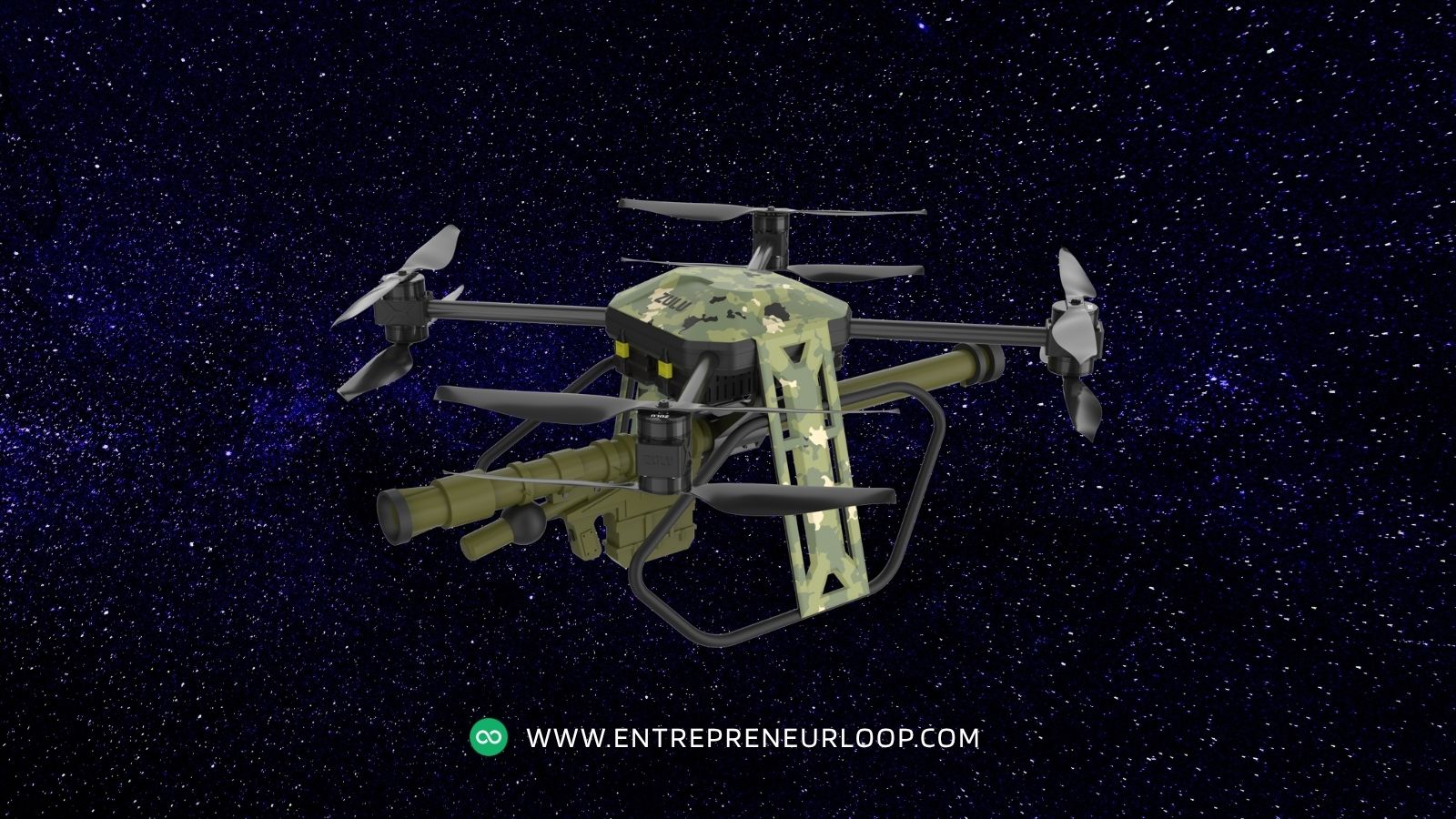
Bengaluru-headquartered technology startup Zulu Defence has announced a procurement order from the Netherlands Special Forces for its Directed Reconnaissance and Attack Platform (DRAP) — a milestone that very few Indian defence startups have ever achieved. The order signals far more than a single export deal. It marks the arrival of Indian military drone startups as credible, NATO-grade suppliers of tactical drones in a world that is rapidly rewiring its battlefield doctrine around autonomous systems.
Who Is Zulu Defence? A Bengaluru Startup Built for War
Zulu Defence is a seed company based in Bengaluru, India, founded in 2023 by Rajagopal Sethauram, Nagendran Kandasamy, and Shashikumar Ramakrishna. Small team. Ambitious mandate. The company has raised a total funding of $987K over 2 rounds from 12 investors. For context, that is a fraction of what American competitors like Anduril or Shield AI spend on a single prototype run — yet Zulu is already exporting to NATO special forces.
At Zulu, the mission is clear: the company does not just make drones — it develops purpose-built air defence solutions, building tactical air defence systems for national security with a team that brings together deep expertise in aviation, drone technology, computer vision, AI, software development, and ammunition.
Headquartered in Bengaluru, the company focuses on drone-based air defence solutions, particularly models designed for surveillance, targeted attacks, and extended hover-and-strike missions. Their product lineup spans micro-drones to swarm launchers. The DRAP is the flagship — and the one that caught Europe’s eye.
What Is the DRAP? India’s Indigenous Loitering Munition Platform
Known as the Directed Reconnaissance and Attack Platform (DRAP), the system has been developed as a compact hovering kamikaze drone capable of both surveillance and precision strike missions. The platform is designed to bridge the operational gap between lightweight FPV drones and larger long-range loitering munitions increasingly used in modern warfare.
Think of it as a flying sniper that also does reconnaissance. Zulu Defence describes the DRAP as India’s first indigenous hovering loitering munition platform capable of combining tactical reconnaissance with precision strike operations in a single deployable system. That dual capability is exactly what modern special forces want — one platform instead of two.
The DRAP is equipped to deliver a 1.5 kg explosive payload. Military strategists increasingly favour this weight class, as it provides enough destructive power to neutralise personnel, breach defences, and disable armoured transports. The warhead system adds further flexibility. Company specifications indicate that the warhead system is highly modular, accommodating various detonation triggers tailored to specific tactical scenarios.
Stealth, Swarm, and Survivability
Survivability is built in from the ground up. Survivability is further boosted by the platform’s stealthy design. Driven by quiet electric motors and featuring a minimal physical footprint, the drone generates very little heat, noise, or radar reflection. This low observability makes it incredibly challenging for standard anti-aircraft sensors to detect the threat until the weapon is already beginning its final dive.
Zulu has also engineered swarming into the DRAP’s core architecture. Engineers have integrated networking capabilities that enable several munitions to operate as a unified swarm. By communicating with one another in the air, a cluster of drones can execute simultaneous, multi-directional strikes. This coordinated approach is designed to overwhelm and exhaust enemy interceptors — a strategy that is rapidly becoming a cornerstone of contemporary uncrewed combat.
The drone can also integrate with Zulu Defence’s CLAD multi-barrel canister launcher platform, enabling coordinated AI-assisted swarm strikes against multiple targets simultaneously.
The GPS Independent Navigation Edge That Won Over Dutch Special Forces
Here is where Zulu’s engineering really separates itself from the pack. Modern battlefields are electronic warfare nightmares. One of the greatest engineering challenges in modern loitering munition design is operating in “denied environments.” When flying against a sophisticated adversary, operators must assume GPS will be jammed or spoofed, and that radio communication links will be blocked through electronic warfare.
The DRAP is purpose-built for exactly this environment. The DRAP has been engineered specifically for modern electronic warfare battlefields where GPS, radio links, and communications are actively jammed. Its answer to the GPS problem is elegant: visual odometry. Through visual odometry, the system constantly analyses the ground below, using natural landmarks and terrain patterns to calculate its location and trajectory. This allows for seamless operations in sectors where traditional GPS networks have been disabled, spoofed, or heavily degraded by adversarial countermeasures.
This is what the industry calls GPS independent navigation — and it is now a non-negotiable requirement for any serious autonomous combat system deployed in peer-level conflict. Its anti-jamming architecture, encrypted communications, and multi-layer navigation systems are designed to maintain operational effectiveness inside GPS-denied zones.
The platform’s edge computing capability makes this resilience possible at the hardware level. A core technological advantage of the munition is its edge computing capability. By processing visual and navigational information within the drone’s own hardware, it eliminates the necessity for a continuous data stream to a human pilot on the ground. The result? The drone can continue tracking and engaging targets even after communication links are disrupted or jammed — a major advantage in next-generation drone warfare.
The HOVERBEE: Tactical Reconnaissance Drones Cleared by Indian Forces
The DRAP is not Zulu’s only weapon in the arsenal. Their tactical reconnaissance drones include the HOVERBEE — a micro-drone that has already cleared the toughest domestic tests. The Indian Army is now equipped with the Hoverbee kamikaze micro-drone. Developed by Bengaluru-based Zulu Defence, this 15 cm long, 260-gram drone is designed to enter buildings, search for terrorists, and eliminate them with a 400-gram grenade.
India’s Bengaluru-based Zulu Defence Systems has released images showing large-scale production of its updated HOVERBEE reconnaissance drones, signalling the company’s shift from prototype development to mass manufacturing. Company representatives confirmed the drone had completed field evaluations with India’s elite Marine Commando Force (MARCOS) and elements of the Army’s ground combat units.
Weighing under one kilogram and equipped with a VTOL system, HOVERBEE can be operated by a single soldier using a ruggedised tablet or handheld controller. The drone’s flight system features autonomous hovering, obstacle avoidance, and encrypted video transmission, making it suitable for coordination with ground manoeuvre units or special reconnaissance detachments.
The CLAD Launcher: Swarm-Ready and Frontline-Deployable
Indigenous defence technology rarely moves this fast. Bengaluru-based Zulu Defence Systems revealed a new multi-barrel launcher on May 9, 2026, designed specifically to launch loitering munitions in swarms. It enables military units to hit several targets using drones fired at once or one after another from one device. This setup aims to provide frontline troops with fast attack options independent of large stationary installations.
The CLAD complements both HOVERBEE and DRAP, turning Zulu’s product ecosystem into a full-stack autonomous combat architecture — reconnaissance, strike, and mass-launch all from a single manufacturer.
Why the Dutch Special Forces Order Is a Watershed Moment
The successful export of the DRAP system to a NATO member state like the Netherlands represents a substantial achievement for India’s private defence manufacturing sector. NATO procurement standards are among the most demanding in the world. Clearing them as a two-year-old startup from Bengaluru is extraordinary.
The reported Dutch acquisition comes at a time when European militaries are rapidly increasing investments in autonomous combat systems and loitering munitions amid evolving battlefield requirements. It also aligns directly with the broader operational trends of European armed forces, which are urgently working to bolster their autonomous, precision-strike capabilities and resilient supply chains in response to evolving, high-intensity drone warfare.
This is not just about one order. It is a proof point — and proof points in defence procurement cascade into larger contracts.
India’s Military Drone Startups Are Going Global
Zulu’s breakthrough is the sharpest tip of a very large spear. The India military drone market generated a revenue of USD 1,947.3 million in 2025 and is expected to reach USD 4,997.2 million by 2033. The market is expected to grow at a CAGR of 11.8% from 2026 to 2033.
Export momentum is accelerating fast. India’s defense drone sector is on the cusp of transformative expansion, fuelled by battle-tested performance in recent conflicts and surging global demand for affordable, combat-proven unmanned systems. Once a minor player in the country’s booming arms export market, military drones are now set to deliver rapid revenue growth, positioning Indian manufacturers as serious competitors to established players from China and Turkey.
Indian drone makers are carving out a strong niche in the tactical and medium-sized UAV segment, filling the gap between expensive Western systems and mass-produced Chinese drones. Flying Wedge’s Kaal Bhairav medium-altitude long-endurance drone, for example, is priced between 10 million and 40 million rupees — a fraction of comparable American platforms costing up to $30 million each. Zulu’s cost-effective model fits squarely into that value proposition.
The platform offers exceptional financial efficiency. By blending readily available commercial hardware with highly specialised, proprietary AI software, the manufacturer has kept production expenses low. The resulting weapon provides military forces with a highly cost-effective method of neutralising high-value targets, far undercutting the price tag of traditional precision-guided munitions.
The Broader Context: Autonomous Combat Systems Are Reshaping Warfare
By combining the endurance of unmanned aerial vehicles with the precision of guided munitions, loitering drones have transformed the way militaries detect, track, and neutralise targets. Their ability to hover or “loiter” above the battlefield, identify threats in real time, and execute pinpoint strikes has made them one of the most significant innovations in modern warfare.
Loitering munitions have already changed battlefield doctrine worldwide, evident most clearly in the Russia-Ukraine conflict. At the DSI Group’s Loitering Munitions Summit, it was revealed that the military UAV market — virtually synonymous with loitering munitions — will be worth $18 billion by 2033.
Zulu Defence is not riding this wave. It is helping create it — from a factory floor in Bengaluru, with a team of fewer than 20 people and under $1 million in funding.
What Comes Next for Zulu Defence?
Zulu Defence Systems has positioned the ZBEE FPV as part of its expanding ecosystem of indigenous tactical drones that include systems like DRAP and VOLUME35. The company is rapidly widening its product range. The firm’s engineering philosophy emphasises compact deployment — launch readiness in under two minutes — combined with payload integration options extending up to six 81 mm mortar shells in its larger unmanned platforms.
Indian startup Zulu Defence Systems has been steadily expanding its portfolio of next-generation uncrewed and counter-uncrewed technology on the global stage. With one NATO order already in the books, expect the pipeline to grow.
Key Takeaways
- Founded: 2023, Bengaluru | Funding: $987K across 2 rounds
- DRAP payload: 1.5 kg explosive, modular fusing, VTOL launch
- Navigation: GPS independent navigation via visual odometry, anti-jamming architecture
- Domestic customers: Indian Army (HOVERBEE), Marine Commando Force (MARCOS)
- Export customer: Netherlands Special Forces (DRAP loitering munition)
- Swarm capability: CLAD nine-barrel launcher for coordinated strikes
- Market context: India’s military drone market projected to reach $4.99B by 2033 at 11.8% CAGR
Conclusion
Zulu Defence is proof that defence technology breakthroughs do not always emerge from billion-dollar labs. They emerge from focused teams solving hard problems. The DRAP’s GPS independent navigation, AI edge vision, swarm integration, and cost efficiency have cleared one of the world’s most demanding procurement bars — Dutch Special Forces. If you are tracking the global shift toward autonomous combat systems and the rise of indigenous defence technology from emerging markets, Zulu Defence is now a company you cannot afford to ignore. Watch Bengaluru.
Frequently Asked Questions
What is Zulu Defence and where is it based?
Zulu Defence Systems is a private defence technology startup headquartered in Bengaluru, India. It was founded in 2023 by Rajagopal Sethauram, Nagendran Kandasamy, and Shashikumar Ramakrishna. The company specialises in developing tactical air defence drone systems including loitering munitions, micro-drones, and swarm launch platforms for national security and military applications.
What is the DRAP, and why did the Netherlands Special Forces order it?
DRAP stands for Directed Reconnaissance and Attack Platform. It is a compact hovering kamikaze drone developed by Zulu Defence that combines surveillance and precision strike capabilities in a single system. The Netherlands Special Forces ordered it primarily because of its AI-driven edge computer vision, GPS independent navigation via visual odometry, and ability to operate effectively in heavily jammed, electronically contested environments where traditional drones fail.
How does the DRAP navigate without GPS?
The DRAP uses a technique called visual odometry, continuously analysing terrain and natural landmarks below it to calculate its position and trajectory. This allows it to function in environments where GPS signals have been disabled, spoofed, or jammed by adversaries. Its onboard edge computing hardware processes navigational data locally, eliminating the need for a continuous uplink to a ground operator.
What other products does Zulu Defence make?
Beyond the DRAP, Zulu Defence produces the HOVERBEE — a 260-gram micro-drone used for building interventions and rapid situational awareness that has been evaluated by the Indian Army and Marine Commando Force (MARCOS). The company also makes the ZBEE FPV combat drone, the CLAD multi-barrel swarm launcher, and the VOLUME35 platform, forming a comprehensive ecosystem of indigenous tactical drones.
Has Zulu Defence worked with Indian military forces?
Yes. The HOVERBEE micro-drone has undergone field evaluations with India’s Marine Commando Force (MARCOS) and Indian Army units, and was recommended for acceptance into service. The Indian Army has also inducted the HOVERBEE. The DRAP has completed field evaluations with elite Indian military formations, prior to being selected by the Netherlands Special Forces.
How large is the Indian military drone market?
The Indian military drone market generated approximately USD 1,947 million in 2025 and is projected to reach USD 4,997 million by 2033, growing at a compound annual growth rate of 11.8%. The broader India drone market is also growing rapidly, with some forecasts projecting it will reach USD 3.23 billion by 2030.
Why is the Dutch Special Forces order significant for India’s defence sector?
This export represents a major milestone because the Netherlands is a NATO member state with rigorous procurement standards. For an Indian startup less than three years old and backed by under $1 million in funding to successfully supply a NATO special forces unit with autonomous combat systems validates both the technology and the broader potential of India’s private defence manufacturing sector on the global stage. It also positions India as a credible supplier of autonomous combat systems to Western allies.