
SuperLiving Lightspeed Funding: Inside India’s $7M Bet on AI-Driven Preventive Health

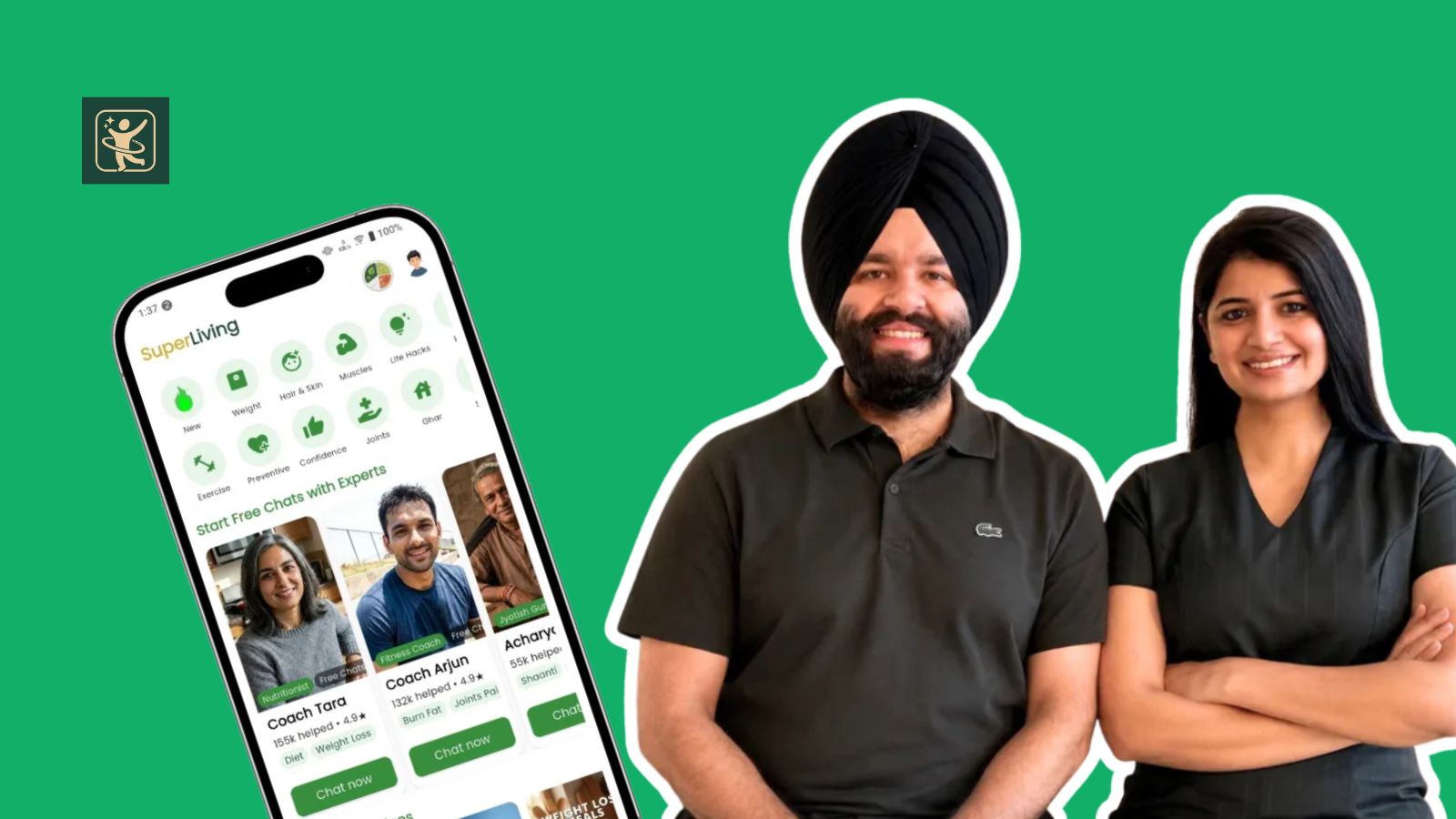
In under a year since launch, Bengaluru-based SuperLiving crossed 1.5 million app installs and surpassed 100,000 paying users — with 73% of those paying customers coming from Tier II and Tier III cities. That kind of traction caught serious attention. On June 25, 2026, the health-tech startup announced a $7 million Series A round — the SuperLiving Lightspeed funding — led by Lightspeed, with participation from returning investors Kae Capital and All-in Capital. This isn’t just another funding headline. It signals a fundamental shift in where India’s preventive healthcare story is actually being written.
What the SuperLiving Lightspeed Funding Actually Covers
The company said it will deploy the fresh capital to strengthen its AI capabilities, expand its vernacular content ecosystem, accelerate product development, and scale user acquisition across Tier-II and Tier-III cities. Each of those four pillars matters in its own right.
Language remains a key barrier in digital health adoption. SuperLiving will invest in expanding its vernacular content ecosystem to reach users who consume health information in their native languages — a strategy that directly targets the massive non-English-speaking population in smaller cities. That’s a surprisingly overlooked lever in the Indian healthtech space. Most apps optimize for the English-speaking urban millennial. SuperLiving is doubling down on everyone else.
The company also plans to broaden its offering beyond wellness content and coaching into adjacent lifestyle and preventive health categories, including diagnostics, health commerce, and other personalized care experiences. That roadmap is ambitious. Done right, it could make SuperLiving a genuine full-stack preventive health layer for everyday Indian life.
Manavdeep Singh Grover SuperLiving: The Founders Behind the Platform
Founded by Manavdeep Singh Grover and Gurjot Kaur — former leaders from Meesho and Pocket FM — the company is building what it describes as an AI-powered platform for wellness and preventive health, combining personalized wellness journeys, educational content, and a 24×7 AI companion designed specifically for Indian users.
That pedigree matters. Both Meesho and Pocket FM cracked the code on scaling consumer products in non-metro India. Grover previously held a leadership role at Meesho, while Kaur comes from Pocket FM — two of India’s most successful consumer platforms. Their combined experience in scaling consumer products in non-metro India makes them well-suited to tackle healthcare access at the grassroots level.
Manavdeep Singh Grover SuperLiving’s thesis is blunt and refreshing. “For decades, personalised wellness has been accessible only to those who could afford experts, coaches and consultants. AI changes that equation completely. What we’ve learned from serving more than 1.5 million users is that the demand for trusted, personalised guidance extends far beyond India’s metros,” said Grover, Co-founder and CEO.
SuperLiving AI Companion App: How the Technology Actually Works
SuperLiving’s technology platform captures and learns from user interactions over time, allowing the system to understand individual goals, challenges, habits, and progress with increasing depth and context. This enables the SuperLiving AI companion to deliver recommendations that evolve alongside each user rather than resetting with every interaction. That’s a meaningful distinction from standard wellness apps that simply push generic content.
The platform collects over 115 lifestyle parameters from user behavior to continually refine personalization, allowing the AI system to understand individual goals, challenges, habits, and progress with more depth and context. Nutrition, movement, sleep, stress, daily habits — the SuperLiving AI companion app touches all of it from a single interface.
SuperLiving has also increased focus on markets beyond metro cities, since these geographies are less likely to have specialist advice available in real life, along with a price-sensitive audience that may not want to splurge on preventive healthcare. The startup is trying to capture the market by providing personalized wellness and nutrition advice in the ₹99–₹250 price range. At those price points, the product becomes genuinely accessible to the populations that need it most.
Results speak louder than features. SuperLiving reported that 82% of its users reported visible change across goals such as fat loss, energy, stamina, skin, and strength. That’s a strong outcome signal for a platform less than a year old.
SuperLiving Series A Update: A Funding Journey That Moved Fast
The SuperLiving Series A update arriving in June 2026 is actually the company’s third institutional raise in rapid succession. The latest investment comes just months after SuperLiving raised $2 million in a round led by Kae Capital, with participation from All In Capital and several angel investors. The startup had also secured ₹2 crore from All In Capital in September 2025 after emerging as a winner at the firm’s “Elevator Pitch” event.
That funding velocity — seed to Series A in under 12 months — reflects genuine early traction rather than hype. Investors don’t write bigger checks that quickly without meaningful data. The funding underscores growing investor confidence in AI-powered healthcare platforms that focus on preventive care, a segment increasingly gaining traction as consumers prioritize long-term health management and personalized wellness solutions.
The SuperLiving Series A update is especially significant given the competitive landscape it navigates. SuperLiving’s direct competitor HealthifyMe also operates a platform that provides an AI-powered nutritionist combined with human coaches to offer real-time health recommendations and customized diet and fitness tracking. The difference is SuperLiving’s explicit bet on Tier II and Tier III India, a market most rivals have historically underserved.
Lightspeed India Healthtech Funding: Why This Deal Makes Strategic Sense
Lightspeed Venture Partners is an American venture capital firm focusing on seed-stage, early-stage, and growth-stage investments in the enterprise, fintech, consumer, and healthcare sectors. As of 2023, it had approximately $35 billion in assets under management. The firm’s India arm has a long history of backing consumer-facing platforms that scale at the grassroots level.
Lightspeed India healthtech funding decisions are backed by a clear thesis. Harsha Kumar, Partner at Lightspeed India, summed it up directly: “Most wellness platforms are built for the top of the pyramid. SuperLiving is building for the rest of India — affordable, vernacular, culturally grounded, and actually sticky. The early traction from Tier-II and Tier-III users tells you everything about where the real demand is.”
That logic aligns with the broader macroeconomic picture. India’s digital health market was estimated at $14.50 billion in 2024 and is projected to reach $106.97 billion by 2033, growing at a CAGR of 25.12%. With numbers like that on the horizon, Lightspeed India healthtech funding plays in the preventive wellness space aren’t just philanthropic — they’re structurally sound bets on where consumer behavior in India is heading.
SuperLiving Preventive Healthcare India: The Market Opportunity
SuperLiving preventive healthcare India isn’t a niche thesis. It’s tapping into a structural gap that decades of metro-centric investment ignored. Affordable plans have resulted in strong adoption in Tier II & III cities, which account for 73% of its paying user base. SuperLiving said it is seeing strongest traction from cities like Meerut, Gangtok, Agra, Nashik, Bhiwadi, Varanasi, Hisar, Jalandhar, Indore, Jaipur, and Visakhapatnam.
Those aren’t cities typically mentioned in a funding press release. They are, however, exactly where India’s next 500 million digital users live. In May 2025, the Ministry of Statistics reported that 97.1% of Indian youth (15–29 years) used mobile phones, 94.3% accessed the internet, and 85.1% sent messages with attachments in the past three months, highlighting strong digital engagement. The infrastructure for a platform like SuperLiving to succeed in these geographies is already in place.
This aligns with the broader trend of health-tech startups attempting to create “super-apps” or integrated ecosystems that offer everything from content to e-commerce and consultation in one place. SuperLiving’s preventive healthcare India play positions it squarely at the center of that wave.
Key Challenges to Watch
The opportunity is real. So are the headwinds.
- The health-tech sector in India faces persistent challenges, including high customer acquisition costs and the struggle to maintain long-term user retention. While AI and personalized content can drive initial interest, turning free users into paying subscribers is a hurdle for many startups in this space.
- Competition is intensifying, with both well-funded health-tech platforms and large consumer conglomerates entering the digital wellness and preventive health space. Navigating the regulatory environment for health data and diagnostics requires significant compliance investment, which can pressure profit margins in the early stages.
- The ability to transition from a content-heavy model to a commerce-led model is a significant shift that requires operational expertise in logistics and supply chain management if they move into physical diagnostics or product sales.
SuperLiving funding news today puts the company at an exciting but pivotal inflection point. The $7 million Series A gives it the runway to address these challenges — but execution will matter far more than capital.
What Comes Next
SuperLiving aims to evolve beyond a wellness platform into a personalized preventive health infrastructure layer for everyday living. That ambition, backed by Lightspeed India’s conviction and the company’s early user data, makes the SuperLiving funding news today one of the more meaningful healthtech stories to emerge from India in 2026.
The intersection of AI, vernacular content, and affordable preventive care is not a crowded space. SuperLiving, with its Series A in the bank and a user base already proven in the cities that matter most, is building something that could define what mainstream preventive healthcare in India actually looks like.
Frequently Asked Questions
What is the SuperLiving Lightspeed funding round about?
SuperLiving raised $7 million in a Series A funding round led by Lightspeed, with participation from existing investors Kae Capital and All-in Capital. The deal was announced on June 25, 2026, and is aimed at expanding the company’s AI-driven preventive healthcare platform across India.
Who are the founders of SuperLiving?
SuperLiving was co-founded in 2025 by Manavdeep Singh Grover and Gurjot Kaur. Grover serves as CEO and previously worked at Meesho, while Kaur comes from Pocket FM. Both are former executives with experience scaling consumer products in non-metro India.
What is the SuperLiving AI companion app?
The SuperLiving AI companion app is a 24×7 AI-powered assistant designed specifically for Indian users. It delivers personalized wellness guidance across nutrition, fitness, sleep, stress, and daily habits by collecting over 115 lifestyle parameters and learning from user behavior over time.
What is the SuperLiving Series A update about in terms of use of funds?
The Series A capital will be used to strengthen AI capabilities, expand the vernacular content ecosystem, accelerate product development, and scale user acquisition across Tier II and Tier III cities. The company also plans to expand into diagnostics, health commerce, and personalized care services.
Why did Lightspeed India invest in SuperLiving?
Lightspeed India’s partner Harsha Kumar explained that most wellness platforms are built for affluent urban consumers, while SuperLiving is building an affordable, vernacular, and culturally grounded platform for the rest of India. The strong traction in Tier II and Tier III cities validated that investment thesis.
How big is India’s digital health market?
India’s digital health market was valued at approximately $14.50 billion in 2024 and is projected to reach $106.97 billion by 2033, growing at a compound annual growth rate of 25.12%. This rapid growth is driven by smartphone penetration, internet access, and increasing consumer interest in preventive care.
Who are SuperLiving’s competitors in India?
One of SuperLiving’s key competitors is HealthifyMe, which also operates an AI-powered nutritionist platform combined with human coaching for real-time health recommendations and diet and fitness tracking. However, SuperLiving differentiates itself through its focus on Tier II and III markets and vernacular content.