

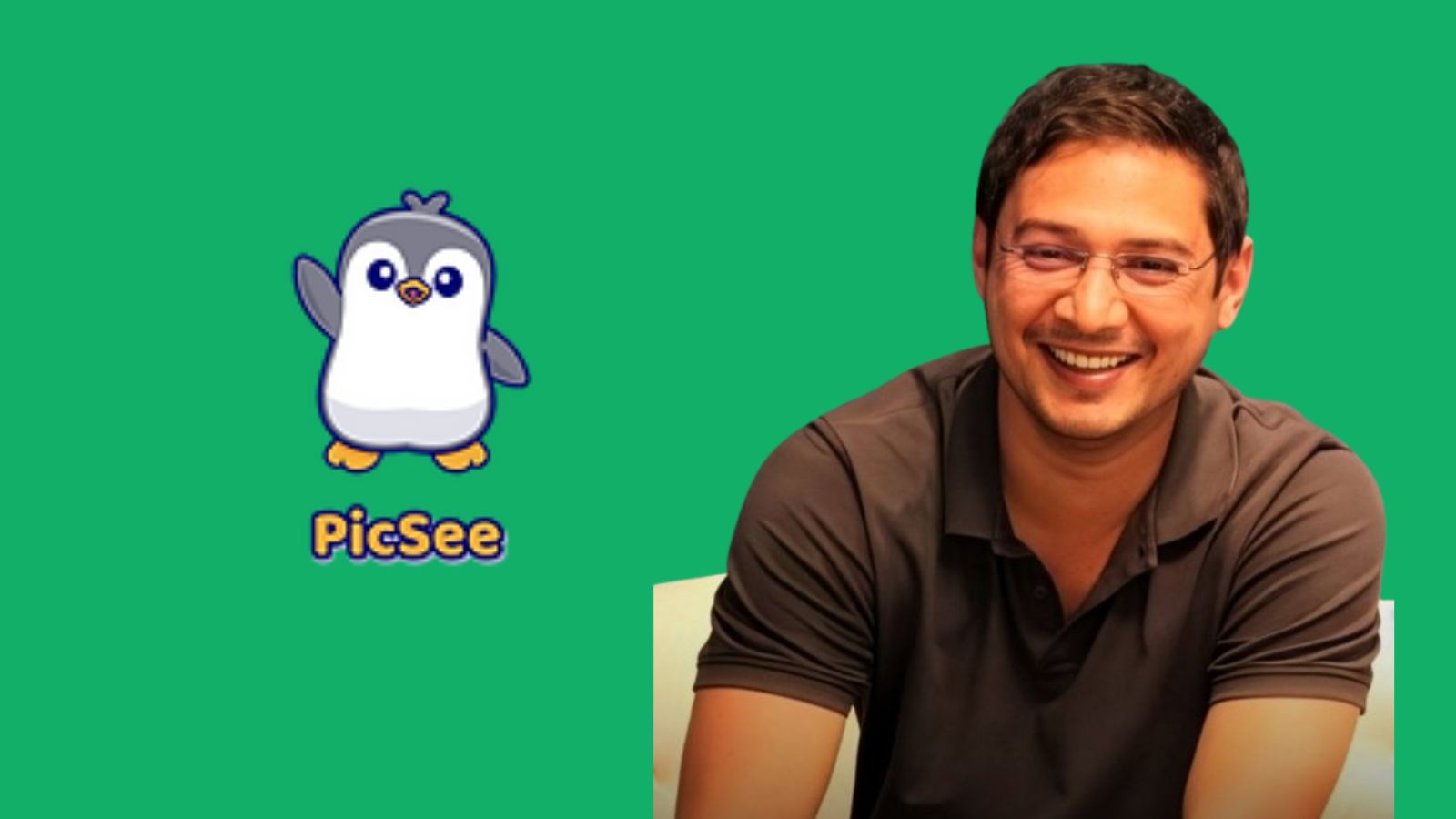
Less than a year after its launch, AI photo-sharing startup PicSee has shut operations after failing to scale, marking the second startup closure for Koo co-founder Mayank Bidawatka. What makes this picsee startup shut down genuinely extraordinary, though, is not the failure itself — it is what came after. Bidawatka plans to return 60–65% of the ₹30–35 crore raised back to investors, including General Catalyst and Blume Ventures, marking a rare exit strategy in the Indian startup ecosystem.
In a landscape where founders typically burn through every last rupee chasing the next pivot, this decision cuts against the grain. Hard.
What Was PicSee? Understanding the AI Photo Sharing App
PicSee was launched in October 2025 by Mayank Bidawatka and former Koo executive Sarthak Gupta under their venture studio Billion Hearts, built to help users find their photos from large image collections using artificial intelligence. The concept was elegant and practical. It used AI photo finder and face recognition technology to help users get photos from their friends’ phones, and claimed a photo barter system under which a user’s friends could get their photos only when they shared photos of the user in their phones.
Think of it this way: you attend a friend’s wedding, dozens of people snap hundreds of photos, and you spend days begging everyone to WhatsApp you the pictures you’re actually in. PicSee was built to eliminate exactly that pain. The startup entered the market with an AI-based solution focused on a common problem faced during events, celebrations, and group gatherings — finding personal photos from large collections. In today’s digital world, people often capture thousands of photos during weddings, trips, conferences, and social events. However, finding specific pictures of individuals from large collections can be time-consuming.
The startup raised $4 million in seed funding from investors including General Catalyst, Blume Ventures, Peak XV Partners’ Surge, Kae Capital, and several angel investors. The backing was serious. The product idea was genuinely useful. So what went wrong?
Why the PicSee Startup Shut Down: The Distribution Wall
Bidawatka said the company did not struggle with user engagement as much as it struggled with scaling the product beyond early adopters. PicSee performed well among existing user groups, but acquiring entire networks of friends proved significantly more difficult than attracting individual users.
Bidawatka put it plainly in a LinkedIn post: “We had the product. We just couldn’t crack the distribution.”
This is a brutal but honest diagnosis. For products like PicSee, which are inherently social, the journey unfolds in three stages: build the product, build distribution, and then monetise it. The team had a clear monetisation roadmap, including a premium subscription with features such as downloading high-resolution photos and automatically curating albums. However, they got stuck on solving the distribution challenge.
While the app saw initial downloads, these figures were heavily impacted by low-quality signups from digital advertising campaigns that failed to convert into active, engaged users. For social applications, the inability to build a network effect — where users naturally invite their peers — often leads to high customer acquisition costs that are difficult to sustain without clear revenue paths.
This is a well-documented trap in consumer social. The cold start problem — how to make your app useful for the very first users before any network exists — is arguably the single biggest challenge for consumer social startups. Fancy design won’t save you if a new user opens the app and finds an empty ghost town. For an ai photo sharing app built on reciprocal friend networks, the cold start was not just a technical problem — it was existential. Every user’s value depended on their entire friend group joining simultaneously.
The Billion Hearts Software Technologies Decision: Returning Capital
The decision to return unused capital reflects a growing emphasis on capital efficiency within India’s startup ecosystem. Instead of extending the company’s runway without a clear path to growth, Billion Hearts Software Technologies chose to return a significant portion of investor funds. Bidawatka said the decision was guided by data rather than emotion, adding that the founders believed it was more responsible to return capital than continue investing in a business without conviction about its next phase of growth.
Following the shutdown, Billion Hearts Software Technologies will return nearly 65% of the about ₹33 Cr raised to investors, including Blume Ventures, General Catalyst, Athera Venture Partners, and a host of angel investors.
Returning capital to investors is relatively uncommon in the startup ecosystem, where founders often continue to pivot or deploy the remaining runway in search of a new growth opportunity. In PicSee’s case, the founders chose to preserve the remaining cash rather than continue spending without a clear direction.
That choice deserves more credit than it typically gets. In most shutdown stories, investors walk away with nothing. Returning capital to investors the way Bidawatka did — proactively, with transparency, before the money fully ran out — signals a maturity that many seasoned founders never demonstrate.
Koo Co-Founder New Startup Journey: From Microblogging to AI Photos
PicSee represented Bidawatka’s third major entrepreneurial effort following The Media Ant, established in 2012, and Goodbox, started in 2015. His most prominent venture, of course, was Koo. Koo was an Indian microblogging and social networking service, owned by Bengaluru-based Bombinate Technologies, co-founded by entrepreneurs Aprameya Radhakrishna and Mayank Bidawatka.)
Koo, the Indian social media website that once claimed to be the second-biggest microblogging platform in the world, boasted a valuation of almost $300 million before ceasing operations after a last-ditch sale attempt fell through. Despite securing over $60 million in funding from prominent investors including Accel and Tiger Global, Koo faced significant challenges in expanding its user base and generating revenue.
The Indian social media platform Koo, which positioned itself as a competitor to Elon Musk’s X, ceased operations after its last-resort acquisition talks with Dailyhunt collapsed. The founders said they were hit by a prolonged funding winter, forcing them to tone down on their growth trajectory. Koo could have become successful internationally if the market was favourable and they had enough funds. “The funding winter got the better of us,” they said.
Bidawatka emerged from that experience and immediately went back to building. That counts for a lot. The koo co founder new startup venture in PicSee was not naive — it was a deliberate, well-funded bet with a lean team and a clear thesis. It just didn’t pan out.
Challenges in Scaling Startups: The Bigger Picture of Indian Startup Funding Winter
The picsee startup shut down is not an isolated story. It lands squarely in the middle of a seismic shift across India’s startup landscape.
Indian startups raised $13 billion in 2025, about 10% lower than the $14.4 billion secured in 2024, with fewer large funding rounds compared to the previous year weighing on overall capital flows. Seed-stage funding experienced a sharp 30% decrease, falling to $1.1 billion in 2025 from $1.5 billion in the previous year. The indian startup funding winter has clearly not fully thawed yet — especially not at the consumer social layer where PicSee was competing.
In total, 28 startups shut operations in 2025, a sharp rise compared to 17 shutdowns in 2024 and 15 in 2023. The challenges in scaling startups are compounding across sectors, but consumer internet remains particularly brutal. Failures are happening earlier in the life cycle, with seven startups folding within a year of inception in 2025, up from just one in 2024. Stress points include high customer acquisition costs, weak product-market fit, funding tightness, and regulatory complexity.
In 2021, investors poured money like there was no tomorrow. Startups assumed growth could be bought via paid users, endless discounting, and celebrity campaigns. But when funding dried up, the same cash-hungry model became a liability.
PicSee avoided that trap. It ran lean, kept conviction high, and when conviction faltered, it stopped. That is not weakness. That is discipline.
What This Means for Founders and Investors
The PicSee story raises a pointed question that the Indian startup ecosystem must sit with: should more founders follow Bidawatka’s lead?
For investors, this shutdown highlights the risks associated with the consumer social media sector in India, where high marketing costs often collide with thin margins and the difficulty of displacing established global platforms. The primary watchpoint for followers of the Indian startup ecosystem will be how such transparent capital return processes influence future trust between early-stage founders and institutional venture capital firms.
The Billion Hearts venture studio model — build, test, return if it doesn’t work — may become a template worth studying. While PicSee has been discontinued, the founders have indicated that Billion Hearts will continue operating as a venture studio, leaving the door open for future AI-focused products and startups.
For investors, Blume Ventures and General Catalyst getting back 65 cents on the dollar is not a celebration — but it is infinitely better than zero. Founder transparency is now one of the top three criteria investors demand, with 59% of angels requiring it before committing capital. Bidawatka’s conduct here may well make his next raise faster than the last one.
Key Lessons from the PicSee Shutdown
Here are the hard truths this story surfaces for every founder wrestling with challenges in scaling startups and navigating an indian startup funding winter:
- Distribution beats product in social apps. While advances in artificial intelligence have lowered the barriers to building sophisticated products, distribution remains one of the hardest problems to solve, particularly for platforms dependent on network effects.
- Know when to stop. Bidawatka noted that the team ultimately lacked the conviction that incremental updates would resolve fundamental growth issues. Identifying that moment early is the real skill.
- Returning capital to investors builds long-term credibility. By choosing this path, PicSee’s founders demonstrated a different approach — protecting investor capital instead of spending money on uncertain experiments. For investors, this decision can represent transparency and responsible financial management.
- The cold start problem is lethal for friend-graph apps. The challenge was acquiring entire friend networks, not individual users. One download is worthless if the user’s friends aren’t there.
- AI can build a great product and still fail. For PicSee, AI enabled automated face recognition and photo discovery, but it could not overcome the challenge of expanding user networks at scale.
Conclusion: A Rare Chapter in Indian Entrepreneurship
The picsee startup shut down is a story that should be read — and re-read — by every founder and investor in India’s ecosystem. Mayank Bidawatka built a genuinely innovative ai photo sharing app, secured top-tier backing from Billion Hearts Software Technologies, and made a hard call based on data. Then, in an act of entrepreneurial integrity that remains genuinely rare, he returned the money.
This is not a failure story. It is a character story. As the indian startup funding winter continues to test which founders are built for longevity, returning capital to investors and walking away with your reputation intact may be the smartest play in the book.
Despite the setback, the entrepreneur indicated that his focus remains on building globally relevant products from India. Watch this space.
Frequently Asked Questions
What was PicSee and why did it shut down?
PicSee was an AI-powered, mutual photo-sharing app launched in October 2025 by Mayank Bidawatka and former Koo executive Sarthak Gupta under the venture studio Billion Hearts. It used facial recognition to help users find and exchange photos from their friends’ devices. It shut down less than a year after launch because the team could not solve the distribution challenge — specifically, acquiring entire friend networks rather than individual users.
How much money is being returned to investors after the PicSee shutdown?
Billion Hearts Software Technologies is returning approximately 60–65% of the roughly ₹33 crore (about $4 million) it raised. Investors receiving their capital back include Blume Ventures, General Catalyst, Athera Venture Partners, and several angel investors.
Who is Mayank Bidawatka?
Mayank Bidawatka is a Bengaluru-based serial entrepreneur best known as the co-founder of Koo, India’s microblogging platform that positioned itself as an alternative to X (formerly Twitter). Before Koo, he co-founded The Media Ant in 2012 and Goodbox in 2015. He is also a co-founder of the Billion Hearts venture studio.
What happened to Koo, Mayank Bidawatka’s previous startup?
Koo shut down in July 2024 after acquisition talks with Dailyhunt fell through. Despite raising over $60 million from investors including Tiger Global and Accel, and once reaching a valuation of nearly $300 million, Koo could not sustain its growth against the funding winter and the difficulty of competing with global social media incumbents.
Is returning capital to investors common in the Indian startup ecosystem?
No, it is quite rare. Most founders continue to pivot or exhaust their remaining runway before shutting down. The decision by the PicSee team to proactively return 65% of raised funds — while cash was still on the balance sheet — stands out as an unusual act of financial transparency and responsibility in the Indian startup space.
What is Billion Hearts Software Technologies?
Billion Hearts Software Technologies is the venture studio co-founded by Mayank Bidawatka and Sarthak Gupta that served as the corporate entity operating PicSee. Despite the PicSee shutdown, the founders have indicated that Billion Hearts will continue to operate as a studio, with a focus on building future AI-driven products.
What does the PicSee shutdown say about the Indian startup funding winter?
It reflects the broader pressure consumer internet startups face in India’s current funding environment. Indian startups raised $13 billion in 2025, down about 10% from 2024, with seed-stage funding falling even more sharply by 30%. The number of startup shutdowns rose to 28 in 2025, up from 17 in 2024. Investors and founders alike are now prioritising capital efficiency and product-market fit over growth-at-all-costs strategies.