
Sniff Dog Walking App Launches in Seattle to Turn Neighborhood Walks Into Real Friendships

Madrona, the first Seattle neighborhood to go live with the platform, already counts about 100 people on the platform, with each neighborhood staying geofenced until it reaches enough engaged sign-ups before Sniff opens it up. That single data point tells you almost everything about why the Sniff dog walking app matters right now. It isn’t just another pet-tech gadget chasing venture dollars. It’s a bet that the humble dog walk, something millions of people already do every single day, can rebuild the kind of neighborhood trust that Americans have been steadily losing.
The new Sniff dog walking app comes from Amish Patel, a Microsoft alum turned serial startup builder, and it launched this week out of his Seattle-based venture studio. Unlike on-demand dog walking marketplaces that pair owners with paid walkers, this app has a different mission entirely: turning the dogs themselves into social connectors for their humans. If that sounds like a strange pitch for a 2026 tech launch, that’s kind of the point.
What Is the New Sniff Dog Walking App?
At its core, the Sniff dog walking app is an iOS social network built around a simple, universal moment. Sniff is an iOS app that turns the everyday moment two dogs greet each other on a walk into a lasting connection between their humans. Instead of swiping through human profiles the way a dating app might work, users browse dog profiles first.
Sniff verifies that users are real people who actually live in the neighborhood they claim, using address and location data, and the app is geofenced so members can only discover dogs nearby. Inside the app, users see only dog profiles and photos, no human names or personal details, until a connection is made. That design choice matters. It flips the usual social app formula, leading with something low-stakes and adorable before asking anyone to reveal their own identity.
Once a match happens, the Sniff app neighborhood social network kicks into gear. Once connected, neighbors can message through the app, arrange meetups, and lean on each other for help, whether that’s dog walking, sitting, or just a hand when something comes up. It’s a lightweight version of the old-fashioned block party, rebuilt for people who barely know their neighbors’ first names.
Interestingly, the technology behind the scenes stays intentionally narrow in scope. Patel said artificial intelligence plays a role only on the trust-and-safety side, confirming identity and location, rather than in matching people up. In an era where nearly every app claims some kind of AI-powered magic, that restraint is almost refreshing.
Meet Amish Patel: The Founder Behind the Sniff App
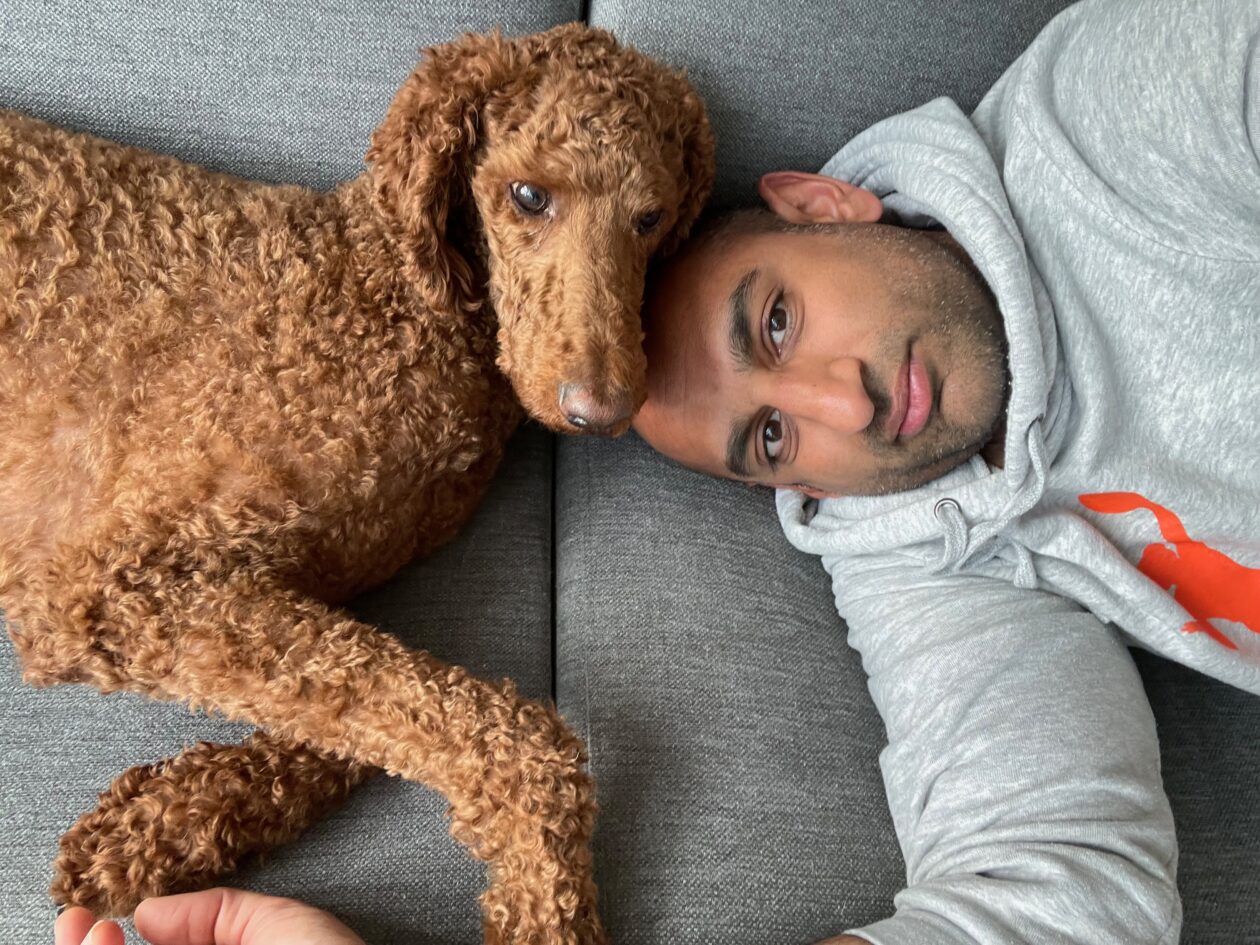
Understanding the Amish Patel Sniff app launch means understanding Patel’s own backstory, because this product is deeply personal. The idea traces back to Patel’s own block in Seattle’s Madrona neighborhood, where he moved with his standard poodle, Chewie, right before the pandemic, and with no kids and limited ways to meet people, the neighborhood park became the default hangout, with a group text thread becoming a real sense of community.
There was just one catch. The five people in Madrona that Patel hangs out with most often, he met through his dog, and most of those contacts were saved under names like “Glory’s mom” or “Louie’s dad”. That quirky detail, so common it barely registers for most dog owners, became the seed for an entire company.
Patel’s résumé reads like a checklist of hardware and product design credentials. Patel is a Microsoft vet who spent eight years on projects including Xbox Kinect and Microsoft Band, before moving into the startup world with stints at fitness wearable maker Katalyst and football helmet manufacturer Vicis. That mix of consumer hardware and wearable tech experience shows up in how methodically Sniff was built, even for something as playful as a dog-walking app.
The Amish Patel dog walking app project also isn’t his first attempt at building something in Seattle’s startup scene. He landed an entrepreneur-in-residence role at Seattle startup studio Pioneer Square Labs in 2020, and two years later co-founded Conduit Venture Labs with Susan Paley, the former first CEO of Beats by Dre. Patel is also listed as Founder and Managing Director of Conduit Venture Labs, a venture studio built around the intersection of physical and digital technology.
Conduit Venture Labs Sniff Launch: Inside Seattle’s Hard-Tech Startup Studio
The Conduit Venture Labs Sniff launch didn’t happen in isolation. It’s the latest product from a studio with a very specific identity. Conduit focuses on hard-tech ventures that blend hardware and software, which makes a social app like Sniff a bit of an outlier compared to the studio’s usual output.
According to Conduit’s own team page, the studio operates with a lean bench of specialists spanning hardware execution, venture building, and deep-tech leadership, reflecting the kind of build-fast, ship-often culture typical of modern startup studios. That structure explains how Sniff came together so quickly. The Sniff app itself was built lean, a couple of developers, a product lead, and Patel splitting his time across the studio’s other projects.
Sniff isn’t Conduit’s first swing, either. Sniff is Conduit’s fourth in-house startup, following Fluffy, a computer vision platform for doggy daycares, and an audiobook AI venture in the loneliness space that Patel said is preparing for a public seed round this fall, with a fourth project in health tech remaining under wraps for now. That pattern, several pet- and connection-focused products coming out of the same studio, suggests Patel has found a thematic niche and is mining it methodically.
How the Seattle Dog Social App Sniff Actually Works
Rolling out a new social platform citywide all at once is risky, so the Seattle dog social app Sniff launch is taking a deliberately staged approach. The pilot is open in Madrona, Leschi, Madison Park, the Central District and Capitol Hill, but pet parents anywhere in Seattle can sign up today. Each neighborhood essentially has to earn its own unlock.
Sniff App Neighborhood Social Network Features
The Sniff app neighborhood social network relies heavily on local ambassadors to seed early momentum rather than paid advertising alone. To help build momentum in each neighborhood, Sniff is partnering with the Seattle Chamber of Connection, where Patel sits on the board, to recruit “Pack Leaders,” local dog owners who help organize meetups and informal introductions as their neighborhood’s user base grows. It’s a grassroots growth strategy that mirrors how early-stage community apps like Nextdoor once built neighborhood-by-neighborhood trust.
Patel is candid about what the app is really trying to solve, and it isn’t just canine companionship. Sniff has a greater societal objective, taking on loneliness and isolation, an epidemic cited in the U.S. That framing lines up with real public health data. The U.S. Surgeon General’s Advisory on the Healing Effects of Social Connection and Community, published by HHS, sounded the alarm on this exact issue back in 2023, and the numbers haven’t improved much since.
Why America Needs a Dog Walking Social App Right Now
It’s worth pausing on just how disconnected American neighborhoods have become, because it puts the Sniff dog walking app in proper context. A recent Pew Research survey found that about a quarter of U.S. adults, 26%, say they know all or most of their neighbors, while another 62% know only some of them, and 12% don’t know any of them at all. That’s a startling baseline for a country built on the idea of tight-knit communities.
Trust levels aren’t much rosier either. The same Pew analysis found that 44% of adults say they trust all or most of the people in their neighborhood, another 46% trust some of the people in their neighborhood, while 9% trust none. Meanwhile, dogs remain a fixture of American households at a scale that makes a pet-first social strategy plausible. Industry data shows 95 million U.S. households own a pet, according to APPA’s most recent State of the Industry Report, with dogs continuing to lead as the nation’s most popular companion animal.
Patel connects those dots directly. As he put it in comments to GeekWire, “Younger people are having kids less, getting more isolated … we’re sitting on our phones, even though we’re all next to each other. One out of four people don’t know their neighbors or talk to their neighbors,” he said. The bet behind Sniff is that a dog on a leash lowers the social barrier that keeps so many adults from ever starting that conversation in the first place.
Sniff Joins a Wave of Latest Seattle Tech Startup Launches
Sniff arrives amid a broader pattern of activity coming out of the region’s startup ecosystem. Seattle has long produced pet-tech companies chasing the same underlying insight that dog owners want more convenience and more connection. Earlier ventures like SniffSpot, a marketplace for renting private yards for dog play, and on-demand walking apps like Wag! tackled adjacent problems, functional access to space and paid walking help, rather than the social layer Sniff is now targeting.
That said, among the latest Seattle tech startup launches, Sniff stands out for explicitly avoiding a transactional model. It isn’t selling walks, sitting services, or subscriptions upfront. It’s selling introductions, with monetization presumably to follow once the community layer proves sticky. That’s a classic startup studio playbook, build the engagement first, figure out revenue once retention is proven.
It also reflects something Conduit has said publicly about the region’s tech identity. In discussions about the Pacific Northwest’s innovation legacy, Conduit’s team has referenced the area’s history as the “Silicon Forest”, a nod to Seattle and Portland’s long-running strength in hardware and physical-product innovation, something the studio explicitly wants to keep alive through ventures like Sniff.
What’s Next for Sniff and Conduit Venture Labs
For now, the roadmap looks incremental rather than explosive. Each new neighborhood needs its own base of engaged sign-ups before Sniff unlocks full functionality there, meaning growth will likely spread block by block rather than through a single citywide blitz. That mirrors how Patel describes the original spark for the idea: a handful of neighbors, a group text, and a very good poodle named Chewie.
Beyond geographic expansion, Patel has hinted at future hardware integrations down the line, consistent with Conduit’s broader hard-tech identity, even though the current version of Sniff is a lean, software-only iOS release. Whether that means smart collars, location tags, or something else entirely remains unconfirmed. What’s clear is that the studio isn’t treating Sniff as a side project. It’s the fourth product in an increasingly focused portfolio built around combating isolation, following Fluffy and the studio’s AI audiobook venture in the same thematic lane.
The Bottom Line on the Sniff Dog Walking App
Whether Sniff becomes the next great neighborhood app or a charming niche product will depend entirely on execution, retention, and whether Pack Leaders can actually convert curious dog owners into repeat users. But the underlying premise, using dogs to fix a very human loneliness problem, is grounded in real data about disconnected neighbors and a documented public health crisis. If you’re a Seattle dog owner curious whether your block has already gone live, checking sign-up availability costs nothing but a few minutes on your phone. For everyone else watching from outside Seattle, this launch is worth tracking as an early test case for whether pet-first social networking can scale into something bigger than a hyperlocal pilot.
Frequently Asked Questions
What is the Sniff dog walking app?
Sniff is a new iOS social app built by Seattle startup studio Conduit Venture Labs. It connects neighbors through their dogs, letting users browse nearby dog profiles first before revealing human identities, with the goal of turning casual sidewalk greetings into lasting friendships.
Who created the Sniff app?
The app was created by Amish Patel, founder and managing director of Conduit Venture Labs, alongside a small internal team of developers and a product lead. Patel previously worked at Microsoft on hardware projects before moving into the startup world.
Which Seattle neighborhoods can use Sniff right now?
The pilot is currently live in Madrona, Leschi, Madison Park, the Central District, and Capitol Hill. Pet parents anywhere in Seattle can sign up, but each neighborhood stays locked until enough local users register.
How does Sniff protect user privacy?
Sniff verifies real identities and locations using address and location data, but inside the app, users only see dog profiles and photos. Human names and personal details stay hidden until a match or connection is made.
Does Sniff use artificial intelligence to match users?
No. According to the founder, AI is used only for trust and safety purposes, such as confirming identity and location, not for matching people or dogs with one another.
Is Sniff part of a larger company or venture studio?
Yes. Sniff is the fourth in-house startup from Conduit Venture Labs, a Seattle-based studio focused on hard-tech ventures. Previous projects include Fluffy, a computer vision platform for doggy daycares, and an AI audiobook venture focused on loneliness.
What problem is Sniff trying to solve beyond dog walking?
The founder describes loneliness and social isolation as the app’s larger target, citing how few Americans today know or trust their neighbors. Sniff uses dogs as a low-pressure way to help neighbors form real connections and support networks.