
“Build Something”: Aman Gupta’s Unfiltered Fireside Chat with 650+ Students at Marwadi University

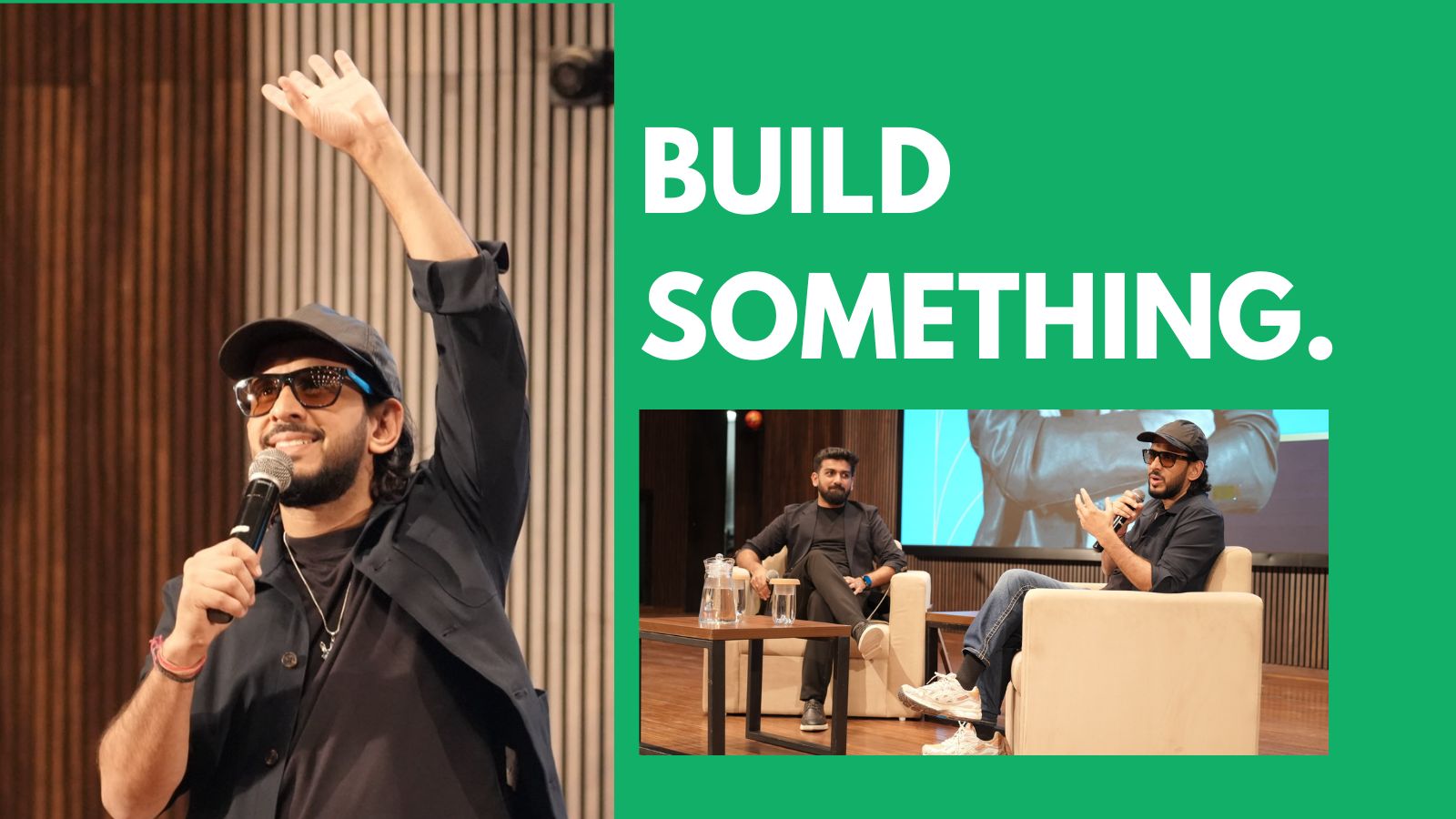
India: Marwadi University recently hosted Aman Gupta — renowned entrepreneur, investor, co-founder of boAt, and Founder & CEO of OFF/BEAT — for a bold, high-energy fireside chat as part of the Orientation Programme for its incoming batch of first-year students, drawing enthusiastic participation from over 650 students eager for firsthand insights. The message from the man himself was deceptively simple: build something. Not tomorrow. Not after you graduate. Now.
India has firmly established itself as the third-largest startup ecosystem in the world, with over 1.57 lakh DPIIT-recognised startups as of December 2024. Against that backdrop, this fireside chat wasn’t just an orientation event. It was a direct challenge to a new generation of founders who are standing exactly where Aman Gupta once stood — at the very beginning.
Why “Build Something” Is the Most Powerful Entrepreneurship Tip for Students
Let’s be clear. The phrase “build something” sounds basic. But coming from the boat founder Aman Gupta — a man who failed five times before hitting gold — it carries enormous weight.
Gupta disclosed that he had started and shut down five companies before working on boAt, and that as a young man, he was always excited about the journey and new adventures, without worrying much about the other aspects of running a business. That’s the kind of candid admission that no LinkedIn post captures. And it’s exactly what 650 students in a hall at Marwadi University got — raw, unscripted truth.
The conversation was candid, real, and tailored to resonate with today’s students, speaking about real-world dynamics of entrepreneurship, innovation, and leadership from the outset of their academic journey, and offering practical insights into building and scaling businesses in today’s fast-evolving economy, drawing from lived experience.
Before the success of boAt, he faced setbacks with five other startups that failed to take off. Reflecting on these failures, Aman emphasised the importance of not letting overconfidence overshadow the need for a solid product and efficient management. His advice to aspiring entrepreneurs is clear: perseverance is key, and dreams should never be given up.
The lessons from failed startups — Gupta’s own included — are not cautionary tales. They are tuition fees paid in real life. And that lesson, delivered to first-year students on day one of their university journey, may well be the most valuable entrepreneurship tip for students they ever receive.
From a CA to a Shark: The Making of the boAt Founder Aman Gupta
Aman Gupta, born 4 March 1982, is an Indian entrepreneur and angel investor. He is the co-founder and was the Chief Marketing Officer (CMO) of Indian electronics brand boAt Lifestyle. That bio reads cleanly now. But the road there was anything but.
He graduated from Shaheed Bhagat Singh College under Delhi University with a BCom (Hons). He is a qualified CA and later joined ICAI. He holds an MBA in Finance and Strategy from the Indian School of Business. A chartered accountant who pivoted to consumer electronics. Few saw it coming.
He started his career as an Assistant Manager at Citibank, where he honed his financial analysis and investment skills — experience that gave him deep insights into managing business finances, a crucial skill for any entrepreneur. From there, he moved to KPMG as a senior management consultant, then to Harman International as Director of Sales — where he saw, up close, just how badly the Indian audio market needed a homegrown champion.
While working at Harman International, Aman Gupta noticed a big gap in India’s audio accessories market. Most high-quality headphones and earphones were imported and expensive, making them unaffordable for many Indian consumers. The cheaper local options, on the other hand, lacked durability and good sound quality. This insight led him to start boAt in 2016, with the goal of providing affordable, stylish, and high-quality audio products specially designed for Indian users.
That insight — recognizing a real consumer problem and choosing to solve it — is the cornerstone of how to build a startup the right way.
How to Build a Startup: Lessons from boAt’s Zero-to-Billion Journey
The co-founders pumped in ₹15 lakh each and set sail their bootstrapped journey by selling mobile cables and chargers. In the first year, the company weathered the storm to post sales of ₹31 crore and a tidy profit of ₹1.67 crore. No venture capital. No fancy office. Just two founders, a clear customer insight, and a stubborn refusal to quit.
Building a brand in India the boAt way meant doing three things simultaneously: keeping prices accessible, making products genuinely aspirational, and building a community of loyal users — or “boAtheads,” as the brand calls them. boAt Lifestyle placed India on the global map by becoming the 5th largest wearable brand based on shipments as per IDC’s Worldwide Quarterly Wearable Device Tracker for Q3 2020, while also solidifying its position in the Indian market by capturing one-third market share.
In under a decade, Imagine Marketing Ltd. — boAt’s parent — grew revenue more than fivefold from ₹600 crore in FY2020 to ₹3,098 crore in FY2025, representing a compound annual growth rate of approximately 38%. That is the definition of building a brand in India at scale.
Here are the core principles from Gupta’s journey that every aspiring founder should internalize:
- Solve a real problem. The Indian audio market had a genuine gap between expensive imports and low-quality local products. boAt filled it.
- Know your customer. Gupta’s background in consumer electronics gave him a direct line into what Indian buyers actually wanted: durable, stylish, affordable gear.
- Bootstrap first. Starting with just ₹30 lakhs in combined capital forced financial discipline from day one.
- Fail forward. Five failed startups before boAt weren’t wasted years — they were the curriculum that no MBA could replicate.
- Brand obsessively. boAt didn’t just sell earphones; it sold a lifestyle. That distinction is everything when building a brand in India’s crowded consumer market.
Marwadi University: Where the Next Indian Founders Are Being Shaped
The Centre for Innovation, Incubation & Research (MUIIR) was established in 2017 at Marwadi University with a clear vision of reinventing a conducive ecosystem for next-generation entrepreneurs through research, innovation, training, mentorship, and startup support. Rather than being just an academic lab, MUIIR acts as a student startup incubator, where ideas are nurtured, refined, and transformed into real-world solutions.
With Marwadi University’s Centre for Innovation, Incubation & Research, every student startup idea is funded INR 2.5 lakhs by the University, encouraging students to grow, build, and innovate. That is not a token gesture — that is a university making a real bet on its students’ ideas before the outside world does.
Dhruv Marwadi, Trustee of Marwadi University, who hosted the fireside chat, said: “We believe that education extends beyond textbooks and classrooms. The best thing about an interdisciplinary university is that there is a student of engineering, nursing, management, computer application, law. If this founding team is formed, they can do wonders.”
That vision — cross-disciplinary founding teams under one roof — mirrors exactly how successful startups are built in the real world. No great company was ever built by one person from one discipline. With more than 14,000 postgraduate and PhD students passing through every year, Marwadi University has published the highest number of research papers and become one of the top 10 universities in Gujarat.
The Shark Tank India Judge Who Actually Gets Students
Aman Gupta is a judge and investor in the business reality show Shark Tank India, and recently ventured into new-age business with OffBeat Studios, which secured ₹100 crore in seed funding. As a shark tank India judge, Gupta has done something rare on national television — he made entrepreneurship feel accessible to ordinary Indians.
He appeared in five seasons of Shark Tank India and has investments in more than 100 companies and startups. But what sets Gupta apart from most investors is his willingness to talk about what went wrong before things went right. The lessons from failed startups in his own portfolio are just as important to him as his wins.
Giving a broad and very bold range of candid advice, Aman Gupta reflected on the students’ curiosity and ambition, while offering practical insights on scaling a global Indian consumer brand. That is the real gift of sessions like the Marwadi University fireside chat — students don’t get a TED Talk-polished version of success. They get the unedited director’s cut.
In FY23, startups contributed about USD 140 billion to India’s economy, which is projected to reach USD 1 trillion by 2030, having contributed 10 to 15 percent to India’s GDP growth from FY16 to FY23. The stakes for getting the next generation of Indian founders right could not be higher.
Build Something: The Call to Action India’s Students Need
India’s startup story is being written right now — and the authors are sitting in university orientation halls. India’s startup ecosystem is now the world’s 3rd largest, with over 1.57 lakh DPIIT-recognised startups as of December 2024, up from just 502 in 2016. That trajectory is extraordinary. But sustaining it requires a constant pipeline of first-time founders willing to take the leap.
Gupta’s career has been a mix of corporate training, startup failures, strong marketing abilities, and a thorough grasp of India’s young consumers. That combination — corporate discipline plus entrepreneurial hunger — is something students at institutions like Marwadi University are uniquely positioned to develop.
Aman Gupta’s persevering mentality and lessons learned from mistakes have helped him carve a position in the industry. That is not luck. That is a system. And the system starts the moment a student decides to build something — anything — rather than wait for the perfect idea or the perfect moment.
The boAt founder Aman Gupta didn’t wait. He started at 23 with his father, failed five times, came back at 36 with boAt, and turned a ₹30 lakh bet into a brand that made India proud on the global stage. Gupta represented India at the Indo-French CEO Forum with Prime Minister Modi, highlighting India’s rise as the world’s third-largest startup ecosystem.
The only question now is: which Marwadi University student will be the next to build something extraordinary?
Conclusion
The fireside chat at Marwadi University wasn’t just an inspiring afternoon. It was a masterclass in entrepreneurship tips for students, delivered by someone who has lived every chapter of that story — the failures, the grit, the breakthroughs, and the global recognition. Aman Gupta’s message — build something — is neither complicated nor optional. It is the single most important action that India’s next generation of entrepreneurs can take.
If you are a student reading this, the instructions are clear. Stop waiting. Start building.
Frequently Asked Questions
What was the theme of Aman Gupta’s fireside chat at Marwadi University?
The central theme was “Build Something” — a direct call to action for first-year students to start thinking and acting like entrepreneurs from day one of their academic journey. The session covered entrepreneurship, brand building, startup failures, and leadership in a candid, unscripted format.
Who is Aman Gupta and why is he significant for Indian students?
Aman Gupta is the co-founder and former CMO of boAt Lifestyle, one of India’s most successful consumer electronics brands. He is also a judge on Shark Tank India across five seasons and has investments in more than 100 companies. His journey from Chartered Accountant to billion-dollar brand builder makes him a highly relatable role model for Indian students.
How many students attended Aman Gupta’s session at Marwadi University?
Over 650 students attended the fireside chat, which was held as part of Marwadi University’s Orientation Programme for its incoming batch of first-year students.
What is Marwadi University’s MUIIR centre and how does it support student startups?
MUIIR stands for Marwadi University Centre for Innovation, Incubation & Research. Established in 2017, it supports student entrepreneurs through mentorship, funding, prototyping facilities, and patent filing assistance. Notably, every student startup idea is funded INR 2.5 lakhs by the University to encourage real-world innovation.
How many companies did Aman Gupta fail with before boAt?
Aman Gupta started and shut down five companies before co-founding boAt in 2016. He has spoken openly about these failures, emphasising that what he learned on the job could not be taught in any business school. He has described boAt as the culmination of over a decade of entrepreneurial experimentation.
What are the key entrepreneurship tips for students from Aman Gupta’s journey?
The most important lessons from Gupta’s story include: solving a real consumer problem rather than chasing trends, bootstrapping before seeking investment, treating failures as a learning curriculum, obsessing over branding and community, and understanding your specific market — in boAt’s case, India’s price-sensitive but aspiration-driven youth.