

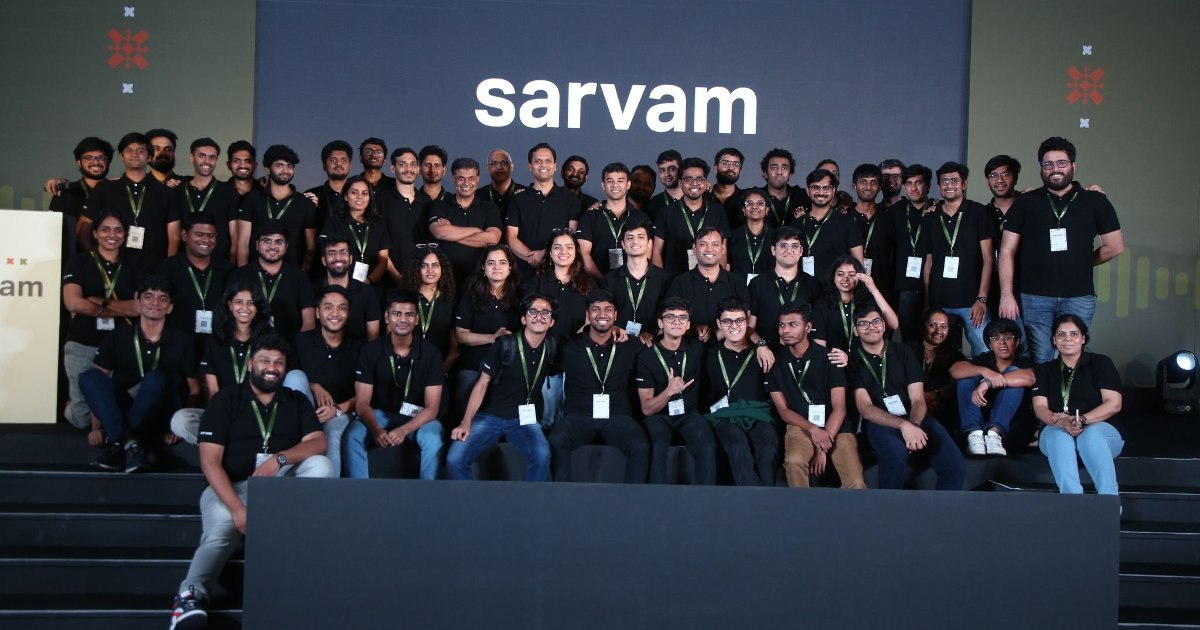
The Indian government plans to showcase Sarvam AI, a homegrown artificial intelligence platform, at the India AI Impact Summit 2026 scheduled for February 19-20 in New Delhi. This move signals the country’s ambition to compete with global tech giants while demonstrating its growing capabilities in artificial intelligence innovation. The decision comes as India positions itself as a hub for AI innovation India, attracting attention from major technology leaders worldwide.
Why the Government Chose Sarvam AI for Global Stage
Indian officials selected this Indian AI startup because it represents a breakthrough in language processing technology. Unlike Western AI models that primarily focus on English, Sarvam AI specializes in understanding and generating content across multiple Indian languages. This capability addresses a critical gap in the AI market, where over 1.4 billion people speak languages that mainstream AI tools struggle to comprehend effectively.
The Sarvam AI platform demonstration will highlight features that outperform several international competitors in specific use cases. According to recent performance benchmarks, the platform achieves superior accuracy rates when processing Hindi, Tamil, Telugu, and Bengali content. These results matter tremendously. They prove that locally developed solutions can match or exceed the capabilities of foreign technology in culturally specific contexts.
Sarvam AI at India AI Impact Summit: What to Expect
The global AI conference 2026 will bring together technology leaders including Jensen Huang from Nvidia, Sundar Pichai from Google, and Sam Altman from OpenAI. Against this backdrop of international expertise, the Sarvam AI government presentation aims to showcase India’s technological sovereignty. Organizers have allocated prime speaking slots and demonstration areas for the platform, ensuring maximum visibility among over 10,000 expected attendees.
Visitors will experience live demonstrations showing how Sarvam AI processes natural language queries in regional languages. The system translates complex technical documentation, generates culturally appropriate content, and understands context-specific nuances that global platforms often miss. These demonstrations will emphasize practical applications rather than theoretical capabilities, addressing real-world problems faced by Indian businesses and government agencies.
Furthermore, the government showcases Sarvam AI as part of a broader strategy to reduce dependence on foreign AI infrastructure. This approach aligns with the India AI Mission 2.0, which allocates substantial funding for indigenous AI development. By highlighting homegrown solutions at such a prominent event, officials hope to attract investment and partnerships that will accelerate the platform’s growth.
The Technology Behind This Homegrown AI Tool India Summit Showcase
Sarvam AI employs advanced neural networks trained on diverse Indian language datasets. The development team spent years collecting and curating training data that reflects the linguistic diversity of the subcontinent. This foundation enables the system to understand idioms, colloquialisms, and regional variations that standard translation tools frequently misinterpret.
Key Technical Features Include:
- Multilingual Processing: Handles 10+ Indian languages simultaneously without requiring language-specific models
- Cultural Context Awareness: Understands festivals, traditions, and social norms embedded in language use
- Low-Resource Optimization: Runs efficiently on standard hardware, making it accessible to smaller organizations
- API Integration: Connects seamlessly with existing enterprise systems and government databases
- Privacy-First Architecture: Processes data locally, addressing concerns about information sovereignty
The platform’s architecture differs fundamentally from mainstream AI systems. While companies like OpenAI and Google train massive models on predominantly English content, Sarvam AI’s developers prioritized depth over breadth. They focused resources on achieving exceptional performance within specific linguistic boundaries rather than attempting to cover every possible use case globally.
India’s AI Tool Global Stage Moment and Strategic Implications
This showcase represents more than technical achievement. It signals India’s intention to shape AI policy India and establish standards that reflect the needs of developing nations. Many countries in the Global South face similar challenges with AI tools that don’t adequately serve their linguistic and cultural contexts. By demonstrating a viable alternative, India positions itself as a leader for these nations.
The impact of Sarvam AI on Indian AI landscape extends beyond the platform itself. Success stories from this Indian AI startup inspire other developers and entrepreneurs. They prove that innovation doesn’t require Silicon Valley resources or Western market access. Local talent, understanding of regional needs, and government support can create competitive solutions.
Additionally, the Sarvam AI government support demonstrates a clear policy direction. Officials recognize that AI sovereignty requires more than purchasing foreign technology. Countries need indigenous capabilities to maintain control over critical infrastructure and protect citizen data. This philosophy influences procurement decisions across government departments, creating substantial market opportunities for local developers.
Sarvam AI Tool Capabilities India Summit Demonstrations Will Reveal
The technical demonstrations planned for the India AI Summit will showcase specific use cases that resonate with government priorities. These aren’t generic examples but targeted applications addressing pressing challenges in governance, healthcare, education, and commerce.
Government Services Enhancement: Officials will demonstrate how Sarvam AI powers multilingual chatbots that handle citizen inquiries. These systems reduce response times from days to minutes. They process requests in the language most comfortable for users, eliminating barriers that prevent many Indians from accessing government services effectively.
Healthcare Applications: Medical professionals will show how the platform translates complex health information into regional languages. Patients in rural areas can understand diagnoses, treatment plans, and medication instructions without requiring English literacy. This capability directly addresses healthcare accessibility challenges affecting millions.
Educational Tools: Educators will present AI-powered tutoring systems that adapt to students’ native languages. These tools provide personalized learning experiences that were previously available only to English-speaking students. The technology democratizes access to quality education regardless of linguistic background.
Business Solutions: Companies will demonstrate how Sarvam AI helps businesses expand into tier-2 and tier-3 cities. The platform enables marketing campaigns, customer support, and e-commerce interfaces in local languages. This functionality unlocks markets that multinational corporations often overlook.
The Competitive Landscape: How Indian AI Tools Stack Up
International observers are watching closely because the Sarvam AI platform demonstration challenges assumptions about AI development. Many assumed that only well-funded Western companies could produce cutting-edge AI systems. However, performance data suggests otherwise when evaluating language-specific tasks.
Benchmark comparisons show Sarvam AI outperforming GPT-4 and Google’s Gemini in Hindi language comprehension tests. The margins aren’t trivial—we’re talking about 15-20% improvements in accuracy for complex linguistic tasks. These results matter enormously for applications where precision is critical, such as legal document analysis or medical translation.
The platform also demonstrates superior performance in understanding context-dependent meanings. Indian languages rely heavily on context clues that English-trained models struggle to interpret correctly. Sarvam AI’s specialized training enables it to navigate these subtleties effectively.
Cost efficiency represents another competitive advantage. Running Sarvam AI requires significantly less computational power than comparable international systems. Organizations can deploy the technology without massive cloud infrastructure investments. This accessibility removes barriers that prevent smaller companies and government agencies from adopting AI solutions.
Investment and Growth Trajectory for This Indian AI Startup
The showcase at the homegrown AI tool India summit comes at a pivotal moment for Sarvam AI’s growth. The company recently closed a funding round attracting investment from prominent venture capital firms, valuing the startup at several hundred million dollars. This capital enables expansion of training data, infrastructure improvements, and team growth.
However, the India AI Impact Summit offers something more valuable than money—validation. When government officials showcase technology at a major international event, they signal confidence that attracts additional partners and customers. The exposure will likely accelerate enterprise adoption and generate partnership opportunities with multinational corporations seeking to improve their Indian market presence.
Growth Indicators to Watch:
- Government Contracts: Multiple ministries are evaluating Sarvam AI for deployment across citizen services
- Enterprise Adoption: Several Fortune 500 companies are piloting the platform for their Indian operations
- Developer Ecosystem: Growing community of third-party developers building applications on the platform
- Academic Partnerships: Collaborations with IITs and research institutions to advance the underlying technology
- International Interest: Inquiries from other developing nations seeking similar solutions for their languages
The company’s trajectory illustrates broader trends in AI innovation. Specialized, focused solutions often outperform generalist platforms in specific domains. This principle creates opportunities for developers who deeply understand particular markets or use cases.
Policy Framework Supporting AI Innovation India
The government’s decision to feature Sarvam AI reflects emerging AI policy India frameworks designed to nurture domestic capabilities. Recent initiatives provide funding, infrastructure access, and regulatory support for Indian AI startups. These policies aim to create an ecosystem where homegrown innovation can flourish without overwhelming competition from well-funded international giants.
The India AI Mission allocates billions of rupees for AI development, focusing on applications that address Indian challenges. This funding supports research institutions, provides computing resources, and helps startups scale their operations. It represents a comprehensive approach to building technological capabilities rather than merely purchasing foreign solutions.
Procurement policies increasingly favor Indian AI tools when they meet performance requirements. Government departments must justify purchases of foreign technology if comparable domestic alternatives exist. This preference creates guaranteed market demand that helps startups achieve sustainability while they develop additional capabilities.
Regulatory frameworks balance innovation encouragement with safety concerns. Officials recognize that overly restrictive rules would handicap development, while insufficient oversight could enable harmful applications. The current approach emphasizes transparency, accountability, and ethical AI development without imposing burdensome compliance requirements on early-stage companies.
Challenges and Opportunities Ahead
Despite the enthusiasm surrounding the Sarvam AI government presentation, significant challenges remain. Scaling from demonstration to nationwide deployment requires infrastructure, training, and support systems that take years to develop. The platform must prove itself in high-stakes production environments where failures carry real consequences for users.
Competition from international giants won’t disappear. Companies like Google and Microsoft are investing heavily in Indian language capabilities for their own platforms. They possess resources that dwarf those available to any startup. Sarvam AI must maintain its technological edge while these competitors close the gap.
Data privacy concerns require careful navigation. As the platform processes more sensitive information, it becomes a target for security threats. Building robust protections while maintaining performance represents a constant engineering challenge. Government clients especially demand stringent security standards that increase development complexity.
Nevertheless, opportunities outweigh obstacles. The addressable market for multilingual AI in India alone exceeds hundreds of millions of potential users. Beyond India, similar needs exist across Asia, Africa, and Latin America. Sarvam AI could become a template for AI development in emerging markets worldwide.
The platform’s success could catalyze broader changes in how the technology industry approaches non-English markets. For too long, companies treated localization as an afterthought—translating English interfaces rather than building for linguistic diversity from the ground up. Sarvam AI demonstrates an alternative approach that may influence how future AI systems are designed.
What This Means for India’s Technology Future
The showcase of Sarvam AI at India AI Impact Summit symbolizes a maturation of India’s technology sector. The country has moved beyond providing services for foreign companies to developing innovative products that compete globally. This transition creates new opportunities for talent, investment, and economic growth.
Young engineers and entrepreneurs see that building world-class technology in India is possible. They don’t need to relocate to Silicon Valley or depend on foreign platforms to make an impact. This mindset shift encourages more talented individuals to focus on solving local problems rather than exclusively pursuing opportunities abroad.
The event also strengthens India’s position in global technology governance discussions. When countries develop their own AI capabilities, they gain credibility in debates about standards, safety, and ethics. India can advocate more effectively for policies that reflect diverse perspectives rather than accepting frameworks designed primarily for Western contexts.
Looking forward, success at this global AI conference 2026 could accelerate government commitments to indigenous technology development. Positive reception might justify expanded funding for similar initiatives across other technology domains. The ripple effects could shape India’s innovation ecosystem for decades.
Preparing for the Demonstration: Behind the Scenes
Months of preparation preceded the decision to showcase Sarvam AI at such a prominent venue. The team conducted extensive testing to ensure demonstrations would perform flawlessly under pressure. They developed use cases that clearly communicate the platform’s value proposition to diverse audiences including technical experts, government officials, and business leaders.
Creating compelling demonstrations requires more than technical excellence. The team designed narratives that illustrate how the technology solves real problems. They recruited users who can share authentic stories about how Sarvam AI improved their work or accessed services previously unavailable in their language.
Infrastructure preparation involved setting up reliable connectivity, backup systems, and troubleshooting protocols. Live demonstrations at major conferences carry risks—technical glitches can undermine months of work. The team developed contingency plans for various failure scenarios to ensure smooth presentations regardless of unexpected challenges.
Coordination with government officials required navigating complex bureaucratic processes. Securing prime demonstration slots, coordinating with security teams, and aligning messaging with official policy positions demanded patience and diplomatic skill. These behind-the-scenes efforts often determine whether technology showcases achieve their strategic objectives.
The Road Ahead for Sarvam AI and Indian AI Innovation
The India AI Summit represents a milestone rather than a destination. Regardless of how well the demonstrations are received, Sarvam AI faces years of hard work to fulfill its potential. The platform must evolve continuously as user needs change and competitors introduce new capabilities. Maintaining technological leadership requires sustained investment in research and development.
Expanding beyond language processing into other AI domains offers growth opportunities. The team’s expertise in handling linguistic complexity could apply to speech recognition, computer vision with cultural context, or multimodal systems that integrate various AI capabilities. These extensions would strengthen the platform’s value proposition and create additional revenue streams.
International expansion presents both opportunities and challenges. Many countries face similar issues with AI tools that inadequately serve their populations. Sarvam AI could adapt its approach to other languages and markets. However, each new market requires substantial investment in data collection, localization, and relationship building.
The broader impact on AI innovation India depends partly on whether other startups can replicate Sarvam AI’s success. If this becomes a template that multiple companies follow, the cumulative effect could establish India as a leader in specialized AI development. Government policies that support this ecosystem will determine whether individual successes aggregate into systemic transformation.
Conclusion: A Pivotal Moment for Indian Technology
The government’s decision to showcase Sarvam AI at the India AI Impact Summit reflects growing confidence in domestic technological capabilities. This moment symbolizes India’s transition from technology consumer to innovation creator. The demonstrations will test whether homegrown solutions can compete with international giants on a global stage.
Success would validate strategies prioritizing indigenous development over foreign dependency. It would encourage investment in Indian AI startups and inspire talented engineers to focus on local challenges. The ripple effects could accelerate India’s emergence as a technology superpower capable of shaping the AI revolution rather than merely responding to changes driven by Western companies.
Whether you’re an entrepreneur exploring opportunities in AI innovation India, a policymaker evaluating technology strategies, or simply someone interested in how technology shapes our world, the Sarvam AI showcase deserves your attention. It represents not just one company’s achievement but a potential inflection point in how developing nations approach technological sovereignty and innovation.
The India AI Summit will reveal whether this bold gamble pays off. Watch closely. The implications extend far beyond one platform or one country. They touch fundamental questions about who builds the technologies shaping our future and whose needs those technologies prioritize.
Frequently Asked Questions
What is Sarvam AI and why is the government showcasing it?
Sarvam AI is a homegrown Indian artificial intelligence platform specializing in multilingual processing of Indian languages. The government chose to showcase it at the India AI Impact Summit to demonstrate India’s indigenous AI capabilities and technological sovereignty, particularly in areas where it outperforms international competitors in language-specific tasks.
How does Sarvam AI differ from international AI platforms like ChatGPT?
Unlike Western AI models trained primarily on English content, Sarvam AI specializes in understanding and generating content across 10+ Indian languages with superior accuracy. It understands cultural context, idioms, and regional variations better than global platforms, and runs more efficiently on standard hardware, making it more accessible to smaller organizations.
What will be demonstrated at the India AI Impact Summit?
The demonstrations will showcase practical applications including multilingual government chatbots, healthcare information translation, AI-powered educational tools in regional languages, and business solutions for expanding into tier-2 and tier-3 Indian cities. These demonstrations focus on solving real-world problems rather than theoretical capabilities.
Does Sarvam AI really outperform GPT-4 and Google’s Gemini?
According to benchmark comparisons, Sarvam AI demonstrates 15-20% better accuracy than GPT-4 and Google’s Gemini specifically in Hindi language comprehension tests and context-dependent meaning interpretation. This superiority applies to language-specific tasks rather than general AI capabilities across all domains.
How does this showcase support India’s AI policy goals?
The showcase aligns with India AI Mission 2.0, which aims to reduce dependence on foreign AI infrastructure and build indigenous capabilities. It demonstrates that government support, local talent, and understanding of regional needs can create competitive solutions, supporting broader goals of technological sovereignty and data protection.
What opportunities does Sarvam AI create for businesses and developers?
Sarvam AI enables businesses to expand into regional markets with local language support for marketing, customer service, and e-commerce. For developers, it provides APIs for integration with existing systems and creates opportunities to build third-party applications serving India’s multilingual population. Government procurement preferences for Indian AI tools also create substantial market opportunities.
What challenges does Sarvam AI face going forward?
Key challenges include scaling from demonstration to nationwide deployment, competing with well-funded international giants investing in Indian languages, maintaining data privacy and security for sensitive information, and continuously evolving to meet changing user needs. The platform must prove itself in high-stakes production environments where failures carry real consequences.