

J&K , India : Thirteen thousand, five hundred and ninety-seven enterprises are now running across Jammu & Kashmir under Mission YUVA, the territory’s flagship youth entrepreneurship scheme, and the number tells only half the story. The Mission YUVA J&K update emerging from this week’s Apex Committee review shows that applications are up 37 per cent, loans sanctioned have crossed ₹1,992 crore, and the programme is adding roughly 2,800 new loan applications every single month.
Mission YUVA (Youth Upliftment and Vibrant Advancement) is a J&K government initiative designed to turn youth aspiration into actual enterprise through four pillars: Culture, Capital, Capacity, and Connectivity. As of September 7, 2026, the scheme has disbursed ₹1,826 crore to 32,665 borrowers, trained 36,474 individuals, and put 9,266 J&K merchant storefronts on the Open Network for Digital Commerce a government-backed open protocol that lets small sellers reach buyers on any ONDC-compatible app without paying platform commissions to a dominant marketplace.
What Did the Apex Committee Review Find?
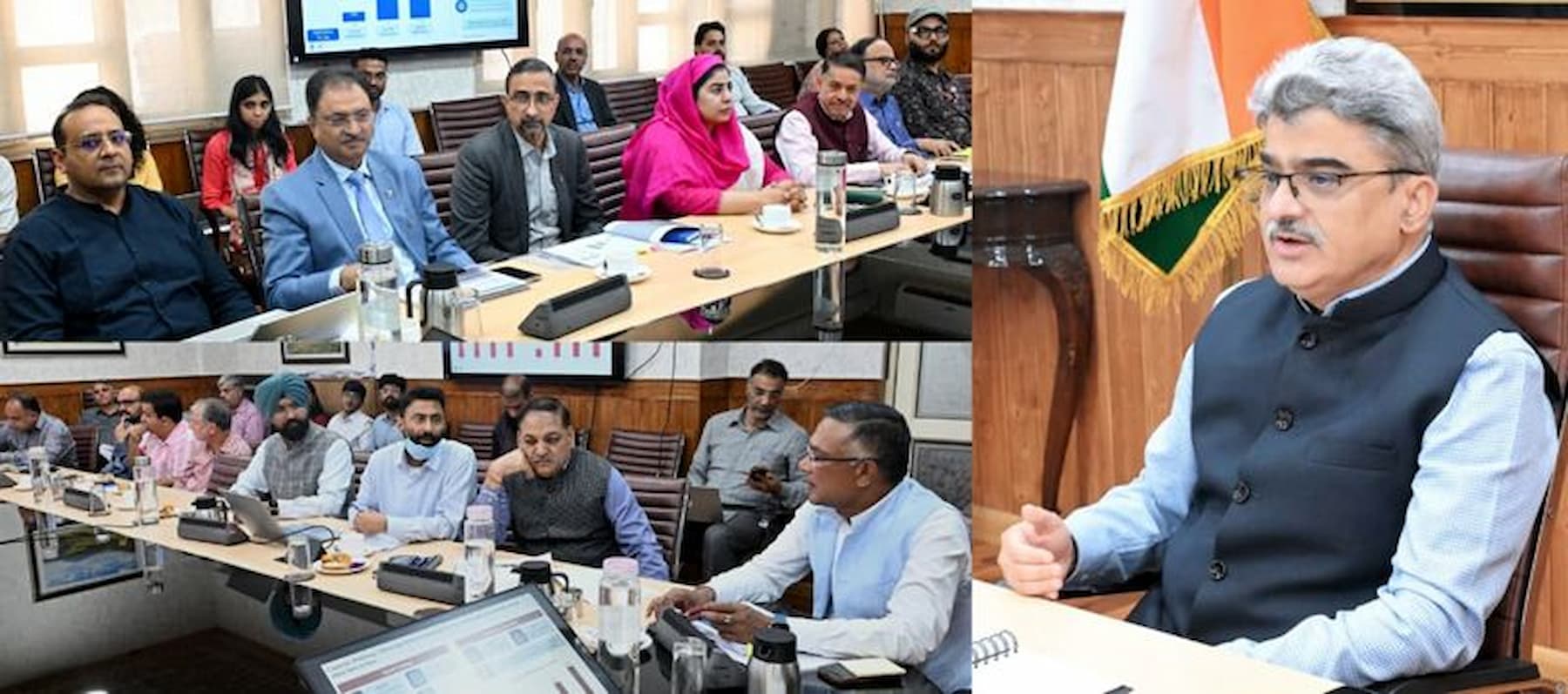
The Apex Committee met on September 9, 2026, under Chief Secretary Atal Dulloo for the Mission YUVA Apex Committee meeting that benchmarked progress against the last review held in May 2026. The room included the MD of J&K Bank, the Director of IIM Jammu, representatives from NABARD, JKRLM, SKUAST, and Deputy Commissioners from every district dialling in via video conference. That breadth of attendance matters: Mission YUVA is not housed in one department. Its delivery runs through banks, district administrations, universities, and rural livelihood institutions simultaneously.
Kumar Rajeev Ranjan, Secretary, Labour and Employment Department, presented the headline numbers. Total applications rose from 1,04,067 on May 15 to 1,42,196 on September 7 — a 37 per cent increase in under four months. SBDU verifications reached 80,965 (up 34 per cent), while DLIC approvals climbed to 75,791 (up 39 per cent). Loan sanctions grew 53 per cent to ₹1,992 crore across 37,171 accounts.
The figure that most reveals the programme’s current health is the final sanction rate: it recovered from 23 per cent in July to 40 per cent in August. That shift suggests the bottleneck in the financial funnel — cases getting stuck between application and actual sanction — is being cleared. At the current processing pace of around 2,800 applications per month through commercial banks, that improvement compounds quickly.
Before vs. After: How the Numbers Moved Between May and September 2026
No other outlet covering this review has published a side-by-side comparison. Here is what the data actually shows:
| Metric | May 15, 2026 | September 7, 2026 | Change |
|---|---|---|---|
| Total applications | 1,04,067 | 1,42,196 | +37% |
| SBDU verifications | ~60,421 (est. base) | 80,965 | +34% |
| DLIC approvals | ~54,527 (est. base) | 75,791 | +39% |
| Loan sanctions (₹ crore) | ~1,302 (est. base) | 1,992 | +53% |
| Credit disbursed (₹ crore) | ~1,194 (est. base) | 1,826 | +53% |
| Enterprises operational | ~8,605 (est. base) | 13,597 | +58% |
| WIP enterprises | ~3,987 (est. base) | 6,777 | +70% |
| Trained individuals | ~21,083 (est. base) | 36,474 | +73% |
| Mentored entrepreneurs | ~377 (est. base) | 2,645 | +700% |
| ONDC merchant storefronts | ~2,158 (est. base) | 9,266 | +329% |
Note: May baseline figures for rows marked “est. base” are derived by back-calculating from the percentage growth figures stated in the official review. Only the September 7 figures and growth percentages are directly stated in the official release.
The mentorship row is the one worth pausing on. A 700 per cent increase in enterprise mentorship completions — from roughly 377 to 2,645 entrepreneurs mentored by 482 onboarded mentors — is not incremental growth. That is a rebuild of the programme’s follow-through infrastructure, addressing the commonest failure point of any government enterprise scheme: the cliff-edge that beneficiaries fall off after receiving a loan but before their business stabilises.
Mission YUVA ONDC Onboarding Update: What a “Digital Store” Actually Means
The Mission YUVA ONDC onboarding update is the headline that most news coverage glosses over without context. Nine thousand, two hundred and sixty-six J&K merchant storefronts are now on ONDC — growth of 329 per cent since May. Of these, 2,067 are dedicated Mission YUVA youth stores that have been fully onboarded, giving those entrepreneurs direct access to India’s national digital commerce network.
What does that mean in practice? ONDC is not a single app or marketplace. It is an open protocol — think of it like the UPI of e-commerce — where a seller lists once and becomes discoverable to buyers on dozens of buyer-side apps simultaneously. A craft seller in Kupwara does not need to negotiate terms with Amazon or Meesho. They list on an ONDC-compliant seller app, and their products appear wherever ONDC buyers are searching. The barrier is the initial onboarding, and Mission YUVA’s 329 per cent growth figure shows that barrier is being removed at scale in J&K.
Culture and Mobilisation: Yuva Jagriti and the Hackathons
The Mission YUVA Yuva Jagriti campaign is the awareness funnel that feeds the entire enterprise pipeline. Yuva Jagriti 5.0, the fifth iteration of the mass mobilisation drive, has now reached 88,300 individuals — up 42 per cent since the May review.
Running in parallel, Business Hackathons launched on August 15, 2026, have engaged 18,000 students across more than 255 educational institutions, generating over 1,300 business ideas before the campaign closes on September 16. The hackathon format is not decoration. It functions as a screening and talent-discovery layer: the ideas that clear the hackathon stage feed directly into the Mission YUVA incubation pipeline.
That pipeline just got a structural upgrade. Earlier in September, NIT Srinagar’s Greenovator Incubation Foundation, IIM Jammu’s YUVA Innovation Hub, and the J&K Directorate of Employment signed a five-year tripartite MoU to develop a regional incubation node specifically for Neo-Innovative Enterprises in Kashmir. The target is to train, incubate, and support 500 innovative enterprises between 2025 and 2030, with the IIM Jammu YUVA Innovation Hub serving as the nodal coordination body and GIF at NIT Srinagar handling early-stage identification and technical incubation in Kashmir.
How Can a J&K Youth Actually Access Mission YUVA?
Every other article covering this Atal Dulloo Mission YUVA review stops at the press-release statistics. This is the part they leave out: what does an applicant actually do?
The application enters through the SBDU (Sub-District Level Unit) verification stage first. Once verified, the case moves to DLIC (District Level Implementation Committee) for approval before it reaches a commercial bank for sanction and disbursement. The current conversion funnel runs: 1,42,196 applications → 80,965 verified → 75,791 approved → 37,171 sanctioned → 32,665 disbursed.
That means roughly 23 per cent of applicants who have been approved at district level have received a loan so far. The gap between 37,171 sanctioned accounts and 32,665 disbursed ones is 4,506 accounts — people who have cleared the bank’s sanction stage but are waiting on the final disbursement step. If you are in that group, follow up directly with your lending bank branch and request a disbursement date in writing.
For those still in the WIP (Work-In-Progress) enterprise stage — currently 6,777 businesses — WIP report submissions are up 70 per cent since May. Completing your WIP report is not optional paperwork. It is the document that converts your enterprise from “in progress” to “operational” in the system, which in turn triggers mentorship access and ONDC onboarding eligibility.
What Chief Secretary Dulloo Emphasised — and Why It Matters
At the Mission YUVA Apex Committee meeting, Chief Secretary Atal Dulloo drew specific attention to district-wise performance gaps and called for stronger “convergence among the institutions associated with Mission YUVA.” That language is deliberate. It means the review found uneven delivery: some districts are processing and converting faster than others, and the Apex Committee is pushing Deputy Commissioners to close that gap.
He specifically stressed maintaining focus on women and youth participation, strengthening the training and mentorship ecosystem, and expanding market access through digital platforms for locally made products and services. The 482 onboarded mentors are the foot soldiers of that last objective. At current pace, those mentors are handling an average of about five entrepreneurs each — a workload that will need to scale as the 6,777 WIP enterprises graduate into the operational pool.
The Mission YUVA Enterprises Operational J&K Picture Going Forward
The Mission YUVA enterprises operational J&K figure of 13,597 represents a 58 per cent increase since May — but the more significant number sits one row below it: 6,777 enterprises in WIP. Those are businesses that have received funding and are building out. At the current conversion rate, a large share of those will become operational by the next Apex Committee review.
The Atal Dulloo Mission YUVA review set a clear direction: faster district-level processing, stronger mentorship coverage, expanded ONDC reach, and sharper focus on women-led enterprise creation. Whether those directives translate into a comparable 50-plus per cent jump by the next review is the question the December or early 2027 Apex Committee meeting will answer.
For now, the Mission YUVA J&K update as of September 10, 2026 is unambiguous: ₹1,826 crore disbursed, 13,597 enterprises running, 36,474 trained, 2,645 mentored, and 9,266 digital stores live on a national commerce network. The number that most people will not quote, but arguably should, is 700 per cent — the growth in enterprise mentorship completions. Schemes that push money out the door are common. Ones that build a follow-through system to keep that money alive are not.
If you are a J&K youth entrepreneur currently navigating the application pipeline, visit the Mission YUVA portal through the J&K Department of Labour and Employment, confirm your current stage in the SBDU-DLIC-bank chain, and check your WIP report status — those two steps will determine whether you show up in the next set of operational enterprise numbers.
Frequently Asked Questions
What is Mission YUVA in Jammu and Kashmir?
Mission YUVA stands for Youth Upliftment and Vibrant Advancement, a J&K government flagship scheme to convert youth applications into operational enterprises through four pillars: Culture, Capital, Capacity, and Connectivity. It channels credit via commercial banks, offers training and mentorship, and connects beneficiaries to digital commerce platforms to generate sustainable livelihoods across the Union Territory.
How much credit has been disbursed under Mission YUVA so far?
As of September 7, 2026, Mission YUVA has disbursed ₹1,826 crore across 32,665 accounts, growing 53 per cent since the May 2026 review. Total loan sanctions have reached ₹1,992 crore across 37,171 sanctioned accounts, with commercial banks processing around 2,800 applications every month.
How many enterprises are operational under Mission YUVA?
As of the September 2026 Apex Committee review, 13,597 enterprises are fully operational across J&K, marking a 58 per cent increase since May 2026. An additional 6,777 enterprises are in the Work-In-Progress stage, with WIP report submissions up 70 per cent, indicating many will become operational soon.
What is the Yuva Jagriti 5.0 campaign under Mission YUVA?
Yuva Jagriti 5.0 is Mission YUVA’s mass youth mobilisation campaign, designed to raise awareness and identify potential applicants. By September 2026 it had reached 88,300 individuals, a 42 per cent increase since the May review. Complementing it are Business Hackathons that ran from August 15 and engaged 18,000 students across 255 educational institutions.
Who is the Mission Director of Mission YUVA J&K?
Harvinder Singh (IAS), Director of Employment, serves as Mission Director of Mission YUVA in Jammu and Kashmir. He acknowledged the tripartite MoU signed between NIT Srinagar’s Greenovator Incubation Foundation, IIM Jammu’s YUVA Innovation Hub, and the J&K Directorate of Employment on behalf of the government.
What is ONDC and how is Mission YUVA using it for youth entrepreneurs?
ONDC (Open Network for Digital Commerce) is a government-backed open protocol that lets sellers list once and become discoverable across multiple buyer apps without depending on a single marketplace. Mission YUVA has onboarded 9,266 J&K merchant storefronts on ONDC, including 2,067 dedicated Mission YUVA youth stores, giving rural and semi-urban entrepreneurs access to the national digital marketplace.
What is the target of Mission YUVA by 2030?
Under the Mission YUVA Neo-Innovative Enterprises component, the J&K government aims to train, incubate, and support 500 innovative enterprises between 2025 and 2030 through YUVA Innovation Hubs anchored at IIM Jammu and a network of YUVA Incubation Centres. The broader mission targets long-term economic empowerment of J&K youth across all districts.