
Krafton India Investment Reaches $500M as Chairman Chang Meets PM Modi in New Delhi

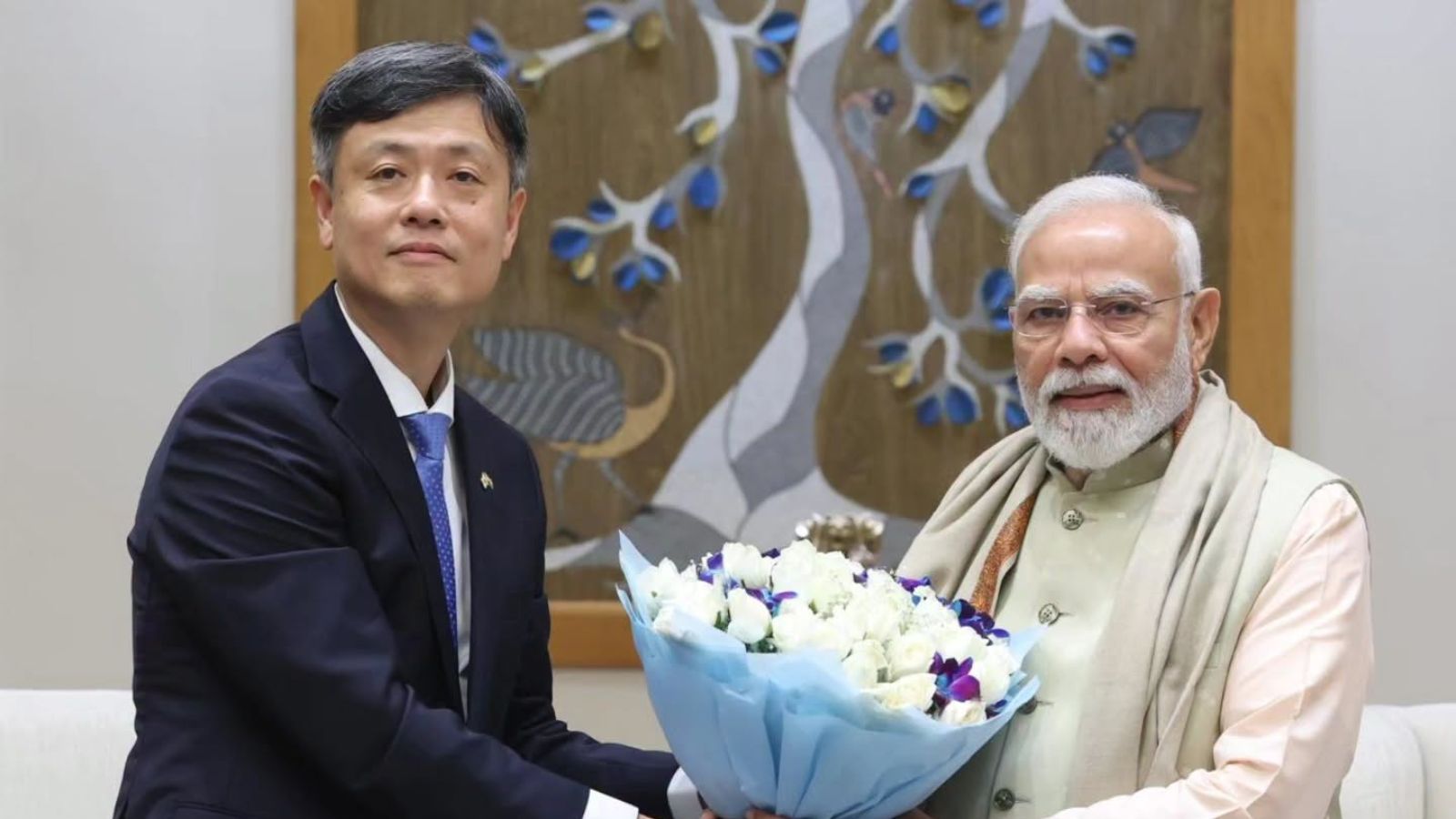
KRAFTON Inc. Chairman Byung Gyu Chang met Prime Minister Narendra Modi in New Delhi on September 4, 2026, announcing an additional $250 million commitment that takes the South Korean gaming company’s total planned Krafton India investment to over $500 million. The new capital, to be deployed over three to four years, targets AI, robotics, and deep tech alongside gaming — and sits entirely separate from a $670 million Unicorn Growth Fund the company launched with Naver and Mirae Asset in December 2025.
The meeting is a diplomatic milestone five years in the making. In September 2020, India banned PUBG Mobile along with 117 other apps linked to China amid border tensions, forcing KRAFTON to sever its Indian publishing relationship with Tencent and rebuild its India strategy from scratch. What Chang walked into Modi’s office with on Friday is the payoff from that rebuild: 260 million BGMI downloads, roughly 18 portfolio companies, a freshly acquired game studio, and a seat at the table with the country’s Prime Minister.
How Much Has Krafton Invested in India, and Where Does the Money Go?
KRAFTON has already deployed over $250 million in India since 2021. The new $250 million pledge lifts the direct investment total to approximately $500 million over a three-to-four-year window. That figure covers BGMI expansion, gaming studio funding, and a widening basket of deep tech India bets — but it does not include the $670 million Unicorn Growth Fund.
The distinction matters. The Unicorn Growth Fund is a separate, institutionally structured vehicle co-anchored with Naver Corporation and Mirae Asset, with KRAFTON committing around $137 million at the fund’s first close. Its mandate is growth-stage Indian technology startups — companies beyond early seed rounds that need scale capital. The $500 million direct line, by contrast, is KRAFTON’s own balance sheet, directed at companies and initiatives it controls or partners closely with.
Treating both pools as one number, as several news reports have done, inflates the headline figure to over $1.1 billion and obscures how each stream of capital actually reaches Indian founders and developers.
The BGMI Comeback: Why This Modi Meeting Has a Backstory
The 2020 PUBG ban did more than block an app. It exposed how exposed KRAFTON was in its fastest-growing market and how dependent its India model had been on a Tencent-linked publishing arrangement. The company publicly terminated that arrangement in September 2020, took on publishing responsibilities itself, and relaunched the game as Battlegrounds Mobile India in May 2021.
Then came the second blow. In July 2022, BGMI was again removed from the Google Play Store and Apple App Store on government orders, this time over alleged data transfer concerns. KRAFTON spent ten months in dialogue with Indian authorities before the game returned on a trial basis in May 2023. By that point, the company had not pulled back capital; it had accelerated it. The commercial rationale was clear enough: India has over a billion internet subscribers and more than 700 million smartphone users. Walking away was never a real option.
BGMI has since surpassed 260 million downloads, and KRAFTON plans to launch BGMI Lite in India before the end of 2026. The ban-to-comeback arc is precisely what gives the Modi meeting its weight. Chang is not arriving as a new investor pitching an idea. He is arriving as someone who held capital in India through two government bans and kept building anyway.
Beyond BGMI: What Krafton’s Expansion Plans Actually Look Like on the Ground
The Portfolio Behind the Headline
The Krafton India investment story across 18 companies and funds includes Nodwin Gaming in esports, audio platform Kuku FM, Indian-language storytelling app Pratilipi, influencer marketing platform One Impression, and payments infrastructure company Cashfree. Four to five of those portfolio companies are gaming or gaming-adjacent studios.
The most strategically significant recent move was the March 2025 acquisition of Nautilus Mobile, the Pune-based studio behind the Real Cricket franchise, for $14 million. KRAFTON took north of a 75% controlling stake in an all-cash deal — its first majority acquisition in India. Real Cricket carries 1.5 to 2 million daily active users, with 89 to 90 percent of its player base inside India. Owning the studio rather than holding a minority stake gives KRAFTON direct input over content strategy, monetization, and IP development, which was the explicit reason the deal was structured for control rather than participation.
KIGI Academy and the Talent Gap
Three days before the Modi meeting, KRAFTON India signed a memorandum of understanding with IIT Madras to launch KIGI Academy, a six-month, fully funded game development programme. The inaugural cohort takes 30 students from IIT Madras through 16 weeks of on-campus training followed by an eight-week residency at KRAFTON India’s Bengaluru headquarters. The programme covers coding, game design, UI/UX, art, and product development — drawing directly from KRAFTON’s Korea-based Jungle training model, which has produced more than 1,000 developers.
The timing was deliberate. The KIGI Academy announcement on September 1 and the Modi meeting on September 4 were packaged as a coherent India strategy, not separate items. KRAFTON is signalling that it sees talent development, not just capital deployment, as a core commitment. India’s AVGC-XR (Animation, Visual Effects, Gaming, Comics, and Extended Reality) sector could need close to 2 million professionals by 2030, and professional game developers remain scarce relative to the size of the consumer market.
What Krafton’s Push Into AI and Robotics Actually Means for Indian Startups
The official language around “AI, robotics, and deep tech” is broad by design. KRAFTON has not announced specific fund allocations for each category, so reading too much precision into those labels is a mistake. What the framing does confirm is that the company no longer positions India purely as a gaming market.
This aligns with KRAFTON’s global posture. In May 2026, the company became a third-largest shareholder in SOCAR, a Korean car-sharing firm, and co-announced Apex Mobility, an autonomous driving venture. The India-South Korea gaming technology collaboration is therefore one piece of a broader corporate reorientation toward deep tech assets. India offers KRAFTON engineering talent at scale and a startup ecosystem generating genuine deep tech companies — the same qualities that drew Naver to co-anchor the Unicorn Growth Fund.
That said, KRAFTON’s operational DNA remains gaming. Investors and startup founders should expect the AI and robotics bets to skew toward companies with consumer or entertainment applications rather than pure industrial plays. KRAFTON’s track record — Nodwin Gaming, Kuku FM, Pratilipi, Nautilus Mobile — reflects a preference for consumer digital products with mass Indian audiences.
India as a Gaming Hub: How This Fits the Viksit Bharat Policy Frame
Modi’s “Make in India” and Viksit Bharat agenda specifically call out gaming and AVGC as priority export sectors. Foreign investment announcements from global majors give the government a credibility signal for that ambition, and KRAFTON’s visit fits that political economy neatly. The bilateral India-South Korea relationship deepened further when Commerce Minister Piyush Goyal and South Korea’s Industry Minister Jung-Kwan Kim were both present at the December 2025 event that launched the Unicorn Growth Fund — suggesting government-to-government coordination well before September 4.
India gaming hub foreign investment 2026 has become a consistent narrative, with KRAFTON now its most visible protagonist. The question for Indian game developers and startup founders is less whether the money is real and more whether KRAFTON’s ecosystem-building model — studio acquisition, fund participation, talent programmes — creates genuine upside for local companies or primarily deepens KRAFTON’s control of India’s most attractive gaming IP.
The Real Cricket acquisition offers a working answer. Nautilus Mobile founder Anuj Mankar said the deal gives the studio “access to unmatched gaming DNA” and moved the relationship from strategic support to deep integration. That is a win for a studio that had been a minority-held asset with limited resources. Whether the same logic applies to KRAFTON’s broader portfolio, where it holds minority stakes without operational control, is a fairer test of the company’s India commitment than any single investment announcement.
What Happens Next
KRAFTON’s $250 million commitment is a forward pledge, not yet deployed capital. The three-to-four-year deployment window means the India story is still a construction site. BGMI Lite, the KIGI Academy programme expansion, and the Unicorn Growth Fund’s deployment pace will be the real indicators of follow-through by 2027 and 2028.
For startup founders building in gaming, AI, or consumer tech: KRAFTON’s India vertical is actively seeking growth-stage opportunities, and the Unicorn Growth Fund with Naver widens the aperture beyond KRAFTON’s traditional gaming comfort zone. For game development students and professionals, the KIGI Academy partnership with IIT Madras is a concrete pipeline worth tracking — particularly given CRAFTKON’s Jungle programme precedent in Korea.
The BGMI maker’s India expansion plans, for now, are the most ambitious and the most institutionally embedded of any foreign gaming company operating in the country. Whether that ambition holds through the inevitable policy friction of the next few years is what will define whether September 4, 2026 was a turning point or a press release.
Frequently Asked Questions
How much is Krafton investing in India in total?
KRAFTON has already invested over $250 million in India since 2021 and announced an additional $250 million pledge on September 4, 2026, taking its direct investment commitment to approximately $500 million over the next three to four years. This figure is separate from the $670 million Unicorn Growth Fund established with Naver and Mirae Asset.
What is the KIGI Academy and how does it work with IIT Madras?
KIGI Academy is a six-month, fully funded game development programme launched by KRAFTON India through a formal MoU with IIT Madras. The inaugural cohort accepts 30 students, who spend 16 weeks in on-campus training at IIT Madras followed by an eight-week residency at KRAFTON India’s Bengaluru headquarters, covering coding, game design, UI/UX, art, and product development.
Why did KRAFTON’s Chairman meet PM Modi in September 2026?
Chairman Byung Gyu Chang met PM Modi on September 4, 2026, to affirm KRAFTON’s long-term commitment to India and announce its additional $250 million investment. The meeting also addressed opportunities in India-South Korea collaboration across gaming, technology, and emerging sectors as part of broader bilateral engagement.
What Indian companies has Krafton invested in so far?
KRAFTON has backed roughly 18 companies and funds in India, including Nodwin Gaming, Loco, Pratilipi, Kuku FM, One Impression, and Cashfree. It also acquired a controlling stake of over 75% in Nautilus Mobile, the studio behind the Real Cricket franchise, in March 2025 for $14 million.
How is Krafton’s India investment different from the Unicorn Growth Fund with Naver?
The $500 million direct investment is KRAFTON’s own balance sheet capital funding gaming studios, startups, and talent programmes it operates or controls. The $670 million Unicorn Growth Fund is a separate institutional vehicle co-anchored with Naver Corporation and Mirae Asset to back growth-stage Indian technology startups beyond gaming. The two streams serve different purposes and different beneficiaries.
What happened to BGMI after the Indian government ban in 2020?
PUBG Mobile was banned in India in September 2020 amid China-India border tensions. KRAFTON severed its Tencent publishing deal and relaunched the game as Battlegrounds Mobile India in 2021. BGMI was banned again in July 2022 over data concerns and returned in May 2023 after a ten-month government review. It has since surpassed 260 million downloads.
What is Krafton’s strategy beyond gaming in India — AI, robotics, and deep tech?
KRAFTON has stated that its new $250 million India commitment will expand capital allocation into AI, robotics, and deep tech alongside gaming and startups. While specific sector allocations have not been announced, the move signals that India is being positioned as a technology development hub rather than purely a consumer gaming market, consistent with KRAFTON’s global pivot toward deep tech assets.