
MTN Uganda AWE Phase 2 Launches to Scale Women-Led Businesses Into Corporate Supply Chains

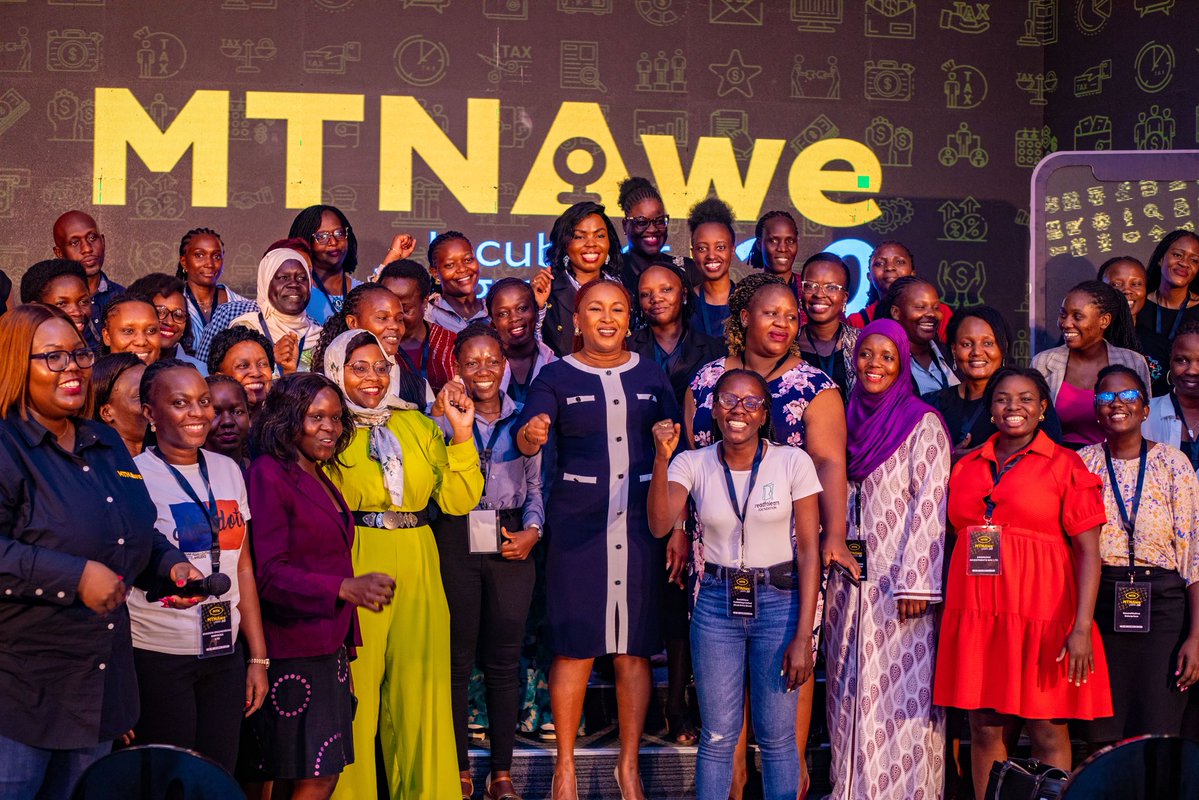
UGX 62 billion (~$16.8 million) in corporate contracts flowing to women-owned businesses — that’s the headline achievement that set the stage for something bigger. On May 22, 2026, at its Kampala headquarters, MTN Uganda formally unveiled MTN Uganda AWE Phase 2, the next chapter of the Advancing Women Entrepreneurs (AWE) programme. The event wasn’t a celebration of the past. It was a direct challenge to the status quo — a structured, partner-backed push to move women-led enterprises from survival mode into competitive, investment-ready businesses capable of thriving in Uganda’s most demanding corporate supply chains.
The MTN Uganda women entrepreneurs launch brings together a powerful coalition: dfcu Bank, ATC Uganda, Innovation Village, Zoho, MTN Mobile Money, the Private Sector Foundation Uganda (PSFU), and NSSF Hi Innovators. Individually, each partner fills a critical gap. Together, they’re building something far more durable than a standard procurement initiative.
From the Ground Up: What Phase 1 Built
To understand why MTN Uganda AWE Phase 2 matters, you need to know what Phase 1 actually delivered. Launched in October 2023 under MTN Uganda’s ESG strategy, the AWE programme started with a brutal supplier reality: just 0.3% of MTN Uganda’s suppliers were women-led. That number was both a problem and an opportunity.
Phase 1 moved the needle. By the programme’s close, 118 women-owned enterprises had joined MTN Uganda’s supplier network across IT, network services, and facilities management. Women-led suppliers’ share of MTN’s ecosystem climbed from 0.3% to 15% in under two years — one of Uganda’s telecom sector’s most significant diversity shifts on record. dfcu Bank extended over UGX 1.6 billion in subsidised loans, while participants completed more than 30 training modules covering procurement readiness, financial management, ESG compliance, and technical capacity building.
But winning a first corporate contract and sustaining the tenth are entirely different problems. Phase 2 was designed to bridge exactly that gap.
MTN Uganda AWE Phase 2: What the “She Means Business” Agenda Changes
The Advancing Women Entrepreneurs Phase 2 update isn’t a copy of what came before — it’s an upgrade. The second phase runs under the theme “She Means Business,” deliberately shifting focus from access to architecture. Where Phase 1 concentrated on getting women into corporate supply chains, Phase 2 concentrates on building businesses strong enough to stay in them.
Through 2026, AWE 2.0 runs accelerator trainings, mentorship sessions, investor pitch days, and supplier development activities, layering new skills onto the foundation Phase 1 built. Additional training areas now include financial management, digital systems integration, ESG compliance, and investor readiness — competencies that corporate procurement teams actively screen for when vetting new suppliers.
The partner network makes the support stack genuinely formidable. MTN Mobile Money Uganda manages digital payments and financial inclusion; ATC Uganda provides infrastructure project mentorship; dfcu Bank delivers tailored financial products; and The Innovation Village leads incubation and entrepreneurship training. Zoho’s Analytics Business Centre now adds data tools and systems literacy — critical in a procurement environment where digital readiness directly determines competitiveness.
MTN Uganda Supply Chain Inclusion 2026: Target Sectors
The MTN Uganda supply chain inclusion 2026 agenda casts a wide net across sectors where women have historically been underrepresented:
- Information technology and digital services
- Network infrastructure and fibre rollout
- Green energy and solar technology
- Marketing and commercial services
- Facility management
- Professional consulting
This isn’t broad for the sake of it. MTN Uganda’s heaviest procurement spending runs through fibre rollout, network infrastructure, and IT — sectors where women-led businesses had been nearly invisible. The goal is structural, not symbolic.
The Sylvia Mulinge MTN AWE Announcement That’s Reshaping the Conversation
The Sylvia Mulinge MTN AWE announcement at the Kampala launch was direct. The MTN Uganda CEO said AWE 2.0 is focused on “transforming businesses into structured, competitive, and investment-ready enterprises that can thrive within and beyond MTN’s value chain.” That phrase — beyond MTN’s value chain — matters enormously. It signals a shift from corporate dependency to genuine business independence.
Her position sits on a foundation of uncomfortable data. A study combining World Bank, Private Sector Foundation Uganda, and Uganda Bureau of Statistics findings shows that men-owned firms earn 2.5 times more than women-owned firms and are significantly larger and more profitable. Worse: only 1% of women-led businesses in Uganda ever bid for tenders. AWE was built to dismantle these patterns — not through handouts, but through structured, competitive preparation.
dfcu Bank’s chief credit officer Margaret Karume put the core problem plainly at the launch: “What many of these women lacked was not ambition, because they had the ambition, but access.” Access to markets. Access to business knowledge. Access to finance and confidence-building ecosystems that move enterprises from survival to sustainable growth.
Uganda Women-Led Business Funding News: Why Access Alone Isn’t Enough
The Uganda women-led business funding news landscape makes MTN Uganda’s timing even more significant. More than 70% of women-owned SMEs worldwide have inadequate or no access to financial services, according to IFC data. In Africa, the financing gap for female-owned enterprises stands at an estimated $42 billion. Women-owned microenterprises in Uganda generate 30% lower profits on average than male counterparts, driven by lower capital use, constrained innovation, and sector-based segregation.
AWE hits all three pressure points simultaneously: access to capital through dfcu Bank financing, access to markets through MTN’s procurement pipeline, and sector integration by actively placing women inside technology and infrastructure supply chains. But recent Uganda women-led business funding news signals a broader lesson — even when access is granted, structural weaknesses inside businesses can cause them to collapse under the compliance and financial demands of corporate contracts.
Business advisory expert William Nyakatura, speaking at the launch, challenged participants to treat operational discipline as a competitive weapon. He urged SMEs to master cash flow management, unit costing, and statutory compliance, while also building the standard operating procedures that make scaling repeatable and sustainable.
MTN Uganda Women Entrepreneurs Launch: A Case Study in Real Impact
No story illustrates the MTN Uganda women entrepreneurs launch potential more clearly than Stella Lunkuse’s. The founder and managing director of Solar Nation Limited walked away from her job at the Uganda Revenue Authority to build a clean energy company. AWE Phase 1 gave her the training, mentorship, and procurement access to scale it meaningfully.
The results were measurable. Solar Nation grew by 12%, expanded into new markets including Ghana and Kenya, and added new staff after accessing AWE’s support network. The company installed solar-powered telecom masts at multiple MTN sites, and Lunkuse grew her workforce from four to 36 employees while connecting over 8,000 Ugandan households with solar energy. She didn’t just win a contract. She built a business.
Stories like Lunkuse’s are what MTN Uganda AWE Phase 2 is designed to multiply across Uganda’s Northern, Eastern, Western, and Central regions.
MTN Uganda AWE 2.0 Application: Who Qualifies and How to Apply
The MTN Uganda AWE 2.0 application process is open, but it has teeth. Eligibility is designed to ensure participants can actually absorb and execute corporate contracts, not just apply for them.
Eligibility requirements:
- Business must be at least 50% women-owned or majority women-shareholder
- Operational for a minimum of one year
- Annual revenues of at least UGX 60 million
- Valid tax compliance certificate
- Active women-led management in place
Priority is given to SMEs, youth-led businesses (ages 23–35), and enterprises managed by women with disabilities. Required documents include a certificate of incorporation, proof of women ownership, financial statements, business registration details, and a company profile.
Applications are submitted directly through MTN Uganda’s official AWE portal at mtn.co.ug/awe. Women entrepreneurs across all four regions of Uganda are eligible to apply.
The Advancing Women Entrepreneurs Phase 2 Update: A New Standard for Corporate Inclusion
What MTN Uganda has constructed here is a replicable model. The Advancing Women Entrepreneurs Phase 2 update demonstrates that deliberate supplier inclusion — when backed by the right partner network and a structured curriculum — can shift a major telecom company’s supplier ecosystem from 0.3% to 15% women-led in under two years, and drive UGX 62 billion in contracts toward businesses that would otherwise never have entered the procurement ecosystem.
MTN Uganda AWE Phase 2 isn’t finished work. The MTN Uganda supply chain inclusion 2026 agenda is still unfolding, and the hardest test — whether AWE graduates can sustain and scale without the programme’s scaffolding — lies ahead. But the structure is sound, the partner commitments are real, and the evidence from Phase 1 graduates like Stella Lunkuse is undeniable.
If you’re a woman entrepreneur operating in tech, energy, infrastructure, or any of the programme’s target sectors, the application window is your entry point. Visit the official AWE page and put your business in the room where it belongs.
Frequently Asked Questions
What is MTN Uganda AWE Phase 2?
MTN Uganda AWE Phase 2, officially called AWE 2.0, is the second phase of the Advancing Women Entrepreneurs Incubator Programme. It was launched on May 22, 2026, at MTN Uganda’s Kampala headquarters under the theme “She Means Business.” Unlike Phase 1, which focused on supplier access, Phase 2 focuses on building the internal financial systems, digital capabilities, and investor readiness that help women-led businesses sustain and scale beyond their first corporate contracts.
What did Phase 1 of the AWE programme achieve?
Phase 1, launched in October 2023, onboarded 118 women entrepreneurs into MTN Uganda’s supplier network and generated over UGX 62 billion (approximately $16.8 million) in contracts for women-owned businesses. It also raised the share of women-led suppliers in MTN Uganda’s ecosystem from 0.3% to 15% in under two years, and dfcu Bank unlocked more than UGX 1.6 billion in subsidised financing for participants.
Who is eligible for the MTN Uganda AWE 2.0 application?
To qualify, your business must be at least 50% women-owned (or majority women-shareholder), operational for at least one year, and generating annual revenues of no less than UGX 60 million. You also need a valid tax compliance certificate and active women-led management. Priority is given to SMEs, youth-led businesses (ages 23–35), and enterprises managed by women with disabilities.
What sectors does MTN Uganda supply chain inclusion 2026 target?
The programme targets women-led businesses across information technology, network infrastructure, digital solutions, green energy and solar technology, marketing, facility management, commercial services, and professional consulting — sectors where MTN Uganda directs significant procurement spending.
What did Sylvia Mulinge say at the MTN AWE announcement?
At the May 22, 2026 launch, MTN Uganda CEO Sylvia Mulinge stated that AWE 2.0 is focused on “transforming businesses into structured, competitive, and investment-ready enterprises that can thrive within and beyond MTN’s value chain.” She emphasized that the deliberate inclusion of women entrepreneurs produces measurable commercial and social benefits for Uganda’s broader economy.
What support does MTN Uganda AWE Phase 2 offer participants?
Selected participants receive direct procurement opportunities within MTN Uganda and partner networks, one-on-one mentorship, peer networking, subsidised financing, free MTN Business Internet, ESG compliance training, accelerator sessions, and investor pitch days. Partners including dfcu Bank, ATC Uganda, The Innovation Village, Zoho, and MTN Mobile Money each contribute specific services to the support package.
How does the AWE programme address the broader Uganda women-led business funding gap?
The programme directly tackles three interlocking barriers: access to capital (through dfcu Bank subsidised loans), access to markets (through MTN’s corporate procurement pipeline), and sector diversity (by actively placing women in male-dominated industries like network infrastructure and solar technology). These are the same barriers cited in global research, where over 70% of women-owned SMEs worldwide lack adequate financial services access.