
Musk OpenAI Lawsuit Verdict: Jury Sides With Sam Altman as $150 Billion Case Collapses in Oakland

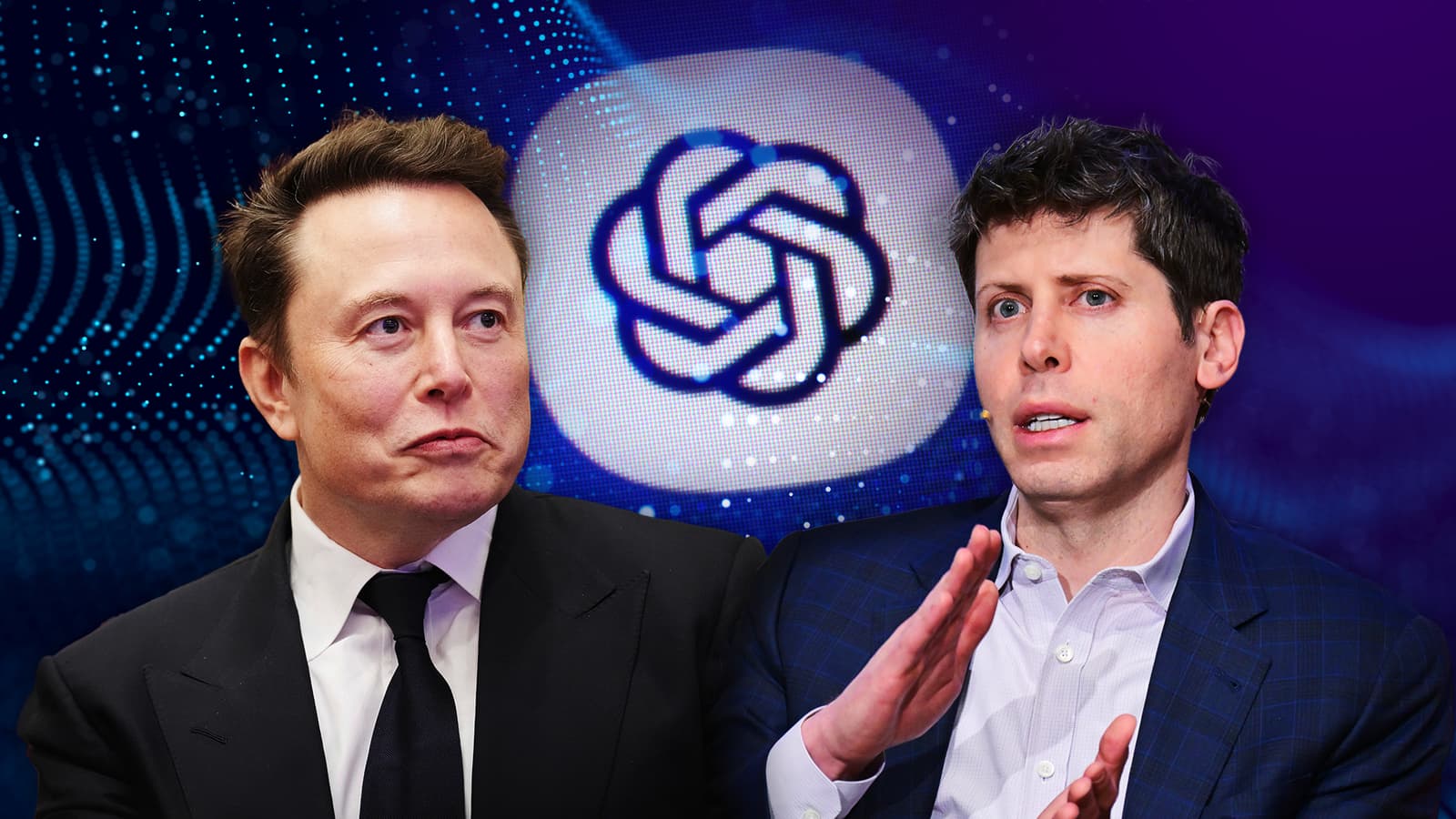
A nine-member jury unanimously dismissed every claim in Elon Musk’s lawsuit against OpenAI in less than two hours on May 18, 2026. The Musk OpenAI lawsuit verdict didn’t turn on who was right or wrong — it turned on a clock. Musk filed too late. That single procedural finding carries consequences that will ripple across Silicon Valley, the AI industry, and America’s nonprofit governance landscape for years to come.
OpenAI is now valued at $852 billion, is generating $2 billion in monthly revenue, and is sprinting toward what analysts expect to be one of the largest IPOs in financial history. The verdict, in the most practical sense, just cleared its runway.
Musk OpenAI Lawsuit Verdict: What the Jury Actually Decided
The Musk v Altman jury decision didn’t address the headline question everyone came to hear answered: Did Sam Altman and Greg Brockman betray a sacred founding promise? It simply couldn’t. California’s three-year statute of limitations on civil claims cut off the inquiry before a single piece of merit-based evidence could be formally weighed.
The jury found that Musk had been aware of OpenAI’s commercial shift well before he filed his lawsuit in February 2024 — placing every claim outside the legal window. U.S. District Judge Yvonne Gonzalez Rogers, presiding in Oakland, immediately adopted the advisory verdict and dismissed all claims on the spot. “There’s a substantial amount of evidence to support the jury’s finding,” she said from the bench.
The trial ran three weeks. Deliberations lasted roughly 90 minutes. That asymmetry — three weeks of testimony, 90 minutes of deliberation — underscores just how decisive the statute of limitations Musk OpenAI case outcome really was.
From $38 Million Donor to Courtroom Adversary: The Elon Musk OpenAI Lawsuit Update
OpenAI launched on December 11, 2015, as a nonprofit research lab with a founding mission to develop artificial intelligence for the benefit of all humanity. Musk was among its most prominent early backers, contributing $38 million in its first years, holding a board seat, and lobbying for the CEO role. When the company refused to hand him majority equity or executive authority, he departed in 2018.
By 2019, OpenAI had created a for-profit subsidiary. By October 2025, a full recapitalization converted it into a Public Benefit Corporation. When Musk filed the Elon Musk OpenAI lawsuit update in February 2024 — roughly two years after launching his own rival AI firm, xAI — he accused Altman and Brockman of methodically dismantling a charitable mission in pursuit of personal financial gain.
OpenAI’s lawyers dismantled that narrative at trial. They argued the Elon Musk OpenAI lawsuit update arrived only after xAI needed a competitive edge. They produced evidence showing Musk himself had floated a for-profit structure — on the condition he retain sole control — and had even pushed for OpenAI to fold entirely into Tesla. During three weeks of testimony, jurors heard from Altman, Brockman, Microsoft CEO Satya Nadella, and Musk himself, who spent three days on the witness stand.
The OpenAI $150 Billion Lawsuit Dismissal: The Full Scope of What Was at Stake
Numbers tell the story here. The OpenAI $150 billion lawsuit dismissal ends one of the most financially aggressive legal campaigns in corporate history. At its peak, Musk’s team asked the court to force OpenAI and Microsoft to disgorge as much as $180 billion in alleged “ill-gotten gains,” to be redirected to OpenAI’s nonprofit arm. Beyond the money, he demanded Altman’s and Brockman’s removal, and the full unwinding of OpenAI’s 2025 corporate restructuring.
The OpenAI $150 billion lawsuit dismissal simultaneously killed a parallel claim against Microsoft, which invested over $13 billion in OpenAI beginning in 2019. Musk accused the software giant of aiding and abetting the alleged breach of charitable trust. Without the primary claim surviving, the Microsoft case collapsed with it.
What the Three Weeks of Testimony Uncovered
Three weeks of courtroom drama produced remarkable revelations regardless. Hundreds of pages of private emails, Brockman’s personal diaries, and internal meeting notes became public record. Texts between Musk and Meta CEO Mark Zuckerberg — apparently exploring a joint bid to buy OpenAI — were entered into evidence. Most striking of all, Brockman’s stake in OpenAI was revealed at trial to be worth approximately $30 billion. That figure gave genuine weight to Musk’s unjust enrichment argument — even though no jury ever formally ruled on it.
Sam Altman OpenAI Trial Victory: What It Means for the IPO Countdown
The Sam Altman OpenAI trial victory couldn’t have come at a more strategically critical moment. OpenAI closed a record-breaking $122 billion funding round in March 2026 at a post-money valuation of $852 billion. A public debut is targeted for Q4 2026, which analysts widely project will rank among the most consequential listings in financial history.
Had Musk prevailed, the fallout would have been catastrophic. Unwinding the PBC restructuring — the precise legal architecture the IPO depends upon — would have forced a complete recapitalization that institutional investors hadn’t modeled. Altman’s removal would have destabilized leadership at its most delicate moment. The Sam Altman OpenAI trial victory eliminates all of that, giving OpenAI a green light to pursue its public debut without this legal overhang.
OpenAI’s lead attorney, William Savitt, characterized the Sam Altman OpenAI trial victory bluntly outside the courthouse: the entire lawsuit was an “after-the-fact contrivance” amounting to Musk trying “to sabotage a competitor.” OpenAI has also filed an active counter-lawsuit against Musk, accusing him of bad-faith litigation tactics — a fight that continues regardless of Monday’s outcome.
Elon Musk OpenAI Appeal Ninth Circuit: Round Two Is Coming
Musk moved immediately. Within hours of the Musk OpenAI lawsuit verdict, he posted on X calling it a “calendar technicality” and pledged to pursue the Elon Musk OpenAI appeal Ninth Circuit case. Lead attorney Marc Toberoff confirmed formal appeal papers would be filed at a post-verdict press conference. Attorney Steven Molo preserved the right in open court — though Judge Gonzalez Rogers responded with visible skepticism and indicated she was prepared to reject it on the spot.
The U.S. Court of Appeals for the Ninth Circuit oversees federal district courts across California and eight other western states. The Elon Musk OpenAI appeal Ninth Circuit filing will likely center on whether the statute of limitations clock should have been legally “tolled” — paused — due to OpenAI’s alleged concealment of its commercial transition. That doctrine exists in law, but applying it is a difficult argument: OpenAI raised capital publicly and restructured visibly over a period of years. Whether the Ninth Circuit even agrees to hear the case will determine whether this dispute continues in courts or quietly fades.
Statute of Limitations and the Future of Charity Law
The legal community is already interrogating what the statute of limitations Musk OpenAI case means for charitable trust law across the United States. Musk himself articulated the broader concern on X: “creating a precedent to loot charities is incredibly destructive to charitable giving in America.” It is a legitimate governance question, entirely separate from the personalities involved.
Current U.S. charity law offers donors limited recourse once a nonprofit restructures — particularly if they delay beyond the applicable limitations window. The statute of limitations Musk OpenAI case, by closing without any merits ruling, signals that timing can matter as much as substance in these disputes. Nonprofit governance advocates and donor rights attorneys will watch the Elon Musk OpenAI appeal Ninth Circuit proceedings closely, because the Ninth Circuit’s ultimate decision — or its refusal to act — could establish lasting precedent for how future nonprofit-to-for-profit transitions are challenged and litigated nationwide.
What Comes Next for Both Sides
Both billionaires are now racing toward their respective IPOs. OpenAI is targeting a late 2026 public debut. xAI, now merged with SpaceX, has already filed its IPO paperwork confidentially. The Musk OpenAI lawsuit verdict removes one enormous legal cloud from both trajectories — even if Musk’s appeal promises to generate fresh uncertainty.
The verdict is genuinely a win for Sam Altman. It is not, however, a clean one. Three weeks of testimony unearthed emails, texts, and internal documents that portray OpenAI’s origin story as far messier and more commercially driven than its nonprofit mythology ever suggested. Altman and Brockman grew enormously wealthy on a company built with charitable donations — and no court has yet ruled on whether that was legally acceptable. That reputational shadow doesn’t lift just because the statute of limitations clock ran out first.
Frequently Asked Questions
What was the Musk OpenAI lawsuit verdict?
On May 18, 2026, a nine-member advisory jury in Oakland, California unanimously dismissed all of Elon Musk’s claims against OpenAI, CEO Sam Altman, and President Greg Brockman. The jury found that Musk’s lawsuit was filed outside California’s three-year statute of limitations. U.S. District Judge Yvonne Gonzalez Rogers immediately adopted the verdict and dismissed the entire case — including claims against Microsoft.
Why did the Musk v Altman jury decision go against Musk?
The Musk v Altman jury decision did not rule on whether OpenAI violated its charitable mission — it ruled exclusively on timing. The jury found that Musk had known about OpenAI’s commercial shift well before filing his lawsuit in February 2024, placing all his claims outside the three-year legal window. The court never formally adjudicated the “breach of charitable trust” allegations.
How large was the OpenAI $150 billion lawsuit dismissal in financial terms?
At its financial peak, Musk’s team sought as much as $180 billion in “ill-gotten gains” from OpenAI and Microsoft, to be redirected to OpenAI’s nonprofit arm. The OpenAI $150 billion lawsuit dismissal also ended Musk’s demands for Altman’s and Brockman’s removal from leadership and the unwinding of OpenAI’s entire 2025 corporate restructuring into a Public Benefit Corporation.
Is the Elon Musk OpenAI appeal Ninth Circuit case actually happening?
Yes. Following the verdict, Musk confirmed on X that he will pursue the Elon Musk OpenAI appeal Ninth Circuit case, calling the verdict a “calendar technicality” that ignored the substance of his allegations. Lead attorney Marc Toberoff confirmed the appeal at a press conference. Judge Gonzalez Rogers, however, responded with skepticism and indicated she was ready to reject it.
What does the Sam Altman OpenAI trial victory mean for the company’s IPO?
The Sam Altman OpenAI trial victory significantly clears OpenAI’s IPO path. The company is currently targeting a
Was Microsoft found liable?
No. Microsoft was named a co-defendant, accused of aiding and abetting OpenAI’s alleged breach of charitable trust through its multibillion-dollar investment. When the primary charitable trust claim was dismissed on statute of limitations grounds, the Microsoft claim fell with it. Microsoft released a statement welcoming the verdict and reaffirming its commitment to advancing AI through its OpenAI partnership.
What does the statute of limitations Musk OpenAI case mean for nonprofit governance?
Because the court ruled only on timing and never on the merits, the core question — whether OpenAI legitimately transitioned from charity to corporation — remains legally unanswered. The statute of limitations Musk OpenAI case effectively signals that donors have a narrow window to challenge nonprofit restructuring decisions. Legal and governance experts are watching the Elon Musk OpenAI appeal Ninth Circuit proceedings closely, as the outcome could establish precedent for how future nonprofit-to-for-profit conversions are governed and contested across the United States.