
How Cloneable’s $4.6M Seed Round Is Set to Clone Expert Worker Knowledge Across America’s Aging Utilities

A process that typically takes a human engineer eight hours — such as structural calculations for a utility pole replacement project — can be completed by a Cloneable AI agent in under two minutes. That single stat captures the audacious bet behind Cloneable, a Raleigh, North Carolina startup that just closed a landmark seed round to clone expert worker knowledge at industrial scale, deploying it as autonomous AI agents for utilities, energy firms, and heavy infrastructure operators. The company uses AI to shadow human experts in heavy industries such as energy and replicates their specialized workflows into autonomous agents. Founded in 2023, this is a startup built not for the boardroom, but for the field — and it’s arriving at exactly the right moment.
![Cloneable]() America’s Aging Infrastructure Workforce: The Crisis No One Sees Coming
America’s Aging Infrastructure Workforce: The Crisis No One Sees Coming
 America’s Aging Infrastructure Workforce: The Crisis No One Sees Coming
Before understanding what Cloneable does, you need to grasp the scale of the problem it’s solving. According to Brookings Institution research, nearly 17 million infrastructure workers are projected to permanently leave their jobs over the next decade due to a wave of retirements, job transfers, and other labor market shifts. That number alone should alarm anyone running a utility, grid operation, or engineering firm.
According to the Department of Labor, nearly half of the current workforce in the utility sector will retire within the next decade, and non-retirement turnover has increased significantly, further compounding the talent gap. Some analysts put the figure even higher. During the next five to ten years, many utilities stand to lose 50% of their current workforce to retirement, with no job classification immune from the wave.
Here’s the real danger, though. This wave of retirement poses a dual threat: it jeopardizes the maintenance of existing systems and hinders the industry’s ability to adapt. Many employees nearing retirement have spent decades working with legacy infrastructure and developed valuable technical knowledge that is difficult to replicate. What leaves with them isn’t just labor — it’s judgment, pattern recognition, and decades of hard-won institutional memory.
The stakes across infrastructure sectors include:
- Energy grids aging faster than maintenance crews can keep up
- Telecom networks relying on pole engineers who take decades to train
- Construction and rail projects stalled by shrinking specialized labor pools
- Mining and agriculture workflows dependent on unwritten expert knowledge
This is the white space the Cloneable AI Raleigh startup is racing to fill. The Cloneable $4.6M seed round today positions the company to scale its answer before the talent cliff arrives in full force.
What It Actually Means to Clone Expert Worker Knowledge
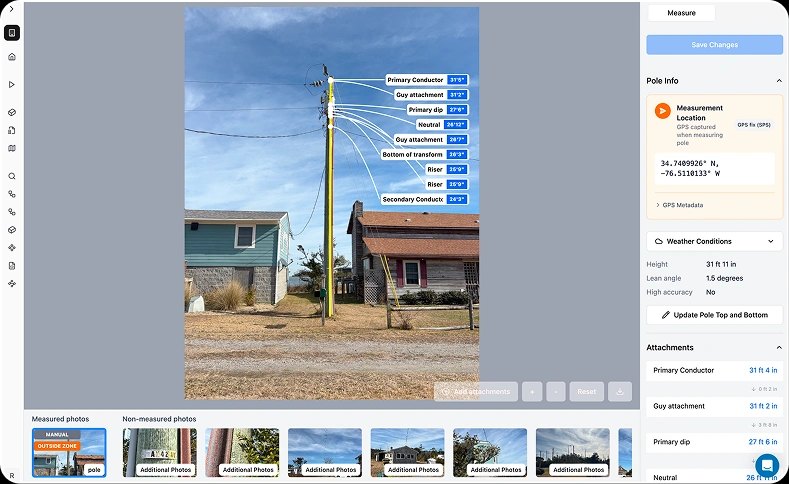
The concept is more elegant than it sounds. Unlike generic AI platforms that require coding or clean data, Cloneable’s platform “shadows” experts. The AI watches an expert perform a workflow — such as a complex utility-pole design. It then captures audio and documentation from the expert in real time, and turns that contextual experience into an AI agent capable of executing the same task.
Cloneable’s platform captures expert knowledge and translates it into specialized AI agents capable of replicating complex workflows at scale. These agents can automate back-office processes by observing how experienced operators perform tasks using existing software tools, enabling organizations to scale expertise without requiring extensive retraining or system overhauls.
This is how you clone expert worker knowledge without losing any of its nuance. The agent doesn’t improvise — it executes. At launch, the platform includes purpose-built templates for energy sector workflows such as make-ready engineering, permitting, and joint use, delivering operational value in as little as 24 hours. The Cloneable infrastructure AI platform new generation of agents now covers the complete arc from field data collection all the way through back-office execution.
The Cloneable Agentic AI Utilities Update: Performance That Changes the Math
A single engineer can process roughly 4,500 to 5,500 poles a year before hitting a capacity ceiling. Cloneable’s agent runs at 2 million to 3 million poles a year. For a mid-size engineering firm with five to ten people spending half their time on this work, that’s $115,000 to $312,000 a year in labor costs that can be redirected to higher-value work.
The stakes reach beyond cost savings. Reich notes this “could be the difference in entire towns being connected to fiber or not over the next 12 months.” That’s not marketing language — it’s infrastructure reality for rural communities hanging on the edge of connectivity.
Growth metrics back the story up. The startup grew ARR 100x between February and the end of 2025, and now has dozens of customers, including American Electric Power, Southern California Edison, Burns & McDonnell, TRC, Sigma, and Perdue. These aren’t beta testers. They are serious enterprises proving out the Cloneable expert worker knowledge AI breaking case study at operational scale.
The Crunchbase exclusive report on this round captures the ambition clearly: this isn’t a narrow point solution. Cloneable is after the entire expert-workflow layer of critical infrastructure.
Congruent Ventures Cloneable Funding Latest: The Investors Who Wrote the Check
Alongside announcing Cloneable Agent, the company closed a $4.6 million seed round led by Congruent Ventures, with participation from First In, Overline, St. Elmo Venture Capital, and Bull City Venture Partners. The Congruent Ventures Cloneable funding latest round brings the startup’s all-in total to $5.35 million since its 2023 inception.
Congruent Ventures is actively deploying Fund III, which closed in December 2023 at $275 million. This fund brings the firm’s total assets under management to more than $1 billion, making it one of the largest pure-play early-stage climate technology firms in the world.
Other investors in the round include DC-based First In, Atlanta-based Overline, Texas-based St. Elmo Venture Capital, and North Carolina-based Bull City Venture Partners. The geographic spread — from San Francisco to Texas to North Carolina — signals broad conviction in the industrial AI thesis. The Congruent Ventures Cloneable funding latest bet was articulated clearly by partner Eliza Cushman, who said the firm had “seen companies focus either on data capture with complex, expensive, purpose-built hardware — or on agentic AI for the back office where they struggle to get the high-fidelity data needed to power those agents. Cloneable has solved both.”
Origin Story: From California Wildfires to a Raleigh AI Startup
The Cloneable AI Raleigh startup news didn’t come out of nowhere. In 2019, as wildfires ravaged California, co-founders Lia Reich, Tyler Collins, and Patrick Lohman — then founding employees at drone company PrecisionHawk — were deployed to help inspect critical infrastructure. They experienced firsthand what it means when expert knowledge can’t scale: bottlenecks, delays, and systems that creak under pressure.
PrecisionHawk was a commercial drone and data company, headquartered in Raleigh, North Carolina. Earlier in 2023, PrecisionHawk was acquired by Field Group, a European company focused on data analysis solutions for the infrastructure, construction, and public service sectors. When the dust settled, the three founders walked away and built Cloneable — this time with a sharper mission: not just capturing field data, but cloning expert worker knowledge into something replicable and scalable.
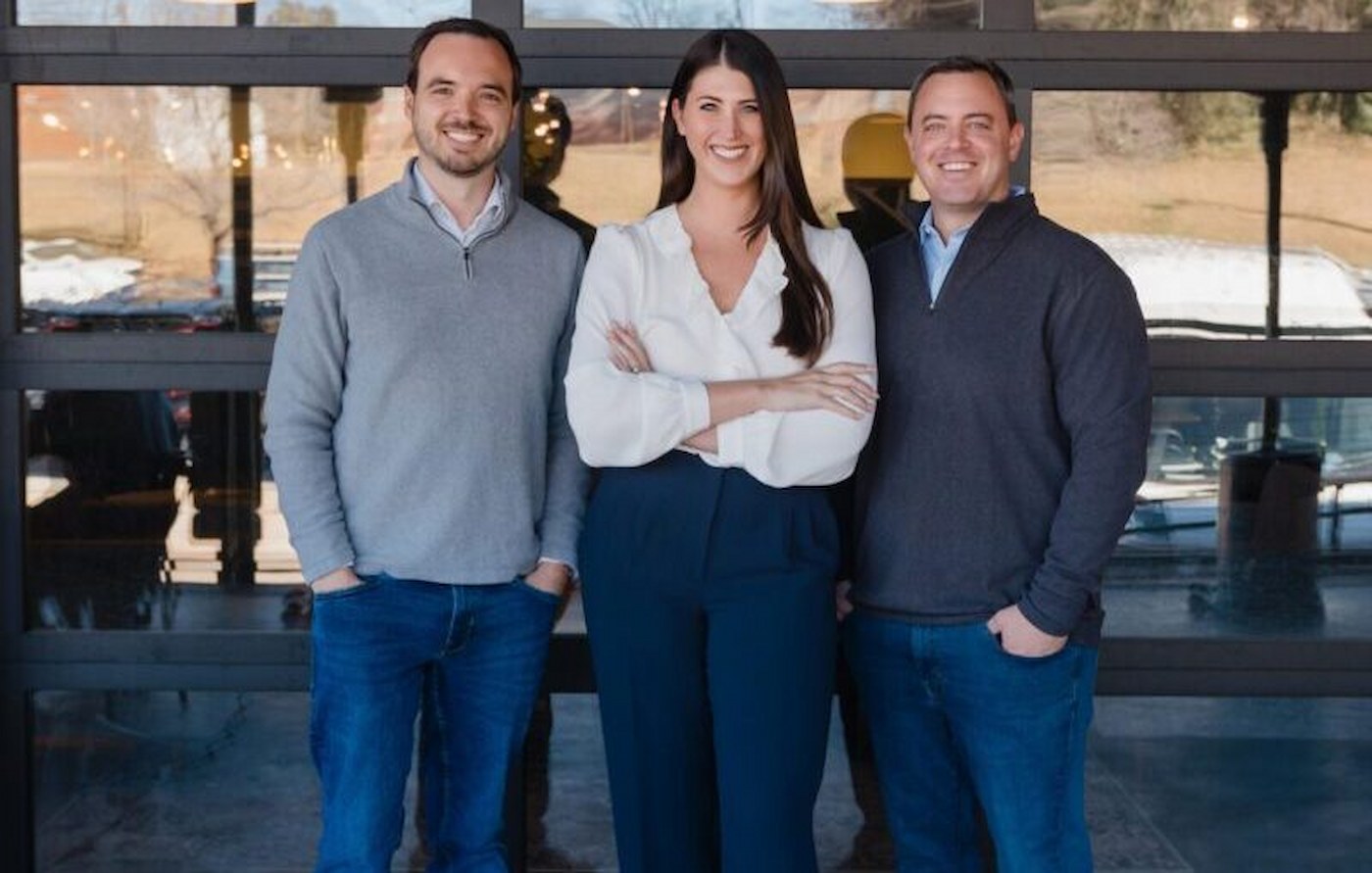
Founded in 2023 by Lia Reich, Tyler Collins, and Patrick Lohman, the team brings more than a decade of experience building technology for industrial data capture, including work in the commercial drone industry and enterprise systems for large-scale operations.
Cloneable Infrastructure AI Platform New: The Industries on the Roadmap
The Cloneable $4.6M seed round today was earmarked with a specific mandate. The funding will accelerate expansion across infrastructure-intensive industries: public utilities, vegetation management, energy, construction, rail, mining, agriculture, and manufacturing. Each of these markets shares a defining trait — they are managed by hard-to-replace human expertise and chronically underserved by narrow, single-use technology solutions.
Here’s what sets the Cloneable infrastructure AI platform new architecture apart from a typical SaaS deployment:
- No code required — experts train agents through observation, not programming
- Rapid deployment — new applications go live from data capture to execution in hours
- Customer-specific models — small, targeted models cloned from each firm’s own workflows
- End-to-end coverage — from physical field inspection through back-office decision-making
- Integration-first design — works with existing tools, no rip-and-replace required
The team ended 2025 with five full-time employees and has since grown to nine, with two to three additional hires planned for 2026. Lean, focused, and growing fast — exactly the profile of a startup that knows its lane.
Why This Matters Beyond the Hype: Differentiation That’s Hard to Copy
Many enterprise AI startups promise transformation and deliver dashboards. Cloneable is different by design. Large foundation model companies focus on the model itself. Cloneable focuses on a framework that leverages different model types, including small, specific ones. “We clone our customers’ knowledge and experience into a small model, which makes it extremely cost-effective to do their work,” Reich explained.
The Cloneable agentic AI utilities update isn’t competing with GPT-4 or Claude. It’s competing with no one — because no one has combined field-level data capture with full agentic automation in a way that actually works for the utility technician in the field on a Tuesday morning.
While competitors are locked into hardcoded, single-use workflows, Cloneable customers build and deploy new applications in hours, from data collection to actionable outcomes. That agility is a structural moat. And with customers like Congruent Ventures-backed enterprises already embedding the platform, network effects will only deepen proprietary data advantages over time.
Without a proactive strategy to preserve and transfer knowledge, utilities risk losing the technical foundation required to ensure grid reliability and future innovation. Cloneable’s answer to that warning is now live, funded, and scaling.
The Bottom Line for Infrastructure Leaders
The Cloneable expert worker knowledge AI breaking story is a signal — not just a startup announcement. America’s infrastructure workforce is aging out faster than any hiring plan can address. Enterprises need to boost their digital transformation with technology solutions that safeguard critical institutional knowledge and create seamless transitions for training new workers into front-line roles.
Cloneable is betting that the fastest way to preserve that knowledge isn’t to document it or mentor it — it’s to clone expert worker knowledge directly into AI agents that run 24/7, scale infinitely, and never retire. The $4.6M round is just the opening chapter. For any utility, construction firm, or engineering company still running on tribal knowledge and legacy workflows, the clock is already ticking.
Explore what the Cloneable infrastructure AI platform new generation of agentic tools can do at cloneable.ai — or dive into the full Hypepotamus profile of the founding team’s vision.
Frequently Asked Questions
What does Cloneable do exactly?
Founded in 2023, Cloneable is an AI automation company focused on infrastructure operations. It automates expert-dependent, field-to-office workflows that have traditionally been considered too complex for automation, capturing the institutional knowledge of experienced operators and deploying it as specialized AI agents for heavy industry workflows.
Who led the Cloneable $4.6M seed round today?
The $4.6 million seed funding round was led by Congruent Ventures, with participation from First In, Overline, St. Elmo Venture Capital, and Bull City Venture Partners.
How does Cloneable clone expert worker knowledge?
Rather than building AI models from the ground up, Cloneable’s platform observes experienced workers as they perform intricate tasks — including diagnosing equipment failures or managing power grid operations. These workflows are then converted into digital agents that can execute the same processes autonomously, reducing reliance on manual intervention for repetitive specialist work.
What is the Cloneable AI Raleigh startup’s total funding to date?
The Raleigh, North Carolina-based startup’s total raised stands at $5.35 million since its 2023 inception.
Which industries does the Cloneable infrastructure AI platform target?
Cloneable is targeting a wide range of infrastructure-intensive sectors, including public utilities, energy, construction, rail, mining, agriculture, and manufacturing.
What growth metrics has Cloneable reported?
The startup grew its ARR 100x between February and the end of 2025, and now has dozens of customers including American Electric Power, Southern California Edison, Burns & McDonnell, TRC, Sigma, and Perdue.
Why did the founders start Cloneable after PrecisionHawk?
The idea for Cloneable traces back to a bottleneck its founders encountered years earlier while working in the field. In 2019, as wildfires ravaged California, the co-founders — then founding employees at drone company PrecisionHawk — were deployed to help inspect critical infrastructure, exposing the limits of knowledge that couldn’t scale or transfer beyond the individual expert.