
How Enhanced Geothermal Systems Are Breaking Free: Fervo Energy’s $421M Leap Past the ‘Valley of Death’

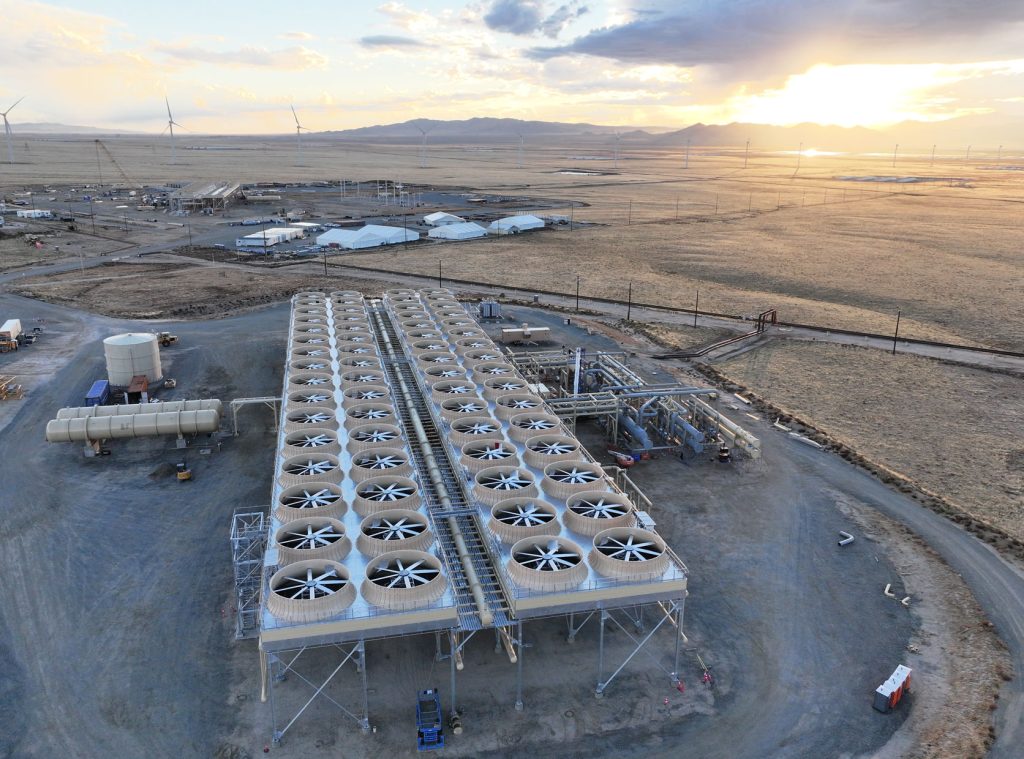
Fervo Energy just secured a $421 million non-recourse loan for its flagship Cape Station project in Utah — a financial milestone that signals enhanced geothermal systems have crossed a critical commercial threshold. Non-recourse debt ties liability to the project itself, not the parent company. Lenders rarely extend that kind of trust to first-of-a-kind facilities. Yet here we are.
The Houston-based startup has raised approximately $1.5 billion since its founding in 2017, and its latest debt deal essentially tells Wall Street something startups rarely get to say: we’re bankable. In the clean energy world, where capital-intensive ventures routinely die between proof-of-concept and profitability, that word carries enormous weight. Fervo hasn’t just survived the so-called “valley of death.” It’s catapulted over it.
What Makes Enhanced Geothermal Systems a Game Changer
Traditional geothermal power plants depend on a geological trifecta: natural heat, underground water, and permeable rock. Those conditions exist in very few places, mostly near tectonic plate boundaries. That limitation explains why geothermal currently accounts for only about 0.4% of total U.S. electricity generation despite the country leading the world with roughly 4 gigawatts of installed capacity.
Enhanced geothermal systems shatter that geographic constraint. They generate electricity without natural convective hydrothermal resources by engineering artificial reservoirs deep underground. Engineers drill into hot, impermeable rock, fracture it to create fluid pathways, then pump water through those fractures to extract heat. The result is carbon free baseload power available around the clock — rain or shine, calm or windy.
A Princeton University study published in Joule found that enhanced geothermal systems could supply up to 20% of U.S. electricity by 2050 if deployment costs decline along expected learning curves. That analysis projected over 250 gigawatts of potential capacity. Meanwhile, the U.S. Geological Survey estimates 135 GW of potential in the Great Basin of the Southwest alone. The technical ceiling for this next generation geothermal technology is staggering — and we’ve barely scratched the surface.
Horizontal Drilling for Geothermal: Borrowing From Big Oil
Fervo’s secret weapon isn’t some exotic lab invention. It’s technology the oil and gas industry perfected over decades. The company uses horizontal drilling and distributed fiber optic sensing to unlock geothermal energy in locations previously dismissed as uneconomic. Think of it as fracking’s cleaner, hotter cousin.
The approach to horizontal drilling for geothermal originated with Fervo’s co-founder and CEO, Tim Latimer, who worked as a drilling engineer at BHP before pivoting to clean energy. His co-founder, CTO Jack Norbeck, brought deep subsurface analytics expertise. Together, they assembled a team where fossil fuel workers have accounted for over 90% of on-site labor hours at Cape Station. This isn’t a clean energy company that looks down on oil and gas. It’s one that raids its playbook.
Fervo’s Project Red in Nevada, completed in 2023, became the world’s first commercial pilot system to use horizontal wells in an enhanced geothermal system. That 3.5 MW facility proved the concept worked. The wells reached 8,000 feet vertically with horizontal laterals extending roughly 3,250 feet. It was small but historic — the equivalent of the Wright Brothers’ first flight for next generation geothermal technology.
Geothermal Drilling Cost Reduction: The Numbers Tell the Story
Cost is where skeptics usually attack geothermal. Drilling is expensive. But Fervo is rewriting those economics at a pace that surprises even industry veterans.
At Cape Station, the company drilled its fastest well in just 21 days — a 70% reduction from its first horizontal well at Project Red in 2022. Keep in mind: Cape wells are hotter and over 2,100 feet deeper. The geothermal drilling cost reduction has been dramatic in raw dollar terms too, with drilling costs across the first four horizontal wells falling from $9.4 million to $4.8 million per well. That’s nearly a 50% decline in just months.
By June 2025, Fervo pushed the envelope further. Its Sugarloaf appraisal well reached 15,765 feet in only 16 drilling days, representing a 79% reduction from DOE baselines for ultradeep wells. The team hit a maximum rate of penetration exceeding 300 feet per hour at depths greater than 15,000 feet. These aren’t incremental improvements. They mirror the explosive efficiency gains seen during the early shale revolution — a comparison Devon Energy’s CTO Trey Lowe made explicitly.
Fervo’s learning curve stands at 35% for drilling time improvement, nearly double the originally planned 18%. That kind of geothermal drilling cost reduction trajectory reshapes every financial model in the sector. It also makes utility scale geothermal projects far more attractive to risk-averse infrastructure investors.
Carbon Free Baseload Power: Why Data Centers Are All In
The timing of Fervo’s rise is no coincidence. Data centers are devouring electricity at unprecedented rates, and hyperscalers want carbon free baseload power that doesn’t depend on weather. Solar dies at sunset. Wind fades on calm days. Geothermal runs 24/7 with capacity factors exceeding 90%.
Google was an early believer. Fervo signed a 115 MW power purchase agreement with NV Energy to supply carbon free baseload power for Google’s Nevada data centers back in 2021. Google then participated in Fervo’s $462 million Series E round in December 2025. Other heavyweight buyers include Southern California Edison, Shell Energy North America, and Clean Power Alliance — all of whom have contracted power from Cape Station.
The appeal goes beyond environmental credentials. Unlike wind and solar, geothermal is one of the rare forms of clean energy to win acceptance from the Trump administration, which has spared the industry from the policy attacks leveled at other renewables. Energy Secretary Chris Wright’s previous company, Liberty Energy, actually participated in an earlier Fervo fundraising round. That bipartisan appeal creates a durable policy tailwind for utility scale geothermal projects nationwide.
Geothermal Energy Market Trends 2026: A Sector Heating Up
Geothermal energy market trends 2026 point unmistakably upward. The global geothermal energy market was valued at approximately $7.45 billion in 2023 and is projected to grow steadily through the decade. Enhanced geothermal systems specifically are forecast to expand at an 18.2% CAGR through 2030 — far outpacing the broader sector’s growth rate.
Several converging forces are accelerating geothermal energy market trends 2026. The Inflation Reduction Act extends a 30% Investment Tax Credit through 2032 along with production credits that directly boost project returns. Simultaneously, the DOE’s GeoVision analysis projects that advanced geothermal could reach 60 gigawatts of capacity by 2050, with updated estimates suggesting 90 GW or more is feasible.
Fervo isn’t alone in this race. Competitors like Sage Geosystems and Zanskar are pursuing their own approaches, and the DOE’s Utah FORGE field laboratory continues to de-risk the technology for the entire sector. But Fervo holds a clear lead among utility scale geothermal projects. Cape Station, once completed at full build-out, will deliver 500 megawatts of capacity — making it the world’s largest enhanced geothermal power plant.
Cape Station: Where Next Generation Geothermal Technology Proves Itself
Cape Station in Beaver County, Utah represents everything enhanced geothermal systems must demonstrate to scale. The first 100 MW phase is on track to deliver power to the grid in 2026, making it the first commercial-scale enhanced geothermal project to hit such a milestone worldwide. Four hundred megawatts of power is fully contracted from investment-grade buyers and slated for delivery by 2028.
An independent reserves report found that Fervo’s proprietary EGS design unlocks thermal recovery factors of 50 to 60%, tripling useful thermal energy reserves compared to conventional approaches. The Cape Station project area alone can support over 5 GW of development — and the site is fully permitted up to 2 GW.
With 15 wells drilled and drilling times now in the mid-teens, Cape Station has evolved from ambitious experiment to bankable infrastructure. Horizontal drilling for geothermal, once considered too risky for commercial deployment, now looks like the most promising pathway to clean, firm power at scale.
What Comes Next: IPO, Expansion, and the Road to Gigawatts
Fervo is reportedly preparing to go public, with rumors of IPO paperwork filed in early 2026. An IPO would provide the capital needed to replicate the Cape Station model across multiple sites, including a Nevada project with NV Energy and Google targeting 115 MW.
The $421 million non-recourse loan wasn’t just a fundraise. It was a signal to every infrastructure investor, utility buyer, and policymaker that next generation geothermal technology is ready for prime time. Geothermal drilling cost reduction continues to accelerate. Demand for carbon free baseload power is surging. And the geothermal energy market trends 2026 confirm what Fervo has been betting on since 2017: the Earth’s heat is the most underrated energy resource on the planet.
If you’re an investor, developer, or policy advocate watching the clean energy transition, enhanced geothermal systems deserve a spot at the top of your watchlist. The valley of death is behind Fervo. The gigawatt era lies ahead.
Frequently Asked Questions
What are enhanced geothermal systems?
Enhanced geothermal systems (EGS) are engineered reservoirs that generate geothermal electricity without natural convective hydrothermal resources. They involve drilling into hot rock, fracturing it to create fluid pathways, and circulating water to extract heat for power generation — enabling geothermal energy production far beyond traditional volcanic hotspots.
How much funding has Fervo Energy raised?
Fervo has raised approximately $1.5 billion overall since 2017, including a $462 million Series E round in December 2025 and a $421 million non-recourse project loan in March 2026. Its estimated valuation stands at $1.4 billion.
What is Cape Station and when will it come online?
Cape Station is Fervo’s flagship 500 MW enhanced geothermal project in Beaver County, Utah. The first 100 MW phase is expected to begin delivering power to the grid in 2026, with 400 MW fully contracted and scheduled by 2028.
How has Fervo reduced geothermal drilling costs?
Fervo achieved a 70% reduction in drilling time and cut per-well costs from $9.4 million to $4.8 million by applying oil and gas techniques — including horizontal drilling, PDC drill bits, and mud coolers — to geothermal formations.
How much electricity could enhanced geothermal systems produce in the U.S.?
A Princeton University study found that over 250 GW of EGS could be deployed by 2050 under baseline cost scenarios. The DOE projects at least 90 GW of capacity is technically achievable, which would represent a massive increase from today’s roughly 4 GW.
Why are data center companies investing in geothermal?
Geothermal delivers 24/7 carbon-free electricity with capacity factors exceeding 90%, making it ideal for data centers that need uninterrupted power. Google, for example, has both contracted power from Fervo and invested in its Series E round.
Is Fervo Energy going public?
Fervo is reportedly preparing for an IPO in 2026, with rumors of paperwork filed in January. An IPO would help fund expansion beyond Cape Station into additional project sites across the western U.S.
