
NICCI Roundtable Flags Policy Gaps and Infrastructure Shortages in Nepal’s Startup Ecosystem

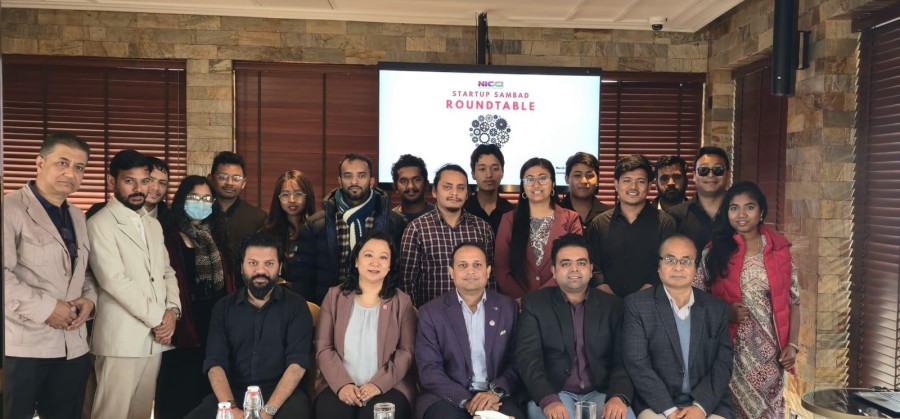
According to the Kathmandu Post, over 2,230 Nepalis left the country every single day with work permits in the first quarter of fiscal year 2025–26 alone — and a critical reason behind that exodus is the persistent failure to build a functional nepal startup ecosystem. On March 16, 2026, the Nepal-India Chamber of Commerce and Industry (NICCI) convened a structured roundtable in Kathmandu that pulled no punches. Founders, chamber leaders, university researchers, and policymakers sat in the same room and produced a frank diagnosis: Nepal’s entrepreneurs are not short on ambition or ideas. What they’re short on is the institutional infrastructure, policy clarity, and capital access that would let those ideas survive.
What the NICCI Startup Sambad Roundtable Insights Reveal
The nicci startup sambad roundtable insights that surfaced from this March session built meaningfully on earlier NICCI-led dialogue. At the Nepal-India Startup Sambad held in February 2026, NICCI Vice-President Kunal Kayal declared that the next phase of Nepal-India economic relations must be driven by the private sector. The March roundtable sharpened that vision into something more urgent. Participants weren’t celebrating success stories this time — they were cataloguing structural failures.
Kunal Kayal chaired the discussion in his role as Vice-Chairperson of NICCI’s Startup and Private Equity Committee. His stated goal was direct: use this dialogue to reduce the outflow of youth by strengthening the domestic entrepreneurial environment. Gaurav Tayal, NICCI’s Vice-President, reinforced the argument — Nepal has innovators, but those innovators need structured mentorship, clearer exit mechanisms, and genuine institutional backing. The nicci startup sambad roundtable insights from this session now form a policy brief that NICCI has committed to taking directly to government decision-makers.
Roshee Lamichhane of the Kathmandu University School of Management joined representatives from both the Federation of Nepalese Chambers of Commerce and Industry (FNCCI) and the Confederation of Nepalese Industries (CNI) in highlighting fragmentation as one of the ecosystem’s deepest wounds. Incubation and support programmes exist. They simply don’t talk to each other — each operates in its own silo, within a single university or organisation, limiting the collaboration and knowledge transfer that healthy startup environments depend on.
Nepal Startup Infrastructure Gaps: The Core Problem
No testing laboratories. No dedicated research parks. These aren’t peripheral complaints — they are fundamental nepal startup infrastructure gaps that suffocate product development before it reaches market. Nepal’s ICT services sector contributed 1.7% of the country’s nominal GDP in 2022, a figure that understates how constrained that growth is by inadequate physical infrastructure. Startups in agritech, biotech, hardware, and space technology all need access to facilities that Nepal does not provide at scale.
Subash Pandey of Agro Range Nepal and Bijay Bhattarai of Dio AI both made this point explicitly during the roundtable. One example that crystallised the absurdity: some startups reported difficulties importing specialised materials for emerging sectors like space technology, while IT-based services are sometimes classified as “luxury goods” rather than strategic economic assets. That classification isn’t just insulting — it actively undermines investment and policy prioritisation in the very sectors Nepal needs most.
Siloed Incubation Networks
Nepal’s incubation landscape looks more organised on paper than it is in practice. Programmes exist at the university level, inside chambers, and within private organisations — but they rarely share resources, coordinate referrals, or build toward a unified startup pipeline. The World Bank has flagged that Nepal’s broader infrastructure challenges are systemic and require deep, sustained reform rather than cosmetic interventions. The same logic applies here. Plugging nepal startup infrastructure gaps will require treating incubation as a national infrastructure project — not a university club activity.
Startup Policy in Nepal 2026: Promises vs. Reality
Startup policy in nepal 2026 has produced real, measurable commitments. The government allocated Rs 730 million for startup loans at a concessional 3% interest rate in the fiscal year 2025–26 budget, offering collateral-free financing for early-stage entrepreneurs. Qualifying startups can also access a five-year income tax exemption on revenues under NPR 100 million, plus a 75% rebate on international technology service income. These are genuinely competitive incentives by regional standards.
The problem is the track record. A startup challenge fund announced in 2015–16 produced zero disbursements. A 2019–20 cash subsidy scheme was announced and then quietly shelved. A 2020–21 low-interest loan fund stalled under bureaucratic weight and poor outreach. The pattern doesn’t inspire confidence. A Policy Research Institute study found that Nepal still faces structural challenges in channelling resources to startups despite well over a decade of stated commitment. Startup policy in nepal 2026 is only as valuable as its execution — and execution remains the weakest link.
Nepal Government Procurement for Startups: A Systemic Bias
Among the roundtable’s most contentious discussions was the issue of nepal government procurement for startups. Nepal’s public procurement system currently defaults to imported goods, bypassing locally developed solutions even when domestic products exist and are competitively priced. That’s not accidental inefficiency — it’s a structural bias that actively demoralises founders who built products for the Nepali market.
Subash Pandey and Bijay Bhattarai named this explicitly: government purchasing decisions send a signal, and right now that signal tells innovators their products aren’t valued. Contrast this with how Singapore and India have weaponised procurement. Both countries embed startup-preference clauses into public purchasing frameworks, creating a guaranteed first-customer effect that dramatically de-risks early-stage growth. Reforming nepal government procurement for startups to incorporate local-first purchasing commitments is a low-cost, high-impact policy lever — and roundtable participants called for it directly.
Access to Finance for Nepali Entrepreneurs: The Capital Gap
Access to finance for nepali entrepreneurs remains the single most frequently cited barrier across every stakeholder group — founders, investors, researchers, and policymakers. Traditional banks still demand collateral that most early-stage startups simply don’t have. Angel investors are scarce. The venture capital industry is nascent and thinly capitalised. India’s startups raised $10 billion in 2023 alone — Nepal’s entire ecosystem doesn’t approach that figure in a decade.
The architecture of financing matters as much as its volume. Without clear investor exit mechanisms, without functional secondary markets, and without standardised due diligence frameworks, institutional capital defaults to safer bets elsewhere. Some positive structural changes are underway. The World Bank approved $95 million to expand SME financing in Nepal, and the government is launching a NPR 25 billion Alternative Development Finance Fund designed to mobilise capital through bonds, equity, and hybrid instruments. Meaningful progress — but bridging the structural gap on access to finance for nepali entrepreneurs requires years of consistent execution. Progress on paper rarely translates instantly into capital in founders’ accounts.
Foreign Investment Hurdles in Nepal: Red Tape and IP Risks
Foreign investment hurdles in nepal are well-documented, and the March roundtable added granular texture to the familiar list. Founders flagged real difficulties accessing international payment systems for receiving revenue from global clients. Complex, opaque procedures surround the repatriation of foreign capital. Nepal’s minimum foreign investment threshold sits at approximately NPR 20 million — around $154,000 — which screens out a significant tier of small-to-mid international investors who might otherwise back early-stage Nepali startups.
Intellectual property protection is another dimension of foreign investment hurdles in nepal that compounds investor hesitancy. The U.S. State Department’s 2025 Nepal Investment Climate Statement notes that IP enforcement remains weak, with frequent rotation of IP office leadership and under-trained enforcement officials. Without meaningful IP safeguards, technology-intensive startups struggle to attract investors who need confidence their innovations won’t be copied or diluted. Political instability piles on top: Nepal has seen six prime ministers since 2015, and that kind of policy discontinuity is a genuine deterrent to long-term capital commitment.
What Nepal Can Learn from Singapore and Bangalore
Sandeep Kamat of NICCI’s Startup Committee drew direct comparisons between Nepal and the innovation economies of Singapore and Bangalore. Those comparisons sting — but they’re instructive, not demoralising. Singapore’s Startup SG model delivers a one-stop digital portal for registrations, certifications, loans, and market access. Bangalore built its ecosystem over decades through deliberate university-industry partnerships, risk-tolerant venture capital, and a government that treated IT not as luxury spending but as strategic national infrastructure.
Nepal can’t clone either model wholesale. It can, however, steal the principles — and recent cross-border evidence shows those principles work here too. Under the India-Nepal Startup Partnership Network (IN-SPAN), facilitated by IIT Madras with support from India’s Ministry of External Affairs, 24 Nepali startups completed an intensive eight-week residency within the IIT Madras innovation ecosystem. Nine secured investment or incubation offers from leading Indian platforms. That’s a 37.5% conversion rate. Done at scale and on a recurring basis, programmes like this could meaningfully compensate for domestic gaps while longer-term reforms take hold.
The Path Forward for the Nepal Startup Ecosystem
The nepal startup ecosystem is not beyond repair — it is under-resourced and under-connected. The NICCI roundtable produced a clear, actionable reform agenda. Fix procurement rules to prioritise local innovation. Build testing labs and research parks as national infrastructure. Deepen access to finance for nepali entrepreneurs through both public loan programmes and structured angel investor incentives. Simplify the foreign capital regulatory maze. Treat incubation as a shared national resource, not an institutional silo.
The FNCCI estimates that SMEs, including startups, account for 70% of employment in Nepal. That makes the stakes concrete. Every startup that collapses due to a solvable policy gap is a job that doesn’t get created — and another talented young Nepali who boards a flight. As Nepal prepares to graduate from Least Developed Country status in 2026, the country faces a pivotal window: build the internal economic engines that reduce remittance dependency, or deepen it further. Addressing startup policy in nepal 2026 with real urgency — across procurement reform, financial architecture, infrastructure investment, and IP protection — is how Nepal begins turning that window into a door.
NICCI Vice-President Kunal Kayal closed the roundtable by committing to carry its conclusions directly to the policy level. That’s a start. The nepal startup ecosystem needs advocates in the room where decisions get made — and it needs them now.
Frequently Asked Questions
What is the NICCI Startup Sambad, and what was the March 2026 roundtable about?
The NICCI Startup Sambad is a structured dialogue series hosted by the Nepal-India Chamber of Commerce and Industry (NICCI) that convenes startup founders, policymakers, chamber representatives, and academics. The March 2026 roundtable specifically examined structural barriers inside the nepal startup ecosystem — including missing testing infrastructure, procurement bias toward imported goods, access to finance challenges, and foreign investment bottlenecks — with the explicit goal of taking those findings to the policy level.
What are the biggest nepal startup infrastructure gaps identified at the roundtable?
The most critical gaps include the absence of product testing laboratories and research parks, fragmented and siloed incubation networks with limited cross-sector collaboration, the misclassification of IT services as “luxury goods” in government frameworks, and difficulties in importing specialised materials for emerging sectors like space technology.
What does startup policy in nepal 2026 currently offer entrepreneurs?
The government offers collateral-free startup loans of up to Rs 25 lakh at 3% interest for up to seven years, a five-year income tax exemption for startups with revenues below NPR 100 million, and a 75% tax rebate on international technology service income. However, a long history of announced-but-unexecuted schemes means many entrepreneurs remain sceptical of implementation.
Why is access to finance for nepali entrepreneurs still so difficult?
Banks continue to require collateral that most early-stage startups don’t possess. The angel investor and venture capital community remains thin, and institutional investors are deterred by the absence of clear exit mechanisms, underdeveloped secondary markets, and the complexity of Nepal’s regulatory environment. While the World Bank’s $95 million SME financing package and the government’s new development finance fund are steps forward, structural change takes time.
What are the main foreign investment hurdles in nepal affecting startups?
The key barriers include complex procedures for bringing foreign capital into Nepal, difficulties accessing international payment gateways, a minimum foreign investment threshold of approximately NPR 20 million that excludes smaller investors, weak intellectual property enforcement, and political instability — with six prime ministers since 2015 — that disrupts policy continuity and investor confidence.
How does nepal government procurement for startups compare to global models?
Nepal’s current procurement system heavily favours imported goods over locally developed solutions, undercutting domestic innovators at the most foundational stage. Countries like Singapore and India have formalised startup-preference procurement policies, creating a guaranteed first-customer dynamic that dramatically de-risks early-stage growth. NICCI and roundtable participants have explicitly called for Nepal to adopt a similar framework.
What results did the India-Nepal Startup Sambad deliver, and can they be replicated?
In the inaugural cohort of the IN-SPAN programme, facilitated by IIT Madras with India’s Ministry of External Affairs, 24 Nepali startups completed an intensive eight-week residency, and nine secured investment or incubation offers from leading Indian platforms. This cross-border model demonstrates that regional cooperation can effectively compensate for domestic gaps. NICCI is working to institutionalise these exchanges as a recurring programme rather than a one-off event.