
Replit Founder Amjad Masad Reaches Billionaire Status Following $400M Funding Round

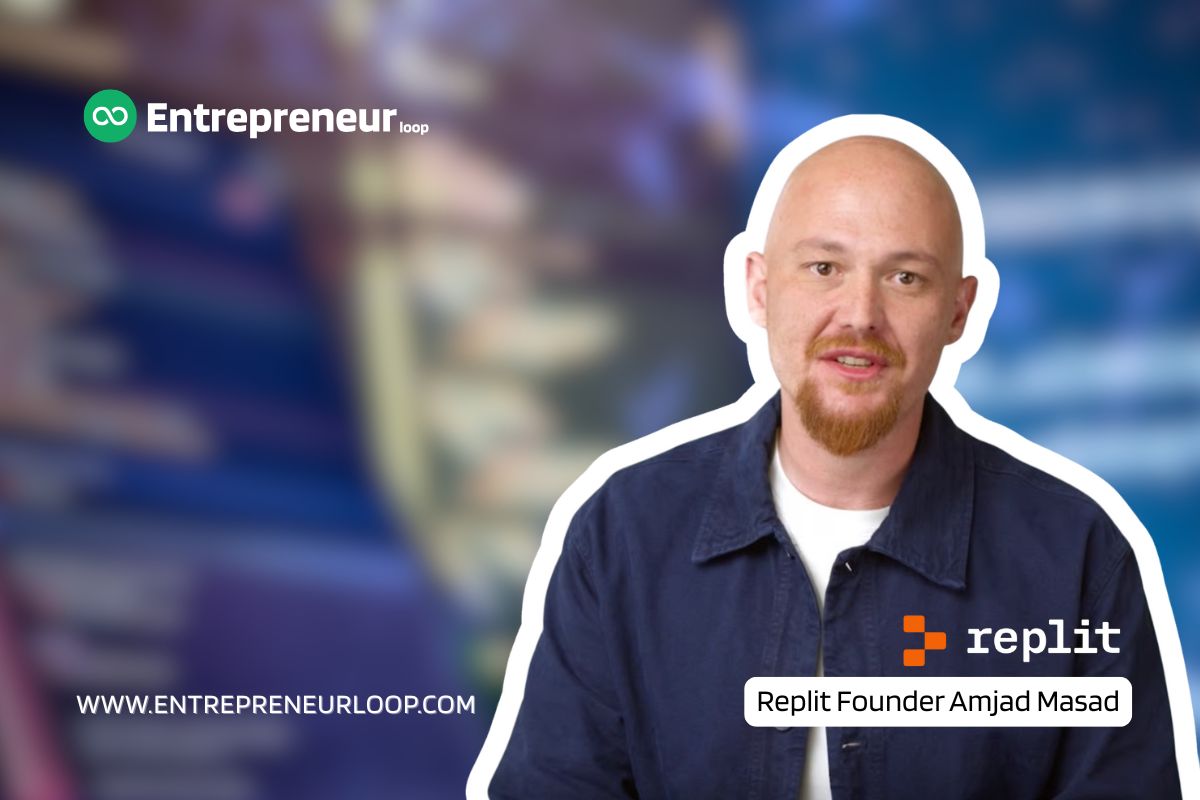
Amjad Masad has officially joined the billionaire club after Replit closed a $400 million Series D funding round that values the AI coding platform at $9 billion, making the founder worth an estimated $2 billion according to Forbes. This massive valuation represents a staggering tripling of the company’s worth in just six months, cementing Masad’s place among Silicon Valley’s elite entrepreneurs.
The recent funding milestone marks a transformative moment for vibe coding startup growth, an approach that allows people to build software by describing what they want in natural language rather than writing code line-by-line. Georgian Partners led the investment round, with participation from G Squared, Prysm Capital, Coatue, Andreessen Horowitz, Craft Ventures, Y Combinator, and strategic investors including Accenture Ventures, Databricks Ventures, and Okta Ventures. Celebrity investors also backed the round, with basketball legend Shaquille O’Neal and actor Jared Leto joining the cap table.
The Journey Behind the Replit Founder Net Worth
Masad was born and raised in Amman, Jordan, in a modest family with Palestinian heritage, where his father—a civil engineer from a Palestinian refugee background—emphasized the importance of education. His path to becoming one of the jordanian tech founders in silicon valley began when his father brought home an IBM PC in 1993, sparking a lifelong passion for technology.
In 2011, at age 23, Masad immigrated to the United States and became a citizen, arriving with credit card debt and no job, landing first at Yahoo for a brief stint from April to November 2011. His breakthrough came when he joined Codecademy as founding engineer—employee number one—after his JavaScript REPL gained attention on Hacker News. He later worked at Facebook leading the JavaScript infrastructure team before taking the entrepreneurial leap.
Masad launched Replit in 2016 as a browser-based coding workspace that allowed developers to write and run code together from anywhere. What started as a collaborative environment for programmers has evolved into something far more ambitious: an AI-driven development system democratizing software creation for everyone.
Explosive Growth Drives Replit Series D Funding Valuation
The numbers behind Replit’s ascent are staggering. Annualized revenue climbed from $2.8 million to $150 million in about a year, according to company figures, and the platform now counts 40 million users worldwide. Even more impressive, Replit’s platform is currently used by more than 50 million users, building everything from school projects to enterprise-grade internal systems.
Enterprise adoption has been particularly strong. Replit is now used at 85% of the Fortune 500. Companies like Zillow, Databricks, PayPal, and Adobe use the platform to build internal apps, with some organizations deploying hundreds of seats for their employees.
The AI coding platform market share has become intensely competitive, with GitHub Copilot, Claude Code, and Anysphere all crossing the $1 billion ARR threshold. However, Replit’s unique positioning focuses on accessibility rather than serving only professional developers, potentially giving it access to a much larger addressable market.
According to Grand View Research, the global AI code tools market was valued at $4.86 billion in 2023 and is projected to reach $26.03 billion by 2030, growing at a CAGR of 27.1%. Replit’s rapid revenue growth significantly outpaces even these bullish industry projections.
Replit Agent 4 Release News: The Platform’s Secret Weapon
Alongside the funding announcement, Replit unveiled its most powerful product yet. Replit Agent 4 combines design and code within a single environment, allowing users to move fluidly from concept to working software, with both a low floor for beginners to start building quickly and high ceiling supporting advanced development workflows in enterprises.
The new release embodies the vibe coding startup growth philosophy that has defined Replit’s trajectory. Agent 4 is Replit’s fastest, most versatile Agent yet, designed to push the boundaries of what’s possible in vibe coding and build production-ready apps faster.
What makes Agent 4 different? It enables users to generate design variants on an infinite canvas, tweak them visually, and apply the best one directly in apps, while tackling authentication, database, back-end functionality and front-end design all at once with parallel agents. This multi-agent approach allows teams to work on different aspects of an application simultaneously—dramatically accelerating development cycles.
The platform also extends beyond traditional coding applications. Users can create mobile and web apps, landing pages, presentations, videos, and more within the same project, all sharing context and design. This unified approach addresses one of the biggest pain points in modern software development: workflow fragmentation.
Understanding Vibe Coding and Its Market Impact
The concept of vibe coding has revolutionized how we think about software development. In computer programming, vibe coding is a software development practice assisted by artificial intelligence such as by chatbots that simulate conversation. The term, coined by AI researcher Andrej Karpathy in early 2025, describes a workflow where the primary role shifts from writing code line-by-line to guiding an AI assistant to generate, refine, and debug an application through a more conversational process.
The implications are profound. In March 2025, Y Combinator reported that 25% of startup companies in its Winter 2025 batch had codebases that were 95% AI-generated, reflecting a shift toward AI-assisted development within newer startups. This trend has accelerated throughout the year as AI models have become more capable.
However, vibe coding isn’t without controversy. METR, an organization that evaluates frontier models, ran a randomized controlled trial finding that experienced open-source developers were 19% slower when using AI coding tools, despite predicting they would be 24% faster and still believing afterward they had been 20% faster. This suggests that while AI coding tools have tremendous potential, their effective use requires new skills and workflows.
Despite these growing pains, Wikipedia notes that major publications like The Wall Street Journal reported in July 2025 that vibe coding was being adopted by professional software engineers for commercial use cases, signaling mainstream acceptance of the approach.
The Billionaire Milestone: Amjad Masad Billionaire Status
The new influx of cash makes Masad a billionaire for the first time, worth $2 billion, according to Forbes estimates. This amjad masad billionaire status places him among a select group of immigrant entrepreneurs who have achieved remarkable success in Silicon Valley.
His journey resonates particularly powerfully because of where he started. Growing up in Jordan without consistent access to computers, Masad often borrowed devices from friends or visited internet cafés to learn programming. That early limitation didn’t stop him—it fueled his determination to make coding accessible to everyone with an internet connection.
Masad, the son of a civil engineer and stay-at-home mom, grew up in Amman, Jordan, where his parents were both refugees—his father from Palestine and his mother from Algeria—and he grew up in a lower middle class family, but in 1993, when he was six, his father brought home an IBM PC, and a year later he had learned to code, building apps to teach math to his younger brother, and as a child attending an international private school with kids wealthier than him, he realized early on that tech could help him economically.
This background fundamentally shaped his vision for Replit. Unlike many founders focused solely on serving professional developers, Masad sees his platform as a tool for democratization—a way to level the playing field for people who face the same barriers he once did.
Competitive Landscape and Strategic Positioning
The replit founder net worth milestone comes amid fierce competition in the AI coding space. GitHub Copilot (owned by Microsoft), Claude Code (owned by Anthropic), and Anysphere have all crossed the $1B ARR threshold, maintaining their lead since September 2025.
Each player has carved out a distinct position. GitHub Copilot leads with distribution advantages, having an estimated $800M in ARR. Anthropic’s Claude Code, launched in May 2025, already contributes approximately 10% of Anthropic’s revenue. Anysphere’s Cursor has achieved a $9.9 billion valuation focusing squarely on professional developers.
Replit’s differentiation lies in its broader vision. Masad insists Replit’s advantage over Anthropic is its nimbleness and focus as a smaller company, noting that while Anthropic’s prowess in coding is undeniable, it’s also a giant AI lab with broader aspirations including AGI, and “Dario really cares about biology and curing cancer, and that’s amazing,” but “We can’t cure cancer. Replit is about making everyone a software engineer…I just know our limits.”
This focused approach appears to be working. Market research identifies Replit alongside tech giants like IBM, Microsoft, Google, and AWS as key players shaping the AI code tools landscape. For a company founded less than a decade ago, this positioning represents remarkable market penetration.
Enterprise Adoption and Revenue Trajectory
The enterprise market has become central to Replit’s growth story. Replit already serves teams from 85% of Fortune 500 companies, with organizations such as Atlassian, LabCorp, PayPal, Zillow, Talkdesk, Adobe, and UKG using the platform to accelerate internal workflows.
Real-world results demonstrate the platform’s value proposition. UKG turned to Replit and, in just a few days, rolled out reusable prototypes, ramping up their product feedback by 400%. Similarly, Talkdesk used Replit across its sales and HR teams to build an internal application to test hiring capacity, with the process taking two days instead of the normal two weeks.
CEO Amjad Masad has set an incredibly ambitious target of reaching the $1 billion annual revenue milestone by the end of 2026. With over 150,000 paying customers already on the platform, the startup is proving its ability to convert a massive free user base into a sustainable, high-growth business model.
The Jordanian Tech Founders in Silicon Valley Narrative
Masad’s success story adds to a growing roster of jordanian tech founders in silicon valley who have made significant impacts on the technology industry. His journey embodies the classic immigrant entrepreneur narrative that has been central to Silicon Valley’s dynamism for decades.
Masad grew up in Amman, Jordan, and moved to the US in 2012, working at Codecademy and later at Facebook before founding Replit. His path wasn’t easy—he applied to Y Combinator multiple times before finally gaining acceptance on his fourth attempt. This persistence exemplifies the determination that has characterized his entire career.
The significance extends beyond personal achievement. By building a platform that democratizes software creation, Masad is helping to create opportunities for the next generation of entrepreneurs from diverse backgrounds—people who might face similar barriers to entry that he once overcame.
His perspective as an immigrant also shapes his worldview. In a viral Twitter thread from 2021 marking ten years since arriving in the United States, Masad reflected on what he loves about America, including work ethic, optimism, meritocracy, and economic mobility. The thread resonated particularly strongly with other immigrants who shared his appreciation for opportunities unavailable in many other countries.
Technical Innovation and Product Philosophy
What sets Replit apart technically? The platform’s architecture reflects years of iteration and refinement. Replit provides an AI-powered development platform designed to enable students, teachers, designers, small business owners and engineers to generate, deploy, and iterate on software applications within a single environment, integrating the development environment with AI-assisted coding tools, runtime infrastructure and deployment capabilities, while supporting integrations with enterprise systems including Salesforce, HubSpot, Snowflake, Amazon Web Services, and Google Cloud, as well as collaboration tools such as Slack and Jira.
This comprehensive approach addresses the full software development lifecycle. Rather than focusing narrowly on code generation, Replit handles everything from initial concept to production deployment. The platform includes built-in services like authentication, database hosting, and monitoring—eliminating setup friction that traditionally slows down development.
The collaborative features draw inspiration from tools like Google Docs, enabling real-time multi-user editing of code. This social dimension has proven particularly valuable for education, with millions of students and teachers using Replit for computer science coursework.
Challenges and Future Outlook
Despite the impressive growth, Replit has faced obstacles. Earlier in the summer, the Replit Agent mistakenly deleted a customer’s codebase, leading Masad to issue a public apology, and the company rolled out new safeguards after the incident, serving as a reminder that AI-driven development tools still carry risk even as adoption climbs.
These growing pains are inevitable as the company scales rapidly. The challenge lies in maintaining platform reliability while pushing the boundaries of what AI-powered development can achieve. Balancing innovation with stability will be crucial as enterprise customers increasingly depend on Replit for critical workflows.
Looking ahead, the competitive dynamics in ai coding platform market share will likely intensify. Expect the dust to start settling and positions to become more entrenched, with enterprise contacts locking in users for extended time periods, and beyond contracts, switching costs rising organically as developers adapt workflows, prompts, and codebases to a specific tool, making changes only viable for significant technical differences.
This ecosystem already looks prime for consolidation, with leading players starting an acquisition spree this month: Anthropic bought the JavaScript runtime tool Bun, while Anysphere acquired the AI code review tool Graphite. Whether Replit pursues similar strategic acquisitions to expand its capabilities remains to be seen.
What This Means for Software Development
The replit series d funding valuation of $9 billion signals investor confidence that the future of software development will look radically different from today. The question isn’t whether AI will transform coding—it already has. The question is which approach will prove most successful: tools optimized for professional developers, or platforms like Replit that aim to expand the definition of who can be a creator.
Industry analysts project the AI Code Tools market size to grow from USD 7.37 billion in 2025 to USD 23.97 billion by 2030, advancing at a 26.60% CAGR. Within this broader market, the vibe coding segment represents a particularly high-growth subsegment as barriers to entry continue falling.
The implications extend beyond software itself. As more people gain the ability to create digital tools without traditional coding skills, we may see an explosion of niche applications solving problems too small or specific to attract professional development resources. This “long tail” of software creation could unlock tremendous value across countless industries.
Conclusion: The Democratization Vision
Amjad Masad’s journey from borrowing computers in Jordan to achieving billionaire status epitomizes both personal success and a broader transformation in technology. His amjad masad billionaire status isn’t just about wealth—it validates a vision that software creation can and should be accessible to everyone.
The $400 million funding round provides Replit with resources to accelerate product development, expand globally, and compete aggressively for enterprise customers. But the company’s ultimate success will be measured not just in revenue or valuation metrics, but in how effectively it delivers on its mission to empower the next billion software creators.
As AI continues advancing, the barrier between having an idea and building a working application continues shrinking. Platforms like Replit are at the forefront of this shift, making software development more intuitive, collaborative, and accessible than ever before. Whether you’re a professional engineer, a student learning to code, or a business user with no technical background, the future of software creation is becoming more democratic—and that future is arriving faster than most people expected.
The vibe coding revolution is just beginning. With backing from top-tier investors, enterprise adoption at Fortune 500 companies, and a founder who deeply understands both the technical and human dimensions of making software accessible, Replit is positioned to shape how millions of people around the world bring their digital ideas to life in the years ahead.
Frequently Asked Questions
What is Amjad Masad’s net worth after the recent Replit funding?
According to Forbes estimates, Amjad Masad’s net worth is approximately $2 billion following Replit’s $400 million Series D funding round that valued the company at $9 billion. This represents his first time crossing the billionaire threshold and reflects his significant ownership stake in the fast-growing AI coding platform. The replit founder net worth has grown dramatically as the company’s valuation tripled in just six months, driven by explosive revenue growth and enterprise adoption.
How did Replit’s valuation increase so quickly?
Replit’s valuation skyrocketed from $3 billion to $9 billion in just six months due to several factors: annualized revenue jumped from $2.8 million to $150 million in about a year, the platform gained over 50 million users, 85% of Fortune 500 companies now use Replit, and the launch of powerful new AI features like Agent 4 demonstrated technological leadership. The replit series d funding valuation reflects investor confidence in the vibe coding market and Replit’s position as a leader in democratizing software development through AI.
What is vibe coding and why does it matter?
Vibe coding is a software development practice where users describe what they want to build in natural language, and AI generates the actual code. Coined by AI researcher Andrej Karpathy in early 2025, this approach shifts developers from writing code line-by-line to guiding AI assistants through conversational prompts. It matters because it dramatically lowers the barrier to software creation, enabling non-technical users to build applications and potentially expanding the developer population from millions to billions. The vibe coding startup growth trend is reshaping who can create software.
What makes Replit different from competitors like GitHub Copilot?
While GitHub Copilot and similar tools focus primarily on assisting professional developers with code completion and suggestions, Replit aims to democratize software creation for everyone—from students to business users with no coding background. Replit provides a complete development environment in the browser with built-in hosting, databases, and deployment, plus collaborative features similar to Google Docs. The platform’s Agent 4 enables users to design, build, and deploy applications through natural language, not just generate code snippets. This broader accessibility focus differentiates Replit’s ai coding platform market share strategy.
How did Amjad Masad become a successful tech entrepreneur?
Amjad Masad’s path to becoming one of the notable jordanian tech founders in silicon valley began in Amman, Jordan, where he was born into a modest Palestinian refugee family. He learned to code as a child after his father bought a computer, then immigrated to the US in 2011 with credit card debt. He worked at Yahoo, became founding engineer at Codecademy, led JavaScript infrastructure at Facebook, and finally launched Replit in 2016. His persistence (applying to Y Combinator four times before acceptance) and vision to democratize coding drove his success.
What is Replit Agent 4 and why is it significant?
Replit Agent 4 is the company’s most advanced AI agent, released alongside the $400 million funding announcement. The replit agent 4 release news matters because it represents a major evolution in vibe coding capabilities. Agent 4 combines design and code in a single environment, uses parallel AI agents to work on multiple aspects of applications simultaneously, includes an infinite canvas for visual design exploration, and can create not just code but also presentations, animations, and mobile apps—all within one project. This multi-modal approach accelerates development timelines by up to 10x according to company claims.
Which major companies use Replit?
Replit serves teams from 85% of Fortune 500 companies, with notable users including Zillow (with roughly 600 seats and over 7,000 apps created), PayPal, Adobe, Atlassian, LabCorp, Talkdesk, UKG, and Databricks. These enterprise customers use Replit primarily for rapid prototyping, building internal tools, and enabling non-engineering teams to create software solutions. The platform has demonstrated significant ROI, with some companies reporting 400% improvements in feedback cycles and reducing development time from weeks to days. This enterprise adoption validates Replit’s value proposition beyond education and hobbyist markets.