

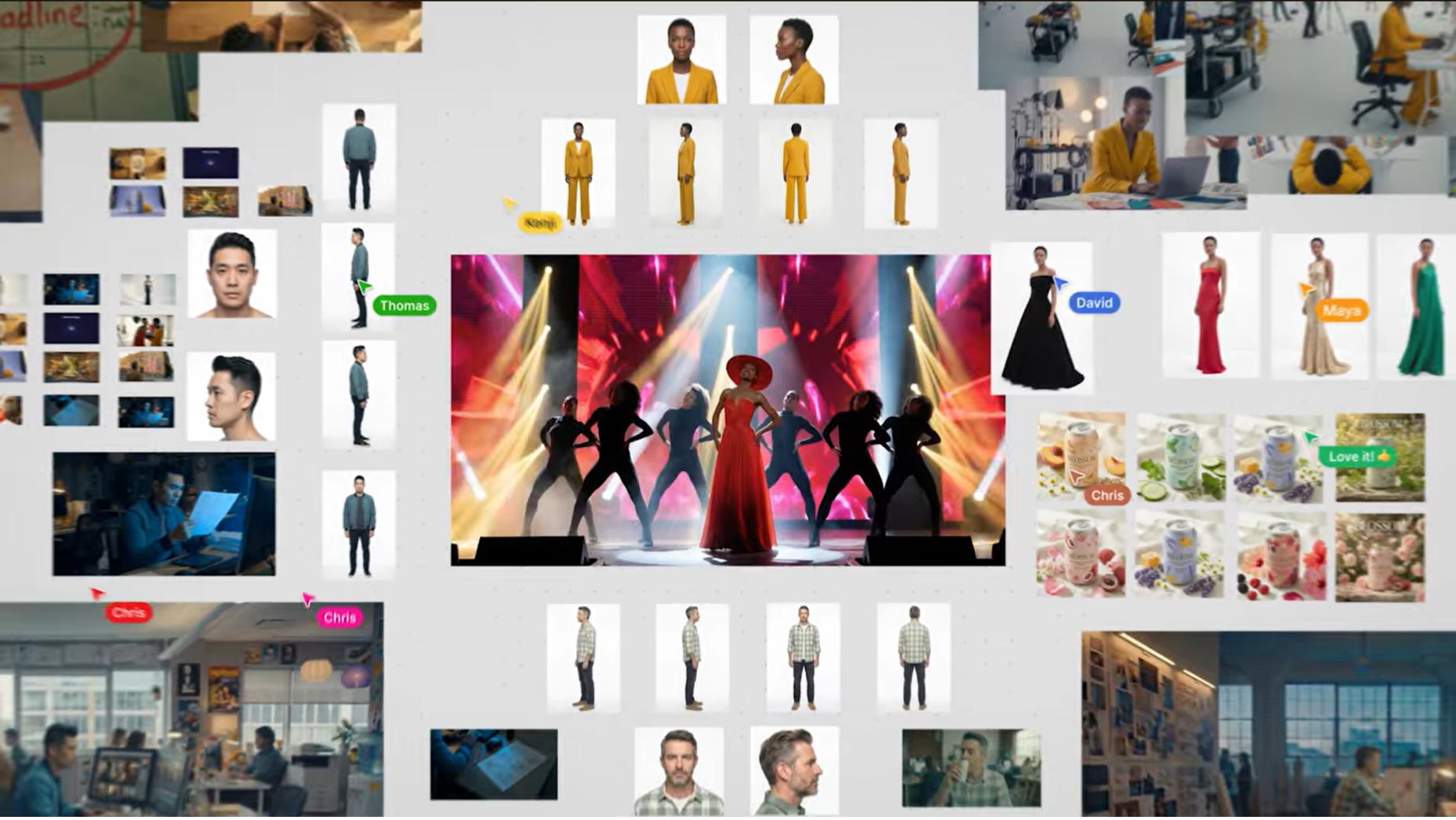
In a live product demonstration that stopped the advertising world in its tracks, Luma Labs showed how luma agents reproduced a global brand’s year-long, $15 million campaign — localized for multiple countries — in just 40 hours and under $20,000, passing the brand’s own internal quality controls. That single data point is your headline. On March 5, 2026, Luma officially launched a new product category: luma agents, AI collaborators engineered to manage creative work from brief to final delivery, spanning text, image, video, and audio simultaneously.
This isn’t a feature drop. It’s a structural challenge to how professional content gets produced.
What Are Luma Agents — and Why Is Everyone Paying Attention?
The problem luma agents solve is deceptively mundane. Creative teams spend a staggering amount of time managing tools, not ideas. According to Adweek, brands and agencies have no shortage of AI tools for creative tasks — what they lack is cohesion. Teams bounce between image generators, video platforms, and language models, stitching outputs together manually while coordinating across departments. That patchwork process is slow, expensive, and creatively draining.
Luma’s answer is luma labs ai agents built not as another point solution, but as a genuine end-to-end orchestration layer. Per the official launch announcement, these agents are designed for agencies, marketing teams, studios, and enterprise organizations looking to scale output without sacrificing quality — maintaining full context from the initial brief right through to final delivery.
The timing is deliberate. As TechCrunch reported exclusively, AI agents have become the hottest battleground in artificial intelligence, with companies racing to build systems that actually complete complex, multi-step tasks. Luma is staking its claim in the creative production niche — pursuing full multimodal ai content generation before any single player locks up the market.
The Architecture Behind Luma Agents: Unified Intelligence Explained
Most AI systems today are pipelines. One model writes text, another generates images, a third processes video, and orchestration layers attempt to stitch the outputs together. This fragmentation doesn’t just create technical complexity — it destroys creative context. Every handoff between models is a place where nuance disappears.
Luma’s answer is what it calls Unified Intelligence, a fundamentally different model architecture. As LBBOnline explains, instead of separating thinking from creation, Unified Intelligence tightly couples reasoning and rendering inside a single system. The first model built on this foundation is Uni-1 — a decoder-only autoregressive transformer operating over a shared token space, interleaving language and image tokens so both modalities function as first-class inputs and outputs within the same sequence.
Think about how a human architect designs a building. They don’t flip between a “thinking mode” and a “drawing mode.” The mental simulation of structure, light, and spatial dynamics happens simultaneously with the act of sketching. Uni-1 aims to replicate that cognitive coherence — reasoning in language while rendering in pixels, within a single forward pass.
That’s what makes genuine ai content orchestration tools possible here, rather than just chaining separate specializations together.
Uni-1: One Model Trained Across Every Modality
According to CEO Amit Jain, Uni-1 has been trained on audio, video, image, language, and spatial reasoning simultaneously. That breadth is what allows luma agents to maintain context across an entire project lifecycle, not just within a single asset. If the brand brief specifies a color palette and a regional tone, those constraints don’t evaporate between the image generation step and the voiceover step. They persist throughout.
Luma Agents Capabilities: A Breakdown of What the System Actually Does
Understanding luma agents capabilities means moving past the marketing pitch and into the mechanics. Here’s what the system does in practice:
- End-to-end production planning: The agents accept a creative brief, then plan the entire campaign — identifying what assets are needed, in what sequence, and which models are best suited to produce each one.
- Multimodal asset generation: Luma labs ai agents generate text, images, video, and audio within a unified workflow. They coordinate across Luma’s proprietary Ray 3.14 as well as third-party systems including Google’s Veo 3, ByteDance’s Seedream, and ElevenLabs voice models.
- Self-critique and iteration: Rather than presenting one output, the agents evaluate their own results against the brief, reject assets that fall short, and iterate automatically until quality criteria are met.
- Persistent project memory: A key differentiator is that the agent tracks assets, collaborators, and approvals — so edits made for one market propagate to others where appropriate, and constraints like legal disclaimers and model rights apply automatically.
- Conversational steering: Users don’t prompt each step. The system generates large variation sets and lets creatives steer direction through conversation rather than repetitive technical prompting.
Typical workflows include concept exploration, previsualization, script development, social cutdowns, voiceover generation, and localization — all while maintaining consistent style and messaging across channels. That’s output that previously demanded a production team coordinating dozens of disconnected tools, weeks of back-and-forth, and a budget that matched.
Real-World Results: Enterprise Proof of Concept
Luma didn’t launch generative ai agents for creators with a press release alone. As Deadline reported, the rollout of luma agents was the centerpiece of a San Francisco event drawing attendees from Hollywood, advertising, and enterprise technology.
Early adopters include global advertising networks Publicis Groupe and Serviceplan, along with brands like Adidas, Mazda, and Saudi AI company Humain. The Mazda use case is particularly instructive. A boutique South African agency of fewer than 20 people used luma agents to produce a campaign featuring the MX-5 evolving visually across three decades — a shoot that would otherwise have required sourcing vintage vehicles, multiple locations, and weeks of post-production coordination.
Then there’s that $15 million benchmark. The system condensed a year-long, multi-country campaign into localized deliverables for multiple markets in 40 hours, for under $20,000 — clearing the brand’s own accuracy and quality standards. For anyone who has worked in advertising production, those numbers feel disorienting. They’re also already verified in a production environment.
The Future of Content Creation AI: What Luma’s Launch Signals
The future of content creation ai is, broadly, agentic. McKinsey estimates that generative AI could contribute $2.6 to $4.4 trillion in annual economic value globally, with significant productivity gains in marketing and creative operations. For teams under constant pressure to localize campaigns and feed always-on digital channels, agents that combine reasoning with generation are the logical evolution of what was already becoming obvious.
Luma is not alone in pursuing this direction. OpenAI and Google are expanding their own agent workflows, while vertical platforms like Adobe, Runway, and Pika have built deep capabilities in specific modalities. But Luma’s pitch is architecturally distinct. Rather than adding an orchestration layer on top of existing models, it embeds reasoning and generation into the same unified system. The goal isn’t coordination between models — it’s a single system that doesn’t need coordination because it thinks and creates in the same process.
Luma has backed this conviction with serious capital, raising a $900 million Series C to fund a 2GW compute supercluster called Project Halo in partnership with HUMAIN. Total funding stands at $1.1 billion at a $4 billion valuation. The future of content creation ai, at least from Luma’s vantage point, is a multimodal world where every creative asset is understood as part of a unified whole — not a collection of separately generated files.
Multimodal AI Content Generation as a Competitive Moat
What separates companies in the multimodal ai content generation space over the next few years won’t be model quality alone. It will be workflow ownership. Luma is betting that controlling the full creative loop — from brief through QA to delivery — creates stickiness that individual model providers simply cannot match. Once a brand’s creative history, constraints, assets, and approvals live inside Luma’s persistent memory system, switching becomes genuinely costly.
That is a classic platform play. It’s also worth watching very carefully.
Who Benefits Most from Generative AI Agents for Creators?
Not every creative team needs enterprise-grade orchestration. A solo illustrator or a scrappy content studio probably doesn’t. But for organizations managing high asset volume, multi-market localization, strict brand governance, and compressed timelines simultaneously, luma agents are a compelling proposition.
Generative ai agents for creators at the enterprise level make the most sense when you face all of those pressures at once — which describes virtually every major advertising campaign, streaming content slate, or product launch in 2026. Luma’s product history reflects this trajectory: from the Dream Machine platform launched in 2024 to Ray3, the world’s first reasoning video model, the company has consistently built toward integrated creative systems rather than isolated tools.
Luma agents are now publicly available via API, with gradual rollout planned to maintain platform stability and avoid disrupting early enterprise workflows.
The Bottom Line
Luma agents represent a genuine architectural rethinking of creative production — not a feature update, not a wrapper around existing tools, but a new category of AI collaborator that reasons and generates across modalities simultaneously. The self-critique loop, the persistent context, the cross-market memory — these aren’t incremental improvements to generative AI. They’re the foundation of a new kind of creative infrastructure.
Whether you’re an agency lead watching that $15 million demo, a marketing director exhausted by stitching together ai content orchestration tools that don’t talk to each other, or a technologist mapping where creative production is headed, the message is consistent: the workflow you’re using today is about to look very different. The question isn’t whether this shift happens. It’s whether your organization moves before or after the market does.
Explore luma agents on the official Luma AI platform and start evaluating what end-to-end creative intelligence could mean for your team.
Frequently Asked Questions
What are luma agents?
Luma agents are a new category of AI collaborators launched by Luma Labs on March 5, 2026. They are built to handle end-to-end creative work — planning, generating, iterating, and refining text, images, video, and audio — within a single unified system that maintains full project context from brief to final delivery.
What is Unified Intelligence, and how does it power luma agents?
Unified Intelligence is Luma’s new model architecture that trains reasoning and generation within the same system, rather than chaining separate models for each task. The first model built on it is Uni-1, trained across audio, video, image, language, and spatial reasoning simultaneously — enabling luma agents to maintain creative context across every step of a project without lossy handoffs between specialized tools.
What are the core luma agents capabilities?
Key luma agents capabilities include end-to-end campaign planning, multimodal asset generation across text, image, video, and audio, autonomous self-critique and iteration loops, persistent project memory across collaborators and markets, integration with third-party models like Google’s Veo 3 and ElevenLabs, and conversational creative steering that replaces step-by-step manual prompting.
Which enterprises are already deploying luma labs ai agents?
Early adopters of luma labs ai agents include global advertising networks Publicis Groupe and Serviceplan, along with major brands such as Adidas, Mazda, and Saudi AI company Humain. These organizations are using the platform for tasks ranging from campaign localization and concept development to high-volume asset production across multiple markets.
How do luma agents differ from other multimodal ai content generation tools?
Most multimodal ai content generation tools operate as point solutions — one model for images, another for video, another for copy — requiring manual handoffs and coordination. Luma agents use a unified architecture where reasoning and generation happen in the same system, maintaining creative context across every asset type without fragmentation between modalities.
How does the self-critique feature work in luma agents?
Luma agents run autonomous plan-generate-evaluate-revise loops. After generating an asset, the system evaluates it against the original brief, identifies gaps or quality issues, rejects underperforming outputs, and iterates until the result meets defined criteria — all without requiring the user to manually review and re-prompt at each stage.
Are luma agents available publicly, and what does it cost?
Luma agents are now publicly accessible via API as of March 2026. Luma is rolling out access gradually to maintain platform stability and prevent workflow disruptions for early enterprise users. Pricing details and access applications are available through the official Luma AI website at lumalabs.ai.