
Ben Affleck’s Stealth AI Company Just Became Netflix’s Most Interesting Bet on Netflix AI Filmmaking

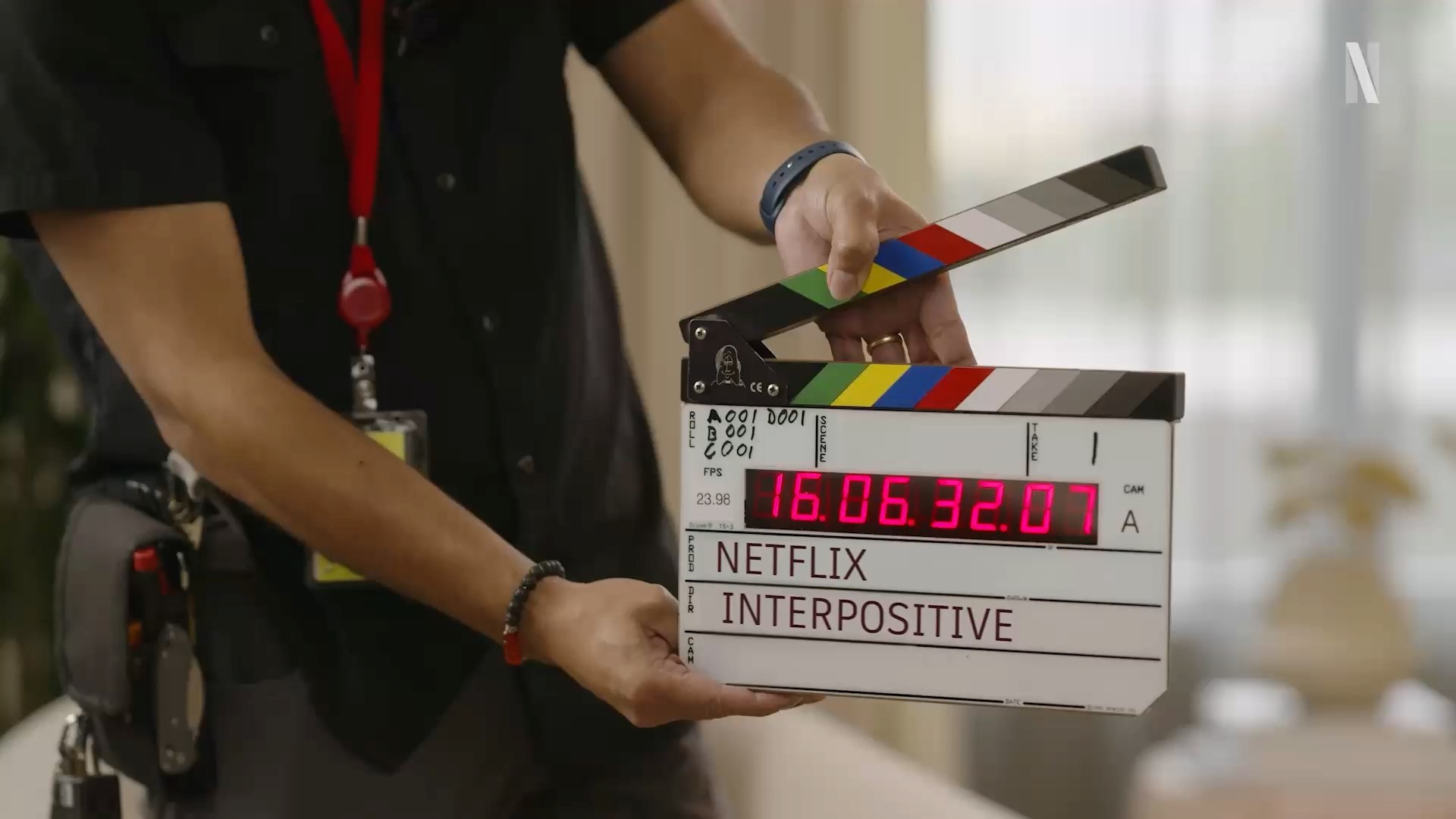
Netflix acquired InterPositive — a filmmaker-built AI startup that operated entirely in stealth for four years — on March 5, 2026, firing a starting gun that will echo through Hollywood for years. The company was founded by Oscar-winning director Ben Affleck in 2022, and Bloomberg confirmed it as a focused technology play, not another content acquisition. This is netflix ai filmmaking getting a genuine internal engine — one designed by a filmmaker, for filmmakers. Small in scale. Enormous in meaning.
The Ben Affleck InterPositive Deal: Terms, Timing, and Why It Matters
The ben affleck interpositive deal brings a 16-person team of engineers, researchers, and creative executives directly into Netflix, with Affleck himself stepping into a Senior Advisor role. Financial terms were not disclosed. Netflix acquired InterPositive outright — no licensing arrangement, no revenue-sharing structure — making the technology exclusively Netflix’s to develop and deploy across its production ecosystem.
That exclusivity is what defines the strategic character of the ben affleck interpositive deal. Disney recently signed a licensing pact with OpenAI’s Sora platform: controlled access without full ownership. Netflix went the other direction entirely. The Hollywood Reporter notes this is a rare M&A move for a company that typically builds technology in-house rather than through acquisition. The streamer’s most recent previous deal was Ready Player Me, an avatar creation platform, closed in December 2025.
Timing gives the deal additional texture. The acquisition landed days after Netflix walked away from its blockbuster bid for Warner Bros. Discovery, with Paramount Skydance outbidding the streamer at $31 per share. Rather than chasing legacy IP and studio libraries, Netflix pivoted sharply toward production technology infrastructure. That’s a deliberate signal — Netflix believes real competitive advantage in 2026 lives inside the tools that shape how content gets made, not just what content gets made.
Netflix has also clarified it won’t commercialize InterPositive’s tools on the open market. Access will be offered to creative partners. That exclusivity becomes a meaningful card to play when top directors and showrunners choose which platform to align with.
How InterPositive Actually Works: AI Tools for Filmmakers Built Differently
Most of Hollywood’s loudest AI arguments center on generative artificial intelligence platforms — text-to-video systems that synthesize entire scenes from minimal human input. InterPositive has almost nothing to do with that category. These are ai tools for filmmakers built from the ground up around a filmmaker’s real frustrations, not a technologist’s demo reel.
Affleck began developing InterPositive after spending 2022 studying the early emergence of AI in production and concluding that existing models fundamentally “came up short.” General AI platforms don’t understand visual logic or editorial consistency. They can’t account for missing shots, the specific optical signature of a given lens, or the way light changes across a practical set. Filmmakers’ actual problems were never the design brief for most AI tools — and Affleck wanted to change that.
InterPositive started by filming a proprietary dataset on a controlled, closed soundstage — building a visual training library that captured the full complexity of real-world production conditions. Directors can upload a specific project’s dailies, and the model trains itself to that production’s visual language: its cinematography, its lighting palette, its continuity logic. The resulting ai tools for filmmakers then handle color mixing, relighting, background replacement, and VFX work during post — not by generating new material from scratch, but by intelligently extending what already exists.
Netflix’s Chief Product and Technology Officer Elizabeth Stone was explicit: InterPositive’s tools are designed to produce higher-quality content. Not faster content. Not cheaper content. Quality. That framing is philosophically and politically crucial in a climate where every AI announcement is scrutinized for signs of labor displacement.
Netflix AI Production Strategy: Making Content Better, Not Just Cheaper
The netflix ai production strategy has been quietly but consistently communicated for years. The InterPositive acquisition is its clearest material expression yet.
Co-CEO Ted Sarandos defined the company’s philosophy plainly in 2024: there’s a bigger business in making content meaningfully better than in slashing production costs. Industry analysis frames the deal as a low-cost bet on the AI post-production curve — a small team, undisclosed price, and enormous leverage potential across Netflix’s hundreds of annual productions. Surgical. Deliberate. Built around a clear thesis about where lasting value comes from. That’s the netflix ai production strategy in practice.
The approach contrasts sharply with broader industry hesitation. Deloitte research found that major studios expected to direct less than 3% of production budgets toward generative AI tools for content creation in 2025, favoring AI for operational functions like marketing, localization, and contract management instead. Netflix is moving faster, deeper, and further up the production value chain than most peers are willing to go.
Netflix’s AI-driven recommendation engine already saves the company an estimated $1 billion annually in customer retention. Bringing the same data intelligence to content creation — not just content delivery — is the natural next evolution for a platform that has always treated storytelling as both an art form and a systems challenge worth optimizing.
The Impact of AI on Hollywood and the Union Question
There’s no clean way to discuss the impact of ai on hollywood in 2026 without confronting labor politics directly. The 2023 WGA and SAG-AFTRA strikes were driven significantly by fears about AI eliminating creative roles. Those union contracts are expiring again this year. New negotiations are already underway, and SAG-AFTRA is currently proposing new AI provisions specifically designed to protect human talent. Every major studio and streamer is walking a tightrope, and the acquisition will be scrutinized heavily.
Netflix’s response to this pressure is structural, not just rhetorical. InterPositive doesn’t synthesize performances, generate AI actors, or automate crew roles. It handles technically demanding post-production tasks — the grind work, not the craft. Chief Content Officer Bela Bajaria framed the deal around a single consistent principle: tools that expand creative freedom, not tools that constrain or replace the work of writers, directors, actors, and crews.
The broader impact of ai on hollywood will ultimately depend on long-term deployment choices, not launch-day messaging. Affleck’s status as a SAG-AFTRA member himself — and the philosophical architecture he built into InterPositive from the start — gives Netflix a more credible position here than most studios currently enjoy. The technology was built to protect creative judgment, and that distinction matters deeply to the people whose livelihoods are on the line.
Generative AI Film Industry: Netflix Plants Its Flag in One Camp
The generative ai film industry is fracturing into two philosophically different visions of what AI should do in storytelling, and Netflix has officially committed to one of them.
Camp one builds AI to generate entire productions from minimal inputs — synthetic video from text prompts, AI-generated actors, machine-made creative decisions at scale. Camp two integrates AI within established human workflows, augmenting filmmakers’ capabilities without displacing their judgment. Netflix is firmly, explicitly in the second camp. InterPositive trains on human-produced material, operates within cinematic frameworks, and returns all decision-making authority to the director, cinematographer, and editor.
The global AI in media and entertainment market was valued at $25.48 billion in 2023 and is projected to grow at a CAGR of 24.5% through 2030, meaning the stakes for getting this right are enormous. About 70% of films now incorporate AI tools at some stage of production, but that figure masks wildly different implementations. The generative ai film industry isn’t a monolith — it’s a marketplace of competing philosophies about what creativity is and who gets to exercise it. Netflix just made its philosophy official, and that clarity may be its most important strategic asset.
AI in Movie Post Production: Where InterPositive Delivers Real Value
The most immediate and measurable application for InterPositive is ai in movie post production — where the business case is most concrete and the friction most costly.
Post-production is expensive, time-consuming, and packed with repetitive precision work: background continuity corrections, relighting shots to match changed edits, color-grading thousands of dailies, replacing problem elements across dozens of scenes. These tasks drain production budgets without requiring the creative judgment that defines a filmmaker’s vision. They just have to get done — correctly, consistently, at scale. That’s precisely where AI can deliver measurable, compound value without encroaching on the decisions that actually matter creatively.
Research shows that producers with dedicated AI frameworks in their pipelines are running 25-35% leaner production cycles. For Netflix — producing hundreds of titles annually across dozens of countries — those efficiency gains compound into real numbers across a full content slate. Better ai in movie post production means more budget left for reshoots that matter, more time for the sequences that define whether a project is good or extraordinary.
The key intelligence behind InterPositive is contextual specificity. General AI doesn’t understand the visual language of any particular film. InterPositive builds a model that does — trained on that production’s own dailies, calibrated to its specific cinematography, lighting choices, and editorial rhythm. That contextual precision is what separates genuinely useful ai in movie post production from generic automation that a director can’t actually trust.
What This Means for the Future of Netflix AI Filmmaking
The InterPositive acquisition is ultimately a story about trust — Hollywood’s most valuable and most fragile resource in 2026.
Affleck understood that filmmakers would only accept AI built by someone who actually understands filmmaking. Not tools optimized for efficiency metrics on a studio spreadsheet, but instruments shaped by the real experience of sitting in a director’s chair and knowing what the work demands. Netflix bet on that insight. The future of netflix ai filmmaking, if this deal delivers on its promise, looks like more powerful tools in the hands of directors who understand exactly what they’re for. Not a replacement for craft. An amplification of it.
The deal also reveals something important about how the relationship between Netflix and Affleck developed. According to Deadline, Affleck first mentioned the venture to Netflix executives last fall, initiating months of dialogue that culminated in the full acquisition. This was a cultivated play, not a reactive one. Netflix will offer InterPositive access to creative partners rather than the open market — making it a tangible incentive for top-tier talent choosing which platform to build their careers on.
The streaming wars’ next frontier isn’t content volume alone. It’s creative trust. Companies that build ai tools for filmmakers from the inside out — with artists as architects, not afterthoughts — will be the ones that earn lasting loyalty from the people who actually make the work. Netflix just made a serious down payment on that position, and the rest of the industry will have to decide whether to follow or find a different answer.
The Netflix-InterPositive deal is modest in scale and significant in conviction. It represents a clear, honest vision for how netflix ai filmmaking should actually function: creator-led, technically disciplined, and built around the people who dedicate their lives to telling stories. The ben affleck interpositive deal proves that the most consequential AI plays in entertainment aren’t always the largest — they’re the most intentional. The generative ai film industry is accelerating in multiple directions simultaneously. Netflix has staked out a specific, defensible position within it. Whether Hollywood’s creative community ultimately embraces it will depend on what these tools actually deliver when the cameras stop rolling and the real work begins.
Want to stay ahead of how AI is reshaping film production and the streaming landscape? Follow developments closely — because the standards being established in 2026 will define how the next generation of stories gets made.
Frequently Asked Questions
What is InterPositive, and what does it actually do?
InterPositive is an AI filmmaking technology company founded by Ben Affleck in 2022. It develops AI tools that are trained on a specific production’s own dailies, then used in post-production to handle tasks like color grading, relighting, background replacement, and visual effects work. Unlike platforms such as OpenAI’s Sora, InterPositive does not generate synthetic video from text prompts — it works within the existing footage and visual language of a real production.
Why did Netflix acquire InterPositive instead of licensing the technology?
Netflix chose a full acquisition rather than a licensing deal because it wanted to own the technology stack outright and integrate it deeply into its production pipeline. This approach gives Netflix exclusive access to InterPositive’s tools and talent, allowing it to develop the technology internally rather than relying on a third-party vendor that could theoretically offer similar tools to competitors.
How much did Netflix pay for InterPositive?
The financial terms of the acquisition were not disclosed by either Netflix or InterPositive. However, industry analysts have characterized it as a relatively modest deal given the company’s small team size of 16 people, describing it as a strategic, low-cost investment in future production infrastructure rather than a large-scale M&A event.
What role will Ben Affleck play at Netflix after the acquisition?
Ben Affleck will serve as a Senior Advisor to Netflix as part of the deal. He won’t be taking on a full-time executive role, but will provide ongoing guidance to help shape how InterPositive’s AI tools are developed and deployed across the streaming platform’s production workflows.
How does InterPositive’s approach differ from other generative AI film tools?
Most generative AI tools for film — including OpenAI’s Sora and similar platforms — create new video content from text prompts, essentially generating material from scratch. InterPositive works differently: it builds a custom AI model from a production’s own filmed dailies, then uses that model to enhance and extend existing footage in post-production. The distinction is that the AI understands the specific visual language of a real production, rather than generating synthetic content from nothing.
How does the acquisition affect Hollywood’s ongoing union negotiations?
The acquisition arrives at a sensitive moment, as SAG-AFTRA and other Hollywood unions are currently in new contract negotiations with major studios and streamers, with AI provisions a central issue. Netflix has been careful to position InterPositive’s tools as quality-enhancing rather than labor-reducing, and the technology itself is designed to handle technical post-production tasks rather than replace actors, writers, or crew members. That said, the deal will face scrutiny, and its long-term reception depends on how the tools are deployed in practice.
Will InterPositive’s AI tools be available to independent filmmakers?
No — at least not directly. Netflix has confirmed it does not plan to sell InterPositive’s tools commercially on the open market. Access will be offered exclusively to Netflix’s network of creative partners. For independent filmmakers outside the Netflix ecosystem, the technology will not be available, which is part of what makes the acquisition a competitive differentiator for the streaming platform.