
Tutor Intelligence Series A: How a $34M Raise Is Rewriting the Future of Warehouse Robotics

Roughly 90% of factories in the United States still operate without robots — and closing that gap is the entire point of what Tutor Intelligence is building. On December 1, 2025, the Watertown, Massachusetts startup officially closed the Tutor Intelligence Series A, pulling in $34 million led by Union Square Ventures and pushing total capital raised to $42 million. That’s not just a fundraise. It’s a loud signal that warehouse automation venture capital is moving toward companies deploying genuinely intelligent robots — not rigid, pre-programmed machines — at real-world scale. The timing is right, and the team is ready to prove it.
Tutor Intelligence Series A: The Round, the Investors, and What They Saw
The Tutor Intelligence Series A was led by Union Square Ventures, a firm whose portfolio spans Twitter, Coinbase, Etsy, and MongoDB — investors who recognize breakout commercial traction when they see it. Fundomo, backers of Standard Nuclear, Mercor, Etched, and Atomic Semi, also participated in the round, along with follow-on investment from Neo, which led Tutor’s seed round and has invested in Cursor and Kalshi. Together, this group brings some of the most selective capital allocators in venture to the industrial AI robotics funding conversation — and that matters enormously for how the market reads this deal.
The close of the $34 million Series A brings the company’s total capital raised to $42 million. That number tells a story on its own. Tutor hasn’t burned through early money chasing labs and theoretical proofs. It has deployed AI powered warehouse robots coast to coast, generating daily economic value for some of the world’s largest supply chain operators. Rebecca Kaden, Managing Partner at Union Square Ventures, noted that “Tutor stands out for its extraordinary speed of execution and its ability to balance cutting-edge product and model development with a clear commercial focus.” Warehouse automation venture capital rarely validates a team this early-stage with that kind of endorsement.
From MIT’s CSAIL to the Shop Floor: The Origin Story Behind the MIT Spin-Off Robotics Investment
This MIT spin-off robotics investment story starts in a lab, but it never stayed there. Founded out of MIT’s Computer Science and Artificial Intelligence Laboratory (CSAIL), Tutor Intelligence has built the data engine powering fleets of robots that move North America’s consumer packaged goods. Co-founders Josh Gruenstein and Alon met as graduate researchers who noticed something the whole field was overlooking: computer vision and natural language processing had enormous training datasets, but robots had almost none collected from real physical environments. That was the bottleneck — and they built an entire company around solving it.
Their solution was elegantly simple in theory and brutally hard in execution. Build a fleet. Deploy it into real factories. Let the robots learn on the job, collect field data nobody else could generate, and feed that learning back into a smarter system. With a massive fleet of deployed robots doing useful work and thus economically incentivized to collect data, they could engineer a flywheel effect: more learning unlocks more robots, unlocks more data, so on and so forth.
Why the Academic Pedigree Matters in Practice
Most robotics startups split research from commercialization. Tutor refused that division. One thing that is unique about the business is the breadth of functional skill sets necessary to deliver and operate robots for customers, ranging from technicians, engineers, researchers, salespeople, data labelers, operations and much more — all motivated by the same goals of putting robots into the world and driving affordability in the physical economy. That 60+ person full-stack team is precisely what makes the MIT spin-off robotics investment thesis defensible to outside capital.
How AI Powered Warehouse Robots Actually Work at Tutor
Traditional industrial robots fail in messy, unpredictable settings. That’s a well-documented limitation across the industry. Tutor’s AI powered warehouse robots are engineered specifically for the chaotic realities of live production — shifting SKUs, imperfect pallets, variable lighting, and all the edge cases that defeat rigid automation cold.
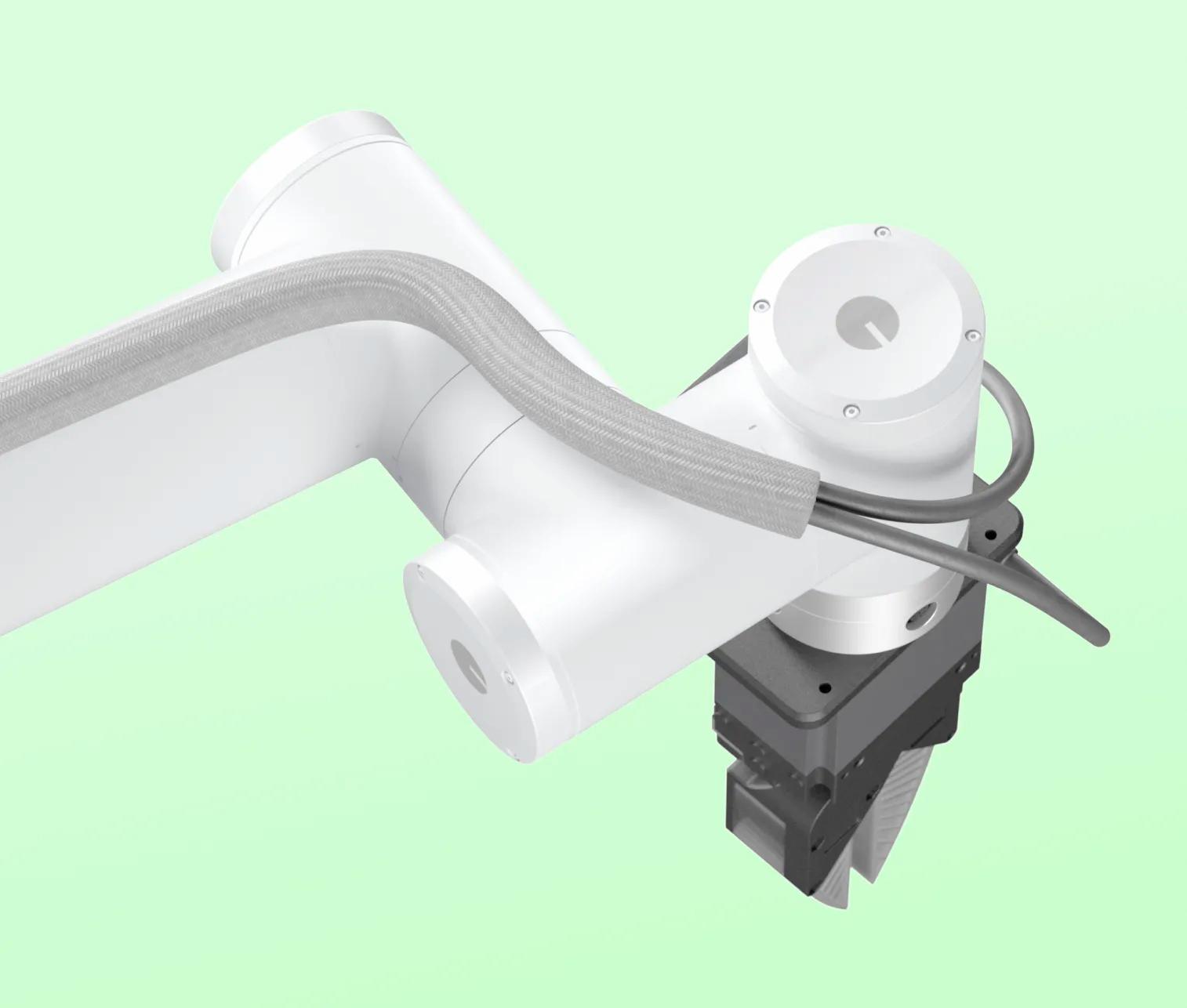
Tutor robots use advanced visual intelligence to identify, adapt to, and handle virtually any SKU in live production. Unlike traditional robots that are pre-programmed to perform narrowly defined tasks in tightly controlled environments, Tutor robots can tolerate the imperfect realities and edge cases that define real-world operations. The company’s flagship robot, Cassie, processes a continuous flow of new SKUs and adapts in real time — eliminating the engineering downtime and reprogramming costs that quietly destroy the ROI of conventional automation systems.
Tutor’s centralized intelligence system logs tens of thousands of hours of real-world production experience, which is annotated by a staff of human “tutors” who label the data to improve the models — so the experience collected in the field is continually reinvested to make the robots faster, smarter, and easier to use. No competitor can replicate years of real-world production learning overnight. That growing data advantage is Tutor’s deepest competitive moat in the logistics automation startup investment space.
The company’s robots work alongside human operators to process items for a vast Fortune 50 supply chain network, multiple Fortune 500 packaged food companies, and category-defining global leaders across personal care, toys, home goods, beauty, and consumer technology. These are core production operations — not controlled pilots.
Robotics as a Service Capital: The Model That Opens Every Door
Price has always been automation’s oldest enemy. A 15-person manufacturer can’t justify a half-million-dollar capital commitment with a multi-year payback period. That dynamic often prices out smaller businesses, which make up almost 99% of U.S. manufacturers — a significant portion of which have fewer than 20 employees.
Tutor’s robotics as a service capital model changes that equation completely. Rather than purchasing hardware outright, customers subscribe at a monthly rate tied to what they’d already spend on traditional labor. Zero ownership burden. Zero maintenance staffing. Zero capital project — just robots performing useful work from day one.
The operational speed is equally disruptive. Tutor’s systems are delivered to customer sites just 30 days after signing, are typically fully operational just one day after delivery, and can be funded entirely from a company’s operating budget through a Robot-as-a-Service (RaaS) subscription-based model that mirrors traditional labor costs. For companies evaluating a logistics automation startup investment decision, that speed-to-value is transformational. ROI arrives in weeks, not quarters.
That allows large firms to expand rapidly across multiple sites, while small firms can scale quickly without being priced out of automation. This is logistics automation startup investment done the right way — aligning Tutor’s growth directly to customer success rather than to upfront transaction size.
Where the $34M Goes: Accelerating Industrial AI Robotics Funding Into Scale
New capital at Tutor doesn’t sit idle. The industrial AI robotics funding is allocated against four concrete priorities:
- Manufacturing capacity expansion: Tutor will scale production domestically to meet growing pipeline demand, building and deploying more robots across the United States faster than ever before.
- Consumer packaged goods fleet growth: CPG is Tutor’s core vertical. Deeper penetration here builds revenue density while simultaneously generating more fleet learning data — a double compounding advantage.
- New robot form factors and capabilities: Cassie is the starting point, not the ceiling. New hardware configurations will address more complex dexterous tasks beyond current palletizing and depalletizing applications.
- Central intelligence platform R&D: The data engine is the competitive moat. Investing here accelerates Tutor’s lead over any rival attempting to replicate years of real-world production learning from scratch.
Tutor plans to use the new capital to increase its manufacturing capacity and expand the deployment of robots across the United States, additionally investing in research and development to support a wider range of use cases, ensuring that the platform is suitable for companies of all sizes, from tiny manufacturers to Fortune 500 logistics giants. The Tutor Intelligence Series A, in that sense, is both a commercial acceleration vehicle and a deep R&D commitment in a single strategic deployment.
Why the Tutor Intelligence Series A Changes the Broader Robotics Landscape
Physical AI — robots that genuinely understand and navigate unpredictable physical environments — is emerging as the most important frontier in applied machine intelligence. Warehouse automation venture capital used to chase autonomous mobile robots and conveyor upgrades. Now it’s chasing what Tutor has already built: systems that learn, adapt, and improve in the field without human reprogramming at every step.
CEO Josh Gruenstein described the industrial world as “a really valuable training ground — an industrial boot camp for robots,” with Tutor’s ambition being to provide robots for as much of the world as possible, using factory data as a foundation for generalizable physical AI skills that extend far beyond any single warehouse use case.
The funding comes at a time when physical AI is emerging as the next stage of robotics, as earlier robots followed fixed commands and worked only in predictable environments, having trouble with the unpredictability found in everyday operations such as shifting layouts, mixed lighting, and human movement. Tutor’s architecture solves that problem structurally — not through incremental tweaks, but through a fundamentally different learning paradigm.
For supply chain operators still relying on manual labor, the message is direct: the logistics automation startup investment opportunity is fully open, and companies that adopt AI powered warehouse robots now will hold a structural efficiency advantage that compounds over time.
Conclusion: Why the Tutor Intelligence Series A Is Built on Real Results
The Tutor Intelligence Series A stands apart because it’s grounded in deployed robots, paying customers, and a self-reinforcing data engine that gets smarter every single day. The robotics as a service capital model eliminates the biggest barrier to automation adoption. The MIT spin-off robotics investment heritage gives the technology genuine research depth. The industrial AI robotics funding from Union Square Ventures, Fundomo, and Neo validates the commercial thesis with real dollars from proven investors who understand what scaling breakout technology actually looks like.
The automation revolution in warehouses and factories isn’t coming — it’s already here, just unevenly distributed. Tutor Intelligence is one of the companies actively and rapidly closing that gap. With warehouse automation venture capital firmly behind it, a 60+ person team, and robots already embedded in some of North America’s most demanding supply chains, Tutor has built a platform that makes the 90% of robotics-free factories look less like an obstacle and more like an enormous, untapped opportunity.
Explore how Tutor Intelligence deploys AI-powered robotic workers and find out whether their subscription model fits your operation’s needs. The factories without robots won’t stay that way for long — and the competitive gap between early adopters and laggards is already starting to open.
Frequently Asked Questions
What is the Tutor Intelligence Series A, and who led the round?
The Tutor Intelligence Series A is a $34 million funding round closed on December 1, 2025, led by Union Square Ventures. Fundomo co-led, and Neo participated as a follow-on investor from Tutor’s original seed round. Total capital raised now stands at $42 million.
Who founded Tutor Intelligence and where did the company originate?
Tutor Intelligence was co-founded by Josh Gruenstein and Alon while they were graduate students at MIT’s CSAIL. It’s a genuine MIT spin-off robotics investment story — born from research into real-world robot data scarcity and built into a commercially deployed company serving Fortune-tier clients across North America.
How do Tutor’s AI powered warehouse robots differ from traditional automation?
Traditional industrial robots require rigid pre-programming and controlled environments. Tutor’s AI powered warehouse robots learn from real production data collected during actual field operations — not simulated environments — and continuously improve through a human-annotated machine learning loop. They adapt to new SKUs and unpredictable real-world conditions without expensive reprogramming cycles.
How does the Robots-as-a-Service model work?
Tutor’s robotics as a service capital model works like a labor subscription. Customers pay a monthly fee comparable to what they’d already spend on traditional labor, avoiding large upfront capital expenditures. There’s no ownership burden, maintenance cost, or technical staffing requirement. Systems are delivered within 30 days of contract signing and are operational within one day of arrival.
Who are Tutor Intelligence’s customers?
Tutor serves Fortune 50 supply chain networks, multiple Fortune 500 packaged food companies, and global leaders across personal care, toys, home goods, beauty, and consumer technology. These are live core production environments — not proof-of-concept pilots.
What will Tutor Intelligence use the $34M in industrial AI robotics funding for?
The industrial AI robotics funding will expand U.S. manufacturing capacity, scale the consumer packaged goods robot fleet, develop new robot form factors for broader task coverage, and advance the central intelligence platform that powers continuous fleet improvement across all deployed robots.
Why is now the right moment for logistics automation startup investment in physical AI robotics?
Roughly 90% of U.S. factories still have no robots, and traditional automation has been too rigid and capital-intensive for most companies to adopt. Physical AI — robots that learn from real-world data — solves both problems simultaneously. The logistics automation startup investment opportunity is converging on companies like Tutor that have already proven the model at commercial scale with marquee customers.