
Rebel Audio Review: How AI Podcasting Tools for Beginners Are Changing the Game

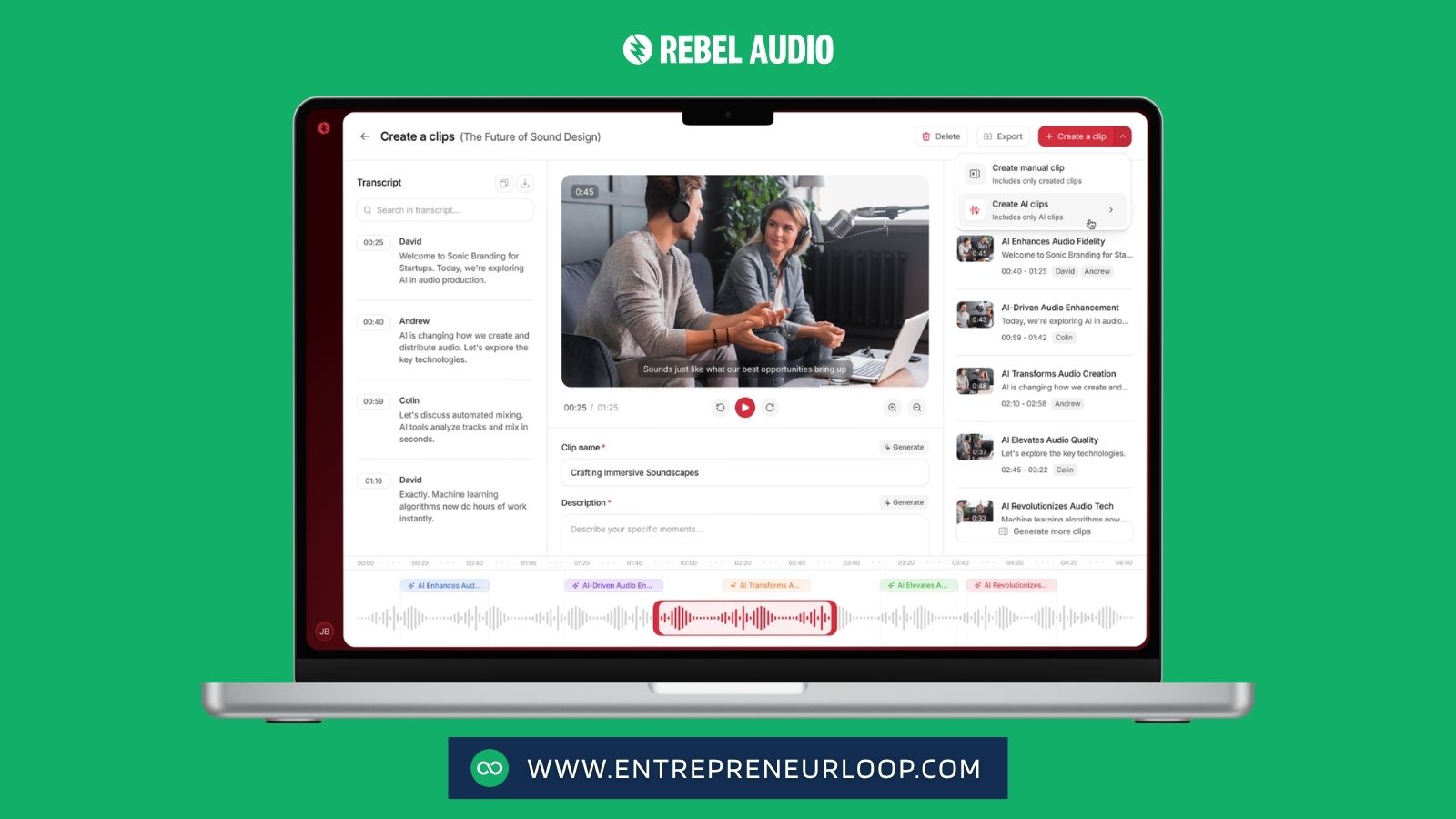
The AI-in-podcasting market has grown exponentially, expanding from $3.07 billion in 2024 to an estimated $4.06 billion in 2025 — and a brand-new platform wants to ride that wave directly into the hands of first-time creators. Rebel Audio is a new all-in-one podcasting tool that allows creators to record podcasts, edit, clip content for social, and publish episodes, all without ever leaving the platform. For anyone exploring ai podcasting tools for beginners, this Nashville-based startup may represent a genuine turning point. It promises to flatten the learning curve that has historically driven newcomers away from the medium, and it arrives at a moment when the audience for podcasts has never been larger.
Why the Podcast Industry Desperately Needs AI Podcasting Software for New Creators
The sheer scale of podcasting is staggering. More than 584 million people listened to podcasts in 2025, with numbers expected to reach 619 million by 2026. Yet behind those headline figures lies a grim paradox. Various analyses have revealed that roughly 47% of podcasts stop at three or fewer episodes, and roughly a third of everyone who has ever created a podcast has churned out of being a creator altogether.
Why do so many people quit? Many new podcasters go “all in” and push themselves too hard early on, investing heavy time in recording, editing, writing detailed show notes, and marketing on social media — often on top of jobs or other responsibilities — leading to stress and exhaustion. The technical burden alone is enough to crush enthusiasm. That reality explains why ai podcasting software for new creators has become such a hot category. Tools that reduce friction could keep more voices on the air.
There are over 4.5 million podcast shows indexed globally as of 2025, but only an estimated 10–11% are actively releasing new episodes. Rebel Audio and its competitors see an enormous opening: help the other 89% get back on track — or prevent new creators from fading in the first place.
How to Start a Podcast With AI: Rebel Audio’s Approach
So how does the platform actually work? Podcasters can upload any audio or video file to the platform and then engage in a chat with Rebel Audio’s AI agent to generate titles, descriptions, cover art, and social clips. Think of it less like a traditional editing suite and more like a conversation. You talk to the AI, tell it what you need, and it handles the heavy lifting.
The system can also translate episodes into other languages with an AI-generated “cloned” version of someone’s voice, or generate a host-read ad in the same way. For anyone wondering how to start a podcast with ai, this kind of end-to-end assistance is exactly what was missing. Rebel Audio bundles recording, editing, artwork, transcription, clipping, and distribution into a single workflow. You never bounce between five different apps.
Once a podcast is ready to go live, users can publish it with one click to multiple platforms, including Spotify, Apple Podcasts, and YouTube. That one-click distribution is a significant draw, especially for people who have no interest in wrestling with RSS feeds or manual uploads.
Best AI Tools for Starting a Podcast: Where Rebel Audio Fits
The market for best ai tools for starting a podcast is crowded and growing fast. Popular rivals include Riverside, Adobe Audition, and Descript. Spotify for Creators has already adopted a similar all-in-one approach, offering unlimited hosting, video podcast uploads, audience tools, analytics, and monetization.
However, Rebel Audio argues that none of these solutions deliver a truly “360-degree” creation suite in the way its platform aims to. The key differentiator? Monetization baked in from day one. Rather than treating revenue as something that comes later, Rebel Audio integrates it from the beginning — creators can tap into advertising, brand partnerships, dynamic ad insertion, and listener subscriptions within the platform.
That positioning matters. Choosing the best ai tools for starting a podcast often means balancing ease-of-use against long-term scalability. Most beginners pick free or cheap tools and then outgrow them. Rebel Audio is betting that a tiered pricing model can serve both camps.
All-in-One Podcast Creation Software: Features That Matter
What separates true all-in-one podcast creation software from a bundle of half-baked features? Depth. Rebel Audio’s feature set spans the entire production lifecycle:
- AI-powered show development: The AI agent suggests show names, generates episode descriptions, and creates cover art through a conversational chat interface.
- Automated editing and clipping: AI detects highlight moments and produces short-form vertical clips with captions — ready for TikTok, Instagram Reels, and YouTube Shorts.
- Voice cloning and translation: Voice cloning is opt-in and requires users to confirm they have the rights to use a given voice, and the platform includes safeguards aimed at preventing deepfake content.
- Automatic transcription: Full transcripts are generated for every episode, boosting accessibility and SEO.
- One-click multi-platform distribution: Publish to every major listening app simultaneously.
This blend of features positions Rebel Audio as genuine all-in-one podcast creation software rather than a single-purpose tool. For creators exploring automated podcast production for beginners, the value proposition is clear: spend less time on logistics, more time on content.
Automated Podcast Production for Beginners: Solving the Podfade Problem
The concept of “podfade” haunts the industry. Most podcasts podfade around episode seven. The causes are well-documented: burnout, lack of planning, time management issues, and discouragement over slow growth or lack of income.
Automated podcast production for beginners directly attacks these pain points. When AI handles editing, transcription, clip creation, and distribution, the per-episode workload shrinks dramatically. A single 30-minute episode can take anywhere from 3 to 10 hours to produce, depending on the level of editing, research, and post-production. Cutting that timeline in half could be the difference between episode eight and episode eighty.
Rebel Audio’s founder, Jared Gutstadt, understands the content business deeply. Gutstadt previously launched production company Audio Up in 2020. Rebel Audio plans to migrate Audio Up’s catalog onto the platform, including shows involving big names like Machine Gun Kelly, Anthony Anderson, Dennis Quaid, Jason Alexander, and Luke Wilson. That existing catalog gives the platform instant credibility and a library of content to demonstrate its capabilities.
AI Powered Podcast Editing Tools: The Technology Under the Hood
Modern ai powered podcast editing tools do far more than trim silence. They analyze sentiment, detect speaker emphasis, identify topic changes, and flag the moments most likely to perform on social media. Rebel Audio leans into this approach with its conversational AI agent — a design choice that lowers the barrier for people who have never opened a waveform editor.
Software makes up the largest share of the AI in the podcasting market, accounting for more than 60% of the total. The rapid maturation of natural language processing and speech recognition has made ai powered podcast editing tools far more reliable than they were even two years ago. Rebel Audio enters a market where the underlying technology has finally caught up with the ambition.
The AI-in-podcasting market is anticipated to reach $12.25 billion by 2029, with an impressive compound annual growth rate of 31.8%. That trajectory means even more sophisticated tools are on the horizon, and platforms that nail the user experience early will enjoy a significant first-mover advantage.
The Team and the Money Behind Rebel Audio
Startups live and die by their teams and their funding. Rebel Audio raised a $3.8 million seed round that was oversubscribed within 30 days. The broader team includes veterans from companies like MGM and DreamWorks, and Mark Burnett has joined as an advisor. Burnett’s involvement signals serious entertainment industry credibility.
Rebel Audio was created in partnership with Lattice Partners, an AI consulting firm and product studio that helps design, build, and launch AI products. The company is based in Nashville, with offices in L.A. and Miami. That geographic spread positions Rebel Audio at the intersection of music, entertainment, and technology — three industries converging rapidly around podcasting.
Pricing: What AI Podcasting Tools for Beginners Actually Cost
Affordability can make or break adoption among first-time creators. Rebel Audio Basic ($15/month) includes AI-assisted production, hosting, and distribution to all major platforms. Rebel Audio Plus ($35/month) adds video hosting, voice cloning for ad reads, and early access to brand-monetization tools. Rebel Audio Pro ($70/month) provides dynamic ad insertion, listener subscriptions, full voice cloning, translation, dubbing, and direct access to Audio Up’s artist and brand partnership network.
Compared to the cost of juggling separate subscriptions for hosting, editing, transcription, and social clipping, these tiers are competitive. For anyone evaluating ai podcasting tools for beginners, the Basic plan offers a low-risk entry point. The Pro plan, meanwhile, targets serious creators who want monetization infrastructure from the jump.
Rebel Audio launched a private beta with a waitlist earlier this month, and an official rollout to the public begins on May 30.
Ethical Concerns and Guardrails
No conversation about AI creation tools is complete without addressing ethical risks. The use of AI-generated images and voice cloning remains a sensitive topic across the creative industry, and concerns around training data, originality, and ownership continue to surface.
Streaming platforms like Spotify and Deezer have already had to address issues related to low-quality, mass-produced AI content, sometimes referred to as “AI slop.” Rebel Audio says it has implemented guardrails: its AI-generated cover art tools are designed with moderation systems to block inappropriate or non-compliant imagery, particularly anything that could violate distribution platform guidelines.
These safeguards matter. The long-term success of ai podcasting software for new creators depends on trust — both from the creators using the tools and from the listeners consuming the output.
Final Verdict: Should You Try Rebel Audio?
The podcasting landscape rewards consistency, and consistency demands manageable workflows. The global podcasting market was estimated at $30.72 billion in 2024 and is projected to reach $131.13 billion by 2030. The opportunity is massive. The barriers to entry have never been lower. And platforms like Rebel Audio are actively dismantling whatever friction remains.
If you have been wondering how to start a podcast with ai, the answer is becoming simpler by the month. Rebel Audio is not the only option, but its combination of AI-native design, built-in monetization, and entertainment industry pedigree makes it one of the most compelling entries in the space. Join the waitlist at rebelaudio.ai before the public launch and see whether this all-in-one podcast creation software lives up to the hype.
Frequently Asked Questions
What is Rebel Audio?
Rebel Audio is an all-in-one podcasting platform designed for first-time and early-stage creators. Instead of juggling multiple tools, podcasters can create their show, record it, edit it, upload cover artwork, create transcripts, clip content for social, and publish — all without ever leaving the platform.
How much does Rebel Audio cost?
Pricing is structured in tiers: a Basic plan at $15/month with AI-assisted production, hosting, and distribution; a Plus plan at $35/month with video hosting and voice cloning; and a Pro package at $70/month with dynamic ad insertion, listener subscriptions, translation, and dubbing.
When does Rebel Audio launch to the public?
An official rollout to the public begins on May 30. A private beta with a waitlist is currently available at rebelaudio.ai.
Who founded Rebel Audio?
Founder Jared Gutstadt previously launched production company Audio Up in 2020. The team includes veterans from MGM and DreamWorks, and Mark Burnett has joined as an advisor.
How big is the podcast audience in 2025?
Around 584 million people worldwide listen to podcasts in 2025, up roughly 6.8% from 2024.In the U.S., 55% of the population — roughly 158 million Americans — listen to podcasts monthly, a jump from about 47% in 2024.
What is podfade and how does Rebel Audio address it?
Podfade refers to the gradual, unplanned decline in episode output until a show goes silent. About 47% of podcasts stop at three or fewer episodes. Rebel Audio addresses this by automating time-consuming tasks like editing, transcription, clip creation, and multi-platform distribution through its AI agent.
Does Rebel Audio have safeguards against AI misuse?
Yes. Voice cloning is opt-in and requires users to confirm they have the rights to use a given voice, and the platform includes safeguards aimed at preventing deepfake content. AI-generated cover art tools include moderation systems to block inappropriate or non-compliant imagery.