
Neko Health Body Scan: Daniel Ek’s Full-Body Scan Startup Now in the US

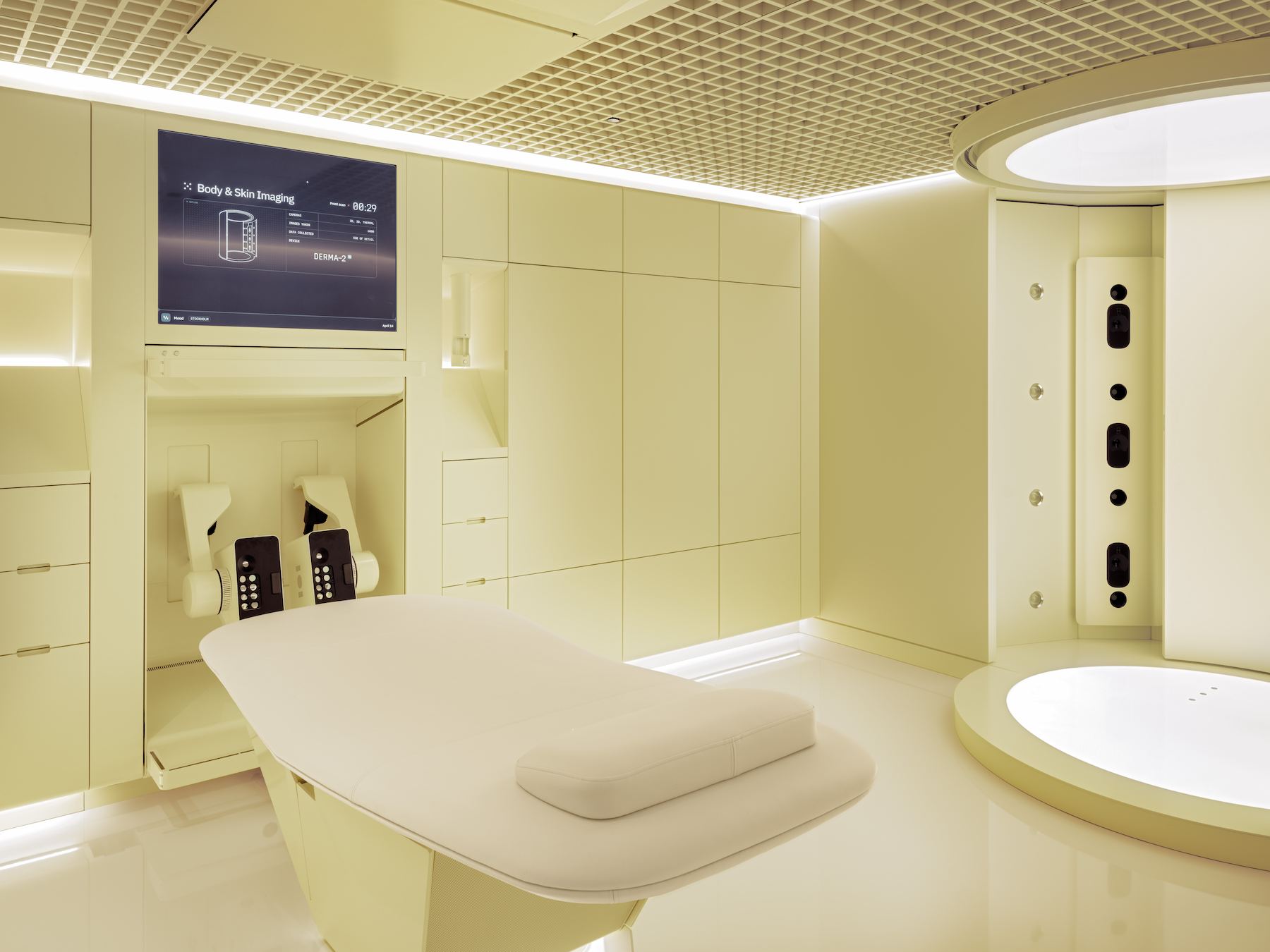
Neko Health opened its first U.S. location at 300 Lafayette Street in SoHo on September 24, 2026, arriving with a pre-launch waitlist of more than 25,000 New Yorkers eager to pay $499 for an hour-long body scan that skips the MRI machine entirely. No radiation. No MRI tube. No week-long wait for results.
The neko health body scan is a one-hour preventive health assessment, not a diagnostic imaging service. The scan combines millions of data points across the heart, blood, skin, and metabolic health, with results available during your visit, followed by a sit-down with a clinician who explains what those results mean and what to do next. It will not replace a CT or MRI if your doctor has ordered one. It is not covered by health insurance. What it offers is speed, price, and breadth, a single appointment that covers ground most annual physicals never touch.
The Swedish health-tech company built its pitch around speed and price, promising to gather blood, heart, and body composition data without the radiation or high cost associated with traditional full-body imaging. Full-body diagnostic scans elsewhere in the market typically run $1,000 to $5,000 out of pocket, a price most people simply cannot justify for a wellness checkup. At $499, Neko’s US pricing lands well below that range, and the scan is HSA/FSA eligible.
What the Neko Health Body Scan Is, and What It Is Not
The name trips people up immediately. “Full-body scan” sounds like Prenuvo: a long tube, magnetic fields, and images of your internal organs. The neko health body scan is something categorically different. Where Prenuvo is known for whole-body MRI designed to detect signs of cancer and aneurysms, Neko operates on a fundamentally different premise, its technology uses no radiation and no MRI imaging, combining instead a suite of sensors, cameras, and measurements to build a picture of the body in real time.
What you actually get is a one-hour preventive health assessment. Neko’s technology captures data across your skin, heart, blood, and metabolic health, including body composition such as visceral and body fat, without the need for a DEXA scan or MRI. Blood results, cardiovascular readings, and skin findings are all processed on-site. Everything is analyzed in the clinic, no samples sent away, no waiting, so your results are ready by the time you meet the clinician.
Here is the trade-off most coverage skips: the scan does not produce the anatomical images a full-body MRI generates, it should not be framed as ruling out cancer or disease, and it does not replace symptom-led medical assessment, ongoing primary care, or dedicated imaging where a doctor has clinically indicated it. If your physician has already ordered an MRI or CT, this visit does not substitute for that.
The neko health new york clinic opened September 24, 2026 at 300 Lafayette Street in SoHo, Neko’s first U.S. location, priced at $499 per session. That positions it as a middle option between a standard annual physical and the $1,200-and-up cost of MRI-based competitors like neko health vs prenuvo comparisons regularly cite.
From Stockholm to SoHo: How Daniel Ek’s Preventive Health Startup Reached New York
Neko Health was founded in 2023 by Daniel Ek, best known as Spotify’s co-founder and CEO, and Hjalmar Nilsonne, who serves as the company’s CEO. The idea was straightforward, if ambitious: build physical clinics where a single visit gives you a detailed health baseline before anything goes wrong, the opposite of how most people interact with a doctor.
 Neko launched its first clinic in Stockholm in 2023, then expanded internationally with the opening of a Marylebone Health Centre in London in September 2024. That UK rollout moved fast. Within one year of launching in London, Neko had expanded to four UK sites, including Covent Garden, Marylebone, Spitalfields, and Manchester. The 75% rebooking rate in Europe, a metric most competitors in this space never publish, signals something most news coverage buries: retention, not just curiosity, is driving the business.
The funding story is equally direct. Neko raised $260 million in a Series B in January 2025. That round valued the company at $1.8 billion. Then, in July 2026, the scale jumped considerably. Neko closed a $700 million Series C on July 15, 2026, led by Lightspeed Venture Partners, valuing the company at $7 billion. Individual investors joining the round included Mark Zuckerberg and Priscilla Chan, Maria Sharapova, Thierry Henry, Ari Emanuel, Tim Ferriss, and will.i.am. The celebrity roster reads like a longevity-biohacking wish list, but the institutional backing from Lightspeed, Atomico, and General Catalyst is what funds the clinic buildout.
New York was the declared destination for that capital. The company opened an 11,000-square-foot facility at 300 Lafayette Street on September 24, 2026, placing the neko health soho manhattan clinic in a neighborhood already dense with high-income, health-conscious consumers who are accustomed to paying out-of-pocket for premium services. The SoHo address is not accidental; it puts the neko health body scan within walking distance of a demographic that comparison-shops preventive health the way it comparison-shops anything else. More than 25,000 New Yorkers had already joined the waitlist before the clinic’s doors opened. Miami, San Francisco, and Washington, D.C. are the next planned U.S. cities.
One detail worth flagging before you book: the neko health scan cost us is set at $499 per session regardless of what insurance you carry, and the SoHo clinic is not a primary care practice. If you are between cities, traveling frequently, or already under active specialist care, the timing of a baseline scan matters, and a visit between medical appointments may serve you better than one the week before a follow-up you already have scheduled.
What Does the Neko Health Body Scan Actually Check For?
The scan measures four distinct health domains, skin, cardiovascular, metabolic blood markers, and body composition, all within a single one-hour appointment, with no MRI, CT, or X-ray involved.
Skin. Neko takes over 2,000 high-resolution images of your skin, mapping your moles from head to toe and tracking each one scan after scan. That baseline matters more than it sounds. Most people have no documented record of their moles at age 35; by age 50, any dermatologist asking “has this changed?” has nothing to compare against. The scan creates that record automatically, and a dermatologist reviews anything flagged before you leave.
Cardiovascular. The heart and circulation assessment covers peripheral microvascular and macrovascular blood circulation, arterial stiffness, the ankle-brachial index, bilateral ankle and arm blood pressures, blood oxygen, and a full ECG including heart rate and heart risk scoring. Blood pressure monitors are attached to both index fingers, arms, and ankles, and a cardiovascular scanner that uses different wavelengths of laser light examines the movement of blood through veins and arteries. That four-point pressure protocol is the detail most competing services skip entirely.
Metabolic and blood. You get a blood draw processed in their own on-site lab, they look at cholesterol, long-term blood sugar, inflammation, and other metabolic markers, so results are ready by the time you sit down with the clinician. The phlebotomy lab is on-site and can turn results around in about half an hour.
Body composition. Data captured by Neko’s proprietary imaging device measures visceral fat and body fat percentage. Visceral fat, the fat stored around the organs that drives metabolic disease, insulin resistance, and fatty liver disease, is invisible to BMI and missed entirely by standard health checks. Neko now provides a measure of it without X-ray radiation. Waist-to-height ratio and grip strength round out the body composition picture, with grip strength used as a marker of physical resilience and long-term health.
One honest caveat: despite being called a full-body scan, this is not an MRI, CT scan, or ultrasound, and it is not designed to look deep inside your internal organs. It also does not include extensive hormone panels, genetic testing, or detailed vitamin and mineral levels. If you are already tracking those markers elsewhere, the Neko scan adds a different layer rather than replacing your existing stack.
When the scan ends, you do not walk out with a printout to decipher alone. In New York, Neko refers members who need additional care to vetted physicians and healthcare systems, including General Medicine, Columbia University Irving Medical Center, Schweiger Dermatology, and Mount Sinai Health System.
How the Technology Works
Every Neko device is designed, engineered, and assembled in its Stockholm facility. By building in-house, the company provides its clinical teams with tools they could not source off the shelf. The system is radiation-free and AI-enabled, using high-resolution and thermal cameras to detect skin cancer risk, a multi-wavelength light scanner for tissue health, and a laser vibrometer to measure cardiovascular function.
The phrase “millions of data points” appears throughout Neko’s marketing, and it is worth grounding. A Neko scan collects approximately 50 million data points using more than 70 sensors in around 15 minutes of active scanning time.
How Much Does the Neko Health Scan Cost in the US?
The one-hour scan costs $499, is not covered by insurance, and is eligible for HSA and FSA spending. There is no membership tier or subscription required to book a single session, you pay once and get the full experience.
That price looks aggressive next to the competition. Rival MRI-based scans can cost $1,000 to $5,000 out of pocket, and Neko competes mainly on price. That is the clearest structural difference when you stack up neko health vs prenuvo: Prenuvo starts around $2,500 for a whole-body MRI, while Neko’s sensor-based approach comes in at roughly one-fifth the cost, though the two services are not measuring the same things.
One point most coverage skips: a scan in the UK, Neko’s largest market, costs £299, at current exchange rates, roughly $385 USD. American pricing at $499 carries a modest premium, which may reflect US clinical staffing and regulatory costs. Whether that gap widens as the company scales is worth watching.
New York is just the beginning of Neko’s US expansion, with more NYC locations and Miami to follow later this year, and Washington D.C. and San Francisco planned after that. The company has not publicly committed to holding the $499 price point across all markets as it scales, so early movers in new cities may want to book before any launch-period pricing ends.
One honest “when not to”: if your primary goal is imaging internal organs, liver, kidneys, lung nodules, the $499 will not get you there. That is where MRI-based options earn their higher price tags, despite the bigger out-of-pocket hit.
Is the Neko Health Scan Covered by Insurance or HSA/FSA?
The short answer: no, and yes. Standard health insurance does not cover the scan, but it is eligible for HSA and FSA spending.
Neko accepts HSA and FSA payments, making the experience more accessible to people already setting aside pre-tax dollars for their health. That matters practically, if you max your FSA each year and have money approaching a use-it-or-lose-it deadline, the $499 neko health new york clinic visit is a straightforward qualifying expense. Ask your benefits administrator to confirm under IRS Publication 502 (medical and dental expenses), since individual employer plans vary on what they reimburse.
Why won’t insurers pay? The core reason is professional society endorsement. The AMA’s Code of Medical Ethics has stated that “diagnostic imaging services that have not been scientifically validated for screening purposes are being offered without prior referral,” citing total body scanning as a prime example. Insurers follow those endorsements closely; without them, a service is typically classified as experimental or wellness-only and excluded from coverage. Neko’s sensor-and-blood-draw model is meaningfully different from a CT or MRI scan, but it faces the same reimbursement headwind: no major professional society has yet formally endorsed this category of direct-to-consumer preventive scan.
One point most coverage of the neko health soho manhattan opening misses: even if a physician later orders follow-up tests based on your Neko results, those downstream visits may be covered by insurance as medically necessary care. The scan itself won’t be reimbursed, but what it surfaces could send you into the covered system.
When not to lean on the HSA/FSA angle: if your account balance is low and you’re choosing between this and a recommended age-appropriate screening like a colonoscopy or mammogram, the evidence-backed test should come first. Neko works best as a complement, not a substitute.
Did Neko Health Receive FDA Approval to Operate in the US?
Yes, but with an important qualifier. Neko Health is legally operating in the US, and two of its devices hold FDA clearance. That is not the same as FDA approval, and the distinction matters before you decide whether the neko health scan cost us of $499 is right for you.
FDA records show two 2026 clearances for Neko’s second-generation hardware, and neither supports calling the entire service an “FDA-approved full-body scan.” Here is what those clearances actually cover. Derma-2 received 510 clearance K253911 on May 20; its cleared purpose is adjunctive skin imaging and relative temperature-pattern review alongside other clinical methods, and the FDA summary states it does not measure absolute temperature, identify anatomical structures, or provide automated diagnostic interpretation. Spectrum-2 received 510 clearance K254129 on May 22, with an indication for recording and monitoring changes in superficial-tissue oxygenation during circulatory or perfusion examinations for people with potential circulatory compromise.
What does 510 clearance actually mean? A 510 is a substantial-equivalence review, not the premarket-approval pathway used for high-risk devices; FDA compares the submitted device with a legally marketed predicate, while premarket approval requires an independent demonstration of safety and effectiveness. Clearance permits the devices to be marketed for their stated uses. It does not mean the FDA evaluated whether Neko’s full one-hour scan protocol produces better health outcomes for asymptomatic adults.
The point most coverage skips: the FDA summary for Derma-2 states that no clinical studies were performed on the device. That is normal for a 510 cleared adjunctive imaging tool, it does not make the device unsafe, but it does mean you should not read “FDA-cleared device” as “clinically proven screening service.” The neko health radiation free scan model avoids the ionizing-radiation questions that follow CT-based competitors, which is a genuine advantage. The regulatory question is a separate one: devices cleared, full-service outcome evidence still pending.
Neko Health vs Prenuvo vs Ezra: An Honest Side-by-Side
The first thing most coverage gets wrong: this is not a three-way comparison of the same product at different price points. Neko Health is not an MRI provider. It uses cameras, lasers, ECG, and a blood draw, a genuinely different technology from Prenuvo and Ezra, despite constantly being compared to them. Treating all three as interchangeable “body scan” options misses the point entirely.
| Neko Health | Prenuvo | Ezra (Function Health) | |
|---|---|---|---|
| Core technology | Sensors, ECG, cameras, blood draw | 3-Tesla MRI | 3-Tesla MRI + FDA-cleared AI |
| Radiation | None | None | None (low-dose CT optional) |
| Entry price (2026) | $499 | $1,199 | $999 (~$899 with Function membership) |
| Scan duration | ~60 min | 30–75 min depending on tier | 22–60 min depending on tier |
| Blood panel included | Yes, same visit | Included in some tiers | Via Function Health membership |
| Clinician consult | Yes, same visit | Video review included | Not included in base scan |
| Internal organ imaging | No | Yes | Yes |
| US locations | 1 (NYC, as of Oct 2026) | 12+ cities | Partner imaging centers nationwide |
The trade-off that matters most: Neko’s sensors and blood draw capture cardiovascular markers, metabolic risk, and skin findings, but they cannot image organs. Choose Neko if you want a fast baseline and doctor conversation without MRI-level cost. Choose Prenuvo if the core desire is MRI and you accept the membership price and annual rescanning cadence. Choose Ezra only after checking which organs the tier you are paying for actually covers, the base scan skips chest, lungs, heart, breasts, and spine.
The point most comparisons skip: both MRI-based competitors carry a known incidental-finding burden that Neko’s sensor model partly sidesteps. That said, of roughly 8,600 scanned Neko members in its own data, 20% had some finding and were referred for a clarifying procedure; 6.9% received a confirmed diagnosis, 6.4% were cleared as healthy (false positives), and 6.7% remained open, which means if the Neko scan flags something, there is roughly a 52% chance it is confirmed. That positive predictive value is worth knowing before you book any scan in this category.
Each company is optimizing for something different: Neko for accessible price and vertically integrated speed, Prenuvo for imaging depth, and Function/Ezra for repeat testing frequency and lab-based tracking. If internal organ imaging is the priority, a family history of cancer, say, Neko is the wrong tool regardless of its price advantage. If cardiovascular and metabolic risk is the question and you want a clinician in the room the same day, $499 is a reasonable starting point for the daniel ek preventive health startup’s model. Go in knowing what each scan can and cannot see, and decide from there.
Frequently Asked Questions
What does the Neko Health scan actually check for?
The scan covers four areas: skin (2,000+ high-resolution mole images), cardiovascular health (ECG, arterial stiffness, ankle-brachial index), metabolic blood markers (cholesterol, blood sugar, inflammation), and body composition including visceral fat. Results are ready within the same one-hour appointment.
How much does a Neko Health scan cost in the US?
The scan costs $499 per session at the SoHo, New York clinic. It is not covered by health insurance but is eligible for HSA and FSA spending. No membership or subscription is required to book.
Is the Neko Health scan covered by insurance or HSA/FSA?
Standard health insurance does not cover the scan. It is HSA and FSA eligible, making it a qualifying expense for people with pre-tax health savings. Confirm with your benefits administrator, since individual employer plans vary on reimbursement.
How is Neko Health different from Prenuvo or Ezra?
Neko uses sensors, cameras, ECG, and a blood draw — not MRI. Prenuvo and Ezra both use 3-Tesla MRI and can image internal organs; Neko cannot. Neko costs $499 versus Prenuvo’s $1,199 entry price, but the two services are not measuring the same things.
Did Neko Health receive FDA approval to operate in the US?
Two Neko devices received FDA 510(k) clearance in 2026 — Derma-2 for adjunctive skin imaging and Spectrum-2 for superficial-tissue oxygenation monitoring. This is clearance through substantial-equivalence review, not full premarket approval, and no clinical outcome studies were required for either device.
Where is the Neko Health New York clinic located?
The clinic is at 300 Lafayette Street in SoHo, Manhattan. It opened September 24, 2026, as Neko’s first U.S. location. The 11,000-square-foot facility is Neko’s largest to date, with additional NYC locations and Miami planned later in 2026.