
TSE Asia Startup Hub 2026: Tokyo Names 23 Companies in Its Widest Cohort Yet

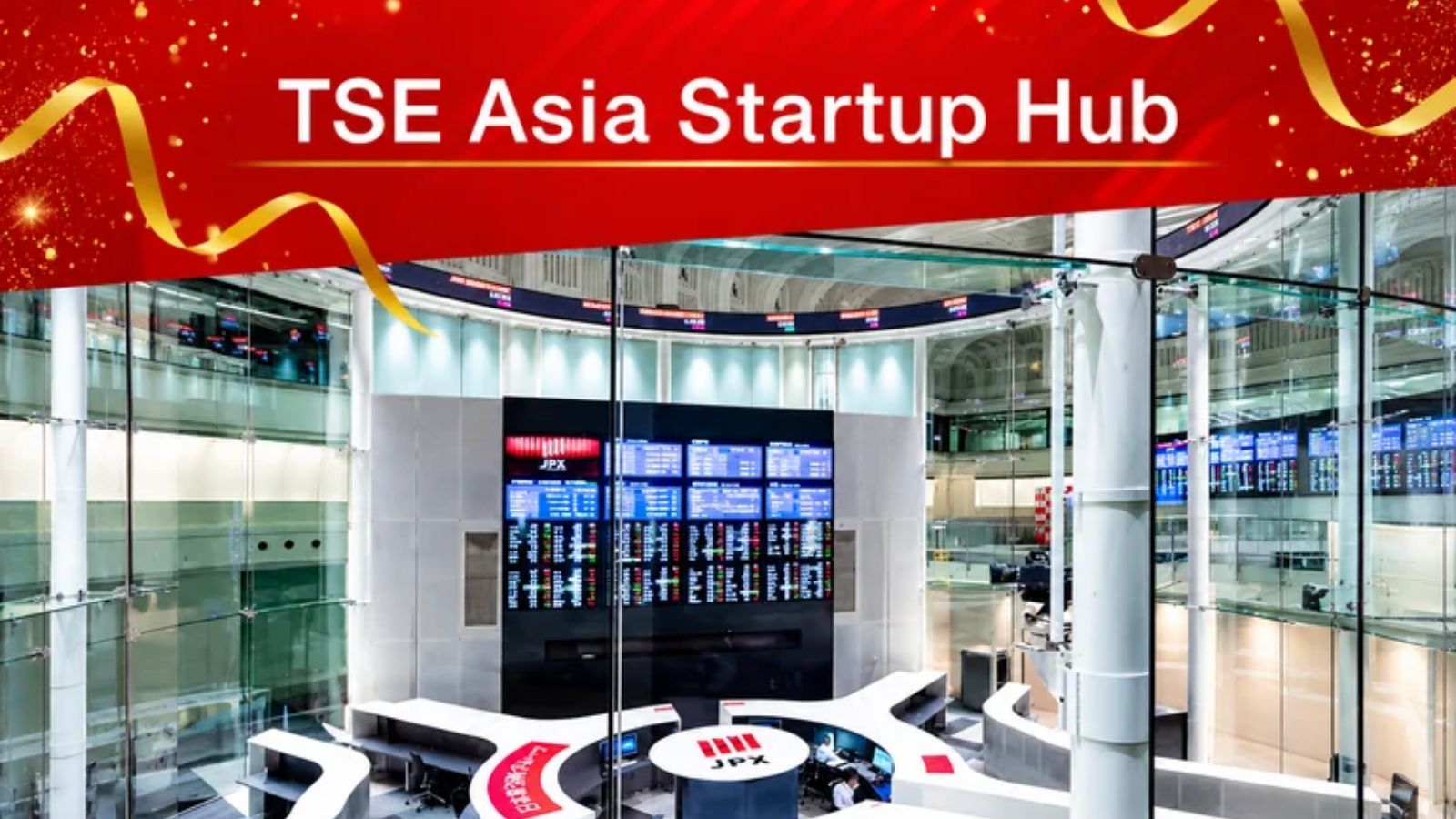
Tokyo Stock Exchange selected 23 companies for its 2026 TSE Asia Startup Hub cohort on September 25, spreading support across ten countries and regions for the first time, including a debut entrant from Hong Kong and another from Mongolia. Seven companies joined fresh this year while 16 return from earlier rounds, according to the official TSE announcement. The expansion marks the third consecutive year of growth for a program that started with just 14 companies from six regions in 2024.
The TSE Asia Startup Hub is a Japan Exchange Group initiative that pairs promising overseas startups with Japanese securities firms, venture capital funds, banks, and government bodies to help them expand into Japan and eventually consider a Tokyo Stock Exchange listing. It does not guarantee an IPO. It builds the relationships, regulatory knowledge, and market access that make one realistic.
Which companies were newly selected for TSE Asia Startup Hub 2026?
The seven new entrants come from the Republic of Korea, Vietnam, Indonesia, Thailand, Hong Kong, and Mongolia. Hong Kong’s inclusion is the headline detail. Buy&Ship, a cross-border e-commerce logistics company, became the first Hong Kong-based firm admitted to the program, and Japan already accounts for roughly 45% of its transaction volume, according to asia business outlook on the selection.
Buy&Ship closed the first tranche of a $12 million Series C round in January 2026 with backing from Mitsubishi Logistics’ venture arm MLC Ventures, Cool Japan Fund, and Altara Ventures. The company has not committed to an IPO timeline, but Tokyo now sits among the markets it is actively evaluating alongside continued US growth. That kind of optionality, rather than a firm listing date, is typical for most companies entering the hub. Mongolia’s arrival, meanwhile, pushes the geographic map further than most observers expected this early in the program’s life.
How the TSE Asia Startup Hub grew from 14 to 23 companies
The trajectory tells its own story about demand for overseas startup Japan market entry support. Here is the year-by-year breakdown.
| Cohort Year | Total Companies | New Selections | Re-selected | Countries/Regions |
|---|---|---|---|---|
| 2024 (launch) | 14 | 14 | 0 | 6 |
| 2025 | 20 | 7 | 13 | 7 |
| 2026 | 23 | 7 | 16 | 10 |
Three things stand out. First, the re-selection rate stays high. Sixteen of 2025’s twenty companies came back for 2026, which suggests the support is worth sticking around for rather than a one-year publicity exercise. Second, the geographic spread jumped from seven to ten regions in a single cycle, faster than the six-to-seven move the year before. Third, the pool of partners backing this Japan IPO support program for Asian companies has swelled to 53 partner organizations and four observers, spanning securities firms, banks, law firms, and venture capital investors.
That partner bench includes Daiwa Securities, Mitsubishi UFJ Morgan Stanley Securities, Mizuho Securities, and Nomura Securities, giving companies access to Japan’s largest underwriting houses from day one rather than having to cold-call them later. The Tokyo Metropolitan Government joined as an additional partner in January 2025, adding a policy and civic-engagement layer that pure financial partners cannot provide on their own.
Why are Southeast Asian startups choosing Tokyo over Hong Kong?
Startups are weighing Tokyo against Hong Kong and Nasdaq largely because Japan offers a structured, government-backed on-ramp rather than a straight listing application. Hong Kong pulled in roughly $45 billion in IPO proceeds during the first nine months of 2026, dwarfing the ¥232 billion (about $1.5 billion) raised through Japanese IPOs in the same period, the lowest nine-month figure since 2022. On raw capital volume, Hong Kong wins by a wide margin.
The calculation changes once you account for relationship-building. A company that spends a year inside the TSE Asia Startup Hub gets warm introductions to underwriters, auditors, and corporate partners before it ever files paperwork. Insignia Ventures Partners, a Singapore-based venture firm that became a program partner in June 2025, has five portfolio companies enrolled and one, Appier, already listed on the Tokyo Stock Exchange. Partner Jixun Foo’s colleague Hian Goh, credited with early groundwork, connected Appier’s leadership to SoftBank’s Masayoshi Son and JAFCO’s Yoshiyuki Shibusawa years before the listing happened, a slow-burn networking process the hub now tries to compress and formalize for other companies.
Fintech firm Surfin and mental health platform Intellect, both cited in JPX’s own program materials, built Japan-specific compliance work, high-yield products cleared under Japanese financial regulations and stress-check-compliant workflows, well before either pursued fundraising in the country. That kind of groundwork is hard to replicate through a generic Nasdaq or Hong Kong Stock Exchange application.
What support does Tokyo Stock Exchange actually provide?
The hub delivers three concrete things: introductions to Japanese business partners, fundraising access through partner banks and VCs, and structured IPO preparation guidance. None of it substitutes for meeting TSE’s own listing criteria.
In April 2026, TSE published the BEYOND BORDERS listing handbook in cooperation with METI and JETRO, a reference document walking foreign companies through market entry and the mechanics of a cross-border IPO on TSE. The handbook is available through JPX’s cross-border IPO page and covers everything from choosing a legal entity structure in Japan to the Japan Depositary Receipt (JDR) mechanism, which lets foreign companies raise capital through Tokyo without a direct primary listing, similar to how ADRs work in the United States.
Feedback collected from the 2025 re-selected companies at their one-year mark backs up the practical value. Docquity, a Singapore healthtech company, said the hub “contributed” directly to new fundraising conversations. Vietnam’s POPS K.K. reported introductions to “prominent Japanese companies” it previously had no contact with. Taiwan’s KKday Holdings pointed specifically to SusHi Tech Tokyo 2025, the city’s flagship innovation event, as a venue that opened doors with new partners. These are not vague testimonials. They describe specific business outcomes tied to the hub’s calendar of events and partner introductions.
Tokyo Stock Exchange listing requirements for foreign companies
Meeting TSE’s actual listing bar is a separate hurdle from being selected for the hub, and founders should not confuse the two. The Growth Market, the segment most sub-unicorn Asian startups target, requires at least 150 shareholders, 1,000 tradable trading units, and a forecasted market capitalization of roughly ¥500 million ($3.19 million) at listing, plus one full year of continuous business operation. The Prime Market sets a far higher bar: ¥25 billion in expected market capitalization and three fiscal years of operating history.
Once a foreign company files, the listing examination itself runs three to four months, according to JPX’s own listing guide. That is faster than many founders expect, but TSE has also signaled a 2030 rule change requiring listed companies to hit ¥10 billion in market capitalization within five years of listing, a maintenance requirement that raises the long-term stakes of a Growth Market debut.
How do Asian startups apply to TSE Asia Startup Hub?
There is no public online application form. Selection happens through TSE’s network of partners, so a startup’s realistic path in is through an existing relationship with one of the 53 partner organizations, a venture capital backer already enrolled, a securities firm, or a JETRO office in its home market. Companies that already have Japanese investors, customers, or a physical Japan office tend to have an edge, since the hub optimizes for firms already leaning toward Japan rather than cold prospects.
Is 2026 the right year to pursue a Tokyo listing?
Not universally, and founders should weigh this honestly rather than assume momentum equals opportunity. Japan’s IPO market is thinner in 2026 than it has been since 2022, and a Growth Market listing with modest liquidity requirements can still leave a stock illiquid and under-covered by analysts if the company doesn’t actively cultivate Japanese institutional interest. Companies chasing maximum capital raised in a single event are better served by Hong Kong or Nasdaq right now, where proceeds run far higher.
Where Tokyo wins is for startups whose actual commercial strategy already runs through Japan, companies selling into Japanese enterprise clients, partnering with Japanese manufacturers, or building distribution through Japanese retail and media, the way POPS K.K. did with anime studios and music labels. For those firms, the TSE Asia Startup Hub compresses years of relationship-building into a structured 12-month track, and the Tokyo startup ecosystem foreign companies increasingly rely on for warm introductions is more valuable than a marginally larger check size elsewhere.
What the 2026 cohort signals going forward
The jump to ten countries and 23 supported companies is not just an incremental headline. It shows TSE actively courting Asian startups listing on Tokyo Stock Exchange as a structural bet on cross-border capital formation, not a pilot program running out the clock. Watch whether Mongolia and Hong Kong produce actual IPO filings within the next 18 months. If they do, the hub’s model of relationship-first market entry, rather than capital-first, will look increasingly like the template other exchanges start copying.
Founders evaluating a Japan strategy should reach out to a hub partner directly, request the BEYOND BORDERS handbook from JPX’s New Listings team, and map their own commercial ties to Japan before assuming a TSE listing is the right long-term venue.
Frequently Asked Questions
What is the TSE Asia Startup Hub and how does it work?
It is a Tokyo Stock Exchange initiative connecting overseas startups with Japanese securities firms, banks, and venture capital partners to support business expansion in Japan, fundraising, and eventual IPO preparation. Selection happens through TSE’s partner network rather than a public application, and support is reviewed annually.
Which companies were newly selected for the TSE Asia Startup Hub in 2026?
Seven companies from the Republic of Korea, Vietnam, Indonesia, Thailand, Hong Kong, and Mongolia joined for 2026. Hong Kong’s Buy&Ship, a cross-border e-commerce firm where Japan drives about 45% of transactions, is the confirmed first Hong Kong entrant.
How many companies are in the TSE Asia Startup Hub 2026 cohort and where are they from?
The 2026 cohort has 23 companies total, seven newly selected and sixteen re-selected from prior years, spanning ten countries and regions. That is up from 20 companies across seven regions in 2025 and 14 companies across six regions at launch in 2024.
What support does the Tokyo Stock Exchange provide to overseas startups through this program?
TSE connects companies with over 50 partners, including securities firms, banks, audit firms, and venture capitalists, for business development, fundraising introductions, and IPO preparation. It also published the BEYOND BORDERS handbook with METI and JETRO covering market entry and cross-border listing procedures.
Has any company from the TSE Asia Startup Hub actually completed an IPO on the Tokyo Stock Exchange?
Yes. Appier, backed by Insignia Ventures Partners, completed a TSE listing after years of relationship-building with Japanese investors including SoftBank and JAFCO. Insignia now has five hub-enrolled portfolio companies and cites Appier as its proof point for future listings.
Why are Southeast Asian startups choosing Tokyo over Hong Kong or Nasdaq for their IPO?
Tokyo offers structured relationship-building and regulatory support before listing, even though Hong Kong raised roughly $45 billion in IPO proceeds in the first nine months of 2026 versus Japan’s ¥232 billion. Companies with existing Japanese commercial ties often value the introductions more than raw capital size.
What are the requirements for a foreign startup to list on the Tokyo Stock Exchange?
Growth Market listings need at least 150 shareholders, 1,000 tradable trading units, roughly ¥500 million in market capitalization, and one year of continuous operating history. Prime Market listings require ¥25 billion in market capitalization and three fiscal years of operations.
How do I apply to be a supported company in the TSE Asia Startup Hub?
There is no public application form. Companies typically get selected through existing relationships with one of TSE’s 53 partner organizations, an enrolled venture capital investor, a Japanese securities firm, or JETRO’s overseas offices in the startup’s home market.