
BRICS Summit 2026 Takeaways: What the New Delhi Declaration Actually Changes for the World

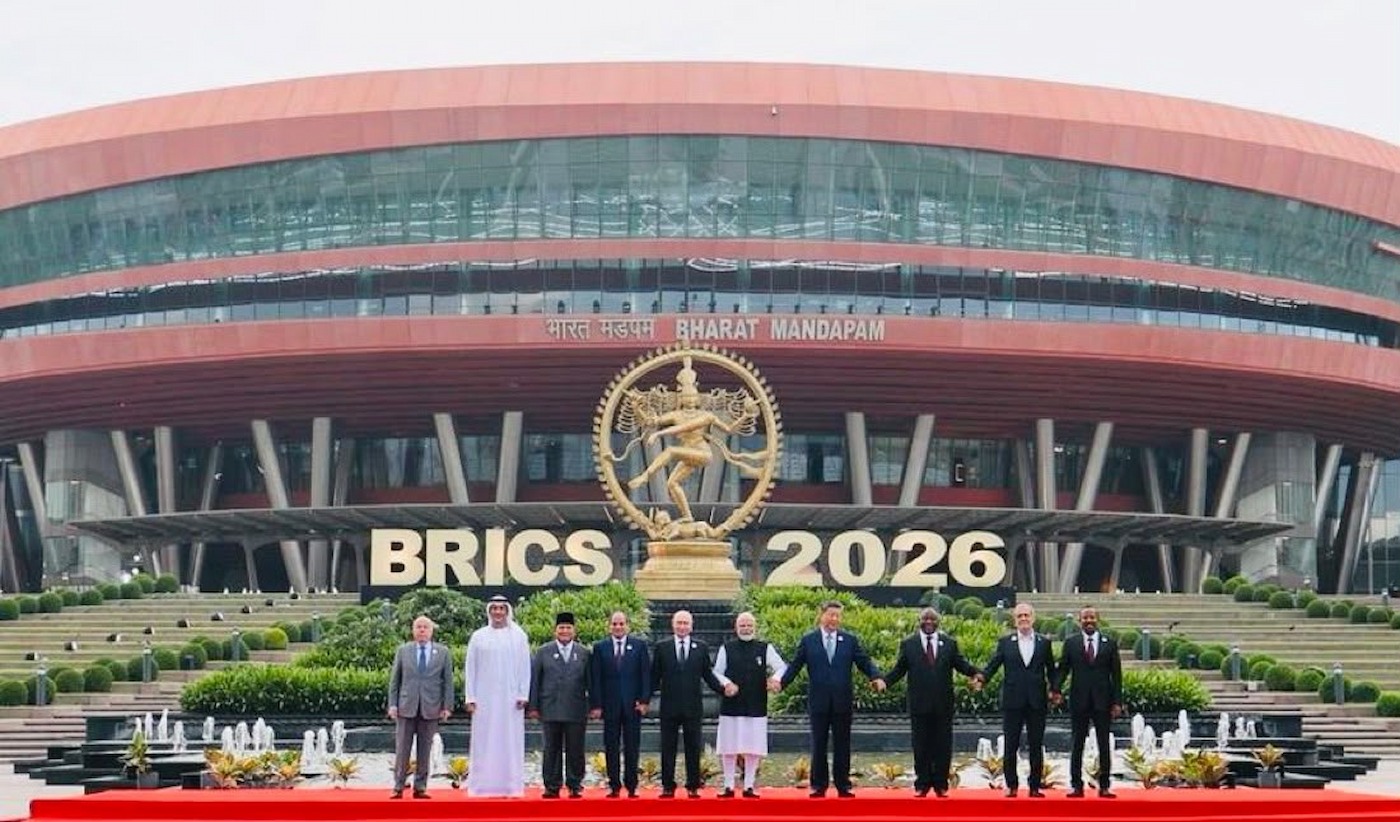
The 18th BRICS Summit, held at Bharat Mandapam in New Delhi on September 12-13, 2026, produced a unanimous 140-paragraph joint declaration signed by eleven member states and attended by Narendra Modi, Xi Jinping, and Vladimir Putin alongside leaders from Brazil, South Africa, Egypt, Ethiopia, Indonesia, Iran, Saudi Arabia, and the UAE. India chaired the proceedings under the theme “Building for Resilience, Innovation, Cooperation and Sustainability.” The BRICS summit 2026 takeaways span five concrete areas: cross-border payment infrastructure, IMF and World Bank reform, trade and tariff policy, conflict diplomacy, and the expanding institutional weight of the Global South.
The quick answer: the BRICS summit 2026 takeaways center on the New Delhi Declaration, which endorsed BRICS Pay for local-currency cross-border settlements, backed the BRICS Payment Task Force’s mandate, called explicitly for IMF quota reform and a restored WTO dispute-settlement mechanism, condemned unilateral tariffs and sanctions, and urged ceasefire dialogue in both the Iran and Ukraine conflicts. No common currency was created or formally proposed.
That’s the core of it in under 60 words. Everything that follows is the layer that turns those points into something you can actually analyze, act on, or write an exam answer around.
What Were the Key Takeaways from the BRICS Summit 2026?
The BRICS summit 2026 takeaways fall into a sequence where the order tells you a lot about where the bloc’s real energy sits. Payment infrastructure came first in terms of concrete deliverables. The BRICS Payment Task Force, a collaborative body of central bank experts from BRICS nations, received a strengthened mandate at New Delhi, with the stated aim of making cross-border payments among member countries faster, cheaper, more accessible, and safer. Financial architecture reform came second, with explicit calls for IMF quota realignment under both the 16th and 17th General Reviews. Third, trade policy: the declaration condemned “unilateral coercive measures, including secondary sanctions and non-UNSC-authorised sanctions” in language that requires no interpretation for anyone following global trade tensions. Fourth, conflict diplomacy: the bloc agreed on shared ceasefire-and-dialogue language for active war zones. Fifth, BRICS expansion and Global South influence as the strategic horizon.
The BRICS summit New Delhi outcomes also produced a specific institutional commitment that most post-summit coverage passed over quickly: the declaration endorsed BRICS coordination to support the WTO accession bids of both Ethiopia and Iran, and backed China’s zero-tariff treatment for 53 African countries as a model for trade cooperation within the bloc. That’s not rhetoric. Those are named trade policy positions with real implications for how member-state customs regimes interact with each other.
Modi himself set the tone on the summit’s second day, urging member states to convert summit agreements from “files to real-life impact” — a signal that the host country treated the declaration as a starting point for action rather than a statement of aspiration.
What Does the New Delhi Declaration Mean for the Global Economy?
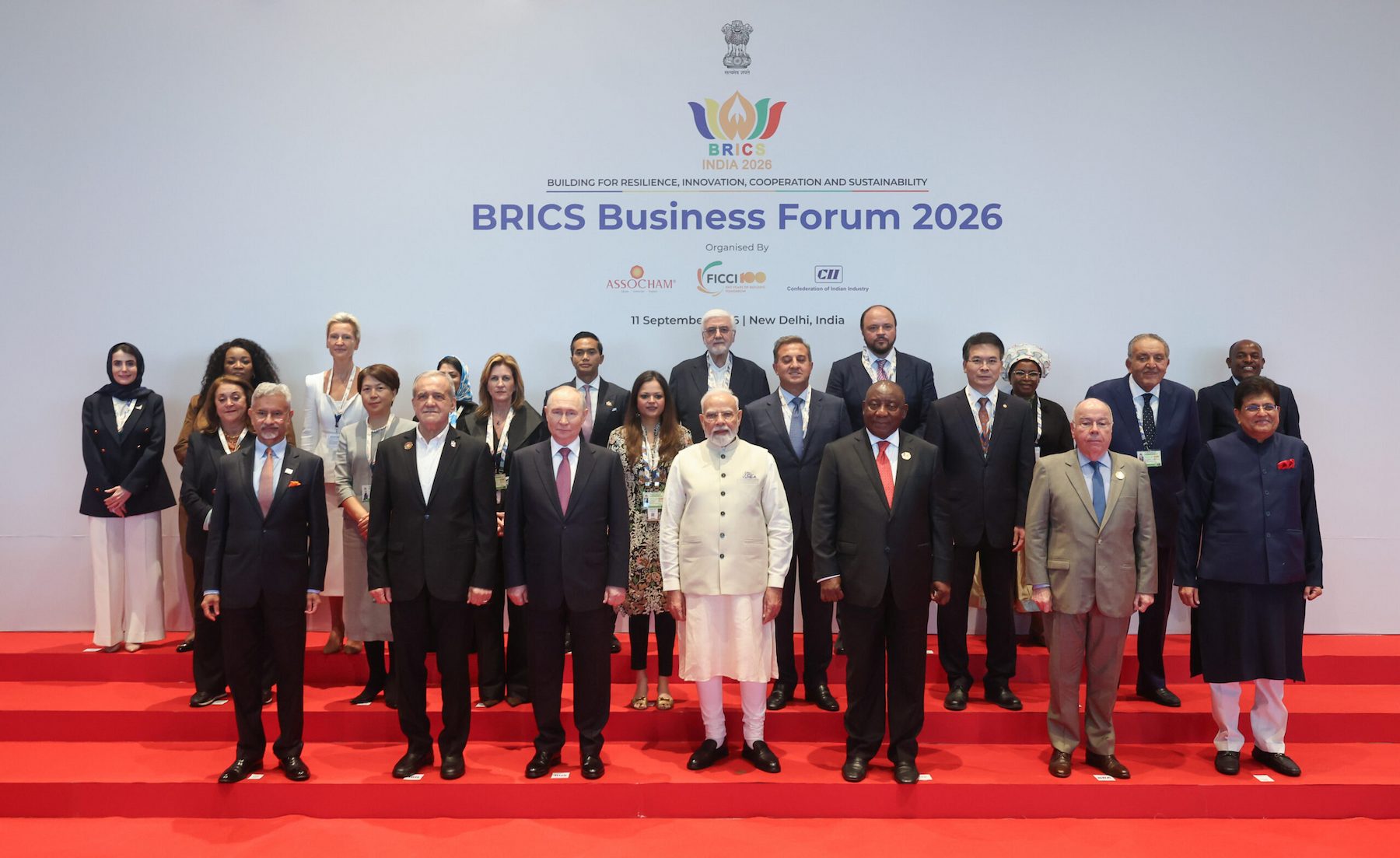 The New Delhi Declaration is the 140-paragraph consensus document adopted on September 12 at the 18th BRICS Summit, a 45-page text covering global governance reform, international conflicts, trade and finance, energy and climate policy, technology, health, and people-to-people cooperation.
For the global economy, its practical significance concentrates in three places. Local-currency trade settlement is the first. The declaration explicitly backs invoicing and settling bilateral and multilateral trade in member currencies, reducing the structural role of the US dollar as default intermediary. The New Delhi Declaration 2026 explained at its most mechanical level: not an attack on any currency, but a steady institutional preference toward alternatives that builds infrastructure, confidence, and precedent over time.
IMF and World Bank reform is the second pressure point. The declaration called for the entry into force of the 16th General Review quota increases “without further delay” and a “meaningful quota realignment” under the 17th Review. It also demanded that the 2025 World Bank Shareholding Review correct the historic underrepresentation of developing countries. And it pushed for merit-based, inclusive, transparent leadership selection in both Bretton Woods institutions, the kind of language that directly challenges the informal convention of an American World Bank president and a European IMF managing director.
WTO dispute settlement is the third. The bloc called for “immediate restoration of an accessible, effective, fully functioning, two-tier binding WTO dispute settlement mechanism,” with new Appellate Body members appointed “without further delay.” That mechanism has been effectively paralyzed since 2019. Restoring it benefits every trading nation, and BRICS lending its collective institutional voice to the push gives the reform effort real multilateral momentum.
BRICS Pay and the De-Dollarization Payment System: From Policy to Plumbing
This is where BRICS 2026 moved furthest from statement to infrastructure, and where most post-summit analysis underinvested its coverage.
BRICS Pay is a decentralized, independent payment messaging and settlement framework, launched in 2018 by the BRICS Business Council, that allows member-state currencies to transact with each other directly rather than routing through dollar-clearing banks. The system features a decentralized cross-border messaging architecture where participants manage their own nodes, making the network resistant to external interference. Russia has been its strongest institutional advocate, given that Western sanctions significantly constrained its access to dollar-denominated clearing. Iran, also operating under sanctions, treats BRICS Pay as a top national priority.
The BRICS de-dollarization payment system got a substantial upgrade at New Delhi. The BRICS Payment Task Force received an expanded mandate covering technical standards, API interoperability between national payment systems — including India’s UPI/RuPay, Russia’s MIR/SPFS, and China’s CIPS — and the cross-border regulatory compliance frameworks that allow central banks to connect. BRICS Pay’s own roadmap targets integration with BRICS+ payment infrastructure in the second quarter of 2026, followed by central bank digital currency integration in the fourth quarter of 2026.
Why didn’t BRICS create a common currency in 2026? The answer is structural, not political failure. India manages inflation through independent monetary policy. China maintains capital controls that are fundamentally incompatible with a shared currency regime. Russia’s banking system operates under significant Western constraints. Brazil carries a history of currency volatility that makes monetary union a domestically sensitive subject. The bloc made a deliberate and practical choice to build interoperable local-currency payment infrastructure — achieving the de-dollarization objective without requiring any member state to surrender monetary sovereignty. For a group this diverse across four continents, that’s the structurally coherent path.
How does BRICS Pay affect the US dollar? The effect is cumulative and gradual rather than sudden. Every operational corridor reduces dollar exposure for the specific commodity flows running through it. The more bilateral corridors that go live, the more trade volume settles outside dollar intermediation. No declaration changes reserve currency dynamics in a single weekend. The payment corridors are the leading indicator to track.
Modi Xi Putin BRICS Meeting: What the Bilateral Conversations Revealed
The joint declaration tells you what eleven governments agreed to publicly. The bilateral meetings at Bharat Mandapam tell you what they needed from each other.
The Modi Xi Putin BRICS meeting produced the summit’s most closely watched sideline conversation. Modi and Xi held their first bilateral on Indian soil in seven years, the latest step in a careful thaw following the deadly 2020 Galwan Valley border clash that killed soldiers on both sides and badly strained relations. Xi told Modi that “China and India are partners rather than rivals” and that bilateral trade had reached a new high. Modi pressed the need for both sides to observe existing border agreements, and both leaders committed to “a fair, reasonable, and mutually acceptable resolution of the boundary question.” Two leaders who had barely spoken for much of the past several years produced an agreed text on their most sensitive dispute. That’s the diplomatic headline of the summit.
For Putin, the BRICS summit New Delhi outcomes carried a different kind of weight. Russia’s advocacy for BRICS Pay is genuine and urgent — Moscow has practical institutional reasons to accelerate every non-dollar settlement corridor it can — and Russia brings real banking technology expertise to the Payment Task Force’s technical work. Putin’s active participation in the economic working sessions reflected that stake.
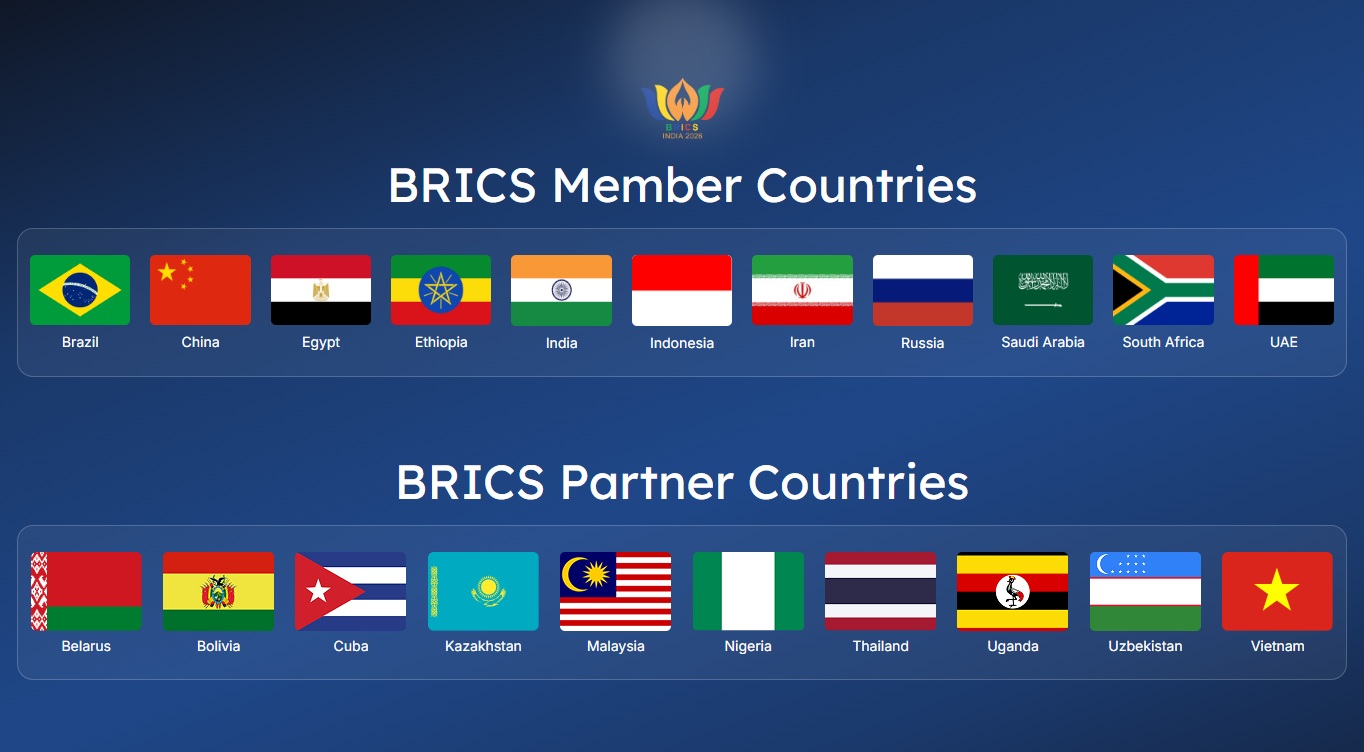
The BRICS expansion Global South influence dimension runs through all of these dynamics. A bloc that was five members as recently as 2023 is now eleven, covering South America, Eastern Europe, South Asia, East Asia, Africa, and the Middle East. Producing a coherent 140-paragraph declaration from that table is a diplomatic coordination achievement.
| Member State | Year Joined | Region |
|---|---|---|
| Brazil | 2009 | South America |
| Russia | 2009 | Eastern Europe / Northern Asia |
| India | 2009 | South Asia |
| China | 2009 | East Asia |
| South Africa | 2010 | Sub-Saharan Africa |
| Egypt | 2024 | North Africa |
| Ethiopia | 2024 | East Africa |
| Iran | 2024 | Middle East |
| UAE | 2024 | Middle East |
| Saudi Arabia | 2024 | Middle East |
| Indonesia | 2025 | Southeast Asia |
![]() What BRICS Agreed on Regarding Iran, Ukraine, and Cross-Border Terrorism
What BRICS Agreed on Regarding Iran, Ukraine, and Cross-Border Terrorism
 What BRICS Agreed on Regarding Iran, Ukraine, and Cross-Border Terrorism
The New Delhi Declaration called for ceasefires and a return to diplomatic negotiations in both the Iran and Ukraine conflicts, without naming specific governments or assigning responsibility to any actor.
Getting consensus language into a joint document signed by Russia, which is a party to the Ukraine conflict, and Iran, which is a principal in the ongoing West Asia war, alongside India, Brazil, and the UAE — countries that have maintained different positions on both conflicts — required negotiations that reportedly continued until 4 am on the summit’s opening day. The UAE and Iran are on opposing sides of the West Asia conflict. BRICS foreign ministers had failed to produce a joint statement on the same issues just months earlier. The fact that all eleven member states endorsed ceasefire and dialogue language at the full summit level represents a genuine diplomatic outcome.
India scored a specific victory in counterterrorism language. The declaration included a direct condemnation of the Pahalgam terror attack and broader language against cross-border terrorism in all forms, endorsed unanimously by all member states. Getting every BRICS member, including China, to sign that passage in New Delhi was a meaningful political result for the host government.
BRICS Expansion and What the Path to 2027 Looks Like
The 18th BRICS Summit is a milestone in a longer institutional build, not a destination. No new full members were announced in New Delhi, but BRICS now formally lists ten partner countries alongside its eleven member states, and the expansion pipeline includes Turkey, Azerbaijan, Pakistan, Bangladesh, and more than thirty other countries that expressed interest in membership or partner status during 2024 and 2025.
That expanding footprint translates into real leverage. A bloc accounting for a significant share of global GDP and the majority of the world’s population carries different institutional weight in IMF quota negotiations and WTO reform discussions than any single emerging market could bring alone. The New Delhi Declaration gave that weight a unified public position on both fronts for the first time in specific, quoted declaration language.
The New Development Bank, BRICS’s own multilateral lender, has approved more than $32 billion for 96 projects since operations began in 2016, and the declaration backed an expansion of its mandate and membership. That’s an existing institution with a functioning track record, not a proposal. The declaration’s support for the BRICS Risk Lab at India’s GIFT City International Financial Services Centre and the India Centre for BRICS Industrial Competencies added specific institutional structures to the summit’s output.
China will host the next BRICS summit in 2027. The Payment Task Force technical deliverables, the IMF quota reform push, and the BRICS Pay integration timelines all converge in that cycle. For business analysts, the India-Russia and China-Brazil bilateral payment corridors are the concrete variables to watch. For policy watchers, the IMF Quota 17th Review negotiations will reveal how effectively the New Delhi Declaration’s unified BRICS position translates into coordinated advocacy inside Bretton Woods institutions.
The BRICS Summit 2026 Takeaways in Real Terms
For a business analyst: the BRICS Pay integration roadmap is your leading indicator. The second-quarter 2026 BRICS+ infrastructure integration and the fourth-quarter CBDC layer are the timestamps. When those corridors carry real trade volume, the payment infrastructure is operational, not aspirational.
For a policy watcher: the IMF 17th Review is the next pressure test. BRICS now has eleven members, the “BRICS Rio de Janeiro Vision for IMF Quota and Governance Reform” on the record, and a demonstrated capacity to coordinate a public bloc position. That’s a meaningfully stronger hand than any previous emerging-market coalition brought to Bretton Woods.
For an exam candidate on current affairs: the BRICS summit 2026 takeaways in condensed form are the New Delhi Declaration at Bharat Mandapam, September 12-13, 2026; eleven members; BRICS Pay mandate expansion; no common currency; IMF 16th and 17th Review reform calls; WTO Appellate Body restoration; local-currency trade settlement endorsement; cross-border terrorism condemnation; and consensus ceasefire language on Iran and Ukraine.
The 18th BRICS Summit produced the clearest institutional advance on payment infrastructure in the bloc’s history, a verified India-China diplomatic reset at the highest level in seven years, and a coordinated multilateral position on trade reform that carries weight in both IMF and WTO corridors. Read the 2027 BRICS Pay pilot results as the evidence test. Everything else in New Delhi was groundwork. That will be the proof.
Want to stay ahead of BRICS developments before the 2027 China summit? Bookmark the BRICS Payment Task Force updates and track IMF quota negotiations through the Fund’s own publications — those two data streams will tell you faster than any summit coverage whether New Delhi’s commitments are becoming infrastructure or becoming archives.
Frequently Asked Questions
What are the key takeaways from the BRICS summit 2026?
The BRICS summit 2026 unanimously adopted the New Delhi Declaration at Bharat Mandapam, expanding the BRICS Payment Task Force mandate for local-currency cross-border settlements, calling for IMF quota reform and a restored WTO Appellate Body, condemning unilateral tariffs and sanctions, and urging ceasefire dialogue in the Iran and Ukraine conflicts. No common currency was launched. Eleven member states endorsed the full 140-point text.
What is the New Delhi Declaration?
The New Delhi Declaration is the 140-paragraph joint statement adopted unanimously by all eleven BRICS member states on September 12, 2026. It covers cross-border payment systems, local-currency trade, IMF and World Bank governance reform, WTO dispute settlement, conflict resolution, counterterrorism, climate and energy cooperation, and support for India’s BRICS institutional proposals including a Risk Lab at GIFT City.
Did BRICS agree to create a common currency?
No. BRICS did not create or formally propose a common currency in 2026. The bloc instead prioritized interoperable local-currency payment infrastructure through BRICS Pay as the practical path to reducing dollar reliance, since a common currency would require member states to surrender independent monetary policy, a trade-off incompatible with the diverse economic structures of eleven countries across four continents.
How does BRICS Pay work and will it replace SWIFT?
BRICS Pay is a decentralized payment messaging and settlement framework that lets member-state currencies transact directly with each other through national central banks, bypassing dollar-clearing intermediaries. It doesn’t aim to immediately replace SWIFT but builds a parallel settlement layer. The BRICS Payment Task Force is developing API interoperability standards linking national payment systems including India’s UPI, Russia’s MIR, and China’s CIPS.
What did BRICS say about the wars in Iran and Ukraine?
The New Delhi Declaration called for immediate ceasefires and a return to diplomatic negotiations in both conflict zones without naming specific governments or assigning blame. Achieving consensus on this language, with both Russia and Iran as BRICS members on opposite sides of these conflicts, required negotiations that ran until 4 am on the summit’s opening day. All eleven member states endorsed the final text.
Which countries are members of BRICS in 2026?
BRICS in 2026 has eleven members according to official BRICS and Indian government sources: Brazil, Russia, India, China, and South Africa (founding members), plus Egypt, Ethiopia, Iran, and the UAE (joined 2024), Indonesia (joined January 2025), and Saudi Arabia.
What does BRICS mean for the future of the US dollar?
BRICS does not threaten near-term dollar displacement, but builds structural alternatives that compound over time. BRICS Pay reduces dollar-clearing dependency for intra-BRICS trade corridor by corridor. Local-currency settlement frameworks, once the payment corridors reach operational volume, shift real trade flows. The IMF quota reform push, if successful, also gradually reduces dollar-denominated reserve requirements for emerging markets.
Why did the BRICS declaration avoid naming the United States?
BRICS operates by consensus among eleven member states with varied relationships with Washington. Directly naming the United States in a joint declaration would have risked fracturing internal unity, since several members maintain significant economic and diplomatic ties with Washington. The language condemning unilateral tariffs, coercive measures, and non-UN-authorised sanctions carries the substantive message while preserving the bloc’s ability to coordinate across diverse geopolitical alignments.