
Bengaluru Startup Unveils Eureka, an Autonomous Amphibious Cargo Aircraft That Skips Runways Entirely

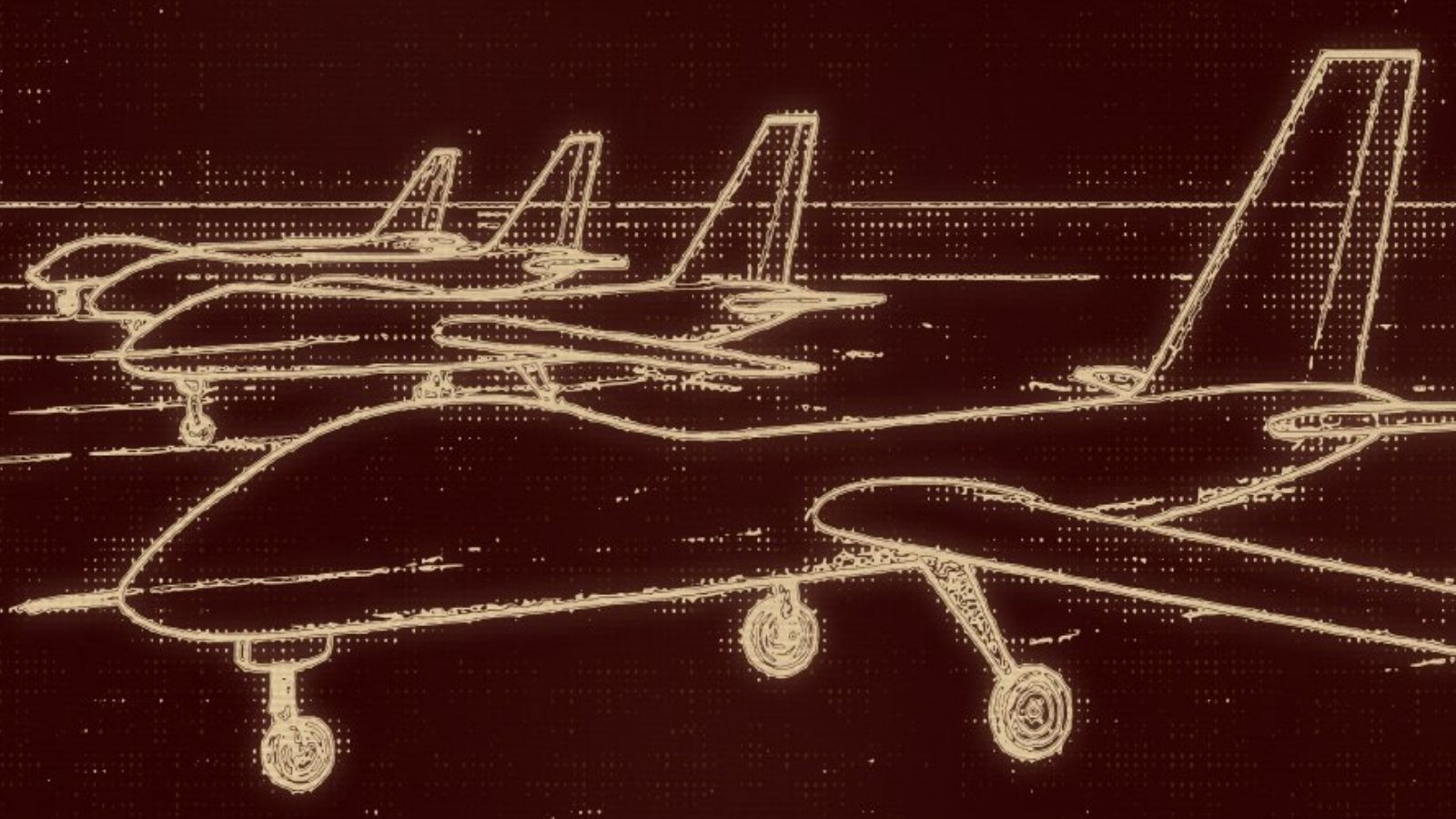
Khushi Mittal stood behind a single tweet on August 29, 2026, and reframed a problem that logistics executives have lived with for decades. Her Bengaluru startup, Aspera Industries, announced Eureka, an autonomous amphibious cargo aircraft built to carry 1,000 kilograms of freight at 6,500 feet above sea level, over a stated range of 2,000 km, without touching a single runway.
Eureka is a pilotless aircraft designed to take off and land directly on open water using retractable hydrofoils instead of a traditional hull. Aspera says the carbon fibre aircraft can move cargo at under $1 per tonne-kilometre on its first unit, a figure the company expects to drop below 50 cents once it reaches fleet scale, positioning it as a genuine alternative to conventional air freight for perishable and time-sensitive goods.
What Is Eureka and How Does This Autonomous Amphibious Cargo Aircraft Actually Work?
Eureka is Aspera’s first product: an unpiloted seaplane engineered purely for freight, not passengers. It flies autonomously between coastal and inland water bodies, treating rivers, lakes and coastlines as its runway network rather than requiring paved airstrips.
Mittal framed the underlying trade-off bluntly in her launch statement, saying “the sea takes weeks and flying costs too much” and that Aspera’s mission is to make flying the default choice rather than a luxury for urgent cargo. That framing matters because it names the actual gap Aspera is chasing: the wide, expensive space between slow ocean freight and pricey conventional air cargo.
The aircraft’s design leans on water as a runway, a phrase Mittal used to describe the 71% of the planet covered by oceans, rivers and lakes that Eureka can theoretically access without new ground infrastructure. That pitch turns the amphibious aircraft without airport requirement into the core selling point, not a footnote.
How Does Aspera’s Pilotless Aircraft Air Freight Cost Claim Stack Up Against Real Numbers?
Aspera’s headline number sounds aggressive, but the math needs a second look before anyone treats it as a settled fact. At under $1 per tonne-kilometre, a full 2,000 km Eureka flight would cost roughly $2 per kilogram of cargo, a figure that sits comfortably inside the current global range for standard air freight rates, which run between $2.50 and $8 per kilogram depending on the route.
That comparison does not kill the pitch, but it does complicate the “cheaper than conventional air freight” framing at first-unit pricing. Where Eureka’s economics start to look genuinely disruptive is at the fleet-scale target of 50 cents per tonne-km, which would translate to roughly $1 per kilogram over the same 2,000 km stretch, half the cheapest air freight rates on the market today. Aspera’s own investor material, published through the Antler India showcase, cites an even more aggressive figure of $0.40 per tonne-km, described as five times cheaper than conventional air freight, a number that has not appeared in Aspera’s own public launch statements. That gap between investor messaging and founder messaging is worth watching as the company scales.
Sea freight still wins on raw cost for bulk, non-urgent cargo, running as low as $0.50 to $2 per kilogram on many lanes. Eureka’s real argument is not that it beats sea freight on price. It is that it beats sea freight on time while undercutting premium air freight on cost for the narrow band of cargo that is too valuable to wait weeks but not urgent enough to justify today’s air rates.
Why Did Seaplanes Decline, and Do Retractable Hydrofoils Actually Fix the Old Problem?
Seaplanes fell out of commercial favor by the 1950s largely because their stepped hulls, needed to break the suction of water at takeoff, created constant aerodynamic drag once airborne. That drag penalty made seaplanes slower and less fuel-efficient than land-based aircraft, and jet-age runways made land planes cheaper to operate almost everywhere.
Eureka’s answer is to remove the step entirely. The aircraft uses retractable hydrofoils that lift the fuselage clear of the water during acceleration, providing the lift needed for hydrofoil takeoff, then fold away once airborne so the carbon fibre fuselage flies clean. In theory, that solves the exact drag problem that killed the old flying boats.
Whether it actually works at scale is the open question. Hydrofoils solve hull drag, but they introduce their own engineering demands around retraction mechanisms, saltwater corrosion, and stability in choppy conditions that a stepped hull never had to manage. Aspera has not published flight test data, wave-height tolerance figures, or certification timelines, so the claim remains a design bet rather than a proven fix.
Where Eureka Fits Among Other Autonomous Cargo Aircraft Startups
Aspera is not alone in chasing pilotless cargo aviation. Prague-based Zuri unveiled its own uncrewed hybrid-electric cargo VTOL days before Eureka’s announcement, targeting a 115 kg payload over a 679 km design range with remote piloting rather than full autonomy. The contrast highlights how differently startups are solving the same cargo-without-airport problem.
| Attribute | Eureka (Aspera) | Zuri uncrewed VTOL | Conventional air freight |
|---|---|---|---|
| Payload | 1,000 kg | 115 kg | Varies, typically several tonnes |
| Range | 2,000 km | 679 km design | Thousands of km |
| Autonomy | Fully autonomous, no operator | Remotely piloted by ground operator | Piloted |
| Infrastructure | Water runway, no airport needed | Pad, deck or open ground | Airport runway required |
| Stated cost | Under $1/tonne-km, target 50 cents | Not yet disclosed | $2.50-$8/kg typical |
Eureka’s payload and range numbers dwarf Zuri’s current product, but Zuri has logged years of test flights since 2018 while Aspera is working from a design announcement with no disclosed flight hours yet. That gap in flight history is the single biggest reason to treat Eureka’s specs as targets rather than proven capability.
Can a Pre-Seed Startup Actually Certify an Autonomous Amphibious Cargo Aircraft in India?
Certification is the hardest part of this story, and it gets the least attention in most coverage. India’s current drone rules cap fully autonomous unmanned aircraft operations at 500 kg, with anything heavier expected to follow the manned aircraft certification path under the Aircraft Rules of 1937. Eureka’s 1,000 kg payload target sits well above that threshold, meaning Aspera will need a bespoke type certificate that does not yet have a clear regulatory template in India.
This is not a dealbreaker, but it is a multi-year process almost certainly measured in years rather than months. Autonomous navigation cargo systems flying beyond visual line of sight over open water also raise air traffic coordination questions that regulators worldwide are still working through case by case. Any India aerospace deep tech startup promising commercial cargo flights on a specific near-term date should be read with that certification timeline firmly in mind.
Who Is Behind Aspera Industries?
Khushi Mittal founded Aspera Industries in 2025 and serves as its chief executive. The Bengaluru aerospace startup raised a pre-seed round backed by Antler India, which introduced Aspera publicly as part of its India showcase cohort alongside eight other early-stage companies working across AI, climate technology and mobility.
Mittal has described Aspera’s ambition in explicitly large terms, framing the cost of flying as an engineering problem rather than a fixed economic reality. That framing explains why Aspera is betting on hydrofoil geometry rather than incremental fuel efficiency gains, a riskier but potentially higher-reward approach if the hydrofoil takeoff mechanism proves reliable in open water conditions.
What Cargo Types Would Actually Benefit From This Kind of Aircraft?
Perishable cargo logistics is the obvious first market: seafood, pharmaceuticals, and fresh produce that currently absorb weeks of ocean transit or expensive air freight premiums. Mittal has pointed out that factories routinely carry three to six weeks of buffer stock shipping delays into their planning, a cost that an amphibious aircraft without airport delays could meaningfully shrink if reliability holds up.
High-value electronics and medical supplies bound for coastal cities without major airport access represent a second use case, since Eureka’s water-runway model could reach ports and river deltas that lack cargo airport infrastructure entirely. Bulk, low-value commodities remain firmly in sea freight territory regardless of how Eureka’s economics evolve, since no cost curve currently makes autonomous air transport competitive for cargo priced in cents per kilogram.
The Bottom Line on Eureka’s Autonomous Amphibious Cargo Aircraft Bet
Eureka is a serious engineering wager on an old idea, wearing new hydrofoil hardware and full autonomy software. The autonomous amphibious cargo aircraft category Aspera is trying to create genuinely fills a real gap between slow sea freight and pricey conventional air cargo, and the underlying economics hold up at fleet scale even if the first-unit pricing claim needs qualification.
What happens next depends entirely on flight testing, certification progress with Indian aviation authorities, and whether hydrofoil retraction proves durable in real ocean conditions rather than a controlled trial. Readers tracking this space should watch for Aspera’s first test flight data and any DGCA certification filings before treating the $1-per-tonne-km figure as settled fact. For now, Eureka is a compelling blueprint. Whether it becomes a working cargo network is still an open bet worth watching closely over the next 18 months.
Frequently Asked Questions
What is the Eureka aircraft by Aspera Industries and how does it work?
Eureka is an autonomous amphibious cargo aircraft that takes off and lands on water instead of runways. It carries 1,000 kg of cargo autonomously at 6,500 feet above sea level, using retractable hydrofoils and a carbon fibre body to cut delivery times from weeks to hours.
How does Aspera’s autonomous seaplane take off and land on water without a hull?
Eureka replaces the traditional stepped seaplane hull with retractable hydrofoils that lift the fuselage clear of the water during acceleration. The hydrofoils fold away once airborne, letting the aircraft fly without the drag penalty that grounded older flying boats.
What payload and range does the Eureka amphibious aircraft have?
Aspera states Eureka carries a 1,000 kg payload over a 2,000 km range, flying autonomously at 6,500 feet above mean sea level. These figures come from the company’s own launch announcement and have not yet been independently flight-tested in public.
How does Aspera’s $1 per tonne-km cost compare to conventional air freight?
Over Eureka’s full 2,000 km range, $1 per tonne-km works out to roughly $2 per kilogram, which sits within today’s typical air freight range of $2.50 to $8 per kilogram. The real cost advantage only appears at Aspera’s fleet-scale target of 50 cents per tonne-km.
Why did seaplanes decline in the 1950s and how is Eureka different?
Seaplanes declined because their stepped hulls created aerodynamic drag once airborne, making them slower and less efficient than land-based aircraft on paved runways. Eureka removes the step entirely, using retractable hydrofoils for takeoff instead of a drag-inducing hull shape.
Who is Khushi Mittal and what is her background as founder of Aspera Industries?
Khushi Mittal founded Aspera Industries in 2025 and serves as its chief executive, leading development of the Eureka autonomous amphibious cargo aircraft. She has publicly framed the high cost of air freight as a solvable engineering problem rather than a fixed limitation.
What is Antler India’s role in funding Aspera Industries?
Antler India backed Aspera Industries with pre-seed funding and featured the startup in its India showcase cohort of early-stage companies. Antler describes itself as one of Aspera’s earliest institutional believers, supporting the company before it had any flight test track record.
What cargo types would benefit most from autonomous amphibious aircraft delivery?
Perishable goods like seafood and pharmaceuticals, along with high-value electronics and medical supplies bound for coastal or river-adjacent areas, stand to benefit most. Bulk, low-value commodities are likely to remain with sea freight regardless of Eureka’s cost improvements.