
Boring Company Valuation Hits $20 Billion — But Does One Tunnel Justify the Price Tag?

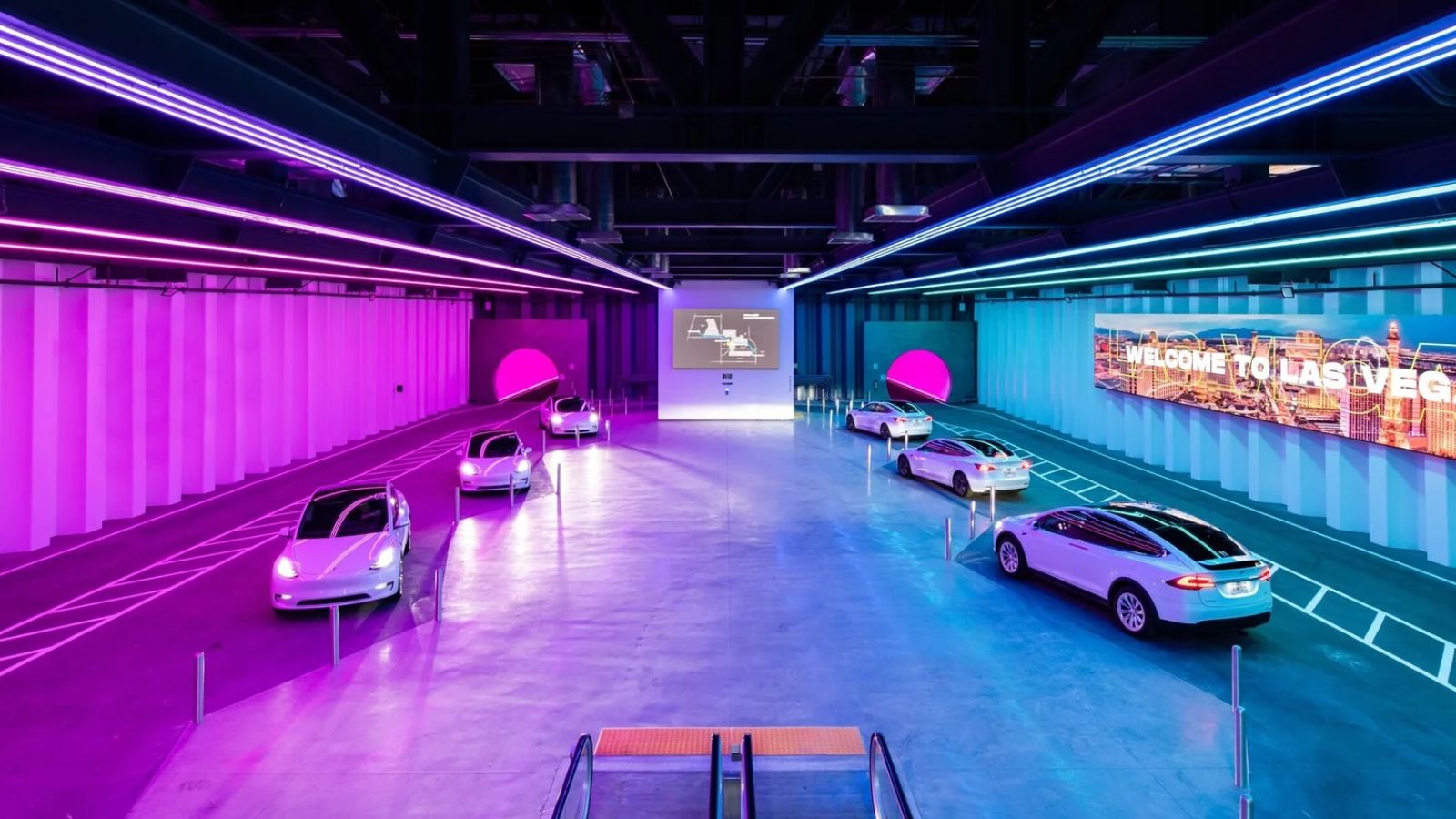
Elon Musk’s tunneling startup The Boring Company is in talks to raise a $4 billion funding round at a valuation of $20 billion. That number, first surfaced by the Wall Street Journal, sets the stage for one of the most provocative questions in private infrastructure investing right now: does the Boring Company valuation reflect a real business, or is it priced almost entirely on the Musk brand?
The short answer is: both, and that tension is exactly what every potential investor needs to understand. The company is seeking a valuation of approximately $20 billion — more than triple its $5.7 billion valuation following its 2022 funding round — yet it currently operates only a limited underground transit network in Las Vegas. Nashville and Dubai are advancing, but neither is operational. The gap between that price tag and the company’s actual revenue footprint is wide, and it deserves a clear-eyed look.
What the $4 Billion Funding Round Actually Means
On July 24, 2026, Elon Musk’s tunneling startup was negotiating a new funding round that could raise approximately $4 billion, potentially valuing the company at around $20 billion post-financing. The deal hasn’t closed and the terms could change.
Context makes that jump look steep. In 2022, the company completed its previous funding round, raising $675 million from investors including Vy Capital, Sequoia Capital, and Founders Fund. That financing valued The Boring Company at $5.675 billion. The proposed Boring Company $4 billion funding round would therefore mark a more-than-threefold increase in just four years — with no public revenue figures disclosed in the interim.
Despite recent sharp stock declines at Tesla and SpaceX, private investors remain willing to pay a premium for Musk-affiliated companies. That Musk-backed companies premium is real and measurable in the gap between what the secondary market prices TBC shares at and what the current round demands. If the round closes at the target valuation, the $4 billion raise would rank among the largest private-market tech funding deals in recent periods.
How The Boring Company Actually Makes Money
Before evaluating Boring Company private market investment at $20 billion, it helps to understand the revenue model — because it is genuinely unusual for an infrastructure company.
The primary business model is selling technology and services to government entities and businesses for mass transit projects. The company also finances projects directly and charges passenger fares for rides. It can additionally generate revenue from operating the tunnels themselves, paying a 0.5–5% franchise fee to the relevant government entity.
Where most transport systems worldwide rely on some form of public funding, in Nevada, TBC finances the tunnels, operates the system and takes revenue from ticket sales, while casinos and hotels pay for the stations. That self-financing model is part of what makes the Loop transit system attractive to city governments — no public dollars at risk. When fully operational, the company says it could serve up to 57,000 passengers an hour, with sample fares of between $6 and $12 per trip.
The cost structure is the other pillar of the pitch. TBC claims its in-house technology can bore tunnels for as little as $10 million per mile — a fraction of the $1 billion-per-mile price tag for conventional urban tunneling projects.(y) The Prufrock tunnel boring machine is central to that claim. The latest-generation Prufrock is an all-electric machine capable of launching directly from the surface, performing continuous construction of the tunnel lining, then re-emerging upon completion — reducing deployment time to within 48 hours of arrival onsite.
Vegas Loop Tunnel Project Growth: Real Progress, Real Limits
The Vegas Loop tunnel project growth is the company’s most concrete evidence that the model works. The Vegas Loop has already transported more than 4 million passengers through 11 stations. In its final form, it will serve up to 90,000 passengers per hour, connecting Harry Reid International Airport, Allegiant Stadium, and downtown Las Vegas with transit times between 2 and 8 minutes. Clark County and the City of Las Vegas have approved 68 miles of tunnel and 104 stations.
That last number is where reality gets complicated. Only eight of the approved 68 miles of tunnels and 104 stations are operational — a lag in development compared to what was expected. As of April 2026, The Boring Company had only built 4.54 miles of the promised 68 miles of tunnels in the Las Vegas Loop announced in 2019. The approved network is enormous; the built network is not.
Regulators have also taken notice. In February 2024, Nevada OSHA found several safety violations at TBC and fined it $112,000. Those violations included eight serious violations from June to October 2023 and allegations that workers faced chemical burns from sludge while working in the tunnels. Nevada’s occupational safety agency then fined the company $400,000 on May 28, 2025, after two firefighters endured chemical burns in Loop tunnels during a training exercise — fines that were “summarily rescinded” the following day at a meeting between Boring president Steve Davis and “high-ranking state officials.”
Tunnel workers have suffered serious injuries, and Nevada regulators said last year that The Boring Company violated environmental regulations nearly 800 times. For investors pricing Musk tunneling company expansion at $20 billion, those figures are not footnotes — they are operational risk indicators.
Boring Company Nashville and Dubai Projects: The Valuation Multiplier
The investment case for a $20 billion Boring Company valuation rests heavily on what comes after Las Vegas. Two active projects — the Boring Company Nashville Music City Loop and the Dubai Loop — are the assets carrying the most weight in that argument.
Nashville: Under Construction, Under Scrutiny
Construction began within hours of February 25 state approval, with The Boring Company’s Prufrock tunneling machine already in the ground the same evening. The first operational segment is targeted for late 2026, with the full route expected to be complete by 2029.
The Boring Company has claimed it can build 13 miles of twin tunnels in Nashville for between $240 million and $300 million total — a fraction of what comparable projects cost elsewhere in the country. Music City Loop is 100% privately funded by TBC, using no taxpayer dollars. Passengers will pay a fare to use the system, with prices expected to be lower than other transportation options.
The controversy is hard to ignore. In November 2025, work crews at the planned entrance walked off the job, citing nonpayment and reported OSHA violations to which The Boring Company had not responded. Reporting revealed that no environmental studies, community outreach, or impact assessments had taken place before the project’s initial approval, and that state-owned land was leased to The Boring Company for free for staging and a job fair before the lease even formally began.
Nashville’s underground transit startup funding story, then, is progress mixed with procedural shortcuts — exactly the pattern critics identify in Las Vegas.
Dubai: Concrete Is in the Ground
The Boring Company Dubai projects represent the company’s first international contract and arguably its most credible near-term expansion asset. Under the agreement with Dubai’s Roads and Transport Authority, the first phase will cover a 4-mile pilot route with four stations linking the Dubai International Financial Centre and Dubai Mall. That phase will pave the way for expansion to a full alignment extending up to 14 miles with 19 stations.
The $153.8 million first phase will connect DIFC with Dubai Mall, cutting travel time between the two destinations from 20 minutes to three minutes. The full 22-kilometer network, comprising 19 stations, will eventually carry 30,000 passengers daily at an estimated total cost of $544.9 million. Construction is not just planned — it is active. A staggering 25,000 pieces of precast concrete are to be used in the initial stage of the Dubai Loop, reaching a total weight of 45,000 tonnes. In February, the RTA revealed the cost of the first phase at $153.8 million.
Parsons Corporation was awarded a contract by The Boring Company to provide professional services in support of the Dubai Loop project, adding a credible engineering partner to the Boring Company Dubai Loop construction contract and reducing some of the execution risk.
The Valuation Math: Option Value, Not Operating Value
Here is the honest analysis wire-service coverage skips. The $20 billion Boring Company valuation requires investors to pay for a future pipeline, not a present cash flow. The company has one operational system. It has a history of announcing — then quietly abandoning — projects in Baltimore, Chicago, and Los Angeles. Previously, the company proposed privately funded transit projects to those cities, planning to generate revenue through ticket sales, but none achieved substantial progress.
What has changed is the pipeline quality. Nashville has dirt moving. Dubai has concrete poured. If those projects move from announcement to operation, the $20 billion pitch starts to look less like a Musk premium and more like a company building a repeatable playbook. Investors are not buying a mature transportation business with decades of operating data. They are buying the chance that faster boring machines, privately funded tunnels, and Tesla-based passenger service can be copied city by city before competitors or regulators slow it down.
That framing — option value priced as operational certainty — is a reasonable description of how most Musk private ventures have been valued at comparable stages. The question is whether the Boring Company execution record, given the Vegas regulatory and safety issues and the Nashville worker disputes, justifies paying a premium that assumes the playbook is already proven.
How to Access Pre-IPO Shares — and Why Most Investors Can’t
Many retail investors watching this Boring Company $4 billion funding round wonder how to participate. The direct answer is: most cannot. The Boring Company does not have a public stock price because it is privately held. Shares are not on public exchanges. Accredited investors can access the company through secondary market transactions.
Accredited investors — high-net-worth individuals or those with high incomes — can sometimes buy pre-IPO shares of companies like The Boring Company on secondary platforms such as EquityZen or Forge Global. On platforms like UpMarket, offerings are subject to availability and require a $50,000 minimum investment. Pre-IPO investments carry significant risks. Boring Company shares are illiquid, meaning there is no public market to sell them quickly. There is no guaranteed exit timeline or return. The investment is speculative, and investors should be prepared for the possibility of total loss.
No confirmed Boring Company IPO date exists. The company has not filed an S-1 with the SEC, and no timeline has been announced publicly.
Verdict: Justified Ambition, Unjustified Certainty
The Boring Company valuation at $20 billion is not irrational — but it prices in a level of execution certainty that the company’s record does not yet support. Vegas works at a small scale. Nashville is tunneling. Dubai has concrete on the ground. Those are real milestones. They are not, however, a proof of a scalable, city-after-city business generating the revenue that a $20 billion enterprise value requires.
Investors willing to treat this as a long-duration, high-risk infrastructure bet — and who qualify as accredited — may find the story compelling on a 7-to-10-year horizon. Anyone expecting near-term liquidity or a rapid IPO should read the fine print carefully. The bet here is on the playbook, not the balance sheet.
Frequently Asked Questions
Why is the Boring Company valued at $20 billion if it only has one operating tunnel?
The $20 billion figure is a private-market price that includes projected value from future projects in Nashville, Dubai, and other cities, not just current operations. Investors are paying for option value — the belief that the Las Vegas model can be repeated at scale — rather than current revenue.
How does the Boring Company make money from its Loop transit systems?
Revenue comes from three sources: selling tunneling services and technology to clients, charging passenger fares directly, and collecting operating management fees from venues or municipalities. In Las Vegas, casinos and hotels fund their own stations while TBC takes fare revenue and operating fees.
What happened to Boring Company projects in Chicago, Los Angeles, and Baltimore?
All three proposals failed to progress beyond the pitch stage. The company removed those projects from its website in April 2021. No tunneling work was done in any of those cities. This history is why analysts treat the Nashville and Dubai advances as a meaningful shift rather than standard Musk promotion.
Can retail investors buy Boring Company stock before an IPO?
No. The Boring Company is privately held and has no public ticker. Accredited investors — those meeting SEC income or net worth thresholds — can access pre-IPO shares through secondary market platforms like Forge Global, EquityZen, or UpMarket, typically with minimum investments of $50,000 or more. No confirmed IPO date exists.
How does the Prufrock machine reduce tunneling costs compared to traditional methods?
The Prufrock is an all-electric tunnel boring machine that launches directly from the surface, continuously lines the tunnel, and re-emerges without requiring purpose-built launch chambers. That eliminates a major cost center. TBC claims the result is tunneling at roughly $10 million per mile versus $1 billion per mile for conventional urban tunneling.
What are the safety and environmental concerns with the Vegas Loop?
Nevada OSHA fined TBC $112,000 in February 2024 for eight serious safety violations including chemical burns to workers. In May 2025, a further $400,000 fine followed after two firefighters suffered burns during a training exercise — though it was rescinded the following day after a meeting with state officials. The company also faced nearly 800 environmental violations cited by Nevada regulators.
Is the Boring Company Nashville Music City Loop on schedule?
Tunneling began on February 25, 2026, the same evening state and federal approval was granted. The first operational segment is targeted for late 2026. However, in November 2025 a contractor crew walked off citing nonpayment and safety concerns, and critics note environmental assessments were released only after construction at the launch site had already begun.
How does the Boring Company’s $20B valuation compare to its 2022 funding round?
The 2022 Series C raised $675 million at a $5.675 billion valuation. The proposed $20 billion figure is a more-than-threefold increase in four years, despite the company’s only operational system still covering fewer than 5 of the 68 miles approved in Las Vegas.