
Rapido’s $3 Billion Valuation: Inside India’s Most Dramatic Startup Valuation Surge of 2026

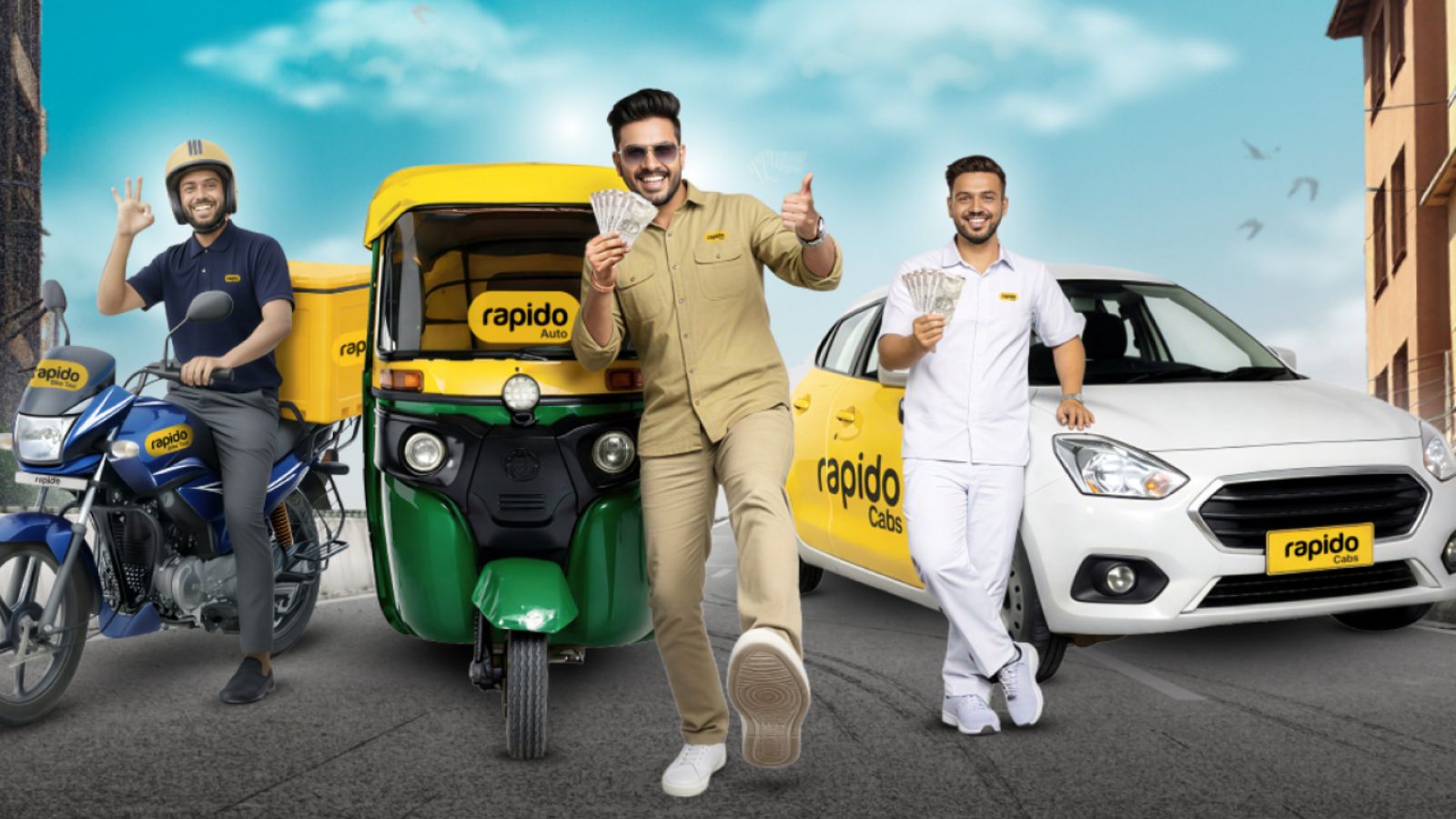
On May 15, 2026, India’s Rapido confirmed it had raised $240 million in fresh primary funding led by Prosus — the largest capital infusion in the startup’s eleven-year history. The resulting Rapido $3 billion valuation isn’t just a headline. It marks a near-tripling of the company’s worth from the $1.1 billion it commanded just nine months ago, making this one of the most dramatic valuation re-ratings any Indian startup has ever pulled off. WestBridge Capital and Accel joined the round, which was part of a larger $730 million primary and secondary financing exercise. For a company that began life in 2015 as a modest bike taxi aggregator, the speed of this ascent is genuinely staggering.
The Numbers Behind the Rapido $3 Billion Valuation
The arithmetic is telling. Just nine months before this round, Rapido was valued at $1.1 billion. A secondary transaction later placed it at $2.3 billion — itself a dramatic jump. Now, with the Rapido $3 billion valuation locked in post-money, the company has effectively tripled its worth in under a year.
Rapido’s fundamentals back up the investor enthusiasm. Revenue from operations surged 44% to Rs 934 crore in FY25, pushing total income past Rs 1,000 crore for the first time in company history. Net losses dropped 30.5% to Rs 258 crore over the same period. The business is tightening up fast. Rapido has maintained 100% year-on-year growth for two consecutive years, and co-founder Aravind Sanka says the company now achieves operational profitability on a quarterly basis. That’s not a fluke — that’s execution.
The Rapido Prosus Investment Round — What’s Really Going On
The Rapido Prosus investment round goes deeper than a standard equity cheque. Prosus increased its stake through a combination of primary and secondary investments — first buying in secondary markets, then returning to lead the primary round. That sequencing matters enormously. You don’t lead fresh primary capital into a company you haven’t already stress-tested as a secondary buyer. Beyond financial backing, Prosus committed to supporting Rapido with AI-led optimization, governance assistance, and scaling operations — operational muscle, not just cash.
The strategic logic is undeniable. India’s taxi and ride-hailing market is estimated at $23.98 billion in 2026, growing at a 7.78% CAGR through 2031. India’s ride-hailing revenue is projected to reach $14.65 billion by 2030 with 12.08% annual growth between 2025 and 2030, making it one of the most attractive mobility bets anywhere on earth. Prosus, which previously led Swiggy’s growth rounds, understands affordable consumer internet in India better than almost any other global investor.
Fresh capital will fund expansion into high-growth markets, stronger first- and last-mile connectivity, and expanded earning opportunities for driver-partners. Rapido currently operates across more than 400 cities with 9 million captains and delivery partners and is targeting 500 cities by the end of 2026.
Rapido vs Uber India — A Multi-Hundred-Million-Dollar War
The Rapido vs Uber India rivalry is no longer a David-versus-Goliath story. It’s a full-scale, intensely expensive battle for India’s mobility future. Uber’s CEO Dara Khosrowshahi publicly named Rapido as Uber’s biggest competitor in India in August 2025, displacing Ola from a position it had held for a decade. That admission sent shockwaves through India’s tech ecosystem. Uber responded in February 2026 by injecting $330 million into its Indian subsidiary, a direct counter-move against Rapido’s rising dominance.
The market share data explains the urgency. Across all categories — bikes, three-wheelers, and cabs combined — Rapido now holds approximately 50% of India’s overall ride-hailing market by total ride volume, compared to Uber’s 40%. In the four-wheeler cab segment, Uber still leads with roughly 45%, but Rapido has already secured more than 20% of cabs despite entering that category only in late 2023. In the Rapido vs Uber India fight, Rapido is the clear dominant force in bikes and three-wheelers, holding over 65% share in those segments.
Structural pricing is Rapido’s sharpest weapon. Bike rides start at Rs 15–20 for short distances, while Uber’s cheapest options begin around Rs 50–60. In a market of 1.4 billion people where cost sensitivity runs deep, that difference is existential. Rapido further disrupted the economics by pioneering a subscription-based model that lets drivers keep a significantly larger share of their earnings rather than surrendering 25–30% commission per ride. Uber and Ola eventually followed, but Rapido’s first-mover advantage in driver loyalty compounds every quarter.
India Ride-Hailing Startup Funding Today — The Tier 2 Opportunity
The India ride-hailing startup funding today story isn’t really about Mumbai and Delhi. It’s about Jodhpur, Coimbatore, Patna, and Ranchi. Demand from Tier 2 and smaller cities is accelerating even as Rapido continues expanding in metro markets, and that’s precisely where the company’s bike-first model holds structural advantages. Lower fare expectations, dense traffic, and a large informal workforce ready to captain two-wheelers make these markets tailor-made for Rapido’s platform.
Growth in autos and two-wheelers is consistently outpacing cabs in non-metro markets, with year-on-year growth rates in these categories far exceeding premium cab formats. India’s ride-hailing is structurally pivoting toward utility-led, affordable, high-frequency rides — exactly the market Rapido has served since day one.
Rapido also holds a decisive advantage in new user acquisition. In 2024 alone, the app recorded 33 million new downloads — more than double Uber’s 17.7 million and Ola’s 17.3 million. Download leads of that magnitude typically convert to monthly active user leads within 12–18 months. As the latest India mobility startup unicorn update confirms, Rapido’s 31.8 million monthly active users now trails only Uber India’s 33.6 million — a remarkable position for a company founded just eleven years ago.
The Ownly Wildcard: Food Delivery Enters the Mix
Rapido isn’t stopping at rides. It launched Ownly, its food delivery platform, citywide in Bengaluru in March 2026 after a six-month pilot. The model is blunt in its disruption: restaurants pay zero commission and zero platform fees, compared to the 16–30% that Zomato and Swiggy routinely charge. Customers pay a flat Rs 30 delivery fee. Already, 20,000 restaurant partners have joined Ownly in Bengaluru, with Delhi NCR, Mumbai, Hyderabad, Pune, and Chennai targeted before July 2026.
Context sharpens the ambition. Swiggy sold its 11.8% stake in Rapido for Rs 2,400 crore in September 2025, explicitly citing a conflict of interest as Rapido entered food delivery. That exit — at 2.5 times Swiggy’s 2022 investment — confirms how seriously the market took the threat. India’s food delivery market is worth approximately $9 billion, dominated almost entirely by Zomato and Swiggy. Ownly’s zero-commission approach mirrors the same playbook Rapido used in ride-hailing: flood the market with affordability, build density, then convert to SaaS once the network is established.
Rapido IPO Plans 2026 — Is a Public Listing Really Happening?
The India mobility startup unicorn update every investor wants to hear: when does Rapido go public? Co-founder Aravind Sanka has confirmed plans to begin IPO groundwork by end of 2026, subject to achieving full operational profitability. Sanka has noted that the company turned profitable for one quarter in FY25 and expects the same trajectory for all of FY26, directly stating: “We don’t lose money anymore.”
The Rapido IPO plans 2026 are built on solid financial foundations. The Rapido $3 billion valuation set by this round establishes a market floor for any listing conversation. Early investors are reportedly sitting on 10–15x returns on their original stakes, giving the cap table excellent alignment heading toward a public market debut. The consistent 100% annual growth rate makes for a compelling investor story — one that’s rare in the often-messy world of ride-hailing.
Risks exist, of course. Regulatory uncertainty around bike taxis persists across multiple Indian states. Scaling profitably in Tier 2 cities — where average fares run lower — demands continued capital discipline. Ownly’s food delivery expansion carries real execution risk when stepping onto Zomato and Swiggy’s home turf. Whether the Rapido IPO plans 2026 stay on schedule will depend heavily on how these bets land in the next two quarters.
What This Means for the Broader Mobility Market
Rapido’s $240M raise and the Rapido $3 billion valuation reflect something bigger than one company’s success. India’s ride-hailing market is structurally tilting toward utility-led growth — high-volume, price-sensitive, and deeply embedded in everyday life across hundreds of cities. Rapido didn’t just spot this shift. It built its entire platform around it, years before the data became obvious. The Rapido Prosus investment round, the ferocity of the Rapido vs Uber India competition, and the bold Ownly disruption all point to one conclusion: this is no longer an underdog story. It’s a platform company with the capital, market position, and momentum to redefine how India moves — one bike ride, auto booking, and food delivery at a time.
Frequently Asked Questions
What is Rapido’s current valuation after the May 2026 funding round?
Rapido raised $240 million in fresh funding at a $3 billion valuation on a post-money basis, confirmed on May 15, 2026. The deal values Rapido at $3 billion post-money, nearly triple the $1.1 billion it commanded just nine months ago, and takes total financing to $730 million since the company’s founding in 2015.
Who led the Rapido $240M funding round and which other investors participated?
Rapido raised $240 million in fresh funding led by Prosus, with participation from WestBridge Capital, Accel and other investors, as part of a larger $730 million primary and secondary financing round.
Why did Uber CEO Dara Khosrowshahi name Rapido as Uber’s biggest competitor in India?
In August 2025, Uber’s chief executive Dara Khosrowshahi named Rapido as Uber’s biggest rival in India — ahead of Ola, which he described as a distant third. Across overall rides, including bikes and three-wheelers, Rapido has reportedly emerged as India’s largest ride-hailing platform with about 50% market share, compared to Uber’s 40%.
What are Rapido’s revenue and profitability figures?
Rapido achieved a significant milestone in FY2025, surpassing Rs 1,000 crore in total income with Rs 1,003 crore reported, and successfully narrowed its net loss to Rs 258 crore. The company, which has been growing at a rate of 100% year-on-year, aims to strengthen its business fundamentals and maintain profitability before entering the public market.
What is Rapido’s Ownly food delivery platform and how does it work?
Rapido launched the food delivery platform Ownly citywide in Bengaluru in March 2026, after a six-month pilot. Restaurants pay zero commission and zero fees against the 16% to 30% that Zomato and Swiggy charge. Customers pay a flat Rs 30 delivery fee.
What are Rapido’s IPO plans for 2026?
Rapido aims to begin IPO groundwork by the end of 2026 as it eyes sustained 100% growth and operational profitability.Sanka said Rapido is very close to achieving full operational profitability in the current fiscal year, and mentioned that Rapido turned profitable for one quarter last year and expects the same performance for the entire FY26.
How does Rapido’s pricing model differ from Uber and Ola?
Rapido’s subscription-based model encourages drivers to join by reducing their operational costs. With reduced overheads, Rapido offers fares that are 10%–15% cheaper, attracting cost-conscious riders.Rapido wins decisively on pricing, with bike rides starting at Rs 15–20 for short distances, while Uber’s cheapest options begin around Rs 50–60.