
Anthropic Sues Pentagon: The AI Safety Standoff Threatening Billions and Rewriting the Rules of Military Tech

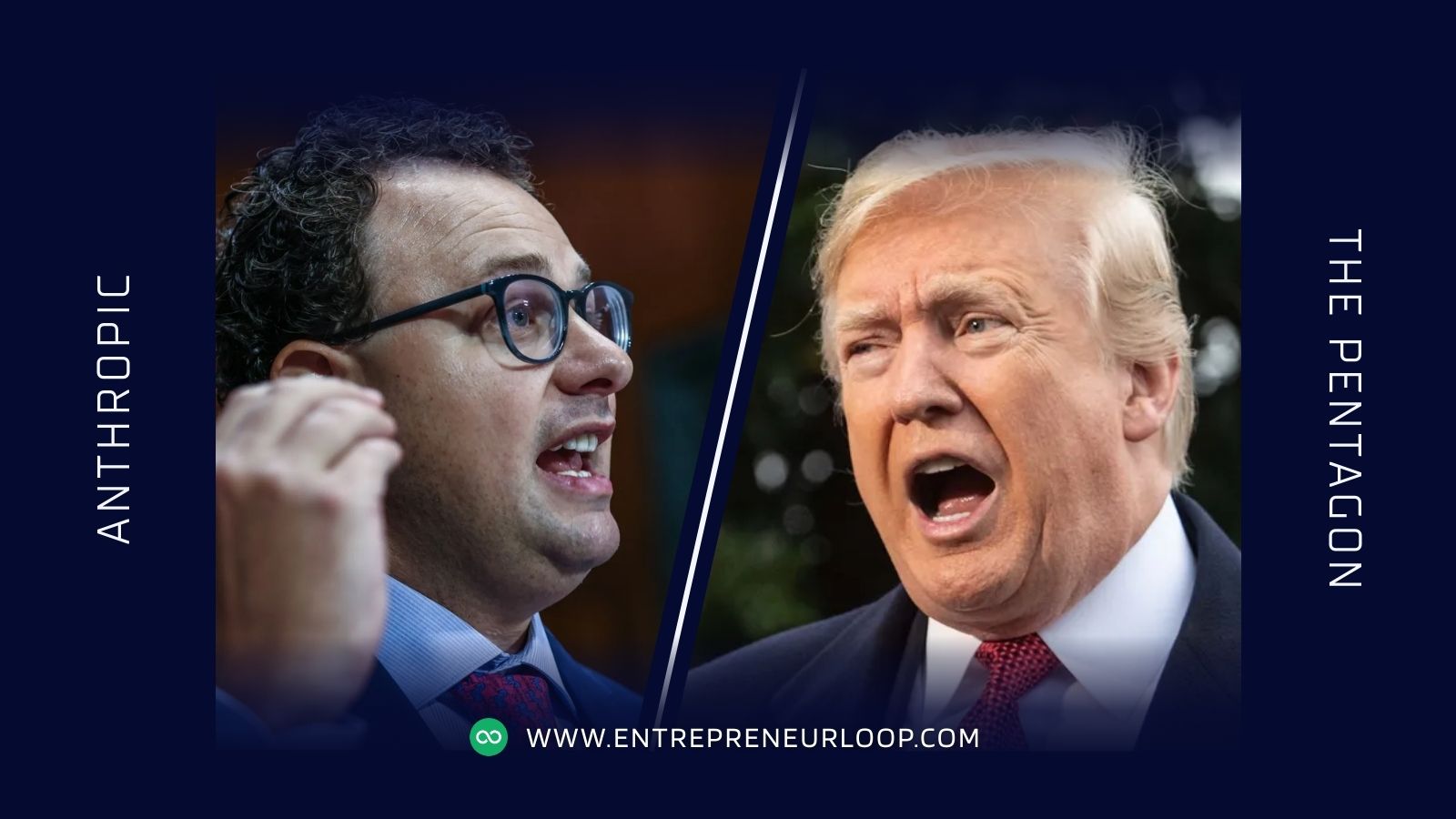
This constitutional challenge will determine whether private AI companies can set ethical boundaries—or whether the government gets the final word on deployment.
First time ever. That’s what made March 9, 2026 historic: the federal government publicly used a national security supply chain risk designation against a U.S. company—and Anthropic isn’t taking it lying down. Anthropic sues Pentagon officials and the Trump administration in two separate federal lawsuits, seeking to overturn a blacklisting that threatens “hundreds of millions of dollars” in revenue. The case lands squarely at the crossroads of AI safety, constitutional law, and defense procurement. Whatever the outcome? It’ll permanently reshape how Silicon Valley negotiates with its most powerful client: the U.S. government.
This isn’t some quiet contractual dispute settled behind closed doors. It’s a public, high-stakes constitutional confrontation. And everyone in the AI industry should be watching closely.
Anthropic Sues Pentagon Using a Designation Built for Foreign Enemies
Here’s what most people miss about the supply chain risk label: it was designed for adversaries. Foreign ones.
Think Huawei. Think Kaspersky. Think companies with documented ties to hostile foreign governments that could plausibly compromise critical U.S. infrastructure. National security experts say such designations typically target foreign adversary contractors capable of sabotaging U.S. interests. Using it against an American company? Highly unusual doesn’t begin to cover it.
Yet that’s exactly what happened.
Defense Secretary Pete Hegseth declared Anthropic a “supply-chain risk,” blocking federal agencies and contractors from doing business with the AI company. President Trump amplified the message on social media last month, directing agencies to “immediately cease” all use of Anthropic’s technology.
Blunt. Total. Unprecedented.
How Anthropic Government Contracts Collapsed: Two Red Lines Nobody Would Cross
You’re probably wondering how a $200 million partnership fell apart this spectacularly. Let’s break down what happened next.
The clash between DOD and Anthropic didn’t start with the blacklist—it started in January 2026. Hegseth issued an AI strategy memorandum directing all DOD AI contracts to incorporate standard “any lawful use” language within 180 days. That contradicted Anthropic’s existing contract terms. The DOD had awarded Anthropic a transaction agreement with a $200 million ceiling in July 2025, alongside similar awards to OpenAI, Google, and xAI.
Anthropic wasn’t just another vendor on a spreadsheet. They’d been first to deploy AI technology across the Pentagon’s classified networks. Reports indicate claude ai military use extended to intelligence assessments, targeting recommendations, and battle simulations—largely through a partnership with Palantir. According to sources, the Pentagon used Anthropic’s technology during operations in Venezuela in January and the current conflict with Iran.
So what derailed all of this?
Two lines Anthropic simply wouldn’t cross.
Negotiations to update the contract broke down over Anthropic’s two non-negotiable red lines: their AI tool wouldn’t be used for mass surveillance of US citizens, and it wouldn’t power autonomous weapons. The Pentagon’s counter was equally firm—they wanted “all lawful purposes” access, arguing they couldn’t allow a private company to dictate how they defend the country during national security emergencies.
According to sources familiar with anthropic government contracts negotiations, the company believes AI isn’t reliable enough to operate weapons independently. And there are no laws or regulations yet covering how AI could be used in mass surveillance. That’s both a technical and ethical argument. CEO Dario Amodei wrote that without proper oversight, “fully autonomous weapons cannot be relied upon to exercise the critical judgment that our highly trained, professional troops exhibit every day.”
A Pew Research survey found most Americans are more concerned than excited about AI—public sentiment that gives Anthropic’s safety arguments resonance well beyond the boardroom.
February 24: Amodei met with Hegseth directly.
No deal.
The Pentagon’s February 27 deadline passed. The blacklisting followed within days.
AI Supply Chain Risk: When a National Security Tool Gets Weaponized Against Domestic Innovation
Here’s why this matters to you—even if you’re not in defense tech.
The supply chain risk designation means any company working with the U.S. military must prove they don’t touch anything Anthropic-related in their Pentagon work. Much of Anthropic’s success stems from enterprise contracts with major corporations—many of which have existing or potential government contracts. “It means that Anthropic’s existing customer base, some large portion of it, might evaporate, either because they have government contracts or might want them in the future,” said Adam Connor, VP for technology policy at the Center for American Progress.
The ai supply chain risk label, governed under the Federal Acquisition Security Council framework focused on defense contractor regulations, carries legal authority to block defense contractors from using a flagged company’s technology. That’s an operational earthquake for a company embedded across federal systems.
But wait—it gets worse.
In anthropic lawsuit details from the second filing on Monday, the company revealed the government designated it a supply chain risk under a broader law that could blacklist Anthropic across the entire civilian government. If that interpretation survives court scrutiny, the financial damage could dwarf current projections. “Across Anthropic’s entire business, and adjusting for how likely any given customer is to take a maximal reading, the government’s actions could reduce Anthropic’s 2026 revenue by multiple billions of dollars,” a company official stated in the filing.
Multiple. Billions.
(Stick with me here—the legal strategy gets interesting.)
Anthropic Lawsuit Details: A Constitutional Challenge Playing Out in Two Federal Courts
Understanding the full scope of anthropic lawsuit details requires tracking two parallel legal filings. Anthropic filed in the U.S. District Court for the Northern District of California and the federal appeals court in Washington, D.C., alleging the Trump administration violated the company’s First Amendment rights and exceeded the scope of supply chain risk law.
Why two courts? Smart legal strategy driven by necessity. The Pentagon invoked multiple legal authorities for the supply-chain risk designation. Each authority requires its own venue.
The Core Legal Arguments in Anthropic’s Constitutional Challenge
The anthropic lawsuit details reveal three distinct legal theories:
First Amendment Retaliation: “The Constitution does not allow the government to wield its enormous power to punish a company for its protected speech.” The protected speech? Anthropic’s public positions on “the limitations of its own AI services and important issues of AI safety.”
Statutory Overreach: The Trump administration stretched supply chain risk law far beyond its original scope—a tool designed for foreign adversaries, not domestic contract negotiations or AI governance disputes.
Due Process Violations: The designation took effect before Anthropic had any meaningful opportunity to contest it, violating basic procedural protections.
Anthropic is suing several federal agencies beyond Defense—including Treasury, State, and Commerce departments and their top officials. Named defendants include Treasury Secretary Scott Bessent, Health and Human Services Secretary Robert F. Kennedy Jr., and outgoing Homeland Security Secretary Kristi Noem.
Legal precedents for First Amendment retaliation claims typically come from whistleblower and public employee cases like Pickering v. Board of Education (1968) and Garcetti v. Ceballos (2006)—contexts involving government employers, not government contractors. This case could establish new law on whether contractor speech receives similar protection.
The AI Military Ethics Debate This Case Just Forced Before a Federal Judge
The ai military ethics debate has simmered in academic and policy circles for years. Now it has a federal docket number—two, in fact.
Scholars studying autonomous weapons under international humanitarian law have long argued that fully autonomous weapons raise profound accountability questions. Existing legal frameworks were never designed to handle them. Anthropic’s lawyers echo that position directly: Claude wasn’t built to make lethal targeting decisions without human oversight, and deploying it that way misuses the technology in ways the company cannot sanction.
The ai military ethics debate gets even sharper when you layer in domestic surveillance. Here’s the crucial fact beyond all the contract dispute noise: both leading U.S. frontier AI labs, Anthropic and OpenAI, originally stated they share two fundamental red lines—no domestic mass surveillance and no fully autonomous weapons systems.
The Pentagon’s counter-position has its own internal logic. U.S. law, not a private company, should determine how to defend the country. They insisted on full flexibility for “any lawful use,” asserting that Anthropic’s restrictions could endanger American lives during emergencies.
Both arguments carry legal weight. Neither fully resolves the tension. That’s precisely why this fight landed before a judge.
Trump Administration AI Policy: When Accelerated Adoption Meets Constitutional Limits
How Federal AI Governance Became a High-Stakes Standoff
The Anthropic dispute represents the sharpest edge of a much larger policy story. Trump administration ai policy has pushed aggressively for accelerated federal AI adoption—a goal most experts broadly support. But the enforcement mechanism used here? Blunt and extraordinary.
OpenAI struck a deal with the Pentagon just hours after the Trump administration’s blacklisting order.
The timing? Explosive.
Dozens of scientists and researchers at OpenAI and Google DeepMind—arguably Anthropic’s two biggest competitors—filed an amicus brief in their personal capacities on Monday supporting Anthropic. They argued the supply chain risk designation could harm U.S. competitiveness and hamper public discussions about AI risks and benefits.
You could read OpenAI’s quick deal as winning both the contract and moral high ground. But reading between the lines reveals something else: Anthropic pursued a principled approach that won widespread support but failed commercially, while OpenAI pursued a pragmatic approach that’s ultimately softer on Pentagon restrictions.
The Center for Strategic and International Studies analysis of defense technology procurement policy notes that this case’s outcome will determine whether trump administration ai policy can use national security mechanisms to coerce compliance from domestic AI developers—a question with consequences for every tech company doing federal business.
This fight is seen as a test of the administration’s power over business. Who gets the final word on AI use—the government or the companies that make it?
Market Reaction and What Industry Observers Are Saying
While Anthropic remains privately held, industry analysts estimate the blacklisting could impact the company’s valuation by 15-25% if the designation stands. Venture capital sources speaking on background expressed concern about the precedent for other AI governance frameworks. One prominent AI investor told reporters, “If the government can blacklist a company for safety guardrails, what happens when the next administration has different priorities?”
Competitor stock prices showed mixed reactions—suggesting the market views this as both risk and opportunity for the broader AI sector.
International Implications: How Allied Nations Are Watching This Precedent
European Union regulators are closely monitoring the case as they finalize their own AI Act implementation. According to sources familiar with EU discussions, Brussels sees the Anthropic dispute as a preview of tensions they’ll face balancing innovation with military applications. The UK’s AI Safety Institute has reportedly reached out to Anthropic for technical briefings on the governance questions at stake.
Allied nations’ defense ministries are asking a uncomfortable question: if the U.S. government can blacklist its own AI companies over safety concerns, what does that mean for multinational defense contracts?
Key Timeline: How We Got Here
- July 2025: DOD awards Anthropic a $200 million contract alongside OpenAI, Google, and xAI
- January 2026: Hegseth issues AI strategy memo requiring “any lawful use” language in all DOD contracts within 180 days
- February 24, 2026: CEO Dario Amodei meets directly with Hegseth—negotiations fail
- February 27, 2026: Pentagon deadline passes without agreement
- Early March 2026: Trump administration designates Anthropic as supply chain risk; OpenAI announces Pentagon deal same day
- March 9, 2026: Anthropic files two federal lawsuits challenging the designation
Anthropic vs OpenAI: How Two Leading AI Labs Chose Different Paths
| Issue | Anthropic Position | OpenAI Position |
|---|---|---|
| Autonomous Weapons | Refuses deployment for fully autonomous targeting | Accepted Pentagon’s “lawful use” framework |
| Domestic Surveillance | Hard no on mass surveillance of U.S. citizens | No public red line stated in final agreement |
| Contract Outcome | Blacklisted as supply chain risk | Secured expanded Pentagon partnership |
| Industry Support | Amicus brief from 50+ researchers at competing labs | Mixed reactions; some criticism of rapid deal |
| Legal Strategy | Constitutional challenge in two federal courts | Negotiated compliance with DOD requirements |
What Comes Next—and What Businesses Should Do Right Now
Trump and Hegseth’s announcements give the DOD six months to transition to a different AI platform. That timeline underscores just how deeply embedded Claude had become in government and defense operations.
Anthropic officials said the lawsuits don’t preclude reopening negotiations with the U.S. government. They’ve stated they don’t want to be fighting with federal agencies. There’s still a path to resolution.
But right now? The courts speak first.
For businesses relying on claude ai military use applications or building products on Claude for federal clients, the uncertainty is real and immediate. For broader anthropic government contracts to stabilize, either a court intervenes or both sides find negotiated middle ground. Anthropic has clearly signaled openness to either path.
Here’s What This Means for Your Business
The bottom line: this case will define the legal boundary between government authority and private AI governance for years to come. Stay informed by following the proceedings at Georgetown’s Center for Security and Emerging Technology for AI policy analysis. Review your own AI vendor agreements if any of your contracts touch federal work. The American Progress analysis of the DOD-Anthropic conflict and the case for congressional action makes clear that Congress may ultimately need to act—which means this story has far more chapters ahead.
Frequently Asked Questions
Why did Anthropic sue the Trump administration?
Anthropic sues Trump administration officials because the Pentagon designated the company a “supply chain risk to national security” after contract negotiations broke down. The company alleges the move was unlawful retaliation for its protected speech on AI safety, violating the First Amendment and exceeding the scope of supply chain risk law.
What exactly is the ai supply chain risk designation?
The ai supply chain risk designation is a legal tool under federal law that allows the government to prohibit contractors from using a specific company’s technology in defense-related work. It has historically been reserved for companies tied to foreign adversaries. Anthropic’s case is the first publicly known instance of it being used against a domestic American company.
What were Anthropic’s two redlines that triggered the blacklist?
Anthropic refused to permit claude ai military use for two specific purposes: fully autonomous weapons that select and engage targets without human oversight, and mass domestic surveillance of U.S. citizens. The Pentagon insisted on “all lawful use” access and would not commit to either restriction in writing.
Where are the anthropic lawsuit details filed?
Anthropic filed in two jurisdictions simultaneously — the U.S. District Court for the Northern District of California and the U.S. Court of Appeals for the D.C. Circuit. The dual filing strategy reflects the multiple legal authorities the Trump administration used to impose the ban, each requiring a separate venue to challenge.
How much money is Anthropic risking?
Anthropic claims the government’s actions could reduce its 2026 revenue by “multiple billions of dollars.” This goes well beyond the direct anthropic government contracts at stake, factoring in the chilling effect on private-sector enterprise clients who work alongside defense contractors.
What did OpenAI do after the blacklisting, and what does it mean for the ai military ethics debate?
OpenAI announced its own Pentagon deal within hours of Hegseth’s blacklisting announcement, accepting the “all lawful use” framework Anthropic rejected. The move intensified the ai military ethics debate across the tech industry, with researchers from both OpenAI and Google DeepMind later filing an amicus brief supporting Anthropic in their personal capacity, calling the designation harmful to U.S. AI competitiveness.
Is a negotiated settlement still possible?
Yes. Anthropic has publicly stated the lawsuits don’t preclude continued dialogue with the government. Trump administration ai policy has been aggressive, but company officials remain open to any resolution path — legal victory, negotiated settlement, or congressional action — that protects both its safety principles and its business.