
Zoho-Backed Startup Unveils India’s First Indigenous MRI Scanner: A Healthcare Revolution in the Making

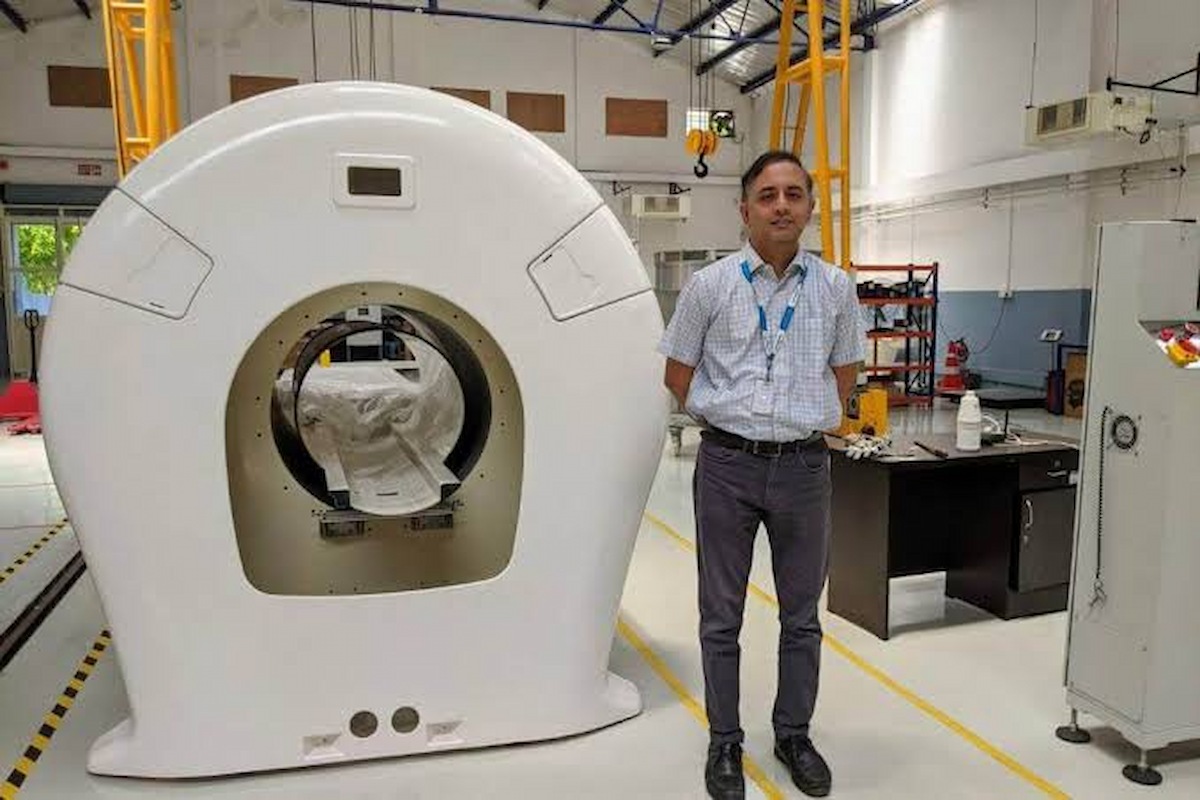
VoxelGrids, a startup backed by technology giant Zoho Corporation, has successfully developed the nation’s first indigenous Magnetic Resonance Imaging (MRI) scanner. This groundbreaking achievement represents more than just technological innovation—it signals India’s emergence as a formidable player in the global medical device manufacturing landscape and promises to democratize advanced healthcare diagnostics across the subcontinent.
The India indigenous MRI scanner breakthrough comes at a critical juncture when the country’s medical device industry is experiencing unprecedented growth. Estimated at Rs. 17,606 crore (US$ 2.06 billion) in 2025, diagnostic imaging equipment market is forecast to expand to Rs. 25,726 crore (US$ 3.01 billion) by 2030, registering a healthy CAGR of 7.92% during the period. VoxelGrids’ innovative approach positions India to capture a significant portion of this expanding market while reducing dependence on costly imports.
Breaking Free from Import Dependency
For decades, India’s healthcare sector has remained heavily reliant on foreign-manufactured medical equipment. Currently, the Indian MRI market is heavily concentrated, with the top five Original Equipment Manufacturers (OEMs) – Siemens, GE HealthCare, Philips, United Imaging, and Hitachi – holding over 91 percent market share by revenue. This overwhelming dominance has left Indian healthcare providers at the mercy of international pricing and supply chain vulnerabilities.
The affordable MRI scanner India desperately needs has finally materialized through VoxelGrids’ revolutionary design. This allows VoxelGrids scanners to be built at approximately 40 percent lower cost. Short bursts of innovation like this demonstrate how indigenous engineering can disrupt entrenched market dynamics. Meanwhile, the cost savings represent substantial benefits for hospitals and patients alike.
Technological Innovation at Its Core
The Zoho Voxelgrids MRI represents a paradigm shift in medical imaging technology. Unlike conventional MRI machines from global manufacturers such as Siemens and GE HealthCare, VoxelGrids’ 1.5 tesla scanner incorporates unique technological advancements. A key innovation is the elimination of the need for liquid helium, a costly and specialized coolant. This engineering breakthrough addresses one of the most significant operational challenges facing healthcare facilities.
Traditional MRI systems demand continuous supply of liquid helium for cooling superconducting magnets. However, VoxelGrids has developed an innovative cryogen-free design. This new MRI scanner ditches liquid helium for a cryogen-free, conduction-cooled design—making it more compact and much cheaper to build (about $400,000 vs. pricier imports). Moreover, the system significantly reduces operational expenses through improved power efficiency.
The made in India medical devices sector benefits tremendously from this technological leap. Furthermore, the electronics surrounding the magnet have been efficiently packaged, maintaining standard bore sizes while significantly enhancing power efficiency and drastically reducing operating expenses. These improvements ensure that even smaller healthcare facilities can afford and operate advanced diagnostic equipment.
Disrupting Accessibility with Innovative Business Models
VoxelGrids recognizes that technological innovation alone cannot solve India’s healthcare accessibility challenges. To further enhance accessibility, VoxelGrids is introducing flexible pay-per-use models. This allows hospitals, particularly smaller ones, to acquire MRI services without the burden of substantial upfront capital investment. This revolutionary approach could transform how medical imaging services reach underserved populations.
Current statistics reveal the gravity of India’s diagnostic imaging shortage. This model is expected to significantly expand the availability of MRI diagnostics throughout India, addressing the current low density of approximately 3.5 machines per million people. Furthermore, Studies estimate that close to 70% of the world’s population has no access to MRI scanners. Meanwhile in India, there are only 0.4 MRI scanners per thousand beds, with most of the access restricted to Tier-I cities.
The Indian MedTech innovation driving VoxelGrids’ approach extends beyond hardware to encompass service delivery models. The scanner can also be mounted on custom mobile platforms and transported to remote locations where the product can be made operational within a few hours. The operational costs such as electricity consumption is also much lower than other scanners in its class.
Strategic Investment and Government Support
Zoho Corporation’s investment in VoxelGrids reflects broader confidence in India’s deeptech capabilities. Zoho Corporation has provided crucial support, investing $5 million in VoxelGrids. The company plans to seek a larger funding round as it scales up for volume production. This substantial backing enables VoxelGrids to accelerate manufacturing and market penetration.
Government initiatives have provided crucial support for this breakthrough. Under the National Biopharma Mission, Voxelgrids Innovations Pvt Ltd has developed compact, lightweight, next generation MRI Scanner to solve the unmet need of the country. The Minister underlined that out of Rs 17 Crore spent for developing the world class MRI, Rs 12 Crore was provided by DBT through BIRAC. This public-private partnership model demonstrates India’s commitment to fostering indigenous medical technology development.
The regulatory environment has evolved to support innovation. This combination of next generation hardware with software has enabled to successfully introduce a highly disruptive product in the diagnostic imaging space, as this is the first Indian company to receive commercial sale and manufacture license from CDSCO, Govt of India. This milestone validates VoxelGrids’ technology while setting precedent for future innovations.
Manufacturing Capacity and Commercial Prospects
VoxelGrids has established robust manufacturing capabilities to support market demand. While a full commercial launch is pending, the company’s Bengaluru manufacturing facility is already capable of producing 20 to 25 scanners per year. Significant interest has been reported from various hospitals, with a commercial launch anticipated by the end of the current fiscal year. This production capacity represents a solid foundation for scaling operations.
The company’s strategic deployment approach demonstrates confidence in their technology. Deployed at Chandrapur Cancer Care Foundation, the 1.5 tesla scanner boasts technological advancements including the absence of liquid helium, making it approximately 40% cheaper to build than imported models. Real-world deployment provides valuable clinical validation while building user confidence.
Competitive Landscape and Market Position
The global MRI market presents both opportunities and challenges for emerging players. Siemens Healthineers, GE HealthCare, Philips, and Canon Medical Systems collectively hold roughly 65% MRI market share. Their market power stems from deep R&D budgets, extensive service networks, and integrated software ecosystems. However, emerging segments offer disruption opportunities.
VoxelGrids appears strategically positioned in the portable MRI segment. Portable MRI Companies such as Philips Healthcare, Canon Medical Systems, VoxelGrids, Canon Medical UK Ltd., PrizMed Imaging, Siemens Healthineers, JMP Medical, Voxelgrids, Hyperfine, GE Healthcare, Others are part of the final deliverable document. This positioning allows VoxelGrids to compete effectively while avoiding direct confrontation with established giants in traditional high-end markets.
Broader Industry Implications
India’s medical device sector transformation reflects changing global dynamics. Production-Linked Incentive subsidies are encouraging firms to shift from import reliance to local manufacturing, bringing high-end products such as MRI and CT systems into Indian factories. VoxelGrids’ success validates this strategic direction while inspiring other entrepreneurs.
The healthcare democratization potential extends beyond India’s borders. India will address many of these problems by making available the first indigenously developed MRI Scanner which is affordable compared to the already available machines. He said, it also offers a prospect of sharing this success with other nations in global south to help them to have access to an affordable and dependable medical imaging solutions. This global vision positions VoxelGrids as a catalyst for worldwide healthcare accessibility improvements.
Technology Integration and Future Prospects
VoxelGrids’ innovation represents convergence of multiple technological advances. Voxelgrids has developed multiple technologies related to MRI scanners based on custom cryogenics and innovative electronic design and is looking to monetize it through OEM partnerships with other vendors in the field. This comprehensive approach enables multiple revenue streams while maximizing technology impact.
Future developments promise even greater accessibility. Looking ahead, VoxelGrids is exploring enhancements such as developing a containerized mobile MRI unit. Mobile solutions could revolutionize healthcare delivery in rural areas where traditional infrastructure remains limited.
Economic Impact and Export Potential
The India indigenous MRI scanner development contributes to broader economic objectives. Medical device exports recorded even faster growth, surging 88% to reach Rs. 31,120 crore (US$ 3.64 billion) in FY25. VoxelGrids’ technology strengthens India’s position as a global medical device exporter while reducing trade deficits.
Cost advantages create compelling export opportunities. The affordable MRI scanner India has developed through VoxelGrids offers significant value propositions for emerging markets. As an indigenous MRI scanner is made available, the cost of MRI scanning is expected to reduce considerably for the common man thus allowing a wider access to the otherwise highly priced MRI scans. He said, additionally, the capital investment of procurement of MRI scanners from the international market will be substantially reduced which in turn will save a lot of foreign exchange.
Challenges and Market Realities
Despite breakthrough achievements, VoxelGrids faces significant challenges in scaling operations. New entrants face high barriers, yet pockets such as portable and ultra-low-field segments remain open for disruption. Establishing distribution networks, building service capabilities, and competing against established players requires substantial resources and strategic execution.
Regulatory compliance across multiple markets adds complexity to expansion plans. Central Drugs Standard Control Organisation (CDSCO) reviews for Class C and Class D devices can extend to 12 months, introducing launch uncertainty that deters smaller innovators. Lengthy queries and additional dossier requests inflate compliance costs. However, VoxelGrids’ successful CDSCO approval provides valuable precedent for navigating regulatory challenges.
Future Outlook and Industry Transformation
The made in India medical devices sector continues gaining momentum through government support and private innovation. The size of the Indian medical devices sector is estimated to be around $14 billion and it is expected to grow to $30 billion by 2030. India is the fourth largest medical devices market in Asia after Japan, China, and South Korea and among the top 20 global medical devices markets in the world. VoxelGrids’ success demonstrates how indigenous innovation can capture meaningful market share.
The Zoho Voxelgrids MRI breakthrough represents more than isolated success—it signals systematic transformation toward self-reliant healthcare technology development. Voxelgrids is one of the few companies that is working to solve this problem with MRI machines entirely built in India. We need more such companies that can own and command this type of engineering know-how across different sectors. This vision extends beyond individual companies to encompass comprehensive ecosystem development.
Conclusion
VoxelGrids’ achievement in developing India’s first indigenous MRI scanner represents a watershed moment for the country’s healthcare and technology sectors. The company has successfully challenged established market dynamics through innovative engineering, strategic partnerships, and flexible business models. Most importantly, their work promises to democratize access to advanced medical diagnostics across India and emerging markets worldwide.
The affordable MRI scanner India has developed through VoxelGrids offers hope for millions who previously lacked access to sophisticated medical imaging. As the company scales production and expands market presence, its impact will likely extend far beyond diagnostic capabilities to influence healthcare policy, medical tourism, and international technology transfer.
This breakthrough validates India’s potential as a global innovation hub while demonstrating how strategic investments in deeptech can yield transformative results. For healthcare providers, patients, and policymakers, the Indian MedTech innovation represented by VoxelGrids signals the beginning of a new era in accessible, affordable, and advanced medical care.
Frequently Asked Questions
What makes VoxelGrids’ India indigenous MRI scanner different from imported models?
VoxelGrids’ 1.5 Tesla MRI scanner eliminates the need for liquid helium cooling, making it approximately 40% cheaper to build than imported models. It features enhanced power efficiency, mobile deployment capabilities, and significantly reduced operational costs while maintaining standard imaging quality.
How does the affordable MRI scanner India developed address accessibility challenges?
The scanner introduces flexible pay-per-use models that eliminate large upfront capital investments for hospitals. It can be mounted on mobile platforms for rural deployment and consumes less power, making advanced diagnostics accessible to smaller healthcare facilities across India.
What role did Zoho play in developing the Zoho Voxelgrids MRI technology?
Zoho Corporation invested $5 million in VoxelGrids and provided crucial strategic support. This investment enabled the company to bridge funding gaps between R&D completion and market launch, accelerating the development of India’s first indigenous MRI scanner.
How does this breakthrough impact made in India medical devices sector growth?
VoxelGrids’ success validates India’s potential to develop world-class medical technology domestically. It reduces import dependency, creates export opportunities, and demonstrates how indigenous innovation can compete with established global manufacturers in sophisticated medical equipment markets.
What are the commercial prospects for VoxelGrids’ Indian MedTech innovation?
VoxelGrids has established manufacturing capacity for 20-25 scanners annually and received significant hospital interest. The company plans a commercial launch by the current fiscal year-end and is exploring larger funding rounds to scale volume production.
How does the India indigenous MRI scanner compare to competitors like Siemens and GE?
While global leaders hold 65% of the traditional MRI market, VoxelGrids targets the portable and cost-effective segment. Their scanner offers comparable 1.5 Tesla imaging capabilities at 40% lower cost with unique features like helium-free operation and mobile deployment options.
What government support has the affordable MRI scanner India project received?
The government provided Rs 12 crore out of Rs 17 crore development costs through BIRAC under the National Biopharma Mission. VoxelGrids also became the first Indian company to receive commercial sale and manufacture license from CDSCO for indigenous MRI technology.