
The ‘Maverick’ Founder: Yann LeCun to Run AMI Labs — and the CEO He Handpicked

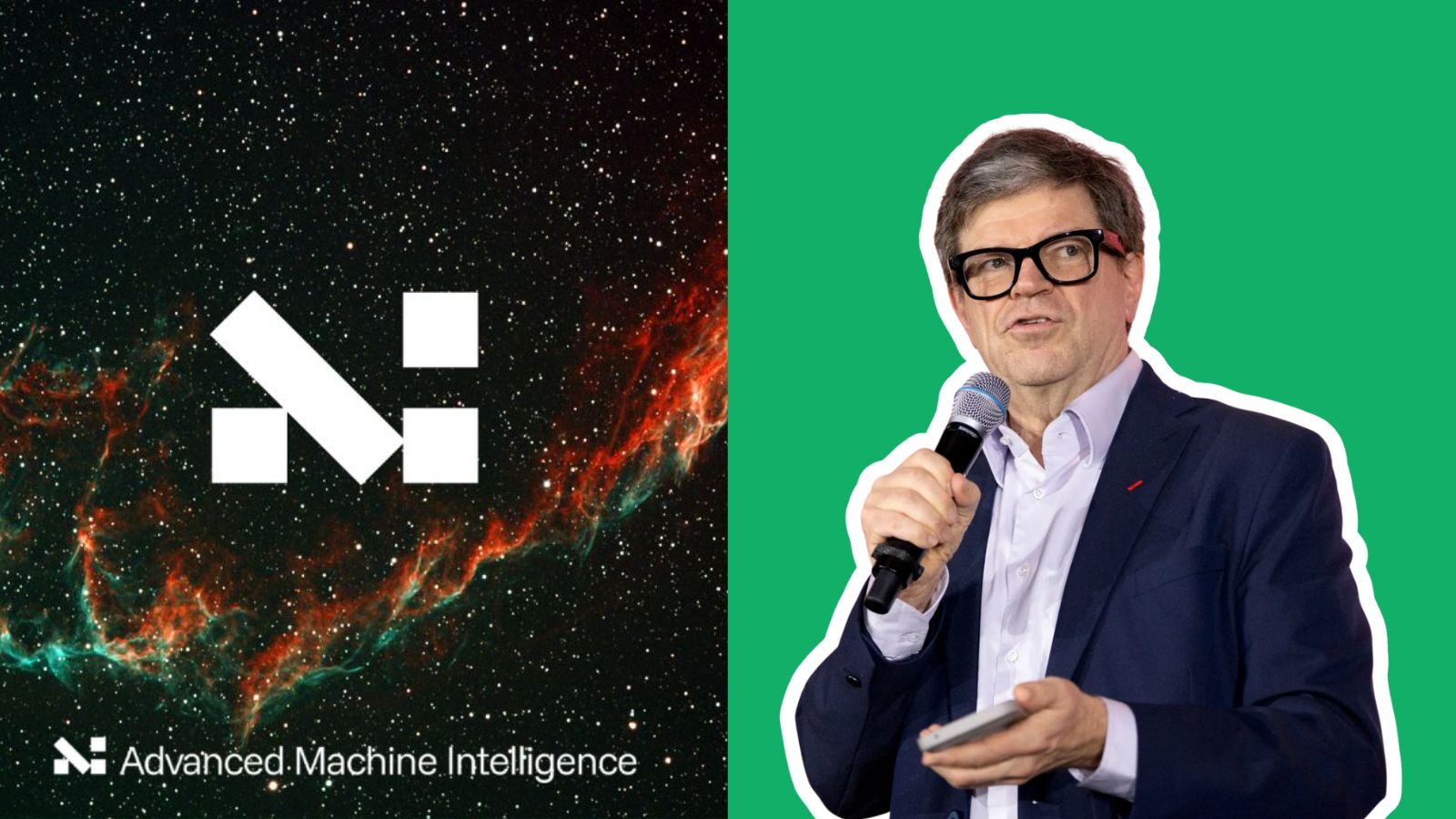
AMI Labs, the new venture co-founded by Turing Award winner Yann LeCun after he left Meta, raised $1.03 billion at a $3.5 billion pre-money valuation — and the decision by Yann LeCun to run AMI Labs as executive chairman rather than CEO turned out to be just as significant as the funding itself. LeCun didn’t simply launch a company. He chose a specific person to lead it. That person is Alexandre LeBrun — a serial French entrepreneur who has now founded four AI ventures and sold two to Nasdaq-listed corporations. After launching three AI startups, LeBrun has embarked on the “project of a lifetime” as CEO of LeCun’s new startup, having over the past 25 years successfully sold two AI startups to Nasdaq-listed companies, led Meta’s AI research lab in Paris, and since 2018 has been scaling his third business, Nabla, AI assistants for doctors.
Why the Decision of Yann LeCun to Run AMI Labs as Chairman Was No Accident
Yann LeCun is a Turing Award recipient and a top AI researcher, but he has long been a contrarian figure in the tech world. He believes the industry’s current obsession with large language models is wrong-headed and will ultimately fail to solve many pressing problems. Instead, he thinks we should be betting on world models — a different type of AI that accurately reflects the dynamics of the real world.
MIT Technology Review asked LeCun directly what his role would look like. His answer was blunt: “I am going to be the executive chairman of the company, and Alex LeBrun will be the CEO. It’s going to be LeCun and LeBrun — it’s nice if you pronounce it the French way.” The split was intentional. That role belongs to Alex LeBrun, a serial entrepreneur and former colleague who previously worked under LeCun at Meta’s AI research laboratory, FAIR. The division of responsibilities was intentional, allowing LeCun to focus on long-term scientific direction and research rather than day-to-day management.
In addition to LeCun’s involvement as chairman and LeBrun’s track record as an entrepreneur, AMI Labs also boasts Meta’s VP for Europe Laurent Solly as COO, Saining Xie as chief science officer, Pascale Fung as chief research and innovation officer, and Michael Rabbat as VP of world models. This is not a science project in a garage. It’s a globally distributed research company built for the long game.
The Alexandre LeBrun AI Startup Playbook: From VirtuOz to Nabla to AMI Labs
Serial entrepreneur is a title that gets thrown around too easily in tech. A graduate of École Polytechnique, LeBrun founded VirtuOz (acquired by Nuance), Wit.ai (acquired by Facebook in 2015), and Nabla, a healthcare AI startup where he remains chairman. Three full alexandre lebrun ai startup ventures before AMI Labs. Each bolder than the last.
After Facebook acquired his previous startup, Wit.ai, the serial entrepreneur and AI engineer worked under LeCun’s leadership at Meta’s AI research laboratory, FAIR. That relationship became the bedrock of AMI Labs. LeBrun joined Meta’s AI research team under Yann LeCun, where he contributed to projects like Facebook’s M assistant, an AI that blended automation with human-like reasoning. His time at Meta reinforced his belief that while generative models excel at tasks like summarization and coding, they often rely on shortcuts that limit their understanding of the real world.
Nabla raised $70 million in Series C funding, and its clinical AI assistant platform was used by about 85,000 clinicians across more than 130 U.S. health systems, with the company reporting a five-fold revenue increase in the first six months of 2025. He didn’t need convincing about LLM limitations. He had watched them fail doctors firsthand.
The Yann LeCun Research Lab Philosophy Powering AMI’s Vision
LeCun left Meta in November 2025 after more than a decade leading Facebook AI Research. While language models have demonstrated strong performance in areas like coding and summarization, LeCun has been critical of their lack of ability to understand the physical world and plan actions within it.
The yann lecun research lab philosophy underpinning AMI Labs centers on what he calls world models. LeCun stated he intended to create AMI Labs to continue the Advanced Machine Intelligence (AMI) research program he had been previously pursuing with colleagues at Meta and NYU. Pronounced “ah-mee” — a nod to the French word for “friend” — AMI Labs positions itself as both a scientific initiative and strategic alternative to increasingly closed frontier labs.
AMI’s technical foundation is LeCun’s Joint Embedding Predictive Architecture (JEPA), which he has argued for years represents a more promising path to machine intelligence than the autoregressive text prediction underlying ChatGPT, Claude, and Gemini. Meta’s own V-JEPA research showed it can learn grounded real-world representations from video without generating pixel predictions. Instead of predicting the next word or the next pixel, JEPA predicts the next abstract representation of reality — watching video, sensor data, and spatial information, then learning the underlying rules of how the physical world behaves.
AMI Labs puts it simply on its homepage: “We share one belief: real intelligence does not start in language. It starts in the world.”
AI World Model Research: Targeting Industries Where Hallucinations Kill
The ai world model research at AMI Labs has a clear commercial destination. LeBrun has indicated the startup will be targeting healthcare, robotics, wearables, and industrial automation first. Each sector demands something LLMs can’t reliably deliver — AI that understands cause and effect in physical environments. Think complex industrial processes where you have thousands of sensors, like in a jet engine, a steel mill, or a chemical factory. There is no technique right now to build a complete, holistic model of these systems. A world model could learn this from the sensor data and predict how the system will behave.
Advanced machine intelligence founders aren’t chasing a product category here — they’re betting on a paradigm shift. This category has fewer players than generative AI, but maybe not for long. “My prediction is that ‘world models’ will be the next buzzword,” AMI Labs CEO Alexandre LeBrun told TechCrunch. “In six months, every company will call itself a world model to raise funding.” The ai world model research space is heating up fast.
AMI Labs Venture Capital: A $1.03 Billion Vote of Confidence
Ami labs venture capital support reads like a who’s-who of global tech finance. The round, one of the largest seed financings ever raised by an AI startup, was co-led by Cathay Innovation, Greycroft, Hiro Capital, HV Capital, and Bezos Expeditions, valuing AMI Labs at approximately $3.5 billion pre-money. AMI is also supported by Toyota Ventures, Temasek, SBVA, Nvidia, Mark Cuban, Association Familiale Mulliez, Groupe industriel Marcel Dassault, Sea, and Alpha Intelligence Capital.
LeCun initially aimed to raise €500 million for his startup, which he announced late last year after leaving Meta, according to a leaked pitch deck seen by Sifted. The funding for Paris-based AMI represents the largest seed round ever for a European startup and one of the region’s largest fundings for an AI startup overall, per Crunchbase data. The ami labs venture capital story signals something bigger: institutions are funding the next paradigm, not merely iterating on the last one.
Advanced Machine Intelligence Founders and a Deliberately Global Team
The advanced machine intelligence founders behind AMI Labs built a multi-continent operation from day one. LeBrun said he will prioritize quality over quantity to build AMI Labs’ team in four key locations: Paris, where it is headquartered; New York, where LeCun teaches at NYU; Montreal, where Rabbat is based; and Singapore, both to recruit AI talent and to be close to future clients in Asia.
Although AMI Labs has no plans to generate revenue for the time being, it still plans to engage with prospective customers early on. “We are developing world models that seek to understand the world, and you can’t do that locked up in a lab. At some point, we need to put the model in a real-world situation with real data and real evaluations,” LeBrun said. New ai research ventures rarely launch this way — globally distributed, research-first, and honest about the timeline. That candor is itself part of the pitch.
What the Decision for Yann LeCun to Run AMI Labs Means for European AI
While the bulk of AI startup funding thus far has gone to LLM-based generative AI giants, investors appear to be turning their attention to funding more companies like AMI that seek to bring artificial intelligence into the physical world. “AMI Labs could be the first European company to reach the scale of the GAFAM companies,” said Pierre-Éric Leibovici, founder and Managing Partner of Daphni.
New ai research ventures of this scale, built in Europe and betting against the LLM consensus, are rare. They succeed even more rarely. AMI Labs has the capital, the team, and — crucially — the scientific credibility to have a real shot. The decision by Yann LeCun to run AMI Labs as a research-led institution rather than a product company echoes how DeepMind operated in its early years. According to Crunchbase, AMI’s raise stands as a landmark not just for the world model category but for European tech broadly.
Conclusion
The story of Yann LeCun to run AMI Labs as executive chairman, and of his handpicking Alexandre LeBrun as CEO, is really a story about what complementary strengths can build. LeCun brings four decades of AI research authority, the JEPA framework, and a public conviction that LLMs are a dead end. LeBrun brings four startups’ worth of operational instinct, two successful exits, and a personal understanding of where AI hallucinations cause real harm. As LeBrun put it: “AMI Labs is a very ambitious project, because it starts with fundamental research. It’s not your typical applied AI startup that can release a product in three months, have revenue in six months, and make $10 million in ARR in 12 months.” In contrast, it could take years for world models to go from theory to commercial applications. The foundation — financial, intellectual, and human — is now unmistakably in place.