
Meta’s Chief AI Scientist Yann LeCun to Launch New AI Startup, Will Not Be Funded by Meta

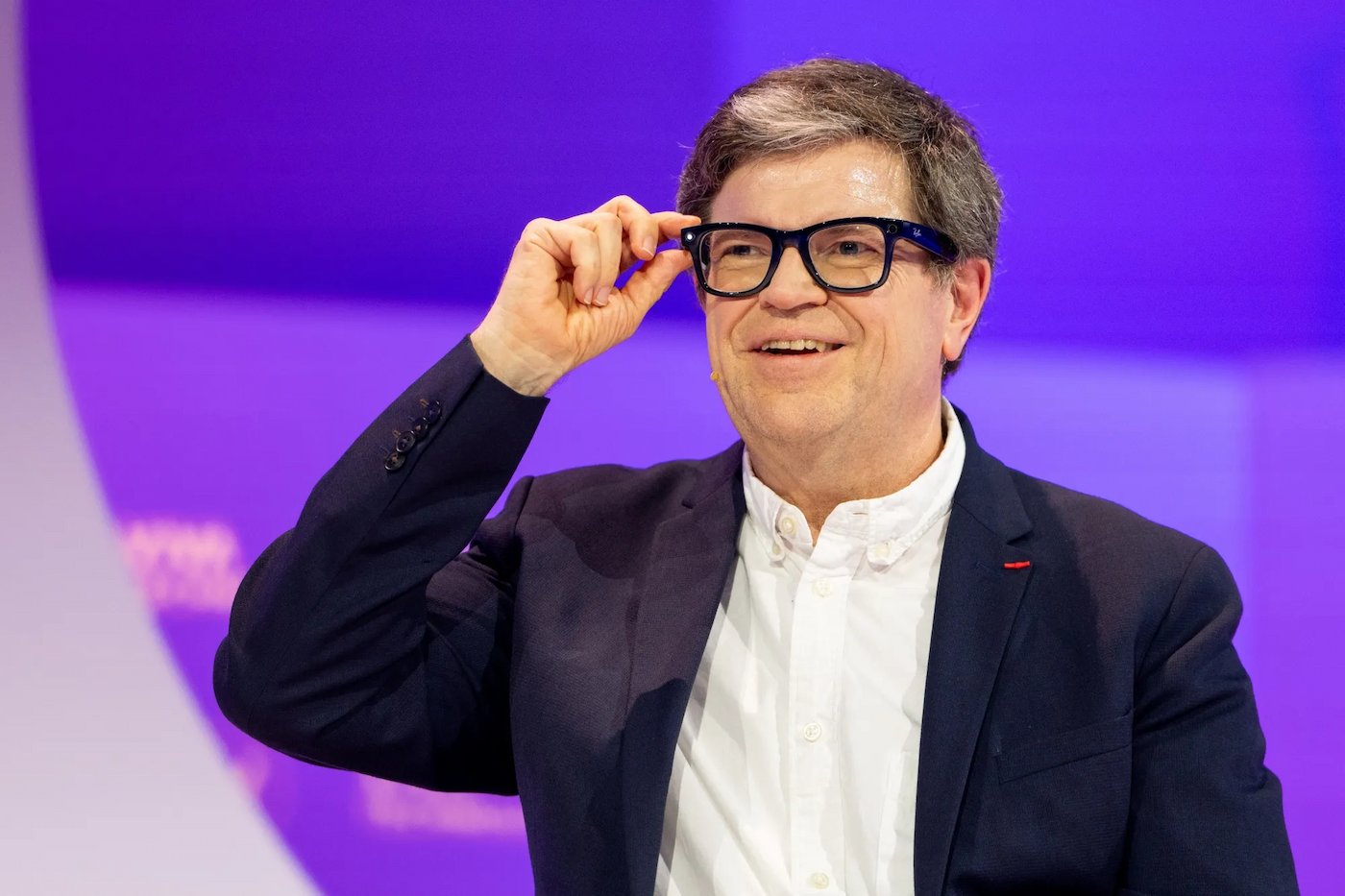
Meta Chief AI Scientist Yann LeCun is leaving to launch an AI startup but Meta will not provide direct financial backing for his ambitious new venture focused on developing advanced “world models” that could reshape artificial intelligence research. The 65-year-old Turing Award winner’s departure from Mark Zuckerberg’s empire represents a seismic shift in the AI landscape, coming at a time when AI startups have attracted $89.4 billion in global venture capital in 2025, representing 34% of all VC investment.
The Pioneer Behind Modern AI Takes a Bold New Path
LeCun announced on LinkedIn that he was leaving Meta after 12 years, spending five years as founding director of Fundamental AI Research (FAIR) and seven years as the company’s chief AI scientist. His revolutionary contributions to the field are undeniable. He is best known for developing convolutional neural networks (CNNs) in the late 1980s — a breakthrough that allowed computers to interpret visual data similarly to human vision, with his “LeNet” model becoming the foundation for technologies ranging from image recognition to facial detection.
The timing couldn’t be more significant. AI is commanding a record-breaking $110 billion in funding in 2024 alone, yet LeCun chose to walk away from one of the most powerful AI research positions in Silicon Valley. Why would someone leave such an influential role?
A Vision Beyond Meta’s Commercial Ambitions
LeCun’s ambition involves building world models, advanced machine learning systems that help humans make decisions and predictions from abstract representations of the world, with applications so wide that “it was better to do it as an independent entity,” according to his discussion with Mark Zuckerberg. These systems differ fundamentally from today’s large language models that rely solely on text processing.
While Meta will not provide financial backing for his startup, the two entities plan to maintain a collaborative partnership that allows LeCun to leverage Meta’s resources and expertise without direct investment, potentially including access to data, talent, or computational infrastructure. However, the relationship isn’t without tension.
LeCun has publicly disagreed with Zuckerberg’s heavy reliance on LLMs, calling them “useful but fundamentally limited” in their ability to reason and plan like humans. Meta’s recent restructuring reflects this philosophical divide. Meta this year reorganized its AI department around what it calls its Superintelligence Lab, headed by Scale AI founder Alexandr Wang.
The Yann LeCun Startup: World Models and Beyond
So what exactly is this Yann LeCun startup planning to accomplish? The new venture will focus on developing “world models,” next-generation systems designed to learn from visual and spatial data rather than text, aiming to replicate human reasoning and understanding of the physical world — a project LeCun has said could take a decade to mature.
The startup remains unnamed as of early December 2025 and is hinted to be based in Paris, LeCun’s hometown and a growing hub for AI innovation in Europe. The location choice is strategic. Research from Brookings Innovation Research shows that emerging hubs are gaining momentum through specialized focus areas, with Tel Aviv leading in cybersecurity AI and Toronto excelling in academic-commercial partnerships.
The funding landscape for this Yann LeCun startup looks promising. Analysts predict that his seed round could exceed $100 million, potentially making it one of the largest early-stage AI raises of 2025. This prediction aligns with current market trends where 69% of all venture capital invested in AI startups flowed into “mega-rounds” of $100 million or more, with mega-rounds representing over 80% of all AI funding in Q4 alone.
Meta’s AI Leadership Exodus Continues
LeCun’s departure adds to a concerning pattern. The planned departure adds to a series of AI leadership shake-ups at Meta, with Joelle Pineau, vice-president of AI research, leaving for Cohere, and the company laying off 600 employees from its AI division. Additionally, more than half the authors of the original Llama research paper left Meta within months of its publication.
Without LeCun, Meta may struggle to maintain its research credibility, with the FAIR team now facing leadership changes and several senior scientists potentially following him to his new venture. This brain drain occurs precisely when Meta needs top talent most for its AI ambitions.
The restructuring extends beyond personnel changes. Zuckerberg recently hired Alexandr Wang, founder of Scale AI, paying $14.3 billion for a 49 percent stake in his company and appointing him to lead Meta’s new Superintelligence division, while also forming an elite team called TBD Lab, offering $100 million pay packages to lure top AI talent from competitors.
Current AI Startup Market Dynamics
The AI startup ecosystem in 2025 presents both unprecedented opportunities and intense competition. Global venture capital investment rose to $120 billion in Q3 2025, with nearly all growth driven by AI, as developers of foundational models secured the largest rounds: Anthropic raised $13 billion, Elon Musk’s xAI $10 billion, and Reflection AI $1 billion.
However, the concentration of funding creates challenges. Capital infusions crowd out smaller, early-stage startups, and while early-stage AI investments remain numerous with nearly three-quarters of deals being seed or Series A rounds, their share of total dollars is shrinking as funding becomes increasingly skewed toward mega-rounds.
For the Yann LeCun startup, this environment presents both advantages and obstacles. His reputation and vision for world models align with investor appetite for foundational AI research, yet he must compete in an increasingly crowded market where valuations for leading AI labs have effectively doubled every six to nine months, marking one of the fastest growth curves in modern US private-market history.
The Technology Behind World Models
LeCun’s vision for world models represents a fundamental departure from current AI approaches. He believes that dominant generative AI systems — including ChatGPT, Claude, and Gemini — hit a cognitive wall as they predict text patterns brilliantly but fail to reason about the physical world, something he wants to fix.
LeCun has long argued that today’s AI models lack grounding in reality as they can’t learn like humans do — through interaction, perception, and reasoning, comparing current systems to “students who memorize the textbook but never touch the lab equipment”. This approach creates clever imitators rather than true thinkers.
Unlike today’s dominant models, which excel at pattern recognition in text and images but struggle with real-world reasoning, world models would enable AI to simulate environments, anticipate outcomes, and plan actions with greater autonomy — an approach LeCun believes is essential for achieving human-level intelligence.
Investment Outlook and Strategic Partnerships
The financial backing strategy for the Yann LeCun startup reveals interesting market dynamics. Yann LeCun, who is leaving Meta Platforms Inc. at the end of the year, said Meta will not financially back his new AI company and hinted it could be based in Paris. This independence allows him to avoid potential conflicts of interest while maintaining beneficial relationships.
Corporate venture capital now represents 43% of AI startup funding, with strategic investors bringing domain expertise, customer access, and partnership opportunities beyond just capital, and data shows that corporate AI investments now focus heavily on strategic integration with 78% of deals including partnership or acquisition clauses.
The timing for AI startup funding remains favorable despite market selectivity. In 2025, VC investments in AI companies are continuing momentum from previous years, with global venture funding totaling $26 billion in January 2025, of which AI-related companies garnered $5.7 billion, accounting for 22% of overall funding.
Competitive Landscape and Market Positioning
The Yann LeCun startup enters a market where AI now commands more than 50% of global VC funding, with the market witnessing a shift toward integrating AI into enterprise workflows and a notable increase in mega-round investments. European competitors are also making significant moves.
Capital is concentrating at the top with a handful of European model developers capturing the majority of funding, including companies like Helsing, which achieved a $13.2 billion valuation following its €600 million Series D, and Mistral AI. This competitive environment means LeCun’s startup must differentiate itself through unique technology and vision.
The market rewards innovation and scale. OpenAI’s valuation surged from $29 billion in 2023 to more than $150 billion in 2025, while Anthropic jumped from $4 billion to over $50 billion during the same period, and xAI’s value climbed past $60 billion less than a year after launch.
Future Implications for AI Research
LeCun’s departure signals broader industry shifts. The decision stems from a mix of personal ambition and strategic divergence, as LeCun grew frustrated with Meta’s pivot toward product-driven AI development while his research-oriented vision emphasized long-term foundational work over immediate commercial applications.
The exit marks a philosophical rift inside the AI community, as the current AI boom revolves around scale — bigger models, larger datasets, and massive compute budgets — but LeCun challenges that logic, believing intelligence won’t emerge from size alone but from architecture and autonomy.
This philosophical divide could reshape AI research priorities. LeCun’s push for open science and skepticism of “black-box” AI aligns with a growing movement advocating transparency and safety in artificial intelligence development, and if successful, his new venture could challenge corporate-driven AI dominance and bring focus back to long-term innovation over short-term productization.
The success or failure of the Yann LeCun startup could determine whether the AI industry continues its current trajectory of scaling existing architectures or pivots toward more fundamental research into how intelligence actually works. For entrepreneurs, investors, and researchers worldwide, this represents one of the most significant developments in AI since the deep learning revolution began.
With AI startups commanding a record-breaking $192.7 billion in funding in 2025 and dominating the VC landscape, rewriting the playbook for global innovation, LeCun’s independent venture stands as a testament to the power of visionary thinking in an industry increasingly dominated by commercial pressures and scaling races.
Frequently Asked Questions
What is Yann LeCun’s new startup focused on?
Yann LeCun’s startup focuses on developing “world models” – advanced AI systems that learn from visual and spatial data to understand cause-and-effect relationships in the physical world, rather than just processing text like current language models.
Why is Meta not investing in Yann LeCun’s startup?
Meta will not provide financial backing to avoid conflicts of interest with their own AI initiatives, though they plan to maintain a collaborative partnership. LeCun and Zuckerberg agreed the startup’s applications were too broad for Meta’s focus areas.
How much funding is expected for the Yann LeCun startup?
Industry analysts predict LeCun’s seed round could exceed $100 million, potentially making it one of the largest early-stage AI raises of 2025, given his reputation and the current AI funding environment.
Where will Yann LeCun’s new AI startup be based?
The startup is expected to be based in Paris, France – LeCun’s hometown and a growing European hub for AI innovation. The company remains unnamed as of December 2025.
What makes world models different from current AI systems?
Unlike current AI that excels at pattern recognition in text and images, world models simulate environments, anticipate outcomes, and plan actions with greater autonomy by learning through interaction and understanding physical reality.
When did Yann LeCun announce his departure from Meta?
LeCun announced his departure from Meta in November 2025 after 12 years with the company, spending five years founding FAIR and seven years as chief AI scientist.
What is the current AI startup funding landscape in 2025?
AI startups attracted $192.7 billion globally in 2025, representing over 50% of all venture capital funding, with 69% flowing into mega-rounds of $100 million or more, creating a highly competitive but well-funded environment.