

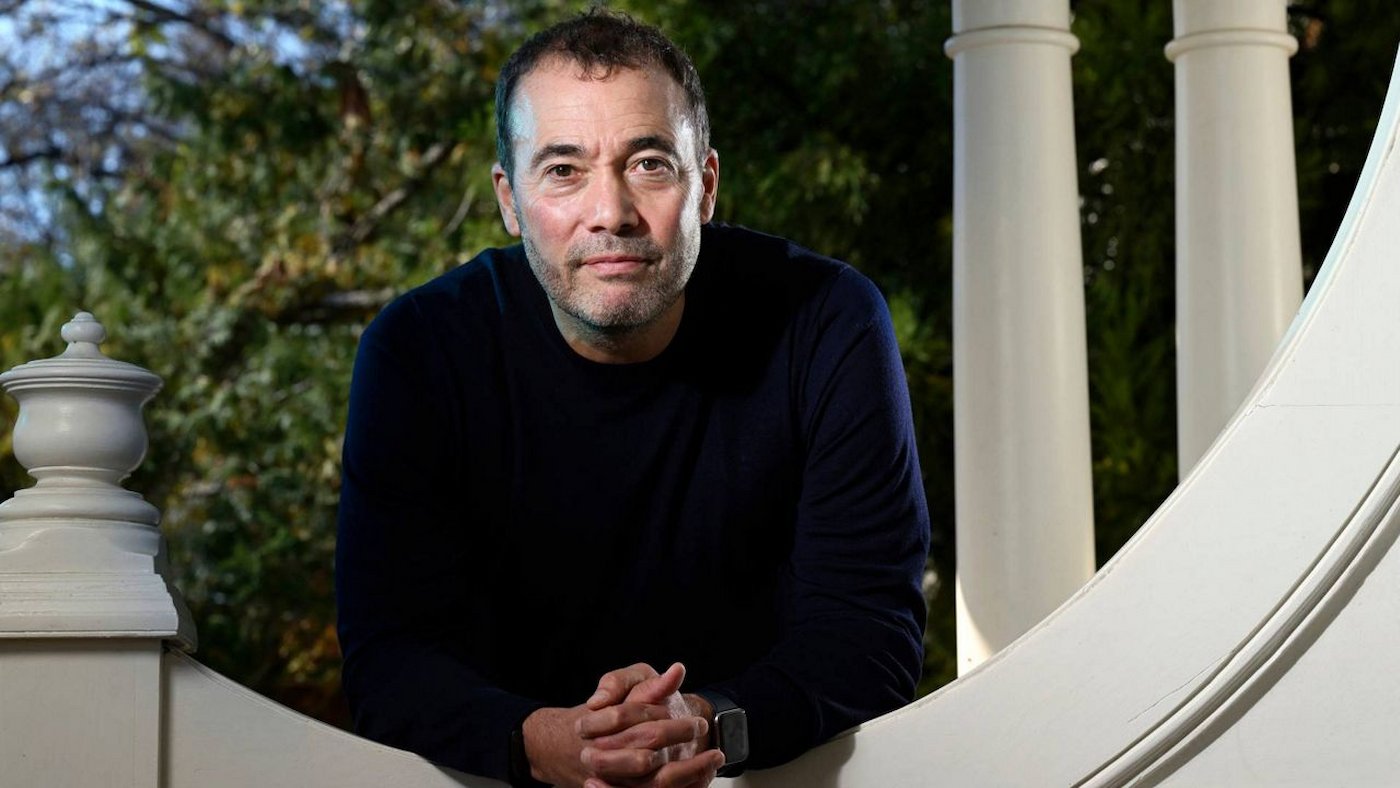
The Washington Post CEO Will Lewis resigned immediately following the layoff of 300 employees—a stunning departure that plunged the legendary newspaper into even deeper turmoil. This moment marks one of the most dramatic upheavals in American journalism history. After just two years at the helm, the British media executive walked away from the 147-year-old institution days after gutting its workforce and absent from the very announcement that destroyed hundreds of careers.
The resignation exposed the mounting chaos at one of America’s most prestigious publications. Lewis disappeared just when his leadership mattered most. More than a third of the newsroom was laid off Wednesday, with at least 300 journalists losing their positions. Meanwhile, photographers captured him walking red carpets at an NFL event in California, smiling while his staff received termination emails from war zones and newsroom desks alike.
The Sudden Collapse of Will Lewis
Will Lewis departed just days after the newspaper announced massive layoffs, leaving industry observers stunned by the timing. His exit followed intense criticism from both journalists and the Washington Post Guild. The union representing staff members called Lewis’s exit long overdue, stating his legacy will be the attempted destruction of a great American journalism institution.
The Washington Post CEO Will Lewis had promised transformation and growth when he arrived in January 2024. Instead, he delivered devastating cuts. The paper lost more than 375,000 cancellations—a loss of 15% of digital subscribers in just a few months after controversies surrounding editorial decisions. Lewis told colleagues the paper had lost $177 million over two years, yet his futuristic initiatives failed to reverse the financial bleeding.
Financial losses mounted throughout his tenure. His much-touted “third newsroom” concept never materialized. Lewis’ most ballyhooed initiative, a so-called third newsroom, never came to fruition. Journalists grew frustrated watching promised innovations evaporate while real jobs disappeared.
Washington Post Layoffs Devastate Newsroom
The Washington Post layoffs represented one of the largest single reductions in American journalism. The Washington Post laid off about one in three employees across the company Wednesday morning, eliminating entire departments and decades of institutional knowledge. Sports coverage vanished overnight. Books sections disappeared. Foreign bureaus closed across the Middle East, Asia, and Europe.
The Washington Post laid off one-third of its staff, eliminating its sport section, several foreign bureaus and its books coverage in what former Executive Editor Marty Baron called among the darkest days in journalism history. Roughly a third of Post employees were laid off, including more than 300 of the 800-person newsroom, gutting coverage areas that had defined the paper for generations.
Reporters learned their fates via email while covering war zones and breaking news. Hundreds of journalists were among those made redundant, including the paper’s entire Middle East roster and its Kyiv, Ukraine-based correspondent. The Caroline O’Donovan case particularly stung—the paper’s Amazon beat reporter was terminated despite covering the company owned by the Post’s billionaire proprietor.
The impact of Washington Post layoffs on journalism extends far beyond one newsroom. The Washington Post Guild said the staff has been reduced by 400 people over the last three years, marking a systematic dismantling of one of America’s most important news organizations. Local coverage shrank dramatically. International reporting capacity collapsed. Cultural criticism nearly disappeared.
Jeff Bezos Washington Post Crisis Deepens
The Jeff Bezos Washington Post crisis centers on the billionaire owner’s controversial decisions and apparent retreat from journalistic principles. Baron blamed Bezos for exacerbating the newspaper’s woes through ill-conceived decisions, including killing an endorsement in fall 2024 of Kamala Harris for president, which led hundreds of thousands of subscribers to cancel their subscriptions.
Critics argue Bezos, worth approximately $260 billion, could easily sustain the paper’s losses indefinitely. For Bezos, who could leverage his net worth to run the paper at a loss for generations to come, these cuts to a trusted news organization represent a choice rather than necessity. His silence during the layoffs spoke volumes—he issued no statement until after Lewis resigned.
Baron said he believed Bezos was afraid the administration would target him and his other businesses for the Post’s journalism, fearing reprisal against not just Amazon, but also against Blue Origin, the private space company that holds significant government contracts. This fear reportedly drove editorial interference and financial decisions that damaged the paper’s credibility with readers.
The billionaire’s apparent prioritization of business interests over journalistic mission alarmed press freedom advocates. Amazon recently spent more than $70m to buy and market a documentary about Trump’s wife, Melania, prompting accusations of currying favor with the administration while simultaneously gutting the paper’s investigative capacity.
Will Lewis Steps Down Washington Post Leadership
Will Lewis steps down Washington Post after a tenure marked by controversy from its inception. Lewis’ time as publisher of the Post was controversial almost from the start, as he was named to the role in November 2023 promising to revive the business, having previously served as publisher of The Wall Street Journal, editor of The Daily Telegraph and a senior executive within Rupert Murdoch’s media empire.
His background haunted him throughout his Post tenure. In December 2023, NPR reported that Lewis had been accused of being involved in efforts to cover up aspects of the early-2010s phone-hacking scandal at Murdoch’s UK tabloids, though he denied wrongdoing. This controversy contributed to staff distrust and the departure of then-executive editor Sally Buzbee in June 2024.
The final straw came with his red carpet appearance. One newsroom insider told the Financial Times that Bezos lost patience after the Super Bowl thing, with senior management livid at Lewis for what insiders described as his callous attendance at the ceremony, and for Bezos it was the last straw. His absence during the layoff announcement proved unforgivable.
Lewis wrote that after two years of transformation at The Washington Post, now is the right time for me to step aside, noting that during his tenure difficult decisions have been taken in order to ensure the sustainable future of The Post. However, staff and union representatives rejected this framing. They viewed his departure as overdue accountability for failed leadership.
Washington Post CEO Exit Layoffs Timeline
The Washington Post CEO exit layoffs unfolded rapidly, creating organizational chaos. Wednesday morning brought the devastating announcement. On Wednesday morning, staffers were told to stay home today while notices were sent about who had been laid off, with executive editor Matt Murray saying these moves include substantial newsroom reductions impacting nearly all news departments.
Lewis remained invisible during this critical moment. Lewis played no visible role in announcing the layoffs in a mandatory Zoom call for the newsroom on Wednesday, nor did he publicly address the paper’s readers to allay their concerns, and was photographed in Northern California walking a red carpet at a Super Bowl event. This absence inflamed an already painful situation.
By Thursday, photos circulated showing Lewis at the NFL Honors ceremony. His hasty departure followed a viral video of a red-cheeked Lewis walking the red carpet at the NFL Honors ceremony in San Francisco on Thursday evening, one day after The Washington Post announced layoffs. Social media erupted with criticism from laid-off journalists and industry observers.
Saturday brought his resignation announcement. The Washington Post announced that Lewis would be resigning effective immediately, with CFO Jeff D’Onofrio stepping in as acting CEO and publisher. Saturday evening’s unusual announcement made no mention of Lewis staying on board in any capacity to support the transition, suggesting a very sudden change.
The Future Under New Leadership
The paper’s chief financial officer, Jeff D’Onofrio, will serve as acting CEO, taking over to stabilize the newspaper during its greatest internal crisis. D’Onofrio joined the Post in 2025 from the tech and digital media world, bringing experience from companies like Raptive, Tumblr and Google.
In a note to staff, D’Onofrio acknowledged, “We are ending a hard week of change with more change,” writing that “This is a challenging time across all media organizations, and The Post is unfortunately no exception,” and that he’s honored to take the helm as acting Publisher and CEO to lead into a sustainable, successful future.
Bezos finally broke his silence after Lewis departed. Bezos said in a statement that The Post has an essential journalistic mission and an extraordinary opportunity, stating that each and every day our readers give us a roadmap to success and the data tells us what is valuable and where to focus. Yet he made no mention of Lewis in his statement, a telling omission.
The Guild demanded immediate action. The Guild wrote that Jeff Bezos must immediately rescind these layoffs or sell the paper to someone willing to invest in its future. Hundreds of current and former employees rallied outside Post headquarters demanding the restoration of jobs and investment in journalism’s future.
Industry-Wide Implications
The Washington Post crisis reflects broader challenges facing American journalism. The layoffs at the Post are part of a wave of mass job cuts in 2026 that is on pace to eclipse 2025—itself one of the worst years of layoffs in recent history. Digital transformation, declining advertising revenue, and artificial intelligence disruption continue battering the industry.
According to industry analyses, Google’s AI Overviews have reduced click-through rates to news sites by 30 to 55 percent, AI chatbots provide virtually no referral traffic to publishers with their click-through rates 96 percent lower than traditional search, and a SearchEngineWorld study found that referral traffic from Google has dropped by up to 64 percent for some publishers.
Yet financial necessity doesn’t fully explain these cuts. The Post Guild said these layoffs are not inevitable, arguing that a newsroom cannot be hollowed out without consequences for its credibility, its reach and its future. Many industry observers see ownership decisions rather than unavoidable market forces driving the destruction.
The Post once stood as a symbol of investigative journalism’s power. Its Watergate coverage toppled a president. Its fearless reporting held power accountable for decades. Today it faces existential questions about mission, independence, and survival. Whether D’Onofrio can stabilize the hemorrhaging institution remains deeply uncertain as journalists, readers, and democracy advocates watch with profound concern.
Frequently Asked Questions
Why did Will Lewis resign from the Washington Post?
Will Lewis resigned immediately after overseeing massive layoffs that eliminated one-third of the Post’s workforce, including 300+ journalists. His absence during the layoff announcement and appearance at an NFL event while staff received termination notices drew intense criticism and reportedly led owner Jeff Bezos to lose patience with his leadership.
How many people did the Washington Post layoffs affect?
The Washington Post layoffs affected approximately one-third of the entire company, with more than 300 journalists losing positions in the newsroom alone. The cuts eliminated the sports section, books coverage, foreign bureaus across the Middle East and Asia, and dramatically reduced local metro coverage.
What is the Jeff Bezos Washington Post crisis about?
The Jeff Bezos Washington Post crisis centers on the billionaire owner’s controversial editorial decisions and financial management that led to massive subscriber losses and subsequent layoffs. Critics argue Bezos interfered with editorial independence, killing the Harris endorsement and changing the opinion section, causing 375,000+ subscription cancellations while having the wealth to sustain the paper indefinitely.
Who replaced Will Lewis as Washington Post CEO?
Jeff D’Onofrio, the paper’s chief financial officer who joined in 2025, became acting CEO and publisher immediately after Lewis’s departure. D’Onofrio previously held leadership positions at Raptive, Tumblr, and Google.
What departments were eliminated in the Washington Post layoffs?
The Washington Post layoffs completely eliminated the sports section, books desk, and the flagship “Post Reports” podcast. The paper also closed its entire Middle East bureau, multiple foreign correspondents covering China, Iran, Turkey, Ukraine, and dramatically reduced its local metro reporting staff and editing teams.
What is the impact of Washington Post layoffs on journalism?
The impact of Washington Post layoffs on journalism is devastating for press freedom and accountability reporting. The cuts eliminated critical coverage of international affairs, local government, sports, and culture at one of America’s most important newspapers. Industry experts view it as emblematic of broader threats to investigative journalism and the financial sustainability of quality news organizations.
Did the Washington Post Guild oppose the layoffs?
Yes, the Washington Post Guild strongly condemned the layoffs, calling them “not inevitable” and stating that Lewis’s legacy will be “the attempted destruction of a great American journalism institution.” The union demanded Bezos rescind the layoffs or sell the paper to someone willing to invest in its future, noting the workforce has shrunk by 400 people over three years.
