
Unconventional AI funding Shatters Records with Historic $475M Seed Round Milestone

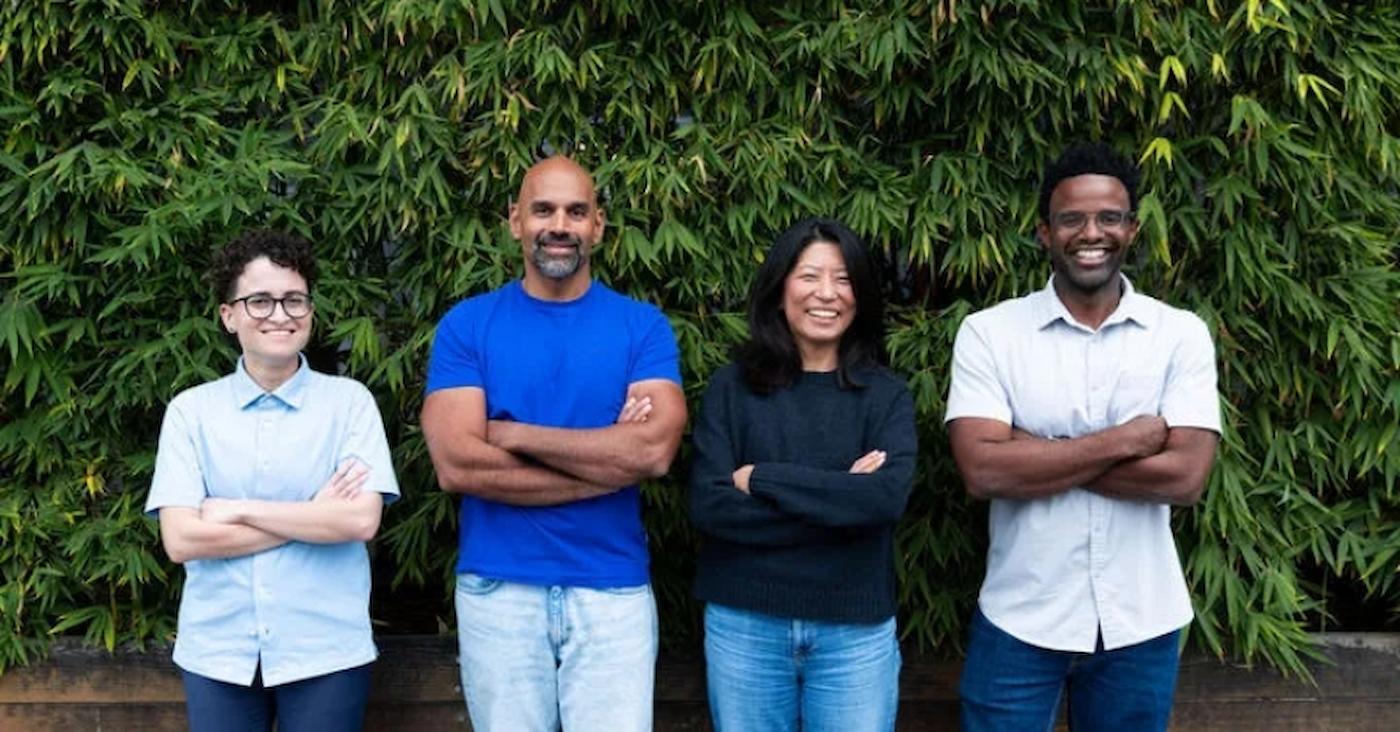
Brain-inspired AI startup Unconventional AI has raised $475 million in its seed funding round, with a company valuation of $4.5 billion, marking one of the largest seed rounds in startup history. The neuromorphic computing company achieved this astronomical valuation despite being founded just two months ago. This unprecedented funding milestone arrives as AI funding exploded in 2024 reaching more than $100B, up 80% from 2023, positioning Unconventional AI funding at the forefront of an investment revolution transforming the technology landscape.
Breaking Down the Massive Unconventional AI funding Round
The funding round showcased Silicon Valley’s appetite for revolutionary AI technologies. The funding round was led by Andreesen Horowitz and Lightspeed Venture Partners, while other investors include Lux Capital, DCVC, and Jeff Bezos. Adding personal conviction to the deal, Unconventional’s CEO – Naveen Rao, formerly of Databricks – also contributed $10m of his own funds to the round.
This Unconventional AI funding represents merely the beginning of even grander ambitions. According to CEO Rao, this is the first portion of an expected larger funding round that could raise up to $1bn. The strategic approach reflects careful scaling in a competitive market where Unconventional AI was seeking a $5bn valuation for the $1bn raise.
Investors demonstrated remarkable confidence in neuromorphic computing’s potential. “The goal is biology-scale energy efficiency,” Lightspeed investors Guru Chahal, Ravi Mhatre and Bucky Moore wrote in a blog post. “By finding the right isomorphism for intelligence, they aim to unlock efficiency gains far beyond what’s possible by iterating on conventional architectures.”
Revolutionary Leadership Behind Unconventional AI funding Success
The massive Unconventional AI funding reflects extraordinary confidence in founder Naveen Rao’s track record. CEO Rao previously founded and sold MosaicML and Nervana Systems to Databricks for $1.3bn in 2023 and Intel Corp for $350m in 2016, respectively. This proven ability to build and scale AI companies provided essential credibility for securing unprecedented seed capital.
Unconventional AI founders also include Michael Carbin, Sara Archour, and MeeLan Lee. The team brings complementary expertise spanning hardware design, software optimization, and research innovation. Their combined experience addresses the technical challenges inherent in developing entirely new computing paradigms that could revolutionize AI efficiency.
The leadership’s approach focuses on biological inspiration rather than traditional silicon scaling. Rao, armed with a PhD in neuroscience and electrical engineering degrees from Stanford and Brown, draws inspiration from biology’s elegant efficiency—think how the human brain processes complex tasks with minimal watts compared to data center behemoths.
What Makes Unconventional AI funding So Significant
The scale of this Unconventional AI funding signals investor recognition of AI’s looming energy crisis. In 2024 alone, U.S. data centers consumed about 200 terawatt-hours of electricity, with AI-specific servers gobbling up 53 to 76 terawatt-hours of that slice. Looking ahead, researchers project AI energy use could balloon to 165-326 terawatt-hours per year by 2028—enough juice to power roughly 22% of all U.S. households.
Traditional AI systems face fundamental efficiency constraints that threaten industry growth. Rao argues that AI demand is accelerating exponentially while global energy capacity is expanding only linearly, suggesting that the industry could hit a ceiling within “the next 3–4 years.” This creates urgent demand for revolutionary approaches that Unconventional AI funding aims to address.
The startup’s neuromorphic approach targets dramatic efficiency improvements. A job posting on Unconventional AI’s website states that it hopes to build an AI accelerator with 1,000 times better efficiency than current silicon. Such improvements could fundamentally reshape AI infrastructure costs and accessibility across industries.
Revolutionary Technology Vision Driving Unconventional AI funding
Unconventional AI funding supports development of brain-inspired computing architectures. Unconventional AI is looking to power AI using “brain-inspired” computing – also known as neuromorphic computing. According to Rao, it is also looking at using analog compute, as opposed to the digital chips typically used today.
The biological model provides compelling efficiency targets. The human brain, for example, performs extraordinary computation while consuming only about 20 watts, a far cry from today’s power-hungry AI systems. They point to the human brain—a system capable of remarkable cognitive processing while consuming only 20 watts—as a model for their revolutionary computing approach.
The technical strategy emphasizes physics-based computing over digital abstractions. The startup is investigating how biological principles and the analogue foundations of computing might translate into processors that harness the inherent physics of semiconductors rather than brute-force digital switching. This approach could unlock massive efficiency gains impossible through conventional silicon optimization.
Market Context: AI Funding Explosion Enables Unconventional AI funding
The unprecedented Unconventional AI funding emerges within a broader AI investment boom transforming venture capital. Nearly one-third of global venture funding was directed toward AI-related companies, establishing artificial intelligence as the top-funded sector. This context enabled investors to justify extraordinary valuations for promising AI hardware innovations.
Mega-rounds have become standard in AI funding landscapes. In fact, to even have a chance at cracking this list of the largest AI startup funding rounds of the year, a company had to raise more than a billion dollars in a single shot. Against this backdrop, Unconventional AI funding reflects conservative positioning despite its historic scale for seed-stage companies.
The timing proves particularly strategic as AI hardware faces supply constraints. Nvidia reigns supreme with 80-90% control of the AI chip market, its GPUs the gold standard for training and inference. Yet cracks are showing: the hotly anticipated Blackwell GPUs are reportedly backordered for a full 12 months, leaving hyperscalers scrambling.
Competitive Landscape and Neuromorphic Computing Trends
The neuromorphic computing sector has attracted increasing investor attention beyond Unconventional AI funding. Several neuromorphic-compute startups have popped up over the years, with SpiNNcloud notably deploying several neuromorphic supercomputing systems – including one at Leipzig University in July 2025 that comprised 656,640 cores and simulated 650 million neurons for AI and HPC workloads.
Established technology giants recognize neuromorphic potential. Intel also has a neuromorphic system dubbed Hala Point, which launched in 2024 and claims to have 1.15 billion neurons. This year alone has seen an Australian startup – Cortical Labs – launching a neuromorphic supercomputer, and the UK announced a center dedicated to researching and developing the technology in May.
However, Despite growing interest in the area, the technology has yet to truly take hold, with the majority of supercomputers and AI systems opting for more traditional architectures. This creates both opportunity and risk for companies pursuing Unconventional AI funding strategies in emerging technology categories.
Technical Challenges and Development Strategy
The massive Unconventional AI funding acknowledges significant technical hurdles in developing neuromorphic systems. Designing custom silicon can necessitate nine-figure budgets for talent, EDA tools, IP, and multiple tape-outs — not to mention spinning out a compiler, runtime, and model optimization stack. The funding scale reflects realistic assessment of development costs.
Success requires integrated hardware-software innovation. Unconventional AI’s website indicates that it plans to develop not only chips but also AI models capable of running on them. It will co-design the hardware and software, an engineering approach that makes it possible to extensively optimize software for a given processor.
The development timeline emphasizes gradual progress toward biological efficiency. As the team explains, “Neurons use their inherent physical properties to build intelligence; we are building silicon circuits that demonstrate similar non-linear dynamics,” with the long-term goal of achieving “biology-scale efficiency in 20 years.”
Market Implications and Future Prospects
The unprecedented scale of Unconventional AI funding validates neuromorphic computing as a legitimate solution to AI’s energy challenges. And if Unconventional AI delivers step-change efficiency, the payoff spans from cloud clusters to edge deployments where thermal envelopes and power budgets are pinched. Success could reshape AI deployment economics across diverse applications.
The funding enables aggressive talent acquisition and technology development. Big VCs like a16z see echoes of past compute shifts, where alternatives eventually chipped away at incumbents by solving unmet needs. Even pre-product, the $4.5B valuation reflects conviction that Rao’s team can deliver, potentially reshaping AI infrastructure amid unrelenting demand surges.
Historical precedent suggests both opportunity and risk. History offers cautionary tales. This is especially true in hardware startups where lead times are long, the integration gates brutal, and an ecosystem has long optimized for CUDA and GPUs. Many well-funded challengers have tripped over software maturity, developer adoption, or late-arriving silicon.
Strategic Outlook for Unconventional AI funding Impact
The historic Unconventional AI funding represents more than capital allocation – it signals fundamental industry transformation toward sustainable AI computing. With unprecedented early funding and an ambition to redesign AI computation at the physical level, Unconventional AI is positioning itself to redefine the trajectory of the industry at a moment when energy constraints are becoming an increasingly urgent concern.
Success metrics will emphasize efficiency over raw performance. Metrics normalized for energy — throughput per watt, tokens per joule, or picojoules per operation — will be as important as raw performance. This shift could influence how the entire AI industry evaluates hardware solutions and infrastructure investments.
The long-term vision extends beyond incremental improvements toward paradigmatic change. As AI adoption accelerates across industries, solutions like this could redefine what’s possible without bankrupting the planet’s power budget. Unconventional AI funding thus represents investment in sustainable artificial intelligence infrastructure for the next decade of technological advancement.
The extraordinary $475 million Unconventional AI funding milestone demonstrates venture capital’s commitment to solving AI’s most pressing technical challenges through revolutionary rather than evolutionary approaches. By combining proven leadership with breakthrough neuromorphic computing vision, the startup positions itself to capture massive market opportunity while addressing industry-threatening energy constraints that demand immediate innovation.
Frequently Asked Questions
What makes the Unconventional AI funding round historically significant?
The $475 million seed round represents one of the largest seed funding rounds ever raised, achieved by a company just two months old. This Unconventional AI funding milestone reflects unprecedented investor confidence in neuromorphic computing solutions to AI’s energy crisis.
Who led the Unconventional AI funding round and what’s the valuation?
Andreessen Horowitz and Lightspeed Venture Partners co-led the round at a $4.5 billion valuation, with participation from Lux Capital, DCVC, and Jeff Bezos. CEO Naveen Rao personally invested $10 million alongside external investors.
What technology is Unconventional AI funding targeting?
The funding supports development of brain-inspired neuromorphic computing systems using analog processing rather than traditional digital chips. The goal is achieving biology-scale energy efficiency potentially 1,000 times more efficient than current AI silicon.
How does this Unconventional AI funding relate to broader AI investment trends?
The round emerges within 2024’s explosive AI funding growth of over $100 billion, up 80% from 2023. Nearly one-third of global venture funding now targets AI-related companies, making artificial intelligence the top-funded sector.
What problem is Unconventional AI funding attempting to solve?
AI energy consumption threatens industry growth, with projections showing AI systems could consume 165-326 terawatt-hours annually by 2028. Current data centers already consume 200 terawatt-hours yearly, creating urgent demand for dramatically more efficient computing approaches.
Who is behind the Unconventional AI funding success?
CEO Naveen Rao previously founded MosaicML (sold to Databricks for $1.3 billion) and Nervana Systems (sold to Intel for $350 million). The team includes Michael Carbin, Sara Achour, and MeeLan Lee, bringing combined hardware-software expertise.
What are the next steps following this Unconventional AI funding round?
This represents the first installment toward potentially raising up to $1 billion total. The funding will support custom silicon development, talent acquisition, and building integrated hardware-software systems targeting commercial deployment within several years.