
Tiiny AI’s Pocket Lab Brings 120 Billion Parameter Models to Your Fingertips

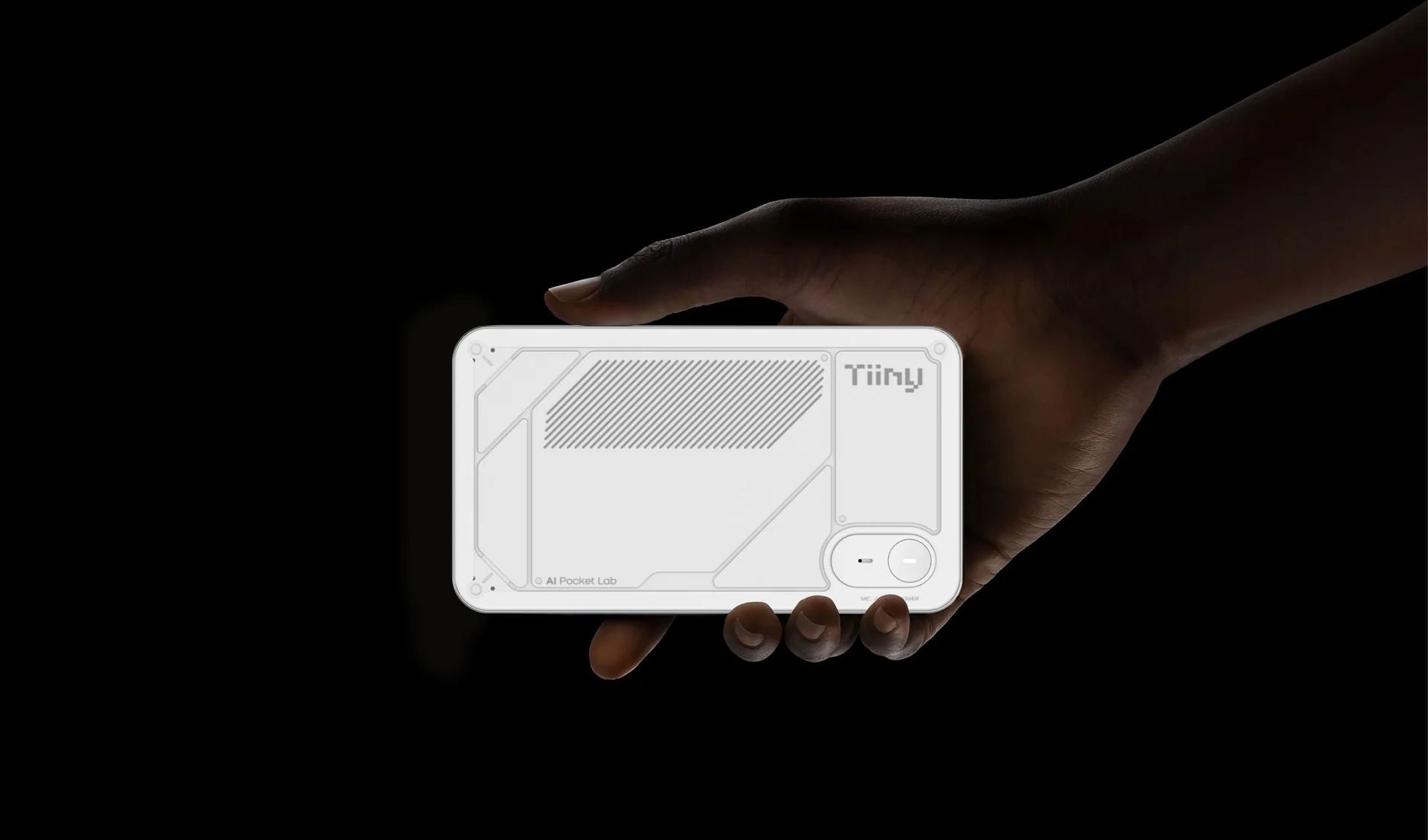
The AI industry just witnessed a paradigm shift as Tiiny AI announced the Pocket Lab, a portable device that runs 120-billion-parameter models entirely offline. This breakthrough marks a decisive moment in artificial intelligence accessibility, eliminating cloud dependence for computational tasks that previously required massive data centers. We’re looking at technology that fundamentally reshapes how individuals and organizations approach AI deployment.
The concept of a personal AI supercomputer seemed like science fiction just months ago. Today, it’s reality. Tiiny AI’s achievement demonstrates that cutting-edge machine learning no longer demands enterprise-level infrastructure or constant internet connectivity.
What Makes the Pocket Lab Revolutionary?
Tiiny AI has engineered something extraordinary. Their device packages computational power equivalent to cloud-based systems into a form factor you can slip into your backpack. The Pocket Lab AI device runs sophisticated language models without transmitting your data to external servers.
Privacy concerns have plagued AI adoption for years. Organizations hesitate to send sensitive information through third-party platforms. Individuals worry about data harvesting. Local AI processing solves these problems elegantly by keeping everything on your personal hardware.
The on-device AI supercomputer approach offers tangible advantages. Response times drop dramatically without network latency. You maintain complete control over your computational resources. Your work continues seamlessly even in areas with poor connectivity or no internet access whatsoever.
Technical Specifications That Matter
The Tiiny AI 120B model represents a remarkable engineering achievement. Fitting 120 billion parameters into portable hardware requires revolutionary compression techniques and novel chip architectures. Traditional deployment methods for models this size demand racks of servers consuming enormous amounts of electricity.
How does Tiiny AI accomplish this feat? They’ve developed proprietary optimization algorithms that maintain model performance while drastically reducing hardware requirements. The company hasn’t disclosed full technical specifications yet, but industry observers suggest advanced quantization methods and specialized neural processing units play crucial roles.
Battery life becomes critical for portable devices. Early reports indicate the Pocket Lab maintains operational capacity for several hours of continuous use. That’s impressive considering the computational demands of processing queries through a 120-billion-parameter architecture.
Storage capacity matters too. These massive models typically require hundreds of gigabytes. Tiiny AI has engineered compression techniques that make the Tiiny AI 120B model fit within reasonable storage constraints while preserving response quality.
The Privacy Revolution in Your Pocket
Data privacy isn’t just a buzzword anymore—it’s a fundamental requirement. Recent surveys show that over 80% of consumers feel they’ve lost control over how companies collect and use their personal information. The personal AI supercomputer model addresses these anxieties directly.
When you process queries through cloud-based AI services, your prompts travel across networks, get stored on corporate servers, and potentially contribute to training datasets. Companies analyze your usage patterns. Third parties might access your information through data breaches or legal requests.
Local AI processing eliminates these vulnerabilities entirely. Your questions, documents, and sensitive information never leave your device. You’re not trusting external parties with confidential business strategies, personal health information, or creative projects. The Pocket Lab AI device gives you genuine autonomy over your intellectual property.
This matters tremendously for specific professional contexts. Healthcare providers can analyze patient data without HIPAA concerns. Legal professionals can review privileged communications safely. Journalists can protect source identities absolutely. Researchers can explore proprietary datasets without exposure risks.
Breaking Free from Subscription Models
The economics of AI usage are evolving rapidly. Major AI platforms charge between $20 to $200 monthly for premium access, with enterprise solutions costing significantly more. Those subscriptions add up quickly, especially for power users who rely on AI tools throughout their workday.
Tiiny AI’s approach could disrupt this subscription-dependent ecosystem. While the company hasn’t announced pricing for the Pocket Lab, the value proposition is clear: pay once for hardware, own your computational capacity forever. No recurring fees. No usage limits. No throttling during peak hours.
Think about the long-term savings. A professional spending $50 monthly on AI subscriptions pays $600 annually. Over five years, that’s $3,000—potentially more than the Pocket Lab’s purchase price. You also gain independence from platform changes, price increases, or service discontinuations.
The on-device AI supercomputer model transforms AI from a service you rent into an asset you own. That shift has profound implications for how individuals and organizations budget for technology infrastructure.
Real-World Applications Unleashed
Imagine you’re a content creator traveling through rural areas with spotty internet. Your personal AI supercomputer continues generating outlines, refining drafts, and brainstorming ideas without interruption. Connectivity becomes irrelevant.
Software developers can leverage the Tiiny AI 120B model for code review, debugging assistance, and architecture planning during flights or in offline environments. The device becomes an always-available programming partner that understands your entire codebase context.
Researchers conducting fieldwork in remote locations gain access to sophisticated analysis tools without internet dependency. Whether you’re studying wildlife in the Amazon or conducting archaeological surveys in desert regions, your AI assistant travels with you.
Educational applications are equally compelling. Students can interact with advanced tutoring systems that adapt to their learning styles. Teachers can generate personalized lesson materials. All of this happens without sharing student data with external corporations.
Business consultants need confidentiality. The Pocket Lab lets them analyze client information, generate strategic recommendations, and prepare presentations while maintaining absolute data security. No cloud provider ever touches sensitive business intelligence.
Challenges and Limitations
We should acknowledge potential drawbacks honestly. The personal AI supercomputer concept faces legitimate obstacles. Model updates present one complication. Cloud services deploy improvements instantly across their platforms. Personal devices require manual updates or new hardware purchases.
Computational limitations matter too. While 120 billion parameters is impressive, the largest models now exceed one trillion parameters. Users with highly specialized needs might find the Pocket Lab AI device insufficient for certain edge-case applications.
Battery technology constrains portable computing. Running intensive AI workloads drains power quickly. Users will need access to charging infrastructure for extended sessions. This limitation affects true mobility more than stationary use cases.
The learning curve could deter some users. Cloud services hide technical complexity behind simple interfaces. Personal hardware might require more technical knowledge for optimization, troubleshooting, and customization. Tiiny AI will need robust documentation and support resources.
Cost represents another consideration. Premium portable hardware typically commands premium prices. The Pocket Lab will likely require significant upfront investment compared to low-cost or free cloud service tiers.
The Competitive Landscape
Tiiny AI isn’t operating in a vacuum. Other companies are exploring edge computing and local AI deployment. The trend toward decentralized machine learning is accelerating across the technology sector.
However, the Tiiny AI 120B model appears to be the first genuinely portable implementation at this parameter scale. Competitors have created specialized hardware for specific tasks or offered smaller models. Nobody else has delivered this combination of power, portability, and versatility yet.
Major cloud providers might view this development with concern. Their business models depend on centralized computing where they control infrastructure and collect recurring revenue. Widespread adoption of personal AI supercomputers could erode their market dominance.
That competitive pressure might actually benefit consumers. If Tiiny AI succeeds, expect rapid innovation as established players develop their own portable solutions. Competition drives down prices, improves performance, and expands features.
What This Means for AI’s Future
The Pocket Lab represents more than a novel gadget—it signals a fundamental shift in AI architecture philosophy. We’re moving from centralized, cloud-dependent systems toward distributed, user-controlled infrastructure.
This transition mirrors computing history. Mainframes gave way to personal computers. Desktop machines evolved into laptops and tablets. Each transition democratized access and empowered individual users. Local AI processing continues that trajectory.
Privacy regulations are tightening globally. GDPR in Europe, CCPA in California, and similar laws worldwide impose strict requirements on data handling. The on-device AI supercomputer model simplifies compliance dramatically by eliminating external data transmission.
Environmental considerations matter too. Data centers consume enormous amounts of electricity and water for cooling. Distributed computing across personal devices might prove more sustainable than concentrating AI workloads in massive server farms.
The geopolitical implications deserve attention as well. Countries increasingly view AI capabilities as strategic assets. Personal AI supercomputers reduce dependence on foreign technology platforms. Users in regions with restrictive internet policies gain uncensored access to computational tools.
Getting Hands on the Technology
Tiiny AI hasn’t announced official availability dates or pricing yet. Industry speculation suggests a launch within the next few months, with pre-orders potentially opening soon. Interested users should monitor the company’s official channels for announcements.
Early adopters will likely pay premium prices, as with most groundbreaking technology. Costs should decline as manufacturing scales and competitors enter the market. Patient buyers might benefit from waiting for second-generation hardware with improved specifications.
The device will probably ship with pre-loaded models and software, but customization options remain unclear. Power users will want to know whether they can fine-tune models, add specialized datasets, or install third-party applications. Tiiny AI needs to clarify their platform’s openness.
Support infrastructure matters tremendously for adoption success. Robust documentation, active user communities, and responsive customer service will determine whether the Pocket Lab becomes mainstream or remains a niche product for technical enthusiasts.
The Democratization of Advanced AI
For years, cutting-edge AI remained exclusive to well-funded corporations and research institutions. Individuals and small organizations relied on whatever consumer-grade tools tech giants decided to offer. That dynamic is changing.
The Pocket Lab AI device puts frontier-model capabilities directly into users’ hands. You’re not requesting access through gatekeepers or accepting someone else’s usage policies. You own the hardware and control the experience completely.
This democratization accelerates innovation in unexpected ways. When more people access powerful tools, creative applications emerge that centralized platforms never imagined. Artists, educators, activists, and entrepreneurs will discover novel uses that reshape industries.
Think about how smartphones unleashed waves of innovation. Nobody predicted ride-sharing apps, food delivery platforms, or social media revolutions when the iPhone launched. Similarly, widespread access to personal AI supercomputers will enable applications we haven’t conceived yet.
The technology also levels playing fields geographically. Talented developers in regions with limited cloud infrastructure gain equal access to computational resources. Innovation becomes less concentrated in traditional tech hubs.
Making Your Decision
Should you invest in a personal AI supercomputer like the Pocket Lab? That depends on your specific needs and circumstances.
Professionals handling sensitive information should seriously consider this technology. Lawyers, doctors, financial advisors, and consultants gain substantial privacy advantages. The security benefits alone might justify the investment.
Frequent travelers and remote workers will appreciate offline functionality. If your work requires AI assistance but your environment lacks reliable connectivity, local AI processing becomes essential rather than optional.
Budget-conscious power users should calculate their long-term costs. If you’re already spending heavily on AI subscriptions, a one-time hardware purchase might actually save money over several years.
Casual users with basic needs probably don’t require this level of capability yet. Cloud services still offer the most cost-effective solution for occasional queries and simple tasks. Wait for prices to drop or your requirements to increase.
The Road Ahead
Tiiny AI has accomplished something remarkable by creating the Pocket Lab. They’ve proven that personal AI supercomputers are technologically feasible and practically viable. What happens next will shape AI’s trajectory for years to come.
Success for Tiiny AI could trigger a industry-wide pivot toward edge computing and local processing. Failure might reinforce the dominance of cloud platforms and centralized models. The stakes extend far beyond one company’s product launch.
We’re watching the early stages of a potential revolution in how humanity interacts with artificial intelligence. The vision of truly personal, private, powerful AI tools is materializing before our eyes. Whether that vision becomes universal reality depends on market reception, competitive responses, and technological evolution.
The Pocket Lab gives us a glimpse of AI’s decentralized future. That future looks increasingly compelling as privacy concerns intensify, subscription costs accumulate, and connectivity limitations persist. Tiiny AI has opened a door. Now we’ll discover whether the world walks through it.
Frequently Asked Questions
What is the Tiiny AI Pocket Lab?
The Pocket Lab is a portable device from Tiiny AI that runs a 120-billion-parameter AI model entirely offline. It functions as a personal AI supercomputer that doesn’t require cloud connectivity, offering users privacy, data control, and independence from subscription-based AI services.
How does local AI processing improve privacy?
Local AI processing keeps all your data on your personal device rather than sending it to external servers. Your queries, documents, and sensitive information never leave your hardware, eliminating risks associated with data breaches, corporate monitoring, or third-party access to your information.
Can the Pocket Lab work without internet connection?
Yes, the Pocket Lab AI device operates completely offline. Since it runs the AI model locally on the device itself, you don’t need internet connectivity to process queries, analyze documents, or use any of its AI capabilities. This makes it ideal for travel, remote locations, or areas with unreliable internet.
How much does the Tiiny AI Pocket Lab cost?
Tiiny AI hasn’t announced official pricing yet. Industry observers expect premium pricing at launch, as with most groundbreaking technology, with costs likely decreasing as manufacturing scales and competition increases. The company should release pricing details when they announce availability.
What are the main advantages over cloud-based AI services?
The personal AI supercomputer offers several advantages: complete data privacy, no recurring subscription fees, offline functionality, no usage limits or throttling, faster response times without network latency, and independence from platform changes or service discontinuations. You own the hardware and control your computational capacity.
Who should consider buying a personal AI supercomputer?
Professionals handling sensitive information (lawyers, doctors, financial advisors), frequent travelers needing offline AI access, power users spending heavily on AI subscriptions, researchers working in remote locations, and anyone prioritizing data privacy should seriously consider this technology. Casual users with basic needs might find cloud services more cost-effective currently.
What are the limitations of the Pocket Lab?
Potential limitations include the need for manual updates versus automatic cloud improvements, possible computational constraints compared to trillion-parameter models, battery life restrictions during intensive use, a potentially steeper learning curve than simple cloud interfaces, and significant upfront costs compared to free or low-cost cloud service tiers.