
Deepinder Goyal’s New Startup Temple Raises $54 Million at $190 Million Valuation

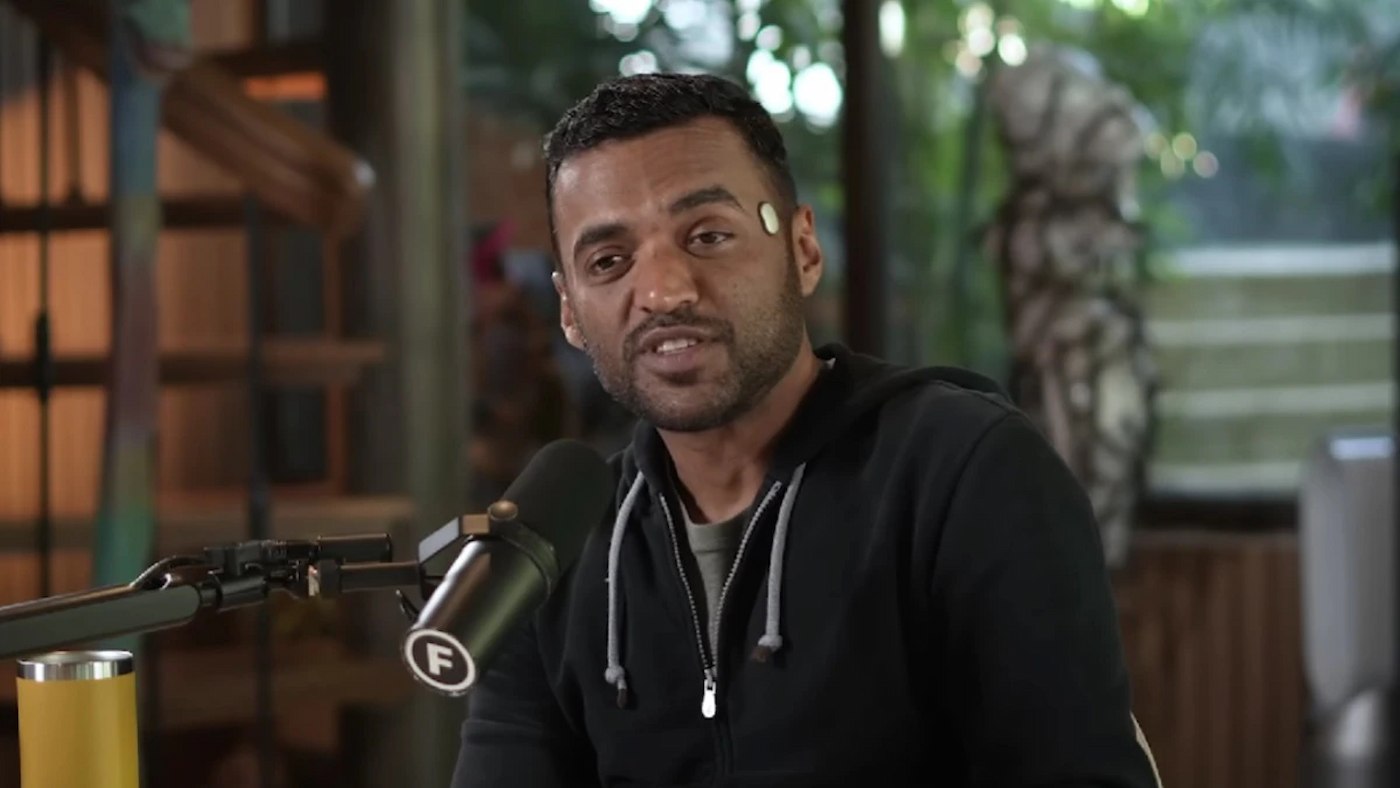
Weeks after stepping down as CEO from food delivery service Zomato and its parent Eternal, Indian entrepreneur Deepinder Goyal secured $54 million for wearable startup Temple — marking what could be one of the larger first rounds for a consumer hardware-focused startup in India. The Temple startup funding round, announced on February 27, 2026, demonstrates investor confidence in Goyal’s track record despite the company operating in stealth mode with no product yet launched.
The Deepinder Goyal Temple startup represents a strategic pivot from food delivery to health technology. This friends-and-family round achieved a Temple startup valuation $190M, a remarkable figure for any pre-product venture. Yet the story behind this funding reveals much about where Indian startup funding news is headed in 2026.
Inside the Temple Startup Funding Round
Temple raised $54 million in its first funding round through friends and family investors, valuing the company at approximately $190 million post-money. The structure itself tells a compelling story about conviction-based capital.
Deepinder Goyal led the round with an investment of Rs 104.07 crore, followed by Steadview Capital at Rs 90.49 crore. Beyond institutional money, other investors include Peak XV Partners, InfoEdge Ventures, and Dharana Capital, alongside angel investors such as Vijay Shekhar Sharma of Paytm, Kunal Shah of CRED, Nithin Kamath and Nikhil Kamath of Zerodha.
What sets this Temple startup funding round apart? More than 30 Temple employees invested their own capital in the round at the same valuation as external backers, without preferential pricing. This move is exceptionally rare in early-stage fundraising. Goyal himself emphasized this point, calling it “the kind of belief you can’t buy.”
The Deepinder Goyal new company details emerged gradually. Temple is building a wearable device that measures cerebral blood flow, a key indicator linked to brain performance and health. However, the device remains in research prototype stage, targeting elite athletes who demand unprecedented precision.
The Deepinder Goyal Zomato Founder New Venture Strategy
Following his exit as Group CEO of Eternal in January 2026, the Deepinder Goyal Zomato founder new venture strategy became clearer. In October 2025, he committed $25 million to Continue Research, exploring ways to extend human lifespan, and co-founded aviation startup LAT Aerospace, which recently expanded into defense technology.
Temple fits within this broader strategy. According to Goyal’s social media posts, the startup aims to build what he calls “the ultimate wearable for elite performance athletes — a device that measures what no other wearable in the world measures.” The scientific foundation stems from the Gravity Ageing Hypothesis published in November 2025, which claims human ageing is strongly affected by gravity’s pull reducing blood flow to active brain parts, with blood flow decreasing by about 0.7% each year from age seven.
This represents Deepinder Goyal’s next big thing — a moonshot bet on neuroscience-backed wearable technology. Unlike fitness trackers from Whoop or Oura that monitor heart rate and sleep, Temple’s focus on cerebral blood flow positions it in uncharted territory.
Indian Startup Funding News: 2026 Context
The Temple startup funding announcement arrives amid shifting Indian startup funding news trends. In 2026, till February, $2.65B has been raised in 260 equity funding rounds across India, representing an 8.14% rise compared to 2025.
However, selectivity defines the current investment climate. The number of startup funding rounds fell by nearly 39% from a year earlier, to 1,518 deals, though total funding slipped more modestly — down just over 17% to $10.5 billion. Investors now favor quality over quantity, deploying larger checks into fewer companies with clear paths to profitability.
Temple’s $54 million friends-and-family round stands out precisely because it defies this cautious trend. The startup investment India 2026 landscape typically demands demonstrable traction, unit economics, or at minimum, a product in market. Temple has none of these yet. What it offers instead is Goyal’s proven execution ability and a bold vision.
The startup enters an increasingly crowded wearables market where companies such as Whoop, Oura, and Garmin have spent years refining devices. The competitive landscape raises questions about differentiation, but Goyal’s track record provides investor reassurance.
The Building Phase: Hiring and Technology Development
Shortly after announcing the Temple startup funding round, Goyal revealed aggressive hiring plans. Temple is recruiting across specialized disciplines including analogure systems engineering, embedded systems, brain-computer interface development, neural decoding research, and deep learning.
The hiring announcement sparked controversy. Goyal required applicants to have less than 16% body fat for men and 26% for women, reasoning that the company builds for people who push bodies to the edge and wants to be those people, not just serve them. Critics questioned the legality and ethics of fitness-based hiring criteria, while supporters praised the conviction-driven culture.
The capital will be used to build what the company describes as the “ultimate wearable for elite performance athletes,” assembling a specialized team spanning hardware, software and performance science. Temple’s current website displays only “Coming Soon,” reinforcing its stealth status.
The focus on cerebral blood flow measurement distinguishes Temple technologically. Standard wearables track peripheral biometrics — heart rate variability, blood oxygen, temperature. Temple aims to monitor brain-level indicators that theoretically correlate with cognitive performance, recovery, and aging.
Market Opportunity and Competitive Position
The global wearables market presents both opportunity and challenge. Temple’s approach targets elite athletes rather than mass consumers, narrowing addressable market size but potentially commanding premium pricing. Professional sports teams, Olympic athletes, and high-performance training centers represent logical customer segments.
Before Temple, Goyal backed health and fitness startups including Ultrahuman, an India-based wearable maker competing with Oura’s smart ring. This prior involvement suggests domain expertise, though it also raises questions about potential conflicts.
The Indian startup funding news context matters here. India Startup Funding 2026 focuses on AI, EVs, climate tech, deeptech, fintech, and healthcare, with growth aligning with digital adoption and strong founder pipelines. Temple sits at the intersection of deeptech and healthcare, two priority sectors.
Regulatory pathways present another consideration. If Temple’s device makes health claims or measures physiological parameters, it may require clearances from regulatory bodies. Medical device approval processes vary by market and could affect commercialization timelines.
Investor Confidence: Why This Round Matters
The composition of Temple startup funding reveals investor psychology. Friends-and-family rounds typically range from $500K to $2M. Temple’s $54 million raise dwarfs typical early-stage amounts, suggesting institutional-grade capital disguised as friendly money.
Every investor participating is either a founder friend or early-stage investor who backed ventures in the same ecosystem, wanting exposure to Temple regardless of whether it ever makes it to market. This framing acknowledges execution risk while expressing long-term conviction.
The Deepinder Goyal new company details that emerged through regulatory filings show Goyal will own a 29% stake following the funding round. This substantial ownership ensures alignment between founder and investor interests.
For Indian startup funding news watchers, Temple represents a test case: Can brand-name founders raise substantial capital for unproven concepts in hardware? The answer appears to be yes, provided the founder’s track record sufficiently de-risks execution uncertainty.
The Zomato Legacy and Future Implications
Understanding this Temple startup funding requires context on Goyal’s Zomato journey. Goyal co-founded Zomato with Pankaj Chaddah, spending nearly two decades building one of India’s largest food delivery platforms, with acquisitions including Uber Eats’ India business in 2020 and Blinkit for $568 million in 2022.
That execution history matters enormously. Investors backing the Deepinder Goyal Temple startup essentially bet on the entrepreneur rather than the early-stage product. This “founder-first” investment thesis has precedent globally but remains relatively rare in Indian startup funding news.
The timing also matters. Goyal stepped down from Group CEO of Zomato parent Eternal, driven by his desire to explore new, high-risk ideas that don’t fit the scope or risk profile of a listed company. Temple represents exactly this kind of moonshot — scientifically ambitious, commercially uncertain, requiring patient capital.
In 2025, the funding landscape opened cautiously, with H1 witnessing capital infusion over $5.7 Bn across 470 deals, as the era of cash burn ended and the market began rewarding businesses demonstrating clear profitability paths. Temple bucks this profitability-first trend, betting instead on transformative technology.
What This Means for Startup Investment India 2026
The Temple startup funding round signals several trends shaping startup investment India 2026. First, brand-name entrepreneurs can still command premium valuations pre-product. Second, friends-and-family rounds increasingly function as de facto seed or Series A rounds when driven by institutional-grade investors. Third, deep-tech hardware ventures remain fundable despite longer development cycles.
India recently updated its startup framework, doubling the period deep tech companies are treated as startups to 20 years and raising revenue thresholds, as part of New Delhi’s effort to build a long-horizon deep tech ecosystem including the ₹1 trillion Research, Development and Innovation Fund. These policy changes create tailwinds for ventures like Temple.
However, questions remain about Temple’s path forward. How long until a product launch? What clinical validation will the cerebral blood flow measurements require? Can the company scale manufacturing and distribution? Will elite athletes adopt the technology?
The Deepinder Goyal’s next big thing needs to deliver innovation matching the hype. The Temple startup valuation $190M implies significant commercial potential that must eventually materialize.
Lessons for Entrepreneurs and Investors
Several lessons emerge from this Indian startup funding news story. For entrepreneurs, track record dramatically increases fundraising capacity, even for unproven concepts. Goyal’s Zomato success enabled Temple’s $54 million raise despite operating in stealth.
For investors, conviction-based backing of exceptional founders can generate asymmetric returns. Temple’s backers essentially purchased an option on Goyal’s ability to execute in an entirely new domain. That bet may fail, but if it succeeds, early backers will benefit enormously.
The internal employee participation also offers lessons. When more than 30 Temple employees participated at par valuation with no discount using their own money, it demonstrated the kind of belief you can’t buy. This alignment strengthens company culture and execution focus.
Finally, the Temple story illustrates how Indian startup funding news increasingly features global-scale ambitions. Temple doesn’t target Indian markets exclusively; the elite athlete segment spans worldwide. This reflects growing confidence among Indian founders to build globally competitive products from day one.
Looking Ahead: Execution Challenges
The Temple startup funding announcement is just the beginning. Execution hurdles ahead include technology development, regulatory approvals, manufacturing partnerships, go-to-market strategy, and competitive response.
The startup enters a crowded and well-funded wearables market, and whether Temple can meaningfully differentiate its technology remains an open question. The cerebral blood flow measurement approach is scientifically interesting but commercially unproven.
Goyal has mentioned that Temple spun out of his longevity research venture Continue, where he invested $25 million. This suggests Temple may access research and development resources beyond the $54 million just raised. However, hardware development notoriously consumes capital, and Temple may require additional funding before reaching commercialization.
The startup investment India 2026 environment will test Temple’s approach. If the company demonstrates technological breakthroughs and early customer traction, it could command significantly higher valuations in subsequent rounds. Conversely, if development stalls or the product fails to differentiate, the lofty Temple startup valuation $190M may prove difficult to defend.
The Bottom Line
The Temple startup funding represents a watershed moment in Indian startup funding news. A $54 million friends-and-family round at $190 million valuation for a stealth-mode hardware startup defies conventional wisdom. Yet Goyal’s track record, the quality of participating investors, and the internal employee conviction suggest this isn’t merely hype.
The Deepinder Goyal Temple startup embodies high-risk, high-reward entrepreneurship. It tackles an extremely ambitious technical challenge — measuring cerebral blood flow in a wearable form factor — targeting a narrow but premium customer segment. Success would establish Goyal as a serial entrepreneur across radically different domains. Failure would offer lessons about founder brand limits.
For observers of Indian startup funding news, Temple offers a fascinating case study. As startup investment India 2026 trends toward discipline and profitability, Temple charts an alternative path: visionary technology development backed by patient, conviction-driven capital. The next 2-3 years will reveal whether this approach succeeds.
The broader Deepinder Goyal Zomato founder new venture portfolio — including Continue Research, LAT Aerospace, and Temple — suggests an entrepreneur unafraid of bold bets. Whether these ventures achieve their moonshot goals remains uncertain, but the Temple startup funding round proves that exceptional entrepreneurs can still raise substantial capital for ambitious, unproven ideas.
As we track Deepinder Goyal’s next big thing, one conclusion seems clear: the intersection of neuroscience, wearable technology, and elite performance will attract significant attention. Temple’s journey from $190 million valuation to potential market leader — or cautionary tale — will be worth watching closely.
Frequently Asked Questions
How much funding did Temple startup raise?
Temple raised $54 million in its first friends-and-family funding round, achieving a post-money valuation of approximately $190 million. Deepinder Goyal led the round with Rs 104.07 crore investment, followed by Steadview Capital, Peak XV Partners, and other prominent investors.
What does Deepinder Goyal’s Temple startup do?
Temple is developing a wearable device that measures cerebral blood flow, targeting elite performance athletes. The technology aims to track brain-level indicators correlating with cognitive performance, recovery, and aging — metrics not measured by existing consumer wearables.
Who invested in the Temple startup funding round?
Major investors include Deepinder Goyal himself, Steadview Capital, Peak XV Partners, InfoEdge Ventures, and Dharana Capital. Angel investors include Vijay Shekhar Sharma (Paytm), Kunal Shah (CRED), and Nithin and Nikhil Kamath (Zerodha). Notably, over 30 Temple employees also invested at full valuation.
Why is Temple’s $54 million funding significant for Indian startups?
The Temple startup funding represents one of the largest friends-and-family rounds for a consumer hardware startup in India, especially remarkable for a pre-product company operating in stealth mode. It demonstrates that brand-name entrepreneurs with strong track records can raise substantial capital for unproven but ambitious concepts.
What is Deepinder Goyal’s involvement with Temple after leaving Zomato?
After stepping down as Group CEO of Eternal (Zomato’s parent company) in January 2026, Deepinder Goyal focuses on high-risk ventures including Temple, Continue Research (longevity research), and LAT Aerospace. He owns approximately 29% stake in Temple and leads product vision and team building.
How does Temple differ from other wearables like Whoop or Oura?
Unlike fitness trackers that monitor heart rate, sleep, and activity, Temple focuses specifically on measuring cerebral blood flow — a physiological parameter linked to brain performance and health. This approach targets elite athletes rather than mass consumers, potentially commanding premium pricing.
What are the challenges facing Temple startup?
Temple faces several execution challenges including technology development for accurate cerebral blood flow measurement, potential regulatory approvals if making health claims, manufacturing partnerships for wearable hardware, go-to-market strategy for elite athlete segment, and differentiation in a crowded wearables market dominated by established players.