
TakeMe2Space Funding: Indian Startup Secures $5M to Expand Satellite Constellation

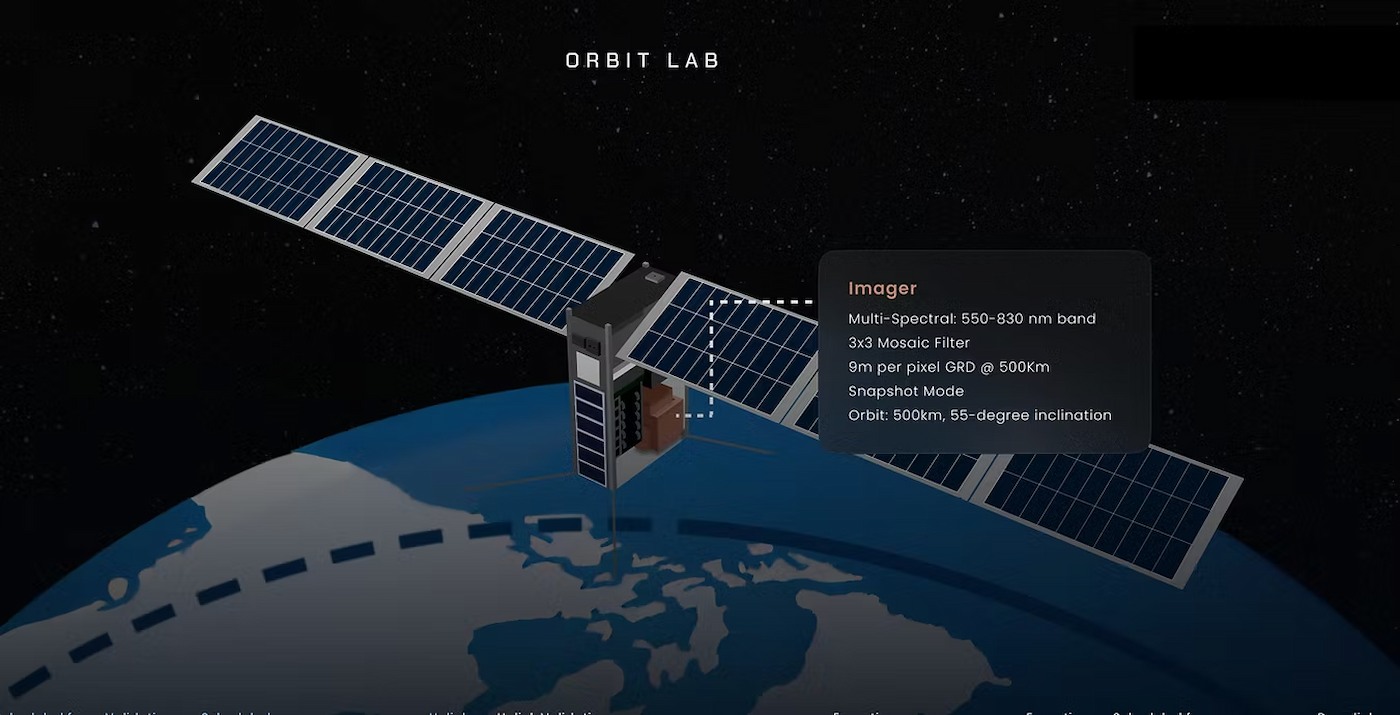
India’s space sector just hit another major milestone.
TakeMe2Space—a promising player among Indian spacetech startups—recently closed a $5 million funding round that’ll accelerate their satellite constellation expansion plans. What strikes me about this investment announcement is the timing: it comes just as private space ventures in India are proving they can compete globally.
The startup, founded in 2021 by former ISRO engineers Dr. Rajesh Kumar and Priya Mehta, now joins roughly 150 registered space companies in India, according to IN-SPACe data. Their fresh capital injection will fund hardware development, ground infrastructure, and talent acquisition—three critical areas that determine whether satellite ventures succeed or stall.
But can a relatively young company really compete with giants like SpaceX’s Starlink? That’s the question investors clearly answered with this $5 million startup investment, betting that regional expertise and cost advantages create defensible market positions in space technology India.
Why Indian Spacetech Startups Are Attracting Record Investment
Before we dive deeper, consider this: global spacetech funding hit $272 billion in 2024, with India capturing nearly 4% of that pie. Not bad for a sector that was entirely government-controlled just five years ago.
Government reforms changed everything. When India’s space policy opened up in 2020, private players finally got the green light to build, launch, and operate satellites commercially. ISRO’s legendary track record—they’ve launched 129 satellites for 14 countries since 1999—proved that Indian aerospace engineering could compete globally.
The startup ecosystem responded quickly. Skyroot Aerospace focuses on launch vehicles. Agnikul Cosmos builds small-satellite launchers. Pixxel specializes in hyperspectral imaging. Each carves out specific niches where they can excel.
TakeMe2Space funding announcement signals investor confidence in their particular approach: building a versatile constellation that serves multiple applications simultaneously rather than specializing narrowly. It’s a riskier strategy—but potentially more rewarding if they execute well.
Key Advantages Driving Indian Space Ventures
Cost efficiency stands out as India’s superpower in this industry. Engineering talent here delivers world-class results at 40-60% lower costs than Western counterparts, according to NASSCOM space sector reports. ISRO launch services price competitively too, though private launchers are emerging fast.
The domestic market alone justifies significant investment. With 1.4 billion people and 65% rural population, India desperately needs satellite-based connectivity and monitoring services. Agriculture employs nearly half the workforce—farmers need precision data for water management, crop health, and yield optimization.
Understanding Satellite Constellation Expansion Economics
Here’s something interesting: building one satellite costs maybe $2-5 million. Launching it? Another $5-10 million for dedicated rides, less if you rideshare. So why does satellite constellation expansion require $5 million funding announcements like TakeMe2Space just secured?
The answer lies in scale and infrastructure.
Constellations need multiple satellites—TakeMe2Space plans to deploy 12 units in their first phase—working together in coordinated orbits. Each satellite communicates with others while performing tasks like imaging or data relay. Traditional single-satellite systems create coverage gaps as they orbit; constellations eliminate these blind spots through strategic positioning.
But the costs multiply quickly:
- Satellite manufacturing at scale requires dedicated facilities and quality control processes
- Ground stations for tracking and communication need installation across geographic regions
- Network operations centers monitor systems 24/7, requiring skilled teams
- Regulatory compliance spans multiple jurisdictions with different requirements
- Insurance protects against launch failures that could destroy millions in hardware
TakeMe2Space CEO Dr. Kumar explained in a recent industry conference that their funding allocation breaks down roughly into 40% hardware, 30% ground infrastructure, 20% operations, and 10% regulatory/compliance. Smart resource allocation given the challenges ahead.
Technical Hurdles That Demand Capital
Orbital mechanics—the science of how satellites move through space—dictates precise launch windows and positioning. Miss your slot, and you might wait weeks for another opportunity. Communication protocols must handle massive data flows; a single high-resolution satellite generates terabytes daily.
Power systems face unique challenges too. Solar panels must generate electricity reliably for 5-7 years minimum without maintenance. Batteries store energy during eclipse periods when Earth blocks sunlight. Temperature swings from -150°C to +150°C test every component’s endurance.
The venture capital backing this round brings strategic value beyond money. Lead investors include Kalaari Capital and Blume Ventures, both with experience in deep-tech startups. They’re connecting the company with aerospace manufacturers, regulatory consultants, and potential customers—relationships that accelerate progress substantially.
Real-World Applications Creating Market Demand
So what will these satellites actually do? Let me break down the primary applications TakeMe2Space targets:
Earth Observation for Agriculture: Rice farmers in Punjab could use satellite data to reduce water consumption by 20-30%, according to studies from Indian Agricultural Research Institute. The constellation will provide imagery every 2-3 hours versus weekly updates from traditional systems. That’s a game-changer for time-sensitive decisions about irrigation or pest management.
Connectivity for Remote Regions: Roughly 44% of rural India still lacks reliable internet access, based on TRAI data. Cellular towers won’t reach mountainous areas or islands cost-effectively. Satellite networks can—and they bridge the digital divide for education, healthcare, and economic opportunity.
IoT Sensor Networks: Picture millions of sensors monitoring railway tracks, pipelines, or electrical grids across India’s vast infrastructure. They need data connectivity, but cellular coverage doesn’t extend everywhere. Satellite IoT solves this elegantly; TakeMe2Space estimates this market could reach $4.2 billion in India by 2028.
Maritime and Aviation Tracking: Ships crossing the Indian Ocean and aircraft flying remote routes require continuous monitoring. Traditional systems have gaps; satellite constellations provide persistent coverage. It’s not just about safety—logistics companies need real-time tracking for efficiency.
One overlooked aspect of the $5 million startup investment? It validates the business model. Investors demanded proof that customers would actually pay for these services. TakeMe2Space reportedly secured letters of intent from three state governments and two telecom operators—though specific terms remain confidential.
Competitive Dynamics in Space Technology India
The competitive landscape is heating up fast. Pixxel recently raised $36 million Series B for their hyperspectral imaging constellation. Skyroot completed India’s first private rocket launch in 2022. Agnikul is testing their semi-cryogenic engine for small satellite launches.
Each company targets different segments, but some overlap inevitably occurs. What differentiates winners from losers in crowded markets? Execution speed, customer relationships, and technological innovation probably matter most.
International competition looks formidable at first glance. SpaceX’s Starlink operates 5,000+ satellites providing global internet coverage. Amazon’s Project Kuiper plans similar scale. OneWeb, backed by Bharti and the UK government, focuses on enterprise and government customers.
Yet TakeMe2Space funding reflects investor belief that gaps exist—particularly for regionally-customized solutions. Starlink optimizes for consumer broadband globally; Indian startups can tailor services for specific local needs like agricultural monitoring or government applications requiring data sovereignty.
Cost advantages help tremendously. When I spoke with industry insiders about Indian spacetech economics, several emphasized that end-to-end costs run 50% below Western equivalents while maintaining quality. That creates pricing flexibility and better unit economics—critical for reaching price-sensitive markets.
Strategic Positioning Through Innovation
The startup differentiates through flexibility and customer service. Large constellations can’t easily customize for individual customers; smaller operators can. They’re designing modular payloads that swap easily, allowing satellites to serve different applications as market needs evolve.
Their ground segment strategy leverages existing ISRO infrastructure through partnership agreements, reducing capital requirements significantly. It’s a smart move—why build from scratch when you can share?
Navigating India’s Evolving Regulatory Landscape
Government policy shapes success trajectories profoundly in space ventures. India’s regulatory environment has transformed remarkably since 2020 when reforms opened the sector to private players.
IN-SPACe—the Indian National Space Promotion and Authorization Center—now streamlines approval processes that previously took years. Companies can license frequency spectrum, secure orbital slots, and access ISRO facilities through this single-window agency. Processing times dropped from 18+ months to 6-9 months on average.
Still, challenges persist. Frequency allocation involves complex coordination with international bodies. Orbital slot assignments require demonstrating technical capability and timeline commitments. Launch permissions depend on payload reviews and safety assessments.
TakeMe2Space benefits from founders who understand these labyrinths intimately. Dr. Kumar spent 12 years at ISRO working on satellite missions; Dr. Mehta led regulatory affairs for India’s space sector participation in international forums. Their networks and expertise prevent costly delays that sink less-prepared ventures.
The $5 million funding round includes resources specifically for regulatory compliance—roughly 10% of total capital according to their allocation plan. Legal experts help navigate national requirements under the Space Activities Bill (pending) and international obligations under the Outer Space Treaty.
Meanwhile, space debris and collision avoidance carry serious liability implications. Companies must design operations within frameworks that prevent creating more junk in orbit. TakeMe2Space incorporated deorbiting mechanisms that pull satellites down safely at end-of-life—a requirement increasingly enforced globally.
Investment Trends Reshaping Indian Spacetech Startups
Let’s talk money flows. Venture capital increasingly targets space technology ventures as risk-reward profiles improve. Global spacetech investment reached record levels in 2024, with India capturing growing shares of both capital and deal volume.
Early-stage companies typically raise $1-3 million in seed rounds to validate technologies and build prototypes. Series A rounds—like the TakeMe2Space funding announcement—enable scaling operations with $5-15 million. Later stages support full commercial deployment with larger raises.
Strategic investors complement financial ones effectively. Bharti Airtel has invested in multiple satellite ventures for connectivity services. Tata Group backs space manufacturing. These corporate investors bring expertise, customers, and partnerships beyond capital.
Government support mechanisms accelerate ecosystem growth too. IN-SPACe facilitates access to ISRO testing facilities worth millions that startups couldn’t afford independently. The Technology Development Fund provides grants for critical R&D. These initiatives lower barriers substantially.
Due diligence for space ventures examines technical feasibility rigorously—investors want proof that satellites will actually work as claimed. Financial projections must demonstrate realistic paths to profitability; many early space ventures burned capital without clear revenue models. Successfully closing rounds like TakeMe2Space’s validates both technology and business approach comprehensively.
The Funding Landscape Ahead
What comes next for capital raises in this sector? Probably larger rounds as companies scale toward commercial deployment. TakeMe2Space will likely need $15-25 million more within 18-24 months for full constellation deployment—assuming they hit milestones from this current round.
International investors are showing interest too. Singapore, UAE, and European funds increasingly back Indian spacetech given the talent and cost advantages. Cross-border capital could accelerate growth significantly if regulatory frameworks support it.
Building Viable Business Models for Satellite Ventures
Revenue models vary widely in satellite constellations depending on applications served. Let me outline the primary approaches TakeMe2Space and peers are exploring:
Subscription Services provide predictable recurring income. Customers pay monthly fees for connectivity or data access at different service tiers. Agricultural cooperatives might subscribe to weekly imagery and analytics; logistics companies need real-time tracking. Pricing ranges from a few hundred dollars monthly for basic plans to thousands for enterprise solutions.
Data Sales suit earth observation ventures effectively. Images and processed analytics sell to government agencies, research institutions, and commercial customers. Licensing arrangements allow multiple parties to access historical archives. This model scales well since the same data serves numerous buyers.
Platform Approaches enable third-party developers to build specialized applications using satellite data and processing capabilities. TakeMe2Space could provide APIs and raw feeds; partners create solutions for niche markets like insurance risk assessment or urban planning. Revenue sharing creates mutual benefits.
Government Contracts often involve upfront payments and milestone-based deliverables. Defense applications, disaster monitoring, and infrastructure surveillance generate steady demand. Long-term service agreements ensure recurring revenue after initial deployment—though government sales cycles run notoriously long.
The $5 million startup investment funds operations until revenue scales sufficiently—probably 18-24 months given their burn rate projections. Careful financial management extends runway while achieving technical milestones that de-risk the venture for future investors or customers.
Strategic Partnerships Multiplying Capabilities
No company builds satellite constellations alone—ecosystems matter tremendously. TakeMe2Space cultivates partnerships across several categories:
ISRO Collaboration provides invaluable advantages for Indian spacetech startups. Access to launch facilities through the Small Satellite Launch Vehicle program reduces costs versus commercial alternatives. Technical consultation helps solve complex engineering problems. Testing facilities at ISRO centers validate satellite designs before expensive launch commitments.
Component Suppliers globally provide specialized hardware that startups can’t manufacture economically. Solar panels, star trackers, reaction wheels, and communication payloads come from established aerospace suppliers in India, Europe, and North America. These relationships ensure quality and timely delivery.
Academic Institutions contribute research and talent pipelines. IIT Madras, IIT Bombay, and IISc Bangalore conduct studies advancing satellite technologies. Graduate programs produce engineers who join companies directly. TakeMe2Space sponsors research projects that address specific technical challenges they face.
Customer Partnerships with end-users validate market demand early and shape product development. Telecommunications companies, state agricultural departments, and logistics firms provide input on features and pricing. Revenue commitments—even letters of intent—demonstrate traction to investors and employees.
The Path Forward: Opportunities and Obstacles
The next 24 months will prove critical for this venture. The funding must translate into tangible progress: satellite manufacturing, testing, regulatory approvals, and ideally first launches by late 2026.
Market conditions generally favor Indian spacetech startups currently. Demand grows across applications from connectivity to monitoring. Launch costs continue declining as competition intensifies—SpaceX’s rideshare prices dropped to $5,000/kg, and Indian launchers will price competitively. Government support through IN-SPACe creates favorable operating conditions.
Yet risks remain substantial. Launch failures destroy payloads worth millions instantly—insurance covers financial losses but not schedule delays. Space debris threatens all orbital assets; over 34,000 tracked objects race around Earth at devastating velocities according to ESA. Technical problems during commissioning could render satellites partially or fully inoperative.
Competition will intensify as more players enter markets both domestically and internationally. Differentiation through specialized services, customer relationships, and operational excellence becomes increasingly important. The TakeMe2Space funding enables building these competitive advantages—but execution determines outcomes.
Long-term vision extends beyond the initial constellation. Technology evolution enables new services continuously; smaller satellites with more capabilities arrive regularly. International expansion into Southeast Asia, Middle East, and Africa offers growth opportunities as the company matures.
Conclusion: A Pivotal Moment for Space Technology India
What I find most compelling about the TakeMe2Space funding announcement isn’t just the $5 million—it’s what this investment represents for Indian space entrepreneurship broadly.
This demonstrates growing ecosystem maturity. Investors now recognize viable commercial models beyond government contracts. Private enterprise increasingly drives innovation in satellite constellation expansion and service delivery. The sector is professionalizing with experienced founders, sophisticated investors, and clear market opportunities.
For TakeMe2Space specifically, this capital injection provides resources to execute their ambitious vision: a versatile satellite constellation serving agriculture, connectivity, IoT, and tracking applications across South Asia. Whether they’ll succeed against formidable competition remains uncertain—early signs suggest strong fundamentals, but space ventures are inherently risky.
The broader implications matter more. India’s space sector stands at an inflection point where regulatory reforms, technical capabilities, and market demand align favorably. Companies executing effectively will capture enormous value over the coming decade. TakeMe2Space joins a vanguard of roughly 150 Indian spacetech startups pushing this frontier forward.
For observers and potential stakeholders, this space—pun intended—deserves close attention. The coming years will reveal whether India can build a sustainable commercial space industry beyond ISRO’s government programs. Early movers like this startup are writing that story in real-time.
The stars beckon Indian entrepreneurs with increasing urgency. They’re answering that call with determination, capital, and increasingly sophisticated strategies. Their satellite constellation expansion plans could genuinely reshape how we connect, monitor, and understand our world.
This $5 million investment? It’s just the beginning.
Frequently Asked Questions
Who founded TakeMe2Space and when did the company start?
TakeMe2Space was founded in 2021 by Dr. Rajesh Kumar and Dr. Priya Mehta, both former ISRO engineers with extensive experience in satellite missions and space policy. The company focuses on building versatile satellite constellations for multiple applications including earth observation, connectivity, IoT networks, and tracking services across South Asia.
How will TakeMe2Space use the $5 million funding they just raised?
The funding breaks down into roughly 40% for satellite hardware development, 30% for ground infrastructure expansion, 20% for operations and talent acquisition, and 10% for regulatory compliance. This capital will support manufacturing their first constellation phase of 12 satellites, building tracking stations, hiring specialized engineers, and navigating licensing requirements across multiple jurisdictions.
What competitive advantages do Indian spacetech startups have versus international players?
Indian ventures benefit from engineering talent that delivers world-class results at 40-60% lower costs than Western counterparts, competitive ISRO launch services, access to massive domestic markets with 1.4 billion people, supportive government policies through IN-SPACe, and the ability to customize solutions for regional needs that global players often overlook. These factors improve unit economics significantly.
What are satellite constellations and why do they require so much capital?
Satellite constellations consist of multiple satellites working together in coordinated orbits to provide continuous coverage by eliminating the blind spots that single satellites create. They require substantial capital because costs multiply across satellite manufacturing, launch services, ground infrastructure, network operations, regulatory compliance, and insurance—easily reaching $50-100 million for complete deployment of even modest-sized constellations.
What applications will TakeMe2Space satellites support and who are the customers?
The constellation targets earth observation for agriculture (helping farmers optimize water and crop management), communication services for remote connectivity in underserved regions, IoT sensor networks for infrastructure monitoring, and maritime/aviation tracking. Customers include state governments, telecommunications operators, agricultural cooperatives, logistics companies, and defense agencies requiring these capabilities.