
South Korea Unleashes Ambitious Super-Gap Startup Project to Forge Tomorrow’s Tech Unicorns

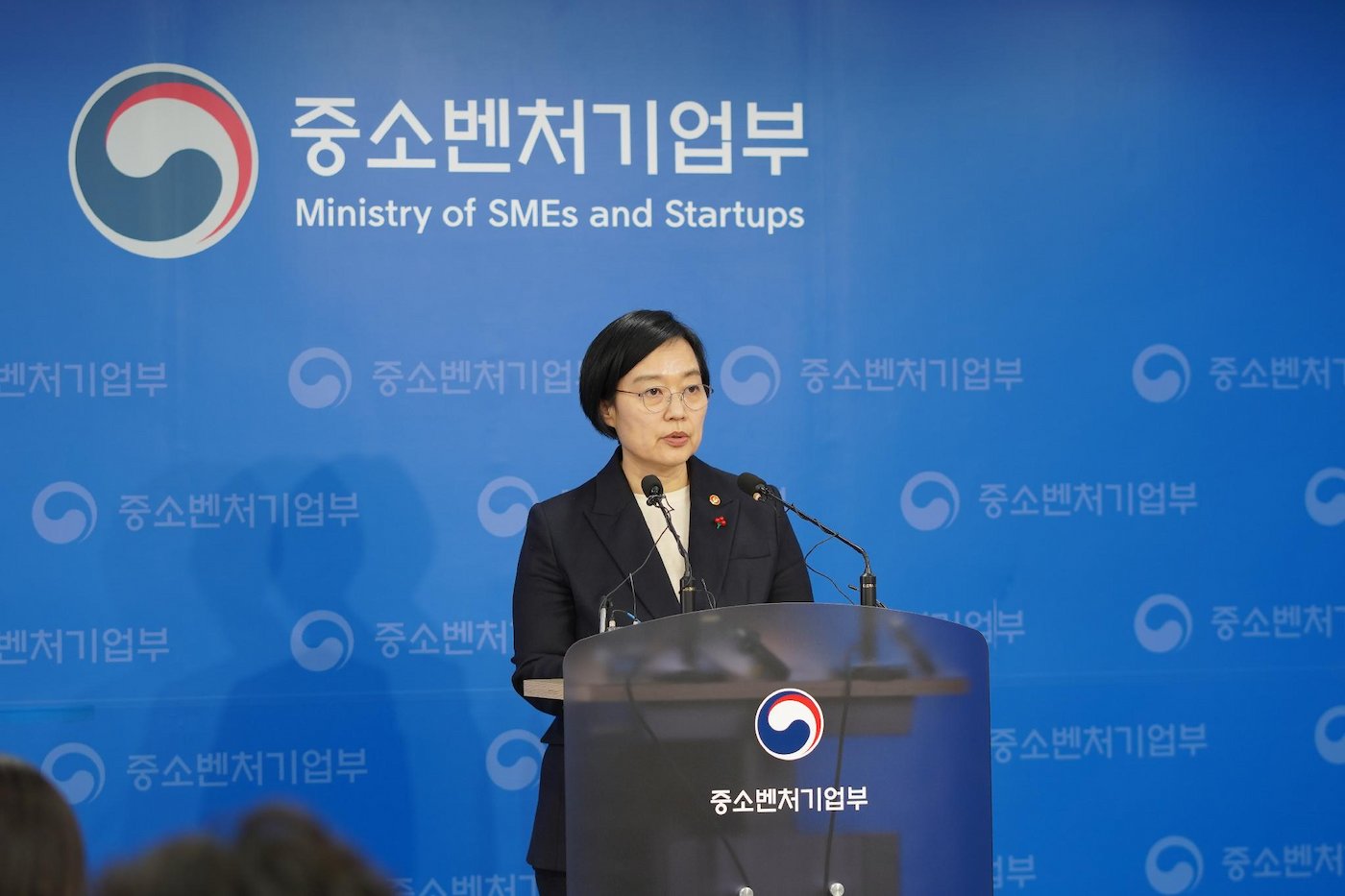
The Ministry of SMEs and Startups has revealed its plan to open applications for the 2026 Super-Gap Startup Project on December 29, 2025, with the call period running until January 23, 2026. The budget for preliminary, initial, and leap packages has been expanded to 177.8 billion won, and 145.6 billion won has been allocated for the ‘Super Gap Startup Project’ in new industry sectors.
Historic Deep-Tech Investment Opens Doors for 120 Revolutionary Startups
South Korea’s Super-Gap Startup Project has already nurtured 604 startups, helping produce three global unicorns — including FuriosaAI — and 14 KOSDAQ-listed companies such as Nota. Building on this record, the 2026 edition expands its scope in line with Korea’s six strategic industries and twelve future innovation sectors, reflecting the national “super-innovation economy” agenda. With applications opening today for the largest iteration yet, entrepreneurs across twelve cutting-edge industries now have until January 23, 2026, to secure their place in Korea’s flagship deep-tech acceleration program.
Korea’s commitment to technological sovereignty through the Super-Gap Startup Project represents more than funding. This is strategic nation-building through innovation. Minister Han Seong-sook emphasized that deep-tech innovation is not merely an extension of startup creativity but a transformative force reshaping industrial structures. The project serves as South Korea’s answer to global technological competition, positioning the nation as a self-sufficient leader in tomorrow’s most critical industries.
Revolutionary Scope Across Tomorrow’s Most Critical Technologies
The six strategic categories (A–F) and their twelve focus areas are: A: Artificial intelligence, semiconductors, quantum & cybersecurity, robotics, mobility and extending into fusion energy, defense technology, and next-generation computing. This expansion reflects Korea’s strategic pivot toward hard-tech ventures that demand significant capital investment and extended development timelines.
The 2026 Super-Gap Startup Project targets technologies that will define competitive advantage in the next decade. Unlike typical software startups with shorter development cycles, these ventures tackle fundamental technological challenges. Quantum computing development requires years of research. Nuclear fusion technology demands massive infrastructure. Defense tech involves complex regulatory frameworks.
The focus on sectors like quantum computing, nuclear fusion, and defense tech signals a shift from short-cycle software startups toward hard-tech ventures that can anchor national competitiveness in the AI and post-semiconductor era. This strategic direction acknowledges that tomorrow’s economic leaders will emerge from breakthrough technologies, not incremental improvements to existing platforms.
Each participating startup can access comprehensive support packages spanning five years. Korean government deep-tech grants include 600 million KRW for commercialization activities and an additional 600 million KRW dedicated to research and development. However, the program offers more than financial resources.
Unprecedented Scale of South Korea Startup Funding 2026
According to the ‘2026 Central Government and Local Government Startup Support Program Integrated Announcement’ announced by the Ministry of SMEs and Startups on the 19th, the budget to be injected into the startup ecosystem in South Korea next year has been confirmed at 3.4645 trillion won. This is a 5.2% increase compared to the previous year, marking the largest scale ever.
The numbers reveal Korea’s unprecedented commitment to startup development. A total of 111 institutions, including 15 central government ministries and 96 local governments, will participate in this support, with 508 projects being promoted. This coordination across government levels demonstrates systematic approach to ecosystem building.
14.245 trillion won is concentrated on loans and guarantees. This accounts for 41.1% of the total, the largest proportion. Yet critics worry about debt burden implications. However, there are also concerns that the high proportion of support centered on ‘loans’ may increase the debt burden on companies amid high-interest trends. An industry insider suggested, “The proportion of direct commercialization funding should be further expanded, and for local government projects, the process of confirming duplicate benefits should be simplified to reduce administrative burdens.”
The 2026 budget allocation prioritizes technology development and commercialization. 8.648 trillion won is allocated for technology development (R&D). This is an increase of about 235.6 billion won compared to the previous year. Through the Ministry of SMEs and Startups’ ‘Startup Growth Technology Development’ project, up to 1.5 billion won will be supported for companies with less than 7 years of operation for a maximum of 3 years, and the Ministry of Science and ICT will invest 70.8 billion won in 12 strategic technologies such as semiconductors and secondary batteries, as well as in AX (AI transformation) innovative companies.
Ministry of SMEs and Startups Korea’s Strategic Vision
The Ministry of SMEs and Startups Korea approaches the Super-Gap Startup Project as industrial policy rather than traditional venture funding. Through this new structure, the MSS aims to direct venture capital and R&D pipelines toward high-impact technologies that could define Korea’s competitiveness in the next decade. This represents a fundamental shift in government approach to innovation support.
Beyond its seemingly another startup funding program, Korea’s Super-Gap initiative represents the country’s strategic engine for deep-tech self-sufficiency at a time when global supply chains and technological ecosystems are rapidly evolving. Korea recognizes that technological independence requires domestic capabilities across critical sectors.
The program structure reflects sophisticated understanding of deep-tech development requirements. For investors, the project also expands opportunities within Korea’s deep-tech ecosystem. By linking R&D, commercialization, and global investment networks, it creates a structured pipeline for scale-up and exit — a critical missing piece in Korea’s venture capital landscape until recently.
Ministry leadership acknowledges the broader transformation underway. Korea’s innovation policy extends beyond startup support toward comprehensive ecosystem development. The Super-Gap Startup Project serves as the flagship program within this larger vision of technological sovereignty.
The 2026 Super-Gap Project marks a decisive step in Korea’s deep-tech evolution. This evolution encompasses cultural change alongside policy reform. Korea is building infrastructure for sustained innovation rather than cyclical funding programs.
Comprehensive Guide: How to Apply for Super-Gap Project
Entrepreneurs seeking Super-Gap Startup Project participation must understand the application timeline and requirements. The Ministry of SMEs and Startups has revealed its plan to open applications for the 2026 Super-Gap Startup Project on December 29, 2025, with the call period running until January 23, 2026. This three-week window requires careful preparation and strategic positioning.
The application process involves multiple phases designed to identify the most promising deep-tech ventures. Startups must demonstrate technological innovation within the twelve designated sectors. They need clear commercialization pathways and scalability potential. The evaluation criteria emphasize technical depth over market traction alone.
The ministry will also connect beneficiaries with national policy tools, including technology guarantees, export vouchers, and venture policy loans to accelerate market readiness. Successful applicants gain access to Korea’s comprehensive startup support infrastructure beyond direct funding.
Application requirements likely include detailed technical documentation, commercialization timelines, and team credentials. Startups should prepare comprehensive business plans addressing both technological innovation and market potential. The ministry evaluates applications based on contribution to Korea’s strategic technology priorities.
International startups may participate if they commit to Korean operations and technology development. The program seeks global talent while building domestic capabilities. This balance reflects Korea’s ambition to become a regional hub for deep-tech innovation.
Success Stories That Validate the Super-Gap Approach
Korea’s Super-Gap Startup Project has already nurtured 604 startups, helping produce three global unicorns — including FuriosaAI — and 14 KOSDAQ-listed companies such as Nota. These outcomes demonstrate the program’s effectiveness in identifying and scaling breakthrough technologies.
FuriosaAI represents the program’s most visible success story. The artificial intelligence chipmaker has achieved unicorn status by focusing on specialized processors for AI workloads. Their success validates Korea’s bet on semiconductor innovation beyond traditional memory chips. FuriosaAI’s trajectory from startup to unicorn illustrates the potential for deep-tech ventures with patient capital and strategic support.
Nota’s path to KOSDAQ listing showcases different success metrics within the Super-Gap ecosystem. The company developed AI-powered optimization tools for mobile applications. Their public market debut provides liquidity for early investors while validating commercial applications of advanced AI research.
The fourteen KOSDAQ listings from Super-Gap participants create a demonstration effect for other deep-tech entrepreneurs. Public market success attracts talent and capital to the ecosystem. Each successful exit reinforces Korea’s reputation as a viable deep-tech startup destination.
Beyond individual company success, the program has catalyzed ecosystem development. The 604 startups represent a critical mass of deep-tech innovation across multiple sectors. This concentration creates knowledge spillovers and talent circulation that benefit the broader ecosystem.
Economic Impact and Global Positioning
Korea’s Super-Gap Startup Project operates within broader economic transformation goals. As Korea enters 2026, the success of this program will not only determine the trajectory of the nation’s AI and semiconductor leadership, but also shape how its startups compete globally in green energy, defense, and next-generation computing.
The program’s economic impact extends beyond participating companies. Deep-tech ventures create high-value employment and intellectual property. They attract international investment and talent. Successful deep-tech companies anchor supply chains and create supplier ecosystems.
Korea’s positioning reflects global trends toward technological nationalism. Major economies increasingly view critical technologies as national security issues. The Super-Gap Startup Project represents Korea’s strategy to maintain technological independence while participating in global innovation networks.
If executed effectively, the project could position Korea among the world’s leading deep-tech ecosystems — where startup innovation, industrial policy, and venture capital converge to drive the technologies of tomorrow. This convergence creates competitive advantages that extend beyond individual companies to national economic capabilities.
The global context for deep-tech innovation has shifted dramatically. Supply chain disruptions, geopolitical tensions, and technological competition have elevated deep-tech from venture investment theme to national priority. Korea’s systematic approach through the Super-Gap Startup Project positions the nation to capitalize on these trends.
Challenges and Opportunities Ahead
Deep-tech startups face unique challenges that traditional software ventures rarely encounter. Development timelines extend years rather than months. Capital requirements reach tens of millions before revenue generation. Technical risks remain high even with proven teams and validated concepts.
The Super-Gap Startup Project addresses these challenges through structured support spanning five years. However, execution determines ultimate success. Korea must maintain political commitment across election cycles. Bureaucratic efficiency affects startup agility. International coordination becomes critical for global market access.
However, there are also concerns that the high proportion of support centered on ‘loans’ may increase the debt burden on companies amid high-interest trends. An industry insider suggested, “The proportion of direct commercialization funding should be further expanded, and for local government projects, the process of confirming duplicate benefits should be simplified to reduce administrative burdens.”
The program’s expansion to twelve sectors creates coordination challenges. Each technology domain requires specialized expertise and different support approaches. Quantum computing needs different infrastructure than fusion energy research. The ministry must balance broad coverage with deep sector expertise.
Competition for talent represents another critical challenge. Deep-tech ventures require specialized engineers and researchers. Korea competes globally for this talent while building domestic capabilities. The Super-Gap Startup Project must attract international talent while developing local expertise.
Future Implications for Korea’s Innovation Economy
The 2026 Super-Gap Project marks a decisive step in Korea’s deep-tech evolution. It demonstrates how public policy can synchronize innovation, capital, and industrial transition toward long-term technological sovereignty. This synchronization creates institutional capabilities that extend beyond individual programs.
Korea’s approach through the Super-Gap Startup Project establishes templates for other economies pursuing technology leadership. The program’s structure, sector focus, and government coordination provide blueprints for systematic deep-tech development. International observers study Korea’s methods as potential models for their own innovation policies.
The program’s success will influence Korea’s broader economic development strategy. Deep-tech capabilities support advanced manufacturing, defense applications, and export competitiveness. These technologies create foundation for sustained economic growth beyond traditional industries.
If executed effectively, the project could position Korea among the world’s leading deep-tech ecosystems — where startup innovation, industrial policy, and venture capital converge to drive the technologies of tomorrow. This convergence represents Korea’s vision for technological leadership in the coming decade.
The Super-Gap Startup Project reflects Korea’s commitment to innovation-driven economic development. As global technology competition intensifies, nations must choose between technological dependence or indigenous capability development. Korea has chosen the path of technological sovereignty through systematic support for breakthrough innovation.
This strategic choice requires sustained commitment, significant resources, and execution excellence. The 2026 Super-Gap Startup Project represents Korea’s most ambitious attempt to build technological leadership through entrepreneurial innovation. The outcomes will shape Korea’s economic trajectory and influence global approaches to deep-tech development.
Frequently Asked Questions
When can startups apply for the Super-Gap Startup Project 2026?
Applications open December 29, 2025, and close January 23, 2026, giving startups a three-week application window.
How much funding can startups receive through the Super-Gap project?
Selected startups can receive up to 1.2 billion KRW over five years, split between 600 million KRW for commercialization and 600 million KRW for R&D activities.
Which industries are eligible for the Super-Gap Startup Project?
The program covers twelve sectors including artificial intelligence, semiconductors, quantum computing, robotics, fusion energy, and next-generation mobility technologies.
What makes the Super-Gap project different from regular startup funding?
The program specifically targets deep-tech ventures requiring longer development timelines and higher capital investment, providing five-year support packages rather than short-term funding.
How many companies will be selected for the 2026 Super-Gap program?
Korea plans to support 120 promising startups across the twelve strategic industry sectors in the 2026 edition of the program.
What additional support do Super-Gap participants receive beyond funding?
Participants gain access to technology guarantees, export vouchers, venture policy loans, and connections to Korea’s broader startup support infrastructure.
Can international startups apply for the Super-Gap Startup Project?
While specific eligibility criteria weren’t detailed, the program appears open to companies committed to developing technology and operations in Korea.