
Sophia Space Raises $10M Seed to Build Orbital Data Centers

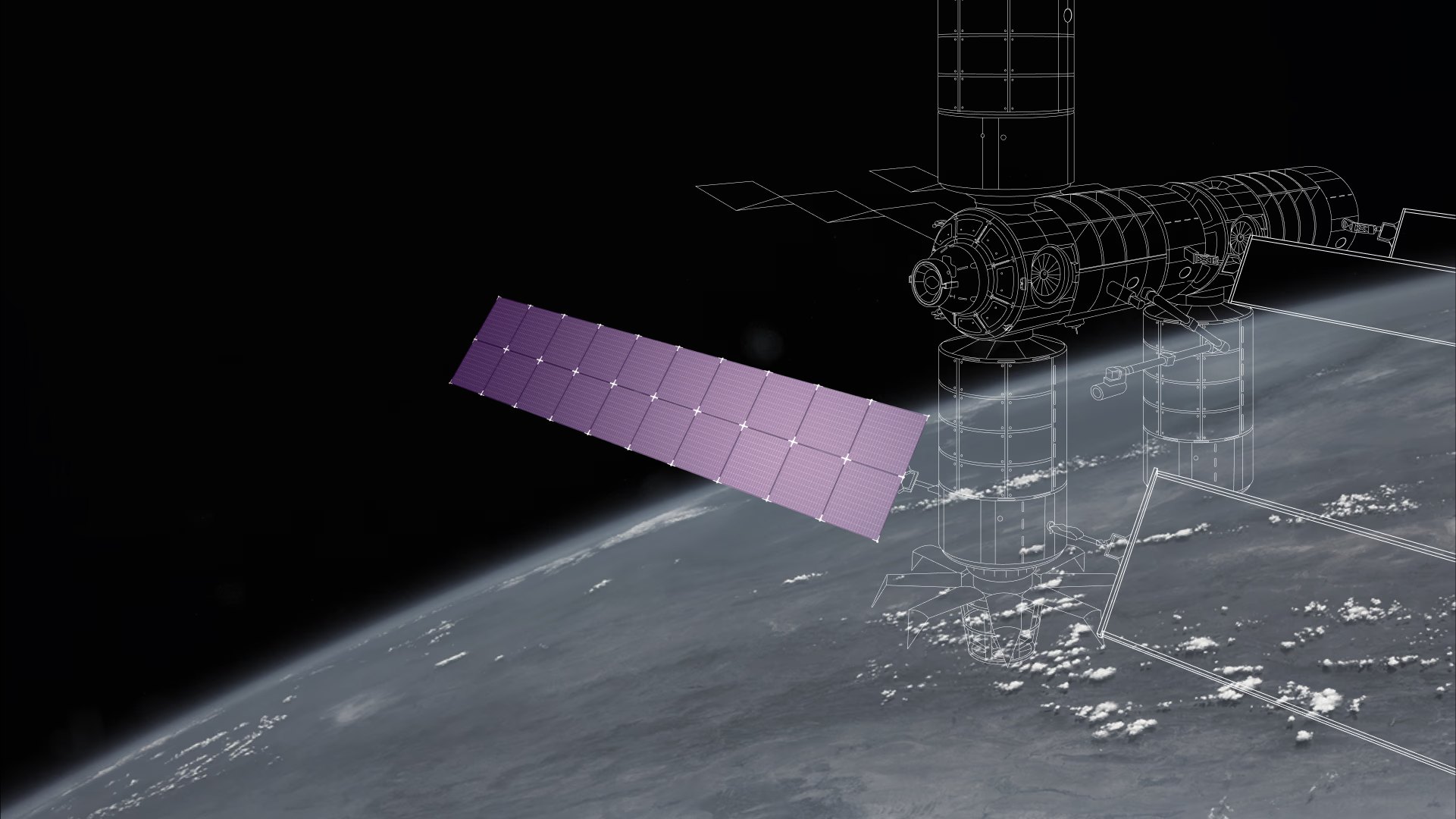
Sophia Space just secured $10 million in seed funding to develop modular computing tiles that will form the backbone of orbital data centers by the 2030s. The Pasadena-based startup, founded by former NASA JPL fellow Dr. Leon Alkalai, joins a rapidly growing sector where space infrastructure investment is reshaping how we think about computing power. This Sophia Space $10M funding signals investor confidence in solving one of space computing’s toughest challenges: keeping high-powered processors cool in the vacuum of space.
The space economy growth is exploding. Companies like SpaceX, Blue Origin, and Google are racing to establish data centers beyond Earth, driven by insatiable demand for AI processing power and the limitations of terrestrial infrastructure. While SpaceX filed plans for up to one million satellites and Google announced Project Suncatcher, Sophia Space is taking a different approach with its TILE platform—a one-meter-square, one-centimeter-thick compute module that uses proprietary passive cooling technology.
Investment in this sector tells a compelling story. Alpha Funds, KDDI Green Partners Fund, and Unlock Venture Partners led the round, building on Sophia’s earlier $3.5 million pre-seed raise in 2025. The space tech startups funding landscape has shifted dramatically, with investors prioritizing companies that solve real engineering constraints rather than chasing speculative moonshots. Sophia Space orbital data centers represent exactly this pragmatic approach.
Understanding Sophia Space’s Vision for In-Orbit Data Processing
The Sophia Space mission centers on a radical idea: processing data where it’s generated rather than beaming it back to Earth. Satellites today collect terabytes of information daily, but most gets discarded because current systems lack sufficient in-orbit data processing capabilities. Earth observation satellites alone generate approximately 100 terabytes of data per day, creating massive bottlenecks at ground stations.
Rob DeMillo, Sophia’s CEO and co-founder, put it bluntly. The satellite industry produces incredible amounts of sensor data that gets thrown away because computing capacity doesn’t exist in orbit. This space-based data storage problem grows worse as satellite constellations multiply and AI applications demand real-time analysis.
Sophia’s TILE architecture directly addresses this challenge. Each TILE hosts four Nvidia Jetson Orin processors and integrates solar arrays on one side for power generation. The secret sauce lies in thermal management—a heat spreader pressed against an aluminum alloy radiator that expels excess heat directly into space’s cold vacuum. This passive cooling method eliminates the need for active cooling systems that would consume precious power and add mechanical complexity.
The orbital data center technology doesn’t operate in isolation. Sophia developed the Sophia Orbital Operating System (SOOS), an AI-assisted platform that distributes processing power and manages heat across multiple tiles. SOOS handles firmware upgrades, security patches, and all IT functions autonomously—critical when manual servicing remains impossible in space.
How Sophia Space Orbital Data Centers Work
The TILE platform represents a departure from traditional satellite computing. Most space computers use radiation-hardened components based on decade-old technology. These systems run slowly and cost enormous sums to develop. Sophia Space chose a different path: commercial off-the-shelf hardware protected by innovative thermal design.
Each TILE measures just one square meter but packs significant computing punch. Four enterprise-grade servers sit in a patented array optimized for both solar power collection and heat dissipation. The non-parasitic design means TILEs don’t draw energy from host satellites, making them ideal for add-on installations.
Two deployment models offer flexibility. TILEs can attach to existing satellites via armatures, or they can fly as free-standing companion satellites connected through optical communication links. This modularity allows satellite operators to add computing capacity without redesigning entire spacecraft.
The long-term vision scales dramatically. Sophia aims to deploy thousands of tiles in modular arrays delivering up to one megawatt of processing power. A 2,500-TILE array could fit inside a SpaceX Falcon 9 fairing thanks to foldable design. These massive structures would handle edge computing for satellite networks collectively capturing terabytes daily, eventually augmenting terrestrial data capacity.
Benefits of Orbital Data Centers Over Terrestrial Infrastructure
The case for moving computing off-planet rests on several compelling advantages. Power stands out as the primary driver. Solar irradiance in Earth orbit runs 36% higher than on the surface, and certain sun-synchronous orbits provide constant sunlight. No weather, clouds, or night cycles interrupt energy generation.
Terrestrial data centers face mounting challenges. They consume massive amounts of electricity, occupy vast land areas, and require enormous water volumes for cooling. Data centers will account for 9% of total U.S. energy consumption by 2030, according to the Electric Power Research Institute. This energy appetite is driving tech giants to explore nuclear power and other alternatives.
Space-based data storage eliminates these constraints. The vacuum of space offers unlimited cooling capacity through radiative heat dissipation. No land acquisition, zoning approvals, or environmental impact studies delay deployment. Latency remains comparable to terrestrial systems—approximately 20 milliseconds round-trip from low Earth orbit.
The benefits of orbital data centers extend beyond resource efficiency. Data processed in orbit reduces bandwidth demands for downlinks. Instead of transmitting raw sensor data, satellites can send processed insights—compressed images with identified features, detected anomalies, or analyzed patterns. This approach proves especially valuable for national security applications requiring real-time threat detection and response.
Physical isolation provides inherent security advantages. Orbital infrastructure operates beyond national jurisdictions, offering options for sovereign data management. Cyberattacks targeting terrestrial infrastructure can’t physically reach space-based systems. Latency between orbit and ground can even act as a buffer detecting potential security threats.
Challenges Orbital Data Centers Must Overcome
Despite these advantages, significant hurdles remain. Cooling represents the most immediate technical challenge. Nvidia CEO Jensen Huang noted that space’s vacuum means no airflow, leaving conduction as the only heat dissipation method. Traditional approaches use large radiators, but these become impractical at data center scale.
Launch costs still limit widespread deployment. While SpaceX and other providers have dramatically reduced prices, lifting thousands of satellites remains expensive. Current estimates suggest orbital data centers cost roughly three times more per watt than terrestrial facilities, though advocates argue this gap will close as launch costs continue falling.
Maintenance poses another significant obstacle. Terrestrial data centers replace failed components routinely. In orbit, broken hardware means mission over unless expensive servicing missions intervene. This reality demands extreme reliability and redundancy, driving up costs and complexity. The challenges orbital data centers face include radiation hardening, micrometeorite protection, and years-long operational lifespans without human intervention.
Power generation at required scales remains unproven. A one-gigawatt orbital array would require approximately one square mile of solar panels, even at 30% cell efficiency. Deploying and maintaining such massive structures pushes current capabilities. Battery storage for eclipse periods adds weight and complexity.
Space debris and the Kessler syndrome risk grow with each satellite launched. Some orbits could become unusable if collision cascades begin. Regulatory frameworks struggle to keep pace with deployment rates, and international coordination remains incomplete. Data sovereignty questions multiply when critical infrastructure orbits beyond any nation’s direct control.
The Sophia Space Business Model and Go-to-Market Strategy
Sophia Space isn’t waiting for massive constellations to prove its technology. The near-term Sophia Space business model focuses on selling individual TILEs to satellite operators needing in-orbit computing. The company plans to build its first two TILEs and begin ground testing in 2026.
A software demonstration mission in space is scheduled for later this year. The first complete TILE orbital demonstration will fly in late 2027 or early 2028. This staged approach allows validation of thermal management, power systems, and autonomous operations before committing to large-scale production.
Target customers span multiple high-value segments. Earth observation satellites drowning in sensor data represent immediate opportunities. These systems could process imagery in real-time, identifying wildfires, tracking ships, or monitoring infrastructure without overwhelming ground stations. The Pentagon’s missile warning and tracking systems, which are receiving billions in investment, need distributed computing for rapid threat assessment.
Communications networks add another revenue stream. As satellite constellations grow more sophisticated, they require onboard intelligence for routing, resource allocation, and autonomous decision-making. Edge computing in space enables these capabilities while reducing dependence on ground-based control systems.
CEO Rob DeMillo emphasized that the seed funding enables building infrastructure for the next era of space-based AI and data processing. The company believes it can eventually build, operate, and launch each satellite for $2 million or less—a price point that makes commercial viability realistic.
Competitive Landscape: Sophia Space vs. Other Players
Sophia Space enters a crowded but differentiated market. Multiple companies pursue space computing, but approaches vary significantly. Starcloud focuses on GPU clusters for AI training, targeting larger workloads than Sophia’s edge computing emphasis. Lonestar Data Holdings concentrates on data storage rather than processing, deploying systems to the moon and Lagrange points.
Axiom Space takes an integrated approach, developing orbital data centers alongside its commercial space station. Axiom launched two ODC nodes to low Earth orbit in January 2026, providing cloud computing services to satellites, constellations, and other spacecraft. Their focus on government and defense customers complements commercial offerings.
The major tech giants bring different strategies. SpaceX’s million-satellite proposal combines launch capability with computing infrastructure, creating powerful vertical integration. Google’s Project Suncatcher aims for dedicated AI data centers in orbit. Blue Origin’s TeraWave constellation prioritizes high-bandwidth connectivity between terrestrial data centers rather than orbital processing.
Sophia’s differentiation lies in its modular TILE architecture and passive cooling innovation. While competitors propose massive monolithic structures or focus on connectivity, Sophia offers scalable compute modules that satellite operators can integrate into existing systems. This incremental approach reduces risk and accelerates market entry.
The future of space computing likely includes multiple winners serving different niches. Massive AI training clusters, secure government data centers, edge computing for satellite networks, and specialized scientific applications each demand tailored solutions. Sophia Space orbital data centers target the edge computing segment where low latency, distributed intelligence, and bandwidth efficiency matter most.
Investment Trends in Space Tech Startups Funding
The Sophia Space $10M funding fits broader patterns in space infrastructure investment. Commercial space investment in 2026 increasingly focuses on infrastructure, security, and data-driven platforms rather than speculative ventures. Investors demand proof of utility and clear paths to revenue.
Recent space tech startups funding rounds demonstrate this shift. Tomorrow.io raised $175 million for AI-powered weather satellites. Hydrosat secured $60 million for thermal imaging constellations monitoring climate risks. Northwood Space obtained $100 million plus a $49 million Space Force contract for resilient connectivity infrastructure. These deals prioritize companies solving specific problems for paying customers.
Government contracts drive significant activity. Space agencies worldwide recognize that commercial providers can deliver capabilities faster and cheaper than traditional approaches. NASA’s Commercial LEO Development Program supports Axiom Station, while defense departments fund dual-use technologies applicable to national security.
The space economy growth trajectory remains steep. Goldman Sachs projects the space market will reach multiple hundreds of billions annually as launch costs continue falling and applications multiply. Orbital data centers represent one piece of this expanding ecosystem alongside communications, Earth observation, manufacturing, and eventually space tourism.
Investor appetite for orbital computing specifically has surged. The narrative connecting space infrastructure to AI demand resonates powerfully. If compute in orbit becomes credible, markets will bid up the entire enabling stack—launch services, space-grade power systems, thermal management, optical communications, and satellite platforms.
What This Means for the Future of Space Computing
The race to establish satellite data centers is accelerating. Within the next few years, multiple demonstration missions will prove technical feasibility. Commercial services offering in-orbit data processing will begin operations. Early adopters—likely government agencies and large corporations—will validate use cases and drive initial revenue.
Data centers beyond Earth could become cost-competitive with terrestrial facilities by the mid-2030s if launch costs continue their downward trajectory and thermal management challenges get solved. SpaceX’s Starship, if it achieves full reusability, fundamentally changes economics by potentially reducing launch costs to $200 per kilogram or less.
The timeline for mainstream adoption remains debatable. Optimists like Elon Musk predict orbital computing becomes economically compelling within two to three years. Skeptics argue meaningful scale won’t arrive until the late 2030s. Most analysts expect the 2030s to bring gradual deployment as technology matures and costs decline.
Regulatory frameworks must evolve alongside technology. International coordination on orbital traffic management, spectrum allocation, and data sovereignty will shape how quickly the industry can scale. Countries that establish clear, supportive regulations while addressing legitimate concerns about space debris and security will attract investment and leadership positions.
The data centers beyond Earth concept extends beyond commercial applications. Future deep-space missions to Mars and beyond will require autonomous computing far from Earth. Lunar bases and orbital stations will need robust data processing and storage. The infrastructure being developed today for near-Earth applications will enable humanity’s expansion throughout the solar system.
Sophia Space’s Path Forward
The $10 million seed round provides runway for critical milestones. Sophia will use funds to build its first two TILEs, begin ground testing, and prepare for orbital demonstrations. Success in these validation missions will position the company for Series A funding and commercial contracts with satellite operators.
Partnerships will prove essential. Sophia plans to work with satellite manufacturers, launch providers, and potential customers to integrate TILE technology into upcoming missions. The company needs to demonstrate that its thermal management approach works as advertised and that autonomous operations through SOOS deliver on promises.
Competition will intensify. As more players enter the orbital computing market and major tech companies commit resources, differentiation becomes crucial. Sophia’s focus on modular edge computing offers defensible positioning, but execution matters more than strategy. Delivering working systems on schedule and proving economic viability will separate winners from also-rans.
The broader question isn’t whether data centers will move to space, but how quickly and in what form. Multiple approaches will coexist—massive centralized facilities for AI training, distributed edge computing networks for satellite support, specialized systems for defense applications, and unique platforms for scientific research. The orbital data center technology landscape will diversify as use cases clarify and economics improve.
Sophia Space’s modular TILE platform represents one compelling vision for this future. By solving thermal management challenges, enabling autonomous operations, and offering flexible deployment options, the company addresses real customer needs. Whether this approach wins significant market share depends on execution over the next few years.
The space economy stands at an inflection point. Launch costs have fallen enough to make new applications viable. AI and sensor technology create enormous computing demands. Power and cooling constraints limit terrestrial expansion. These forces combine to push computing infrastructure beyond Earth’s surface. Sophia Space $10M funding represents a bet that this transition is inevitable—and that the company’s technology will play a significant role in shaping how it unfolds.
Frequently Asked Questions
What is Sophia Space and what do they do?
Sophia Space is a Pasadena-based startup founded by former NASA JPL fellow Dr. Leon Alkalai that develops modular computing tiles called TILEs for orbital data centers. These one-meter-square modules integrate solar power generation, passive cooling technology, and commercial processors to provide computing capacity in space for satellite operators, defense applications, and future large-scale orbital data infrastructure.
How much funding did Sophia Space raise and who invested?
Sophia Space raised $10 million in seed funding led by Alpha Funds, KDDI Green Partners Fund, and Unlock Venture Partners. This follows a $3.5 million pre-seed round in 2025, bringing total funding to $13.5 million. The company will use the capital to build its first two TILE prototypes, conduct ground testing in 2026, and prepare for orbital demonstrations in late 2027 or early 2028.
What are the main benefits of orbital data centers compared to terrestrial facilities?
Orbital data centers offer several advantages including access to constant solar energy (36% higher irradiance than Earth’s surface), unlimited cooling capacity through radiative heat dissipation in space’s vacuum, elimination of land and water resource requirements, reduced bandwidth needs by processing data where it’s collected, physical security through isolation from terrestrial threats, and the ability to provide real-time processing for satellite networks without ground station bottlenecks.
What are the biggest challenges facing orbital data center technology?
The primary challenges include thermal management in space’s vacuum environment where no airflow exists for cooling, high launch costs that currently make orbital systems three times more expensive per watt than terrestrial alternatives, inability to perform manual maintenance or repairs on failed hardware, power generation at required gigawatt scales, radiation protection, micrometeorite shielding, and space debris concerns including potential Kessler syndrome cascades that could make orbits unusable.
Who are Sophia Space’s main competitors in the orbital computing market?
Key competitors include Starcloud (focusing on GPU clusters for AI training), Lonestar Data Holdings (concentrating on lunar and Lagrange point data storage), Axiom Space (developing integrated orbital data centers alongside its commercial space station), and major tech companies like SpaceX (planning million-satellite constellations), Google (Project Suncatcher for AI data centers), Blue Origin (TeraWave high-bandwidth connectivity), and potentially Amazon through Project Kuiper. Each company targets different segments of the emerging space computing market.
When will Sophia Space’s orbital data centers become operational?
Sophia Space plans to build its first two TILE prototypes and begin ground testing in 2026. A software demonstration mission in space is scheduled for later in 2026, with the first complete TILE orbital demonstration expected to fly in late 2027 or early 2028. Near-term strategy focuses on selling individual TILEs to satellite operators for edge computing applications, while the long-term vision of deploying thousands of tiles in modular arrays to build full-scale orbital data centers targets the 2030s.
What makes Sophia Space’s TILE technology unique?
TILE technology is unique because of its proprietary passive cooling system that uses a heat spreader pressed against an aluminum alloy radiator to expel heat directly into space without active cooling mechanisms. Each one-meter-square, one-centimeter-thick TILE integrates solar arrays for power generation, hosts four Nvidia Jetson Orin processors, operates non-parasitically (without drawing power from host satellites), and can be deployed either as add-on systems connected via armatures or as free-flying companion satellites with optical communication links. The Sophia Orbital Operating System (SOOS) provides AI-assisted autonomous management of processing distribution, thermal control, firmware updates, and security patches.
