

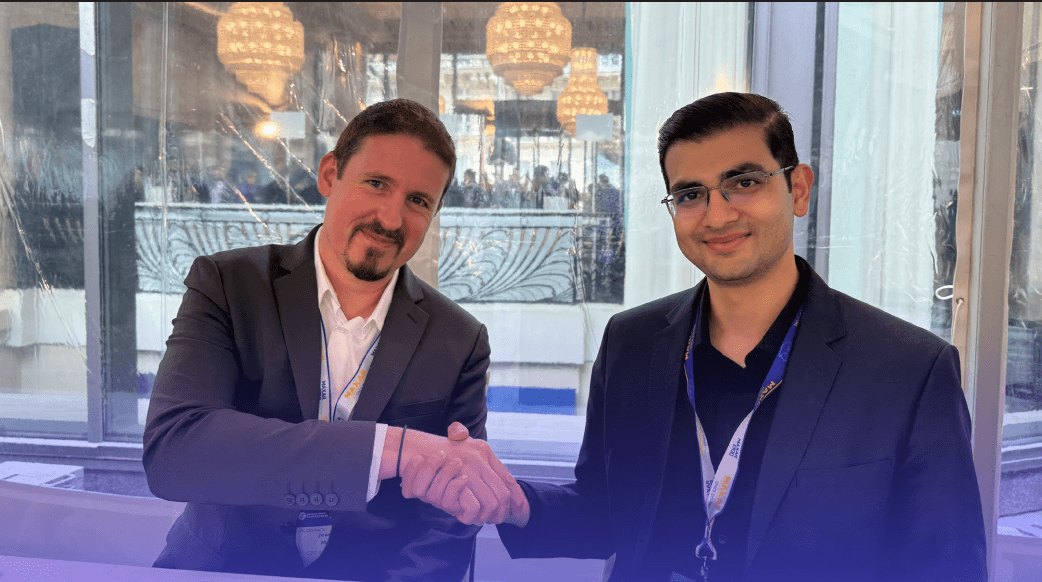
The global small satellite market reached $4.1 billion in 2025, and electric propulsion systems now power over 60% of new commercial satellite constellations. Pixxel, an Indian space tech startup building the world’s highest-resolution hyperspectral imaging constellation, just announced a strategic partnership with French propulsion manufacturer Exotrail to equip its next-generation satellites with cutting-edge thruster technology.
This collaboration marks a significant milestone in the India France space tech partnership. It demonstrates how emerging space nations are leveraging international cooperation to build competitive satellite infrastructure. The Pixxel Exotrail thrusters will enable unprecedented orbital maneuvering capabilities for Earth observation missions.
Why Satellite Propulsion Matters for Earth Observation
Traditional satellites drift in fixed orbits. They capture images only when passing over target areas. Modern constellations need agility. Electric propulsion systems allow satellites to adjust positions, extend mission lifetimes, and eventually de-orbit safely.
Pixxel’s hyperspectral imaging constellation requires precise positioning. The startup plans to deploy dozens of satellites that detect environmental changes invisible to human eyes. These spacecraft will monitor crop health, track pollution, identify mineral deposits, and assess infrastructure. Such missions demand sophisticated Earth observation satellite mobility.
The Exotrail spaceware systems provide exactly this capability. Their Hall-Effect thrusters small satellites use deliver efficient, reliable propulsion in compact packages. This technology transforms how small satellites operate in orbit.
Understanding Exotrail’s Hall-Effect Thruster Technology
Hall-Effect thrusters represent a proven electric propulsion technology. They ionize propellant gas using electromagnetic fields. These ions accelerate through an electric potential, generating thrust. The process delivers ten times more efficiency than traditional chemical rockets.
Exotrail specializes in miniaturized versions for small satellites. Their thrusters weigh just a few kilograms yet provide months of operational capability. This efficiency matters tremendously for commercial operators managing tight budgets.
The new space propulsion technology enables several critical functions:
- Orbit raising: Moving satellites from deployment orbits to operational altitudes
- Constellation phasing: Positioning multiple satellites for optimal coverage
- Collision avoidance: Dodging space debris and other spacecraft
- End-of-life disposal: Responsible de-orbiting after mission completion
For Pixxel’s constellation, satellite orbital maneuvering becomes a competitive advantage. The startup can reposition assets to capture time-sensitive imagery. Competitors with fixed orbits cannot match this flexibility.
Pixxel’s Hyperspectral Imaging Ambitions
Pixxel isn’t building ordinary Earth observation satellites. Hyperspectral sensors capture hundreds of spectral bands, far beyond the red-green-blue channels in standard cameras. This capability reveals chemical compositions, vegetation stress, water quality, and other invisible phenomena.
The startup’s hyperspectral imaging constellation will provide unprecedented environmental monitoring. Farmers can detect crop diseases days before visible symptoms appear. Mining companies can identify ore deposits from space. Governments can track illegal pollution discharge.
However, hyperspectral sensors generate massive data volumes. Satellites must position themselves precisely over ground stations for data downlink. The electric propulsion for Pixxel satellites enables this positioning flexibility.
Traditional Earth observation companies launch satellites into sun-synchronous orbits. They capture images at the same local time daily. Pixxel wants more versatility. Their Pixxel satellite constellation propulsion system allows dynamic orbit adjustments based on customer needs.
The Strategic Value of the India France Space Tech Partnership
This collaboration showcases growing international cooperation in commercial space. France developed robust space infrastructure over decades. India emerged as a cost-effective launch and satellite manufacturing hub. Together, they create synergies neither achieves alone.
Exotrail brings mature propulsion technology proven on multiple missions. French space companies lead European efforts in electric propulsion, with decades of research and flight heritage. Pixxel gains access to this expertise without developing thrusters internally.
For Exotrail, Pixxel represents a major customer in the booming Asian satellite market. India’s space sector attracts billions in private investment. The country launched over 400 foreign satellites, demonstrating manufacturing and operational capabilities. Partnerships like this position Exotrail for future growth.
The India France space tech partnership extends beyond this single deal. Both nations collaborate on climate monitoring, deep space exploration, and launch vehicle technology. Commercial partnerships strengthen governmental relationships and create economic opportunities.
How Electric Propulsion for Pixxel Satellites Works
The Pixxel Exotrail thrusters use xenon gas as propellant. Xenon offers high atomic mass and remains chemically inert. These properties make it ideal for electric propulsion applications.
Here’s the operational process:
- Propellant injection: Xenon flows into the thruster chamber at controlled rates
- Ionization: Electrons strip from xenon atoms, creating positively charged ions
- Acceleration: Electric fields accelerate ions to velocities exceeding 15,000 meters per second
- Thrust generation: Expelled ions produce reaction force, propelling the satellite
- Neutralization: An electron emitter prevents spacecraft charging
This process consumes minimal propellant compared to chemical systems. A few kilograms of xenon enables months of maneuvering. Chemical thrusters would require hundreds of kilograms for equivalent capability.
The efficiency matters especially for small satellites. Launch costs depend on mass. Lower propellant requirements mean more room for imaging sensors and electronics. This optimization improves the business case for Earth observation constellations.
Satellite Orbital Maneuvering Capabilities
The Pixxel Exotrail thrusters enable several sophisticated maneuvers. These capabilities separate advanced constellations from basic satellite systems.
Station keeping maintains satellites in designated orbital positions. Atmospheric drag, gravitational perturbations, and solar pressure gradually alter orbits. Regular thruster firings counteract these effects. Without active station keeping, satellites drift out of position within weeks.
Plane changes rotate orbital inclination. This complex maneuver requires significant energy but enables new coverage patterns. Pixxel can adjust satellite positions to cover emerging areas of customer interest.
Formation flying coordinates multiple satellites in precise geometric patterns. This technique improves imaging resolution and enables stereo vision. The Pixxel satellite constellation propulsion system will synchronize dozens of spacecraft.
Collision avoidance has become critical as orbital congestion increases. Over 36,000 tracked debris objects threaten satellites, and millions more pieces remain untracked. Automated systems detect potential collisions days in advance. Thrusters execute avoidance maneuvers without ground intervention.
De-orbiting Solutions for Satellites and Space Sustainability
Space debris represents one of humanity’s fastest-growing environmental challenges. Defunct satellites and rocket stages accumulate in valuable orbits. Collisions create thousands of fragments, triggering cascading destruction scenarios.
Responsible satellite operators must plan for end-of-life disposal. International guidelines require removing satellites from protected orbits within 25 years of mission completion. De-orbiting solutions for satellites have become mandatory, not optional.
The Exotrail spaceware systems provide efficient de-orbit capabilities. After completing their missions, Pixxel satellites will fire thrusters to lower their orbits. Atmospheric drag increases at lower altitudes. Within months, satellites re-enter and burn up safely.
This capability contrasts sharply with older satellites lacking propulsion. Those spacecraft become permanent debris, threatening active missions for decades. New space propulsion technology transforms satellites from potential hazards into responsible infrastructure.
Regulators increasingly require de-orbit demonstrations before approving satellite licenses. The Pixxel Exotrail thrusters help the startup meet these requirements while maintaining good standing with international space agencies.
Technical Specifications and Performance Metrics
While companies keep exact specifications confidential, Hall-Effect thrusters small satellites typically deliver impressive performance. Industry-standard systems provide these characteristics:
- Thrust range: 1-20 millinewtons, adjustable based on mission requirements
- Specific impulse: 1,500-3,000 seconds, indicating excellent propellant efficiency
- Power consumption: 50-500 watts, easily supplied by solar panels
- Operational lifetime: 5,000-10,000 hours of cumulative firing time
- Pointing accuracy: Sub-degree precision for trajectory control
These metrics enable the sophisticated Earth observation satellite mobility that Pixxel’s business model requires. The startup can reposition satellites multiple times daily without depleting propellant reserves.
Reliability matters tremendously for commercial operators. Failed thrusters doom expensive satellites to useless orbits. Exotrail’s systems have demonstrated exceptional reliability across multiple customer missions, reducing insurance costs and operational risks.
Market Implications for Commercial Space
This partnership signals important trends in the satellite industry. Vertical integration no longer makes economic sense for most operators. Specialized suppliers provide superior components at lower costs than internal development programs.
Pixxel focuses on hyperspectral sensors and data analytics—their core competitive advantages. They source thrusters, solar panels, and communication systems from best-in-class vendors. This approach accelerates development timelines and reduces capital requirements.
The electric propulsion for Pixxel satellites market continues expanding rapidly. Analysts project the small satellite propulsion sector will exceed $1.2 billion annually by 2030. Exotrail positions itself prominently in this growth market.
Competition intensifies as new players enter the field. American, European, and Asian companies all develop electric propulsion systems. However, flight-proven technology maintains significant advantages. Customers prefer suppliers with successful orbital demonstrations over untested alternatives.
Future Applications Beyond Earth Observation
While Pixxel focuses on Earth imaging, the new space propulsion technology enables numerous other applications. Communication constellations use similar thrusters for station keeping. Scientific satellites employ electric propulsion for planetary missions. Even space tugs leverage this technology for orbital logistics.
The modular design of Exotrail spaceware systems allows customization for diverse missions. Manufacturers can select thrust levels, propellant capacities, and control algorithms matching specific requirements. This flexibility expands addressable markets beyond any single application.
Deep space missions increasingly adopt electric propulsion. NASA’s Psyche mission uses Hall-Effect thrusters to reach a metal-rich asteroid. The technology proved capable of multi-year interplanetary journeys. Commercial operators will eventually extend these capabilities to lunar logistics and Mars cargo delivery.
Challenges and Technical Considerations
Electric propulsion systems face several engineering challenges. Plasma erosion gradually degrades thruster components. Propellant management requires precise flow control. Power systems must supply stable high-voltage electricity.
The Pixxel Exotrail thrusters incorporate design features addressing these issues. Advanced materials resist plasma damage for extended lifetimes. Pressure regulators maintain consistent xenon flow rates. Dedicated power processing units condition electricity for thruster operation.
Integration complexity presents another challenge. Thrusters must mount securely to satellite structures. Plume exhaust cannot contaminate sensitive sensors. Electromagnetic interference must not disrupt communications or guidance systems. Successful integration requires careful design coordination between Pixxel and Exotrail engineering teams.
Testing and qualification demand extensive resources. Thrusters undergo vacuum chamber testing simulating space conditions. Vibration testing ensures survival during launch. Thermal cycling validates performance across extreme temperature ranges. This qualification process typically requires 18-24 months before flight approval.
Competitive Landscape and Market Position
Several companies compete in the small satellite propulsion market. American firms Busek, Aerojet Rocketdyne, and Phase Four offer various technologies. European competitors include ThrustMe and Enpulsion. Asian manufacturers are emerging rapidly.
Exotrail differentiates through integrated software systems. Their spaceware platform combines thrusters with mission planning tools and autonomous operations. This end-to-end approach simplifies satellite operations and reduces ground segment costs.
For Pixxel, selecting proven suppliers accelerates time to market. The startup competes against established Earth observation companies with decades of experience. Rapid constellation deployment becomes a strategic imperative. Reliable propulsion systems support aggressive launch schedules.
The hyperspectral imaging constellation market remains relatively uncrowded. Few operators possess the sensor technology and data processing capabilities Pixxel developed. However, competition will intensify as the market matures. Operational advantages from superior satellite orbital maneuvering help maintain leadership positions.
Conclusion: Advancing the New Space Economy
The partnership between Pixxel and Exotrail exemplifies how collaboration drives the new space economy forward. Indian innovation in sensors combines with French expertise in propulsion, creating capabilities neither company could achieve independently. This international cooperation accelerates technological progress while reducing development costs.
The Pixxel Exotrail thrusters enable unprecedented flexibility for Earth observation missions. Customers gain access to high-resolution hyperspectral data captured exactly when and where they need it. This capability transforms environmental monitoring, resource management, and infrastructure planning.
As satellite constellations proliferate, responsible space operations become increasingly important. Electric propulsion systems supporting de-orbiting solutions for satellites help ensure long-term orbital sustainability. Companies that embrace these technologies position themselves as responsible stewards of the space environment.
The commercial space industry stands at an inflection point. Launch costs continue declining. Miniaturized components enable capable small satellites. Global connectivity creates demand for satellite services. Partnerships like this Pixxel-Exotrail collaboration demonstrate how innovative companies capitalize on these trends.
Are you interested in leveraging satellite data for your business? Consider how hyperspectral imaging might reveal insights invisible to traditional sensors. The new space propulsion technology powering these constellations makes previously impossible applications suddenly feasible. Explore opportunities while this market still offers first-mover advantages.
Frequently Asked Questions
What are Pixxel Exotrail thrusters and why are they important?
Pixxel Exotrail thrusters are electric Hall-Effect propulsion systems that enable precise satellite orbital maneuvering. They allow Pixxel’s hyperspectral imaging satellites to adjust positions, avoid collisions, and safely de-orbit after missions, providing critical flexibility for Earth observation operations.
How does electric propulsion for Pixxel satellites differ from chemical propulsion?
Electric propulsion delivers ten times more efficiency than chemical rockets by ionizing propellant and accelerating ions through electromagnetic fields. This allows Pixxel satellites to maneuver for months using just a few kilograms of xenon, compared to hundreds of kilograms required by chemical systems.
What advantages do Hall-Effect thrusters small satellites provide?
Hall-Effect thrusters offer exceptional propellant efficiency, compact size, long operational lifetimes, and precise control. These characteristics enable extended missions, complex orbital maneuvers, constellation coordination, and responsible end-of-life disposal for small satellite operators like Pixxel.
How does the India France space tech partnership benefit both companies?
The partnership allows Pixxel to access mature French propulsion technology without internal development costs, while Exotrail gains a major customer in Asia’s growing satellite market. This collaboration combines Indian sensor innovation with French propulsion expertise to create competitive advantages neither achieves alone.
What is satellite orbital maneuvering and why does Pixxel need it?
Satellite orbital maneuvering includes station keeping, plane changes, formation flying, and collision avoidance. Pixxel needs these capabilities to reposition its hyperspectral imaging satellites over customer target areas, optimize constellation coverage patterns, and respond to time-sensitive imaging requests that competitors with fixed orbits cannot match.
How do de-orbiting solutions for satellites address space debris concerns?
De-orbiting solutions use thrusters to lower satellite altitudes at mission end, where atmospheric drag causes controlled re-entry and burnup. This prevents defunct satellites from becoming permanent space debris that threatens active missions, meeting international guidelines requiring orbital clearance within 25 years.
What makes Pixxel’s hyperspectral imaging constellation unique?
Pixxel’s constellation captures hundreds of spectral bands beyond standard cameras, revealing chemical compositions, vegetation health, and water quality invisible to normal sensors. Combined with electric propulsion enabling flexible positioning, this provides unprecedented environmental monitoring capabilities for agriculture, mining, and government applications.