

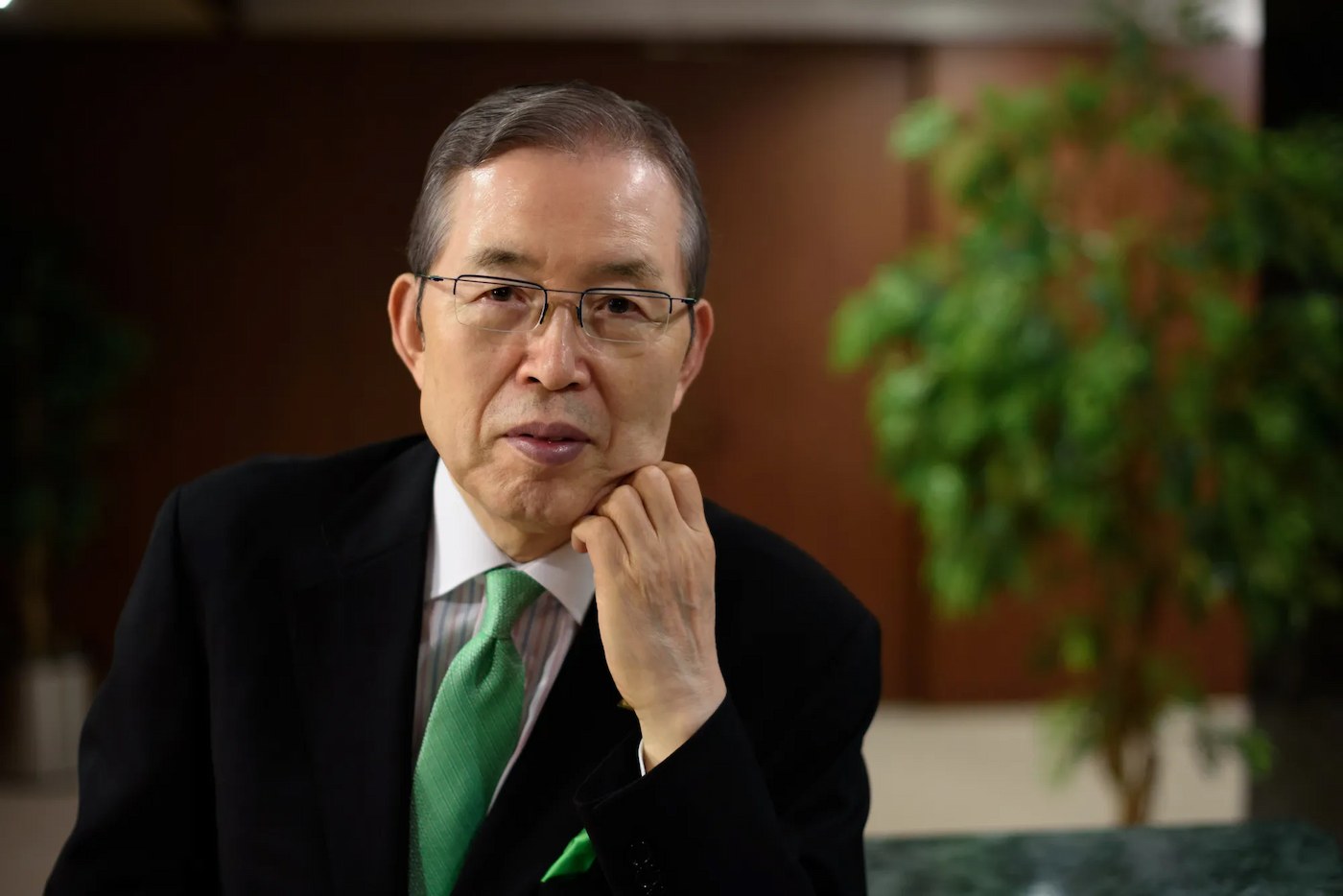
Nidec Corp. founder Shigenobu Nagamori voluntarily resigned from his position as chairman of the board Friday, following the discovery of accounting issues that have severely damaged the reputation of the Japanese electric motor manufacturer. This dramatic move represents the culmination of years of governance failures that have rocked one of Japan’s most influential industrial companies.
The 81-year-old business legend stepped down voluntarily, with current CEO Mitsuya Kishida taking his place as chairman while Nagamori assumes the role of non-fulltime chairman emeritus. However, this leadership transition comes at a time when the Nidec founder steps down under extraordinary pressure from mounting scandals that threaten the very foundation of the company he built.
The Accounting Crisis That Triggered the Resignation
The latest crisis began with a payment of approximately 200 million yen ($1.4 million) at a Chinese subsidiary in September 2024, which triggered an internal investigation that uncovered documents suggesting improper accounting practices involving senior management across multiple Nidec entities. The revelations were far more damaging than initially anticipated.
Since June, Nidec has repeatedly disclosed accounting issues spanning subsidiaries in Italy, Switzerland, and China, as well as its car inverter business, creating audit delays that have bogged down the company’s financial reporting processes. The scope of these problems painted a troubling picture of systemic control failures.
The probe into Nidec Techno Motor (Zhejiang) Co., Ltd. revealed broader concerns about accounting irregularities, including improper timing of asset write-downs, with initial investigations suggesting potential management involvement across multiple business entities. These findings prompted the establishment of an independent third-party committee to investigate the full extent of the misconduct.
A Pattern of Governance Failures
The Nidec founder steps down against the backdrop of recurring governance issues that extend far beyond the recent Chinese subsidiary scandal. In May 2024, the company revised down two years of operating profit by approximately $67 million after discovering inflated sales records at a subsidiary, and just three months prior, postponed its annual report due to potential customs declaration errors at an Italian subsidiary.
Earlier governance lapses included improper dividend payments and share repurchases that exceeded legal limits under Japanese law, revealing systemic issues such as inadequate employee training and weak internal coordination across the organization. These repeated violations demonstrated a concerning pattern of oversight failures.
The company’s troubles date back even further, with short-seller Muddy Waters accusing Nidec of aggressive accounting practices in 2016, though the company dismissed those claims at the time. The current crisis has vindicated many of those early concerns about the company’s financial practices.
Market Impact and Financial Consequences
The financial markets have responded harshly to news of the Nidec founder steps down decision and the underlying scandals. The stock has been removed from the benchmark Nikkei 225 index, with shares down 30% this year as investor confidence has evaporated. The company’s reputation has suffered irreparable damage in key financial centers.
The Tokyo Stock Exchange has placed Nidec on notice for potential delisting unless it can address corporate governance concerns, while Moody’s Ratings downgraded the company with warnings that further downgrades remain possible. These regulatory actions have intensified pressure on company leadership to implement comprehensive reforms.
The stock price plummeted 12% in May 2025 following initial revelations, followed by a devastating 22% single-day drop when the Chinese subsidiary investigation was announced, causing the price-to-earnings ratio to collapse from 43.7 in 2023 to just 10.6 by September 2025.
The Founder’s Troubled Legacy
Born in 1944, Nagamori’s aggressive business tactics helped transform Nidec from humble beginnings into a $15 billion global enterprise with components used across consumer electronics, automotive, and data center markets. His entrepreneurial vision created tremendous value over several decades.
Yet his growth-at-all-costs approach is now under intense scrutiny following the growing number of suspected accounting irregularities, which have triggered filing delays, credit downgrades, and potential delisting risks in Tokyo. The very strategies that built the company may have contributed to its current crisis.
The decline was precipitated by a decade-long struggle to secure proper succession planning, with Nagamori often openly criticizing leadership candidates, including personally recruited executives, before retaking control in 2022 just one year after relinquishing leadership to Jun Seki, a former Nissan executive who quickly departed.
Leadership Transition and Cultural Challenges
CEO Kishida acknowledged that a corporate culture emphasizing intense pressure on business divisions to deliver profits may have contributed to the accounting irregularities. This admission highlights the cultural transformation needed to restore trust and ethical practices.
President and CEO Mitsuya Kishida will consolidate leadership as both CEO and chairman, representing Nidec’s transition away from founder-led governance toward more traditional corporate structures. This represents a significant shift for a company that has been dominated by its founder’s personality and vision.
The Nidec founder steps down at a critical juncture when internal and external investigations into potential accounting issues continue, including probes into possible senior management involvement, with the scandal having already toppled the Kyoto-based company’s position as a major player in Japan’s industrial landscape.
Strategic Implications for Business Operations
Despite the governance crisis, Nidec has maintained its aggressive expansion strategy, including a $1.6 billion unsolicited bid for Makino Milling Machine in 2024, though this move faced fierce opposition from labor unions citing concerns about deteriorating working conditions. The company continues pursuing growth amid the turmoil.
The company has been diversifying beyond its core automotive motor business, seeking to benefit from surging demand for water-cooling modules for artificial intelligence data centers as it attempts to offset intense price competition in China’s electric vehicle market. These strategic initiatives may help offset some governance-related challenges.
Nidec has positioned itself as a critical supplier controlling over 68% of the ventilated car seat motor market and is expanding into AI cooling solutions, though governance issues could undermine its ability to secure long-term contracts with automakers and technology firms that increasingly prioritize transparency and compliance.
Regulatory Response and Oversight
The company established a third-party committee led by independent legal and accounting professionals to investigate suspected improper accounting practices, calculate financial impacts, and recommend prevention measures, with committee members selected according to Japan Federation of Bar Associations guidelines to ensure neutrality.
The governance crisis has been further complicated by Nidec’s delayed submission of its 2025 securities report, pushed to September 26, 2025, to accommodate internal and third-party investigations, raising additional transparency concerns among investors and regulators.
Legal risks continue mounting with The Rosen Law Firm investigating potential securities claims and class-action lawsuits looming, while the Tokyo Stock Exchange’s Special Security Alert has forced commitments to overhaul internal management systems.
Industry and Market Analysis
The crisis highlights broader concerns about corporate governance in Japanese manufacturing companies, particularly those with strong founder leadership. The revelations have reignited long-standing concerns about governance at the Kyoto-based manufacturer, which has been dominated for decades by its 81-year-old founder and chairman.
Market analysts note that concerns about Nidec’s management and internal controls are surfacing again, with founder Nagamori—who owns over 8% of outstanding shares and whose company biography calls him “the man hotter than the sun”—having built the company into a global powerhouse through aggressive acquisitions over decades.
The question remains whether this represents a temporary setback or exposes deeper flaws in Nidec’s corporate culture, with repeated governance lapses across three continents and multiple business lines suggesting systemic issues rather than isolated errors.
Future Outlook and Reform Requirements
It remains uncertain whether Nagamori’s departure will end this turbulent period for Nidec, and whether new leadership can repair governance systems and stabilize a company that once symbolized Japan’s manufacturing excellence. The path forward requires comprehensive organizational transformation.
For Nidec to regain its competitive position, it must implement structural reforms including independent board oversight, mandatory compliance training for global teams, and transparent investor communication, with failure to do so potentially resulting in prolonged market value erosion and competitive disadvantage in EV and AI supply chains.
The resignation marks a watershed moment as the Nidec founder steps down from active leadership of the company he built over five decades. In a 2022 Bloomberg interview, Nagamori expressed the personal difficulty of handing off control, saying “I built this company from the ground up, and Nidec is like a part of my body.” His departure signals the end of an era for Japanese manufacturing.
The success of Nidec’s transformation will depend on new leadership’s ability to rebuild trust while maintaining the innovative spirit that made the company a global leader. As governance reforms take shape, investors and stakeholders will closely monitor whether the company can emerge stronger from this crisis or whether the damage to its reputation proves irreversible.
The Nidec founder steps down story serves as a cautionary tale about the importance of robust corporate governance, particularly for founder-led companies operating in highly regulated global markets. The outcome will influence how Japanese corporations approach succession planning and governance structures in an increasingly complex business environment.
Frequently Asked Questions
Why did the Nidec founder step down as chairman?
Shigenobu Nagamori voluntarily resigned following the discovery of accounting irregularities across multiple subsidiaries, including a 200 million yen payment at a Chinese subsidiary that triggered investigations revealing potential management involvement in improper accounting practices.
What accounting issues led to the Nidec chairman resignation?
The company disclosed accounting problems spanning subsidiaries in Italy, Switzerland, and China, including inflated sales records, improper asset write-down timing, customs declaration errors, and dividend payments exceeding legal limits under Japanese law.
How has the Nidec leadership change affected the company’s stock price?
Nidec shares have fallen 30% this year, with the stock removed from the Nikkei 225 index. The company faces potential Tokyo Stock Exchange delisting and Moody’s credit downgrades due to governance concerns.
Who is replacing Shigenobu Nagamori as Nidec chairman?
Current President and CEO Mitsuya Kishida will serve as both CEO and chairman, consolidating leadership as Nidec transitions from founder-led governance. Nagamori becomes non-fulltime chairman emeritus.
What is the timeline of Nidec’s recent accounting scandals?
Issues began emerging in May 2024 with revised profit figures, followed by Italian subsidiary customs problems, then September 2024 Chinese subsidiary payment irregularities that triggered comprehensive third-party investigations announced in late 2024.
What regulatory actions has Nidec faced due to these accounting issues?
The Tokyo Stock Exchange issued a Special Security Alert with potential delisting risk, Moody’s downgraded the company’s credit rating, and the company faces delayed securities filings and potential class-action lawsuits from The Rosen Law Firm.
How might the Nidec founder stepping down impact the company’s future strategy?
The leadership change may help restore governance credibility needed for securing contracts with automakers and tech firms, while the company continues expanding into AI data center cooling solutions and electric vehicle components despite the current crisis.