
South Korea Launches National Startup Era Initiative: Transforming Deep Tech Funding in 2026

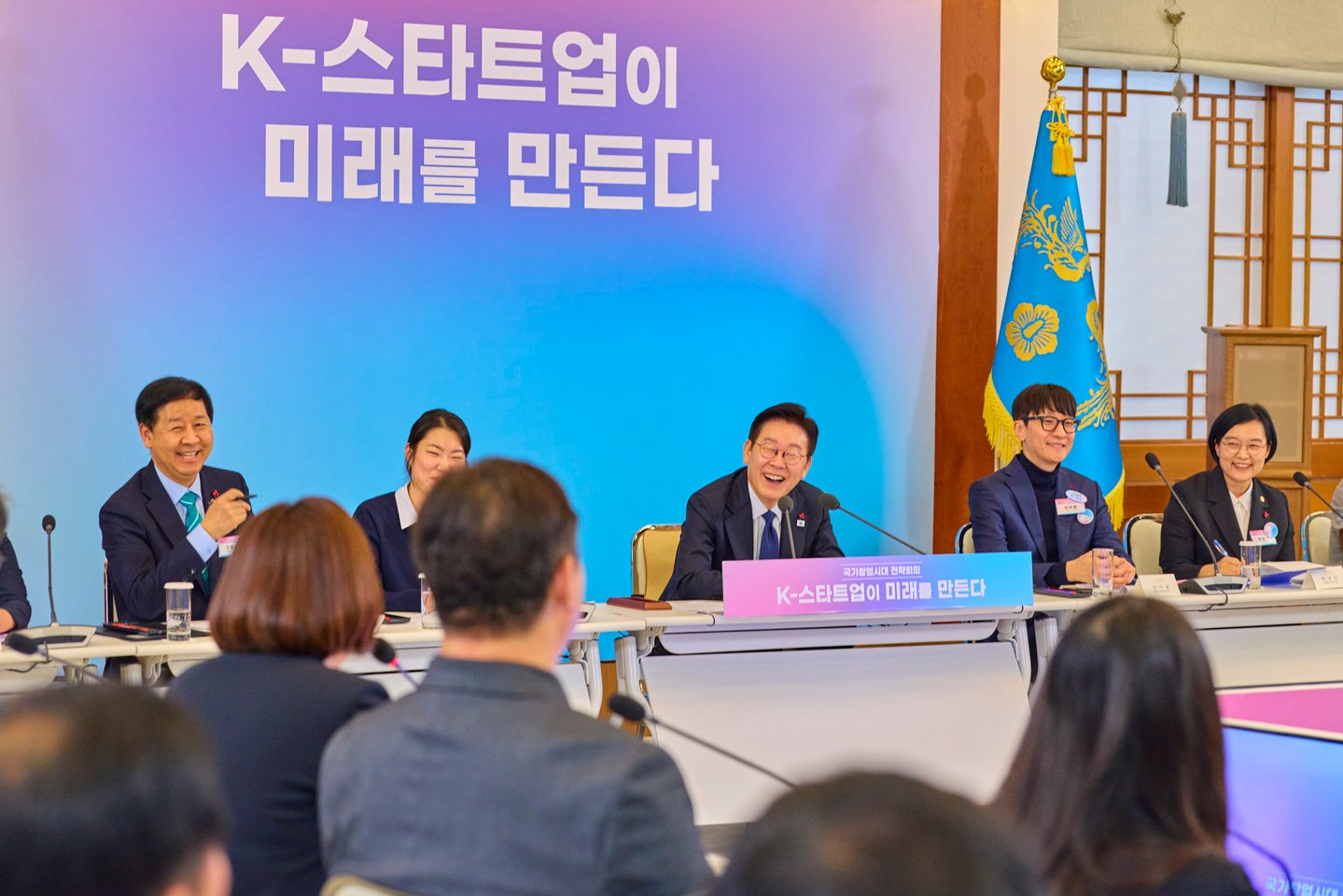
President Lee Jae-myung announced in his 2026 New Year’s address that Korea will pivot toward a “startup-centered society,” marking one of the most dramatic policy shifts in Asian innovation history. This declaration wasn’t just political rhetoric. It triggered a cascade of structural reforms that deep tech founders South Korea now navigate through unprecedented Korean government startup grants specifically designed for breakthrough technologies requiring years—not months—of patient capital development. The Korea startup funding 2026 landscape represents something entirely different from previous government programs that favored quick wins over long-term technological breakthroughs.
What makes this different? Traditional government programs fail deep tech. They expect returns quickly. The National Startup Era initiative recognizes that quantum computing, fusion energy, and advanced semiconductors can’t hit profitability in 18 months like a social media app. This isn’t about subsidizing startups—it’s about building national infrastructure for innovation that could define global competitiveness for decades ahead.
Understanding the National Startup Era Initiative’s Structure
The National Startup Era initiative operates through multiple synchronized tracks. Unlike fragmented previous efforts, Korea’s 2026 approach treats startup finance as infrastructure rather than intervention, fundamentally reshaping how to fund deep tech startup Korea ventures receive capital.
The Ministry of SMEs and Startups officially launched the 2026 Startup Package Program beginning with the Deep Tech-Specialized track. Applications opened January 6 and run through January 27 via K-Startup. The first phase targets 175 deep tech startups across five strategic fields: big data and AI, bio-health, future mobility, eco-friendly energy, and robotics. Early-stage companies receive up to KRW 150 million while scale-up ventures access KRW 300 million.
But here’s the critical distinction. The Korea tech startup policy 2026 restructures support into three specialized types: Deep Tech-Specialized for high-technology ventures, Investment-Linked for startups with verified fundraising, and General Track for broader applicants. This segmentation reflects alignment with global innovation standards by matching financial aid to technology readiness levels rather than arbitrary fiscal calendars.
Korea Startup Funding 2026: Breaking Down The Numbers
The scale is massive. South Korea confirmed 3.4645 trillion won for the startup ecosystem in 2026, marking a 5.2% increase and the largest budget ever allocated. This involves 111 institutions including 15 central government ministries and 96 local governments promoting 508 distinct projects.
Deep technology investment Korea concentrates on three essential areas. Loans and guarantees receive 1.4245 trillion won (41.1% of total). Technology development gets 8.648 trillion won in R&D support. Commercialization funding totals 8.151 trillion won, including 145.6 billion won specifically earmarked for the Super-Gap Startup Project.
The Super-Gap program deserves special attention. Each selected startup receives up to KRW 1.2 billion combining 600 million for commercialization and 600 million for R&D over five years. Top performers qualify for an additional 1 billion won in global scale-up funding over two years. That’s sustained, substantial backing designed for the extended timelines deep tech demands.
How Korean Government Startup Grants Work For Deep Tech Founders South Korea
Applications matter. Timing matters more. The Super-Gap Startup Project opened applications December 29, 2025, with submissions closing January 23, 2026. That three-week window requires preparation, not improvisation.
Eligibility criteria emphasize technological innovation within 12 designated sectors: artificial intelligence, semiconductors, quantum computing, cybersecurity, robotics, mobility, fusion energy, defense technology, and next-generation computing. Startups must demonstrate clear commercialization pathways and scalability potential—not just interesting research projects.
The evaluation process prioritizes technical depth over pure market traction. This represents a fundamental departure from typical venture capital screening. However, you still need commercialization strategy. The South Korea startup ecosystem now explicitly supports patient capital while demanding realistic paths to eventual market impact.
International participation is possible. Foreign startups may participate if they commit to Korean operations and technology development. The program seeks global talent while building domestic capabilities, reflecting Korea’s ambition to become a regional hub for deep tech innovation.
Regional Advantages: Why Location Affects Korea Tech Startup Policy 2026
Here’s what most coverage misses about how to fund deep tech startup Korea: geography dramatically influences terms. The 2026 Startup Package incorporates regional preference policies aimed at reducing economic gaps between Seoul and the rest of the country.
Non-metropolitan startups benefit from differentiated private contribution ratios. Special Support Areas require only 10% private share with government covering 90%. General Areas require 25% private contribution. Special Support Areas include 40 rural counties identified as population-declining regions and underdeveloped localities.
Over 60 percent of policy funding directs outside the capital region. This regional redistribution creates real advantages for deep tech founders South Korea establishing operations in cities like Busan, Daegu, Gwangju, and Daejeon. Your capital stretches further while accessing identical technical infrastructure and mentorship programs available in Seoul.
The government plans to establish five regional startup cities by 2026 and ten by 2030. These aren’t token gestures—they’re systematic infrastructure investments connecting regional innovation corridors with global markets and domestic manufacturing capabilities.
The Super-Gap Startup Project: Korea’s Deep Tech Flagship
First launched in 2023, the Super-Gap Startup Project has become the government’s flagship deep-tech acceleration program. Results speak louder than promises. The program has nurtured 604 startups, producing three global unicorns including FuriosaAI and 14 KOSDAQ-listed companies such as Nota.
The 2026 edition expands scope across 12 future innovation sectors. Minister Han Seong-sook emphasized that deep-tech innovation isn’t merely creative extension but transformative force reshaping industrial structures. Through the Super-Gap Project, Korea aims to ensure its most innovative startups become global leaders in markets ranging from AI to clean energy.
Beyond direct financial support, the National Startup Era initiative operates three thematic programs. Tech-Up promotes rapid commercialization by integrating external technologies with startups’ in-house R&D, including selecting 10 new fabless semiconductor startups receiving up to KRW 250 million each. Link-Up facilitates open innovation partnerships between startups and large corporations focusing on domain-specific AI transformation.
The program also connects beneficiaries with national policy tools including technology guarantees, export vouchers, and venture policy loans to accelerate market readiness. This integrated approach addresses the full commercialization lifecycle rather than just seed funding.
AI Fast Track: Priority Access Through Korea Startup Funding 2026
Artificial intelligence receives special treatment. The KRW 140 billion “AX Sprint Preferential Track” speeds financing for companies pursuing AI transformation or holding core AI technologies. Maximum loan balance limits expand from KRW 6 billion to KRW 10 billion with interest discounts and accelerated evaluations.
This represents more than preferential rates. It signals Korea’s determination to anchor its next startup wave in AI-driven business innovation. The Korea tech startup policy 2026 explicitly recognizes AI as infrastructure rather than application layer, demanding faster capital deployment and higher risk tolerance.
Starting January 5, 2026, founders apply through a new “Policy Fund Navigator”—a digital guidance feature embedded within the KOSME online funding system. This replaces fragmented systems requiring manual document reviews, recommending suitable funding programs once applicants enter company age, export records, and intended capital use.
What Deep Technology Investment Korea Actually Delivers
Results matter more than announcements. The Super-Gap Project has produced measurable outcomes demonstrating program effectiveness in identifying and scaling breakthrough technologies. FuriosaAI represents the most visible success story—an AI chipmaker achieving unicorn status by focusing on specialized processors for AI workloads.
Their trajectory from startup to unicorn validates Korea’s bet on semiconductor innovation beyond traditional memory chips. It illustrates potential for deep-tech ventures receiving patient capital and strategic support. Other KOSDAQ-listed companies emerging from the program span bio-health, robotics, and advanced materials sectors.
These aren’t isolated successes. The 604 startups supported represent critical mass of deep-tech innovation across multiple sectors. This concentration creates knowledge spillovers and talent circulation benefiting the broader South Korea startup ecosystem. Successful companies anchor supply chains and create supplier ecosystems that compound over time.
International recognition validates technical competitiveness. Korean startups secured roughly 60% of 3,600 global Innovation Award entries at CES 2026, marking the third consecutive year Korea led CES Innovation Award recognition. Technical capability exists—the National Startup Era initiative creates commercialization infrastructure to monetize it.
TIPS Program Expansion: Connecting Early Stage to Scale-Up
The Tech Incubator Program for Startups undergoes structural overhaul beginning 2026. TIPS merges existing General, Deep-Tech, and Global Tracks into unified systems centered on startup growth stages rather than sector categories.
Maximum R&D grants increase from KRW 500 million to KRW 800 million. Deep-Tech TIPS provides additional R&D funding to startups completing General Track—similar to Post-TIPS supporting commercialization with KRW 700 million in follow-up capital. Companies now choose Post-TIPS for commercialization or Deep-Tech TIPS for advanced R&D.
Global TIPS replaces the previous Global Track for later-stage startups demonstrating overseas traction. Qualification now requires at least USD 1 million in foreign VC investment, up from USD 300,000 previously. Combined R&D and commercialization support increases to KRW 5 billion.
The ministry plans to increase startups supported under TIPS from 520 in 2025 to 620 in 2026. This expansion reflects Korea’s evolving strategy helping startups scale beyond domestic boundaries and build global competitiveness in AI, semiconductors, and frontier technologies.
National Growth Fund: The KRW 150 Trillion Catalyst
Much enthusiasm surrounds the National Growth Fund—a large-scale public financing vehicle launched to catalyze Korea’s next innovation cycle. The KRW 150 trillion fund injects liquidity into KOSDAQ and venture investment markets while attracting private capital into early- and mid-stage startups.
Industry leaders describe the fund as “priming water” for Korea’s innovation economy. It’s expected to establish virtuous cycles of investment, growth, and reinvestment distributing outcomes more equitably across society. However, long-term success depends on practical implementation—regulatory innovation and real-world policy execution reflecting startup financing realities.
The Korea Development Bank launched a KRW 7.45 trillion National Growth Fund for 2026, marking one of the nation’s most significant funding initiatives for semiconductors, AI, and deep tech. A defining feature is the Ultra-Long-Term Technology Investment Fund totaling KRW 880 billion operating for up to 20 years, providing patient funding helping technology startups commercialize innovations without premature return pressure.
This represents critical evolution in Korea’s policy-based venture finance. Unlike earlier government-backed vehicles focused on volume and short-term deployment, this framework emphasizes long-term deep tech commercialization and strategic industry resilience.
Execution Challenges Nobody Discusses About Korea Tech Startup Policy 2026
Despite unprecedented scale, legitimate execution questions remain. Can Korean government startup grants actually transform research into globally competitive products? One Silicon Valley investor at CES 2026 noted, “Korean startups have the technology; what they need next is strengthening sales and commercialization capabilities.”
Technical depth doesn’t automatically translate to market success—particularly when competing against battle-tested American and Chinese deep tech companies with decade-long head starts. Scaling deep tech requires not just R&D funding but business autonomy—the very trait Korean startups are still cultivating.
The effectiveness of the National Startup Era initiative hinges on execution, with policy documents emphasizing connectivity between stages yet not eliminating fragmentation risks if early-stage screening, regional programs, and scale-up tracks fail to align operationally.
Industry insiders suggest proportions of direct commercialization funding should expand further. For local government projects, processes confirming duplicate benefits should simplify to reduce administrative burdens. There are also concerns that high proportions of support centered on loans may increase debt burdens amid high-interest trends.
Why Global Founders Should Watch the National Startup Era Initiative
The South Korea startup ecosystem is building something fundamentally different from traditional venture models. Where Silicon Valley prioritizes rapid scaling and quick exits, Korea startup funding 2026 explicitly supports patient capital for breakthrough technologies requiring extended development cycles.
For global founders building quantum computers, fusion reactors, advanced semiconductors, or industrial robotics, the Korean government startup grants merit serious evaluation. Terms, scale, and structural support significantly exceed what most developed economies offer deep technology ventures.
Korea’s 2026 strategy signals clear departure from uniform startup policy toward selective, performance-linked growth support. The scale of capital committed places Korea among the more actively state-backed startup ecosystems in advanced economies, particularly in AI, manufacturing technology, and deep tech.
For investors, emphasis on pension participation and structured scale-up pipelines suggests a maturing venture market aligned with global norms. For policymakers globally, Korea’s approach demonstrates how government can integrate policy, branding, and ecosystem coordination to accelerate startup globalization.
The Bigger Picture: Technological Sovereignty Through Deep Tech Founders South Korea
Korea deep tech funding 2026 reflects geopolitical realities as much as economic strategy. Focus on quantum computing, nuclear fusion, and defense tech signals a shift from short-cycle software startups toward hard-tech ventures that can anchor national competitiveness in the AI and post-semiconductor era.
The Korean government unveiled ambitious plans to transform Korea into one of the world’s top four venture ecosystems by 2030, setting targets of 50 unicorns, 10,000 AI and deep tech startups, and KRW 40 trillion in annual venture investment.
This isn’t aspirational rhetoric. Korea’s positioning reflects global trends toward technological nationalism. Major economies increasingly view critical technologies as national security issues. The Super-Gap Startup Project represents Korea’s strategy maintaining technological independence while participating in global innovation networks.
President Lee’s remarks emphasized Korea must evolve “from an employment-centered to a startup-centered society,” promising to build a nation where failure becomes an asset. The Korea Startup Forum welcomed the initiative as “a decisive and visionary step for Korea’s economic future,” praising plans to replace “growth concentrated in few major conglomerates” with models of “growth shared by all.”
What This Means for How to Fund Deep Tech Startup Korea
The National Startup Era initiative systematically addresses the notorious “valley of death” between prototype and commercial scale. MSS reaffirmed plans to expand TIPS participation to 1,200 companies annually, concentrate funding on AI and deep tech startups, and offer support packages up to KRW 100 billion in combined investment and guarantees for selected next-generation unicorn candidates.
Regional startup cities—five by 2026 and ten by 2030—decentralize opportunities beyond Seoul. This represents fundamental reprioritization toward deep technology investment Korea as national infrastructure rather than industrial policy experiment.
As Korea enters 2026, success of the National Startup Era initiative will determine not only the trajectory of the nation’s AI and semiconductor leadership but also shape how startups compete globally in green energy, defense, and next-generation computing.
The experiment is underway. Capital is deployed. Now comes the hard part: converting Korean government startup grants into technologies that actually matter globally. Whether Korea’s government-led innovation infrastructure can truly compete with market-driven venture ecosystems in producing globally dominant deep tech companies remains the defining question of this ambitious initiative.
For founders worldwide, the Korea tech startup policy 2026 offers unprecedented support structures that deserve serious strategic consideration. For the South Korea startup ecosystem, this represents a defining moment—translating policy ambition into commercial reality that reshapes global innovation dynamics for decades ahead.
Frequently Asked Questions
What is the National Startup Era initiative and how does it support deep tech founders South Korea?
The National Startup Era initiative is South Korea’s comprehensive government program providing up to KRW 1.2 billion per startup over five years for breakthrough technologies in AI, semiconductors, quantum computing, robotics, bio-health, and fusion energy. Announced in President Lee Jae-myung’s 2026 New Year’s address, this Korea tech startup policy 2026 framework marks a structural transformation from conglomerate-led growth to founder-driven innovation. It specifically addresses deep tech’s need for patient capital through programs like the Super-Gap Project, Deep Tech-Specialized Startup Package, and expanded TIPS program, combining financial support with technology guarantees, export vouchers, and commercialization assistance.
How does Korea startup funding 2026 differ from traditional venture capital for deep technology investment Korea?
Korea startup funding 2026 provides patient capital over 3-5 year periods with regional co-investment requirements as low as 10% for non-metropolitan areas, compared to venture capital’s typical 18-24 month rapid-scaling expectations and higher equity dilution. Korean government startup grants prioritize technological depth over immediate revenue traction, making them ideal for hard-tech ventures in early development stages. The National Startup Era initiative includes integrated support like technology guarantees, policy loans, and commercialization mentorship rather than pure financial injection, explicitly supporting extended development cycles that traditional VCs typically won’t fund.
What are the best strategies for how to fund deep tech startup Korea through the National Startup Era initiative?
To fund deep tech startup Korea successfully, apply through the Deep Tech-Specialized Startup Package for early support (up to KRW 300 million) or Super-Gap Project for comprehensive funding (up to KRW 1.2 billion). Consider establishing operations outside Seoul to access preferential 90% government co-investment rates in Special Support Areas. Use the new Policy Fund Navigator digital system launching January 2026 to identify optimal program matches. Demonstrate clear commercialization pathways alongside technical innovation. Leverage the AX Sprint Preferential Track if your technology integrates industrial AI applications, which provides expanded loan limits up to KRW 10 billion with accelerated approvals.
How does the National Startup Era initiative support regional deep technology investment Korea outside Seoul?
The National Startup Era initiative allocates over 60% of policy funding (KRW 2.44 trillion) to non-metropolitan regions through differentiated co-investment ratios. Special Support Areas covering 40 rural counties require only 10% private capital contribution versus 25% in general areas. The South Korea startup ecosystem plans to establish five regional startup cities by 2026 and ten by 2030, providing deep tech founders South Korea in cities like Busan, Daegu, and Gwangju access to identical technical infrastructure, mentoring, and global expansion support as Seoul-based ventures while stretching capital significantly further through reduced co-investment requirements.
What results has the National Startup Era initiative achieved with deep tech founders South Korea?
The Super-Gap Startup Project component of the National Startup Era initiative has nurtured 604 startups since 2023, producing three deep tech unicorns including FuriosaAI and 14 KOSDAQ-listed companies like Nota. Korean startups secured roughly 60% of 3,600 global Innovation Awards at CES 2026, demonstrating technical competitiveness. Korean government startup grants have established Korea as the leading nation in CES Innovation Award recognition for three consecutive years, validating that Korea startup funding 2026 is producing globally competitive innovations across semiconductors, AI, robotics, and bio-health sectors.
What is the timeline and application process for Korea tech startup policy 2026 funding programs?
The Deep Tech-Specialized track accepts applications from January 6-27, 2026 via K-Startup website, targeting 175 startups across AI, bio-health, future mobility, eco-friendly energy, and robotics. The Super-Gap Project application window ran December 29, 2025 to January 23, 2026, selecting 120 startups across 12 strategic industries. Applications require demonstrating technological innovation within designated sectors, clear commercialization pathways, and scalability potential. The new Policy Fund Navigator system launched January 5, 2026 provides digital guidance matching founders with optimal National Startup Era initiative funding programs based on company stage and technology focus.
How does the National Startup Era initiative integrate with manufacturing and AI transformation goals?
The National Startup Era initiative includes a dedicated KRW 140 billion “AX Sprint Preferential Track” for AI transformation, expanding loan limits from KRW 6 billion to KRW 10 billion with accelerated approvals. The Ministry of Trade, Industry and Energy invests 700 billion KRW in the Manufacturing AI Transformation (M.AX) program, creating immediate commercial pathways for deep tech founders South Korea developing industrial AI applications. This integration of Korea tech startup policy 2026 provides both development capital and built-in customer access through government-coordinated manufacturing partnerships, explicitly recognizing AI as infrastructure rather than application layer demanding faster capital deployment.