
Judge Orders Elon Musk’s Lawsuit Against OpenAI and Microsoft to Proceed to Trial

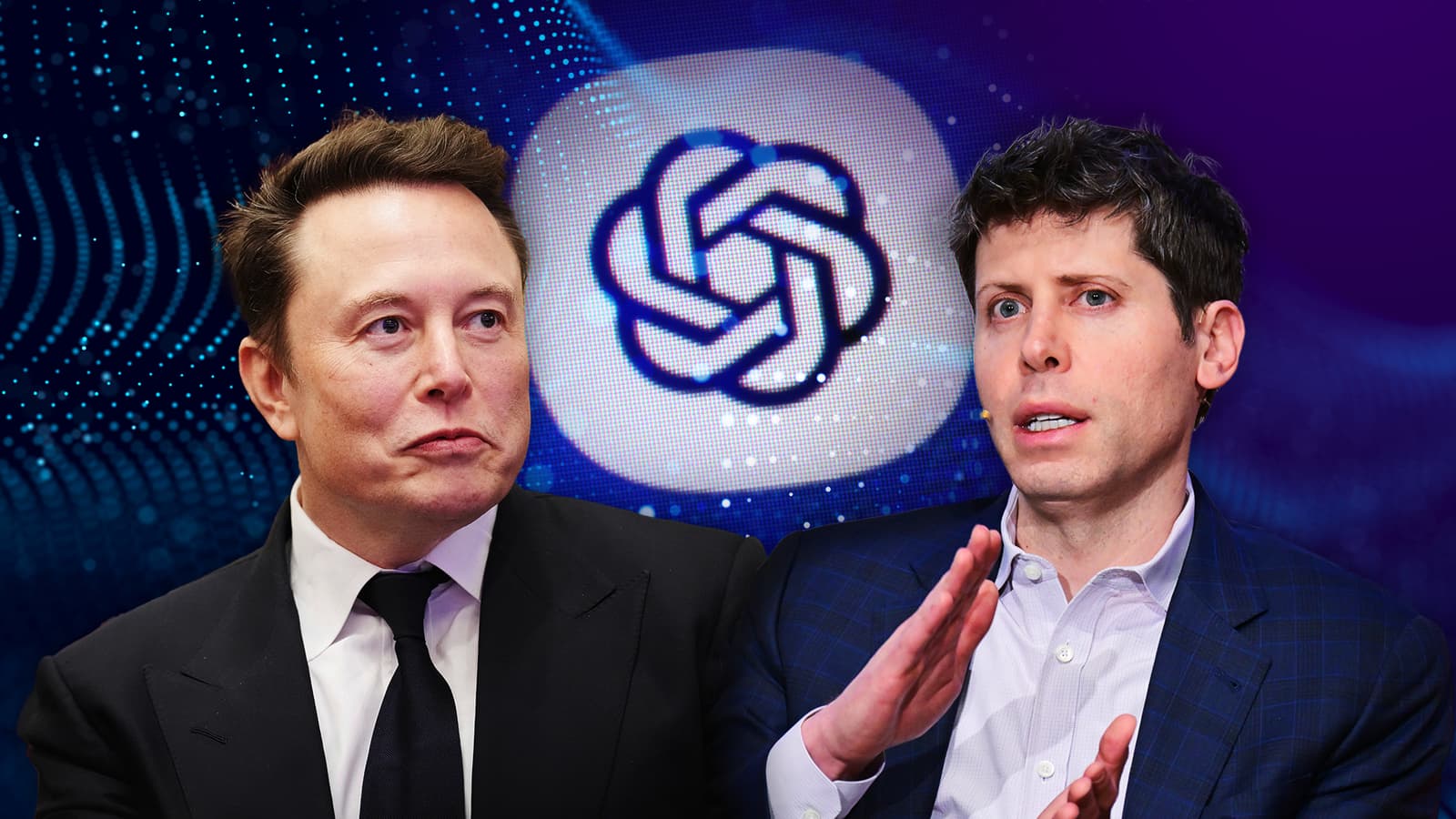
A federal judge in Oakland, California, rejected requests by OpenAI and Microsoft to dismiss claims by Musk and ordered the case to proceed to a jury trial set for late April. This marks a pivotal moment in what’s rapidly becoming one of the most consequential legal battles in technology history. The Musk OpenAI lawsuit trial will examine whether the artificial intelligence company betrayed its founding nonprofit mission when it transformed into a for-profit powerhouse backed by billions from Microsoft.
Musk alleges OpenAI’s leaders betrayed their nonprofit mission commitments to pursue billions in profit, investing $38 million based on those assurances. What began as a philanthropic vision to develop safe AI for humanity has morphed into a billion-dollar enterprise. Now, a jury will decide if that transformation crossed ethical and legal boundaries.
The Elon Musk vs OpenAI Microsoft Battle Heads to Court
Elon Musk’s lawsuit against OpenAI will proceed to trial, further escalating his yearslong feud with the company and its CEO, Sam Altman. The decision came after U.S. District Judge Yvonne Gonzalez Rogers said Wednesday that the case would head to trial.
This OpenAI lawsuit proceeds trial despite multiple attempts by defendants to have it dismissed. The case survived three dismissal attempts in March 2025, May 2025, and January 2026. The repeated survival demonstrates unusual strength for fraud cases built primarily on informal commitments rather than explicit contracts.
District Judge Yvonne Gonzalez Rogers said her decision was based on evidence suggesting OpenAI’s leaders made assurances that its original nonprofit structure would be maintained. Internal communications provided the smoking gun. The judge refused to toss out Musk’s fraud allegations, pointing to internal communications involving OpenAI co-founder Greg Brockman in 2017, when fellow board member Shivon Zilis told Musk that Brockman would “like to continue with the non-profit structure” of OpenAI, but two months later, Brockman wrote: “cannot say that we are committed to the non-profit. don’t want to say that we’re committed. if three months later we’re doing b-corp then it was a lie.”
These emails reveal a troubling pattern. Leaders publicly committed to maintaining nonprofit status while privately planning the opposite.
Understanding the Musk AI Legal Battle: What’s Really at Stake?
The Musk AI legal battle revolves around four main legal claims that survived dismissal. Four claims survived dismissal: breach of charitable trust, constructive fraud, fraud, and unjust enrichment. Each carries significant financial and reputational consequences.
Musk and Altman co-founded OpenAI as a nonprofit research company alongside several other researchers and executives in 2015. Musk departed from OpenAI’s board in 2018 after trying to convince Altman to let his autos business, Tesla, acquire the AI nonprofit. His departure came after fundamental disagreements about the company’s direction.
The financial stakes are astronomical. Elon Musk wants OpenAI Inc. and Microsoft to pay him damages in the range of $79 billion to $134 billion over his claims that the generative AI company defrauded him by abandoning its nonprofit roots and partnering with the software giant. This represents one of the largest damage claims in corporate litigation history.
In the lawsuit, Musk alleged he agreed to start the company because he was promised that it would “chart a safer, more open course than profit-driven tech giants.” Those promises now form the foundation of his legal argument.
The Microsoft OpenAI Legal Case: How Deep Does the Involvement Go?
Microsoft’s role in this drama extends beyond passive investment. Microsoft is also named as a defendant in the lawsuit, as Musk alleges the company aided and abetted OpenAI’s breach of fiduciary duty. The tech giant’s $13.75 billion investment fundamentally changed OpenAI’s trajectory.
Microsoft faces liability claims for aiding and abetting OpenAI’s breach of fiduciary duty through its $13.75 billion investment. If a jury finds OpenAI breached its nonprofit duties, Microsoft could face liability for knowingly participating in that breach. This transforms the dispute from a founder quarrel into a broader test of investor accountability.
Judge Rogers writes that Musk identified considerable evidence raising a triable issue of fact that Microsoft had actual knowledge beyond vague suspicion of wrongdoing. The judge found sufficient evidence that Microsoft potentially knew about OpenAI’s plans to abandon its nonprofit structure.
The Microsoft OpenAI legal case also examines the partnership’s structure. The tech giant invested $13.75 billion in OpenAI and now holds a 27% stake, yet Microsoft’s 27% stake exceeds the Foundation’s 26% ownership, yet lacks equivalent governance rights. This unusual arrangement raises questions about control and influence.
However, the judge did dismiss one Microsoft-related claim. The judge wrote that Musk didn’t cite any evidence or allege any facts to support finding that Microsoft’s retention of any benefit was unjust. Not every allegation survived scrutiny.
OpenAI’s Transformation: From Nonprofit to $500 Billion Powerhouse
The transformation of OpenAI from nonprofit to commercial venture represents a fundamental shift in the company’s mission. OpenAI, the maker of ChatGPT recently valued at $500 billion, announced its restructuring in October, and it said at the time that it had given a 27% ownership stake to its longtime backer Microsoft in a transition that will keep the startup’s nonprofit arm in control of its for-profit operations.
This restructuring became a flashpoint for the Musk OpenAI lawsuit trial. The Tesla CEO alleges in the suit that he was “assiduously manipulated” and “deceived” after OpenAI established an “opaque web of for-profit OpenAI affiliates,” including its multibillion-dollar partnership with Microsoft, and explored converting to a for-profit entity.
The valuation jump tells the story. From its humble nonprofit beginnings, OpenAI now commands a market valuation approaching half a trillion dollars. Musk claimed Altman and the other defendants have been “unjustly enriched to the tune of billions of dollars in value.”
OpenAI maintains its transformation preserved the nonprofit’s oversight. In her ruling, the judge refused to throw out Musk’s accusation that OpenAI breached its promise to operate as a charitable trust. Nevertheless, she acknowledged the evidence requires a jury’s examination.
Key Evidence in the Elon Musk vs OpenAI Microsoft Showdown
The evidence unsealed in this case reveals fascinating insights into OpenAI’s early days. Thousands of pages of evidence from the case were unsealed, including partial 2025 depositions of most of the key players involved, including Sam Altman, Ilya Sutskever, Greg Brockman, Mira Murati, and Satya Nadella.
These documents paint a picture of internal conflict and shifting commitments. The judge found that Musk’s use of an intermediary to donate $38 million in seed money to the startup doesn’t strip him of legal standing to try to enforce those conditions. This ruling demolished OpenAI’s argument that Musk lacked standing to sue.
The judge’s reasoning matters. Judge Rogers found sufficient evidence to move forward, stating: “There were assurances made that it was going to be not-for-profit, and a jury may find that compelling.” Circumstantial evidence can carry significant weight in fraud cases.
The hearing confirms what we’ve maintained from the outset — there is substantial evidence that OpenAI’s leadership made knowingly false assurances to Musk about its charitable mission that they never honored in favor of their personal self-enrichment. Musk’s attorney framed the evidence as demonstrating intentional deception.
OpenAI’s Defense Strategy Against the Lawsuit
OpenAI hasn’t accepted these allegations quietly. A spokesperson for OpenAI said Thursday that Musk’s lawsuit “continues to be baseless and a part of his ongoing pattern of harassment,” and that the company remains focused on empowering the OpenAI Foundation, which is already one of the best resourced nonprofits ever.
The company tried multiple angles to dismiss the case. OpenAI has repeatedly denied the claims, and lawyers for the company have filed a motion to dismiss the case. All three attempts failed.
OpenAI is preparing investors for courtroom fireworks. OpenAI sent a letter Thursday to investors and banking partners warning that it expects Elon Musk to make “deliberately outlandish, attention-grabbing claims” as his lawsuit against the AI lab heads to trial in April, and the trial will mark a public escalation of Musk’s years-long feud with OpenAI.
The company’s confidence shows in their internal assessments. OpenAI said in the letter that they have strong defenses and feel confident about their chances of winning the case, adding: “Regardless, based on the record so far, we believe this case is worth no more than the $38M that Elon donated – though that is not a guarantee.”
OpenAI also published emails suggesting Musk supported the for-profit venture initially and email communications showing that Musk endorsed the for-profit venture at the time — and suggesting that he was only suing now because of OpenAI’s success.
The Broader Implications for the AI Industry
This Musk AI legal battle extends beyond personal vendettas. For OpenAI, the stakes include potential disgorgement of billions and possible unwinding of the Microsoft partnership underpinning its commercial strategy, while for Musk, victory would validate his betrayal claim, though he’ll face questions about why his own xAI abandoned its benefit corporation status, and for the tech industry collectively, the March 30 trial will test whether informal founder commitments carry legal consequences when billions in damages and the future of nonprofit-to-for-profit conversions hang in the balance.
The irony isn’t lost on observers. Musk has long warned about the potential dangers of artificial intelligence and the risks it could pose for humanity, and launched his own AI company called xAI in 2023, competing directly with OpenAI, Google, Anthropic and other AI players.
His own company underwent similar transitions. xAI started as a for-profit, “benefit corporation” with an obligation to deliver environmental and social benefits through its work, but the company dropped that obligation and its benefit corporation status in 2025 when Musk merged xAI with his social network X. This undermines some of his moral high ground.
The OpenAI lawsuit proceeds trial will establish important precedents. When can informal commitments between founders create legally enforceable obligations? What duties do nonprofit organizations owe their early donors? How accountable are investors who fund controversial transformations?
What Happens Next in the Musk OpenAI Lawsuit Trial
The trial timeline is set. The case is now headed to a jury trial on April 27th in Northern California federal court. Both sides are preparing for an intense courtroom battle.
The judge said she still needed to determine some of the logistics as to how that trial will be set up. Procedural details are being finalized.
One critical preliminary issue involves timing. Procedural bifurcation means Musk must first establish he discovered the alleged fraud recently enough to satisfy the statute of limitations, and only after clearing that threshold will the jury evaluate whether OpenAI evolved to meet capital demands or whether its leaders used nonprofit assurances to secure early investment before pursuing a for-profit structure they intended all along.
The jury will hear testimony from major tech figures. Sam Altman, Greg Brockman, and potentially Satya Nadella will face cross-examination about their roles in OpenAI’s transformation.
Financial documents will be scrutinized. The jury will examine revenue sharing agreements between OpenAI and Microsoft. They’ll review internal projections showing when OpenAI planned to pursue profits.
The Personal Dimension: Musk vs. Altman
Beyond corporate structures and legal theories, this case involves two former collaborators who’ve become bitter enemies. Musk and Altman, one-time business partners turned bitter foes, have feuded in court over the future of OpenAI since 2024.
The acrimony extends to unusual public actions. Musk is separately suing over a partnership deal between Apple and OpenAI, and as recently as late October Musk was publicly accusing OpenAI of murdering a former engineer and whistleblower whose death has been conclusively ruled a suicide, and last April, OpenAI asked a federal court to order Musk to stop publicly bad-mouthing them.
Musk even made an audacious acquisition attempt. Last year, OpenAI rejected Musk’s unsolicited bid to acquire the assets of the nonprofit that controls the company for $97.4 billion. The offer was immediately rebuffed.
Their relationship wasn’t always antagonistic. Early OpenAI emails show mutual respect and collaboration. But the breakdown appears complete now, with each side questioning the other’s motives and integrity.
Conclusion: A Defining Moment for AI Governance
The Musk OpenAI lawsuit trial represents more than a billionaire’s grudge match. It addresses fundamental questions about how we govern transformative technologies. Can mission-driven organizations maintain their values while pursuing commercial success? What obligations do founders owe each other and society?
The Elon Musk vs OpenAI Microsoft case will set precedents affecting how future AI companies structure themselves. It may influence regulatory approaches to nonprofit-to-for-profit conversions. The outcome could reshape partnership dynamics throughout Silicon Valley.
As April approaches, legal experts and industry watchers will closely monitor developments. The Microsoft OpenAI legal case involves some of the most powerful companies and individuals in technology.
Whatever the jury decides, this trial has already accomplished one thing: exposing the tensions inherent in AI development. The technology promises enormous benefits and profits. Balancing those commercial opportunities against safety concerns and societal obligations remains the central challenge of our era. This Musk AI legal battle forces us to confront those tensions directly.
The OpenAI lawsuit proceeds trial will unfold over coming months, with testimony, documents, and arguments revealing how today’s AI powerhouses really operate. For anyone interested in technology, business ethics, or the future of artificial intelligence, this case demands attention.
Frequently Asked Questions
What is the Musk OpenAI lawsuit trial about?
The Musk OpenAI lawsuit trial centers on allegations that OpenAI betrayed its founding nonprofit mission by transforming into a for-profit company backed by Microsoft. Musk claims he invested $38 million based on assurances that OpenAI would remain a nonprofit focused on developing safe AI for humanity, but the company later established for-profit affiliates and partnerships worth billions.
When will the Elon Musk vs OpenAI Microsoft trial take place?
The trial is scheduled for late April 2026 in federal court in Oakland, California. U.S. District Judge Yvonne Gonzalez Rogers denied OpenAI and Microsoft’s motions to dismiss the case in January 2026, clearing the way for the jury trial to proceed.
What damages is Musk seeking in the OpenAI lawsuit?
Musk is seeking damages ranging from $79 billion to $134 billion from OpenAI and Microsoft. He claims the companies defrauded him by abandoning OpenAI’s nonprofit roots and establishing a multibillion-dollar partnership that betrayed the organization’s founding principles.
Why is Microsoft named in the Musk AI legal battle?
Microsoft is named as a defendant because Musk alleges the company aided and abetted OpenAI’s breach of fiduciary duty through its $13.75 billion investment. The lawsuit claims Microsoft had actual knowledge of OpenAI’s plans to abandon its nonprofit structure yet proceeded with funding that facilitated the transformation.
What legal claims survived dismissal in the Microsoft OpenAI legal case?
Four claims survived dismissal: breach of charitable trust, constructive fraud, fraud, and unjust enrichment. The judge found sufficient evidence that OpenAI’s leaders made assurances about maintaining nonprofit status, supported by internal emails showing co-founder Greg Brockman privately discussing plans to abandon the nonprofit structure while publicly committing to it.
How has OpenAI responded to the lawsuit allegations?
OpenAI has repeatedly called Musk’s lawsuit “baseless” and part of his “ongoing pattern of harassment.” The company maintains it has strong defenses and believes the case is worth no more than the $38 million Musk donated. OpenAI warned investors to expect “deliberately outlandish” claims from Musk during the trial.
What are the broader implications of this AI industry lawsuit?
The trial will establish important precedents about nonprofit-to-for-profit conversions, fiduciary duties in tech startups, and whether informal founder commitments create legally enforceable obligations. It could influence how future AI companies structure themselves and affect regulatory approaches to mission-driven organizations pursuing commercial success.