
Cambridge AI Spinout Matta Secures Record-Breaking Industrial AI Investment

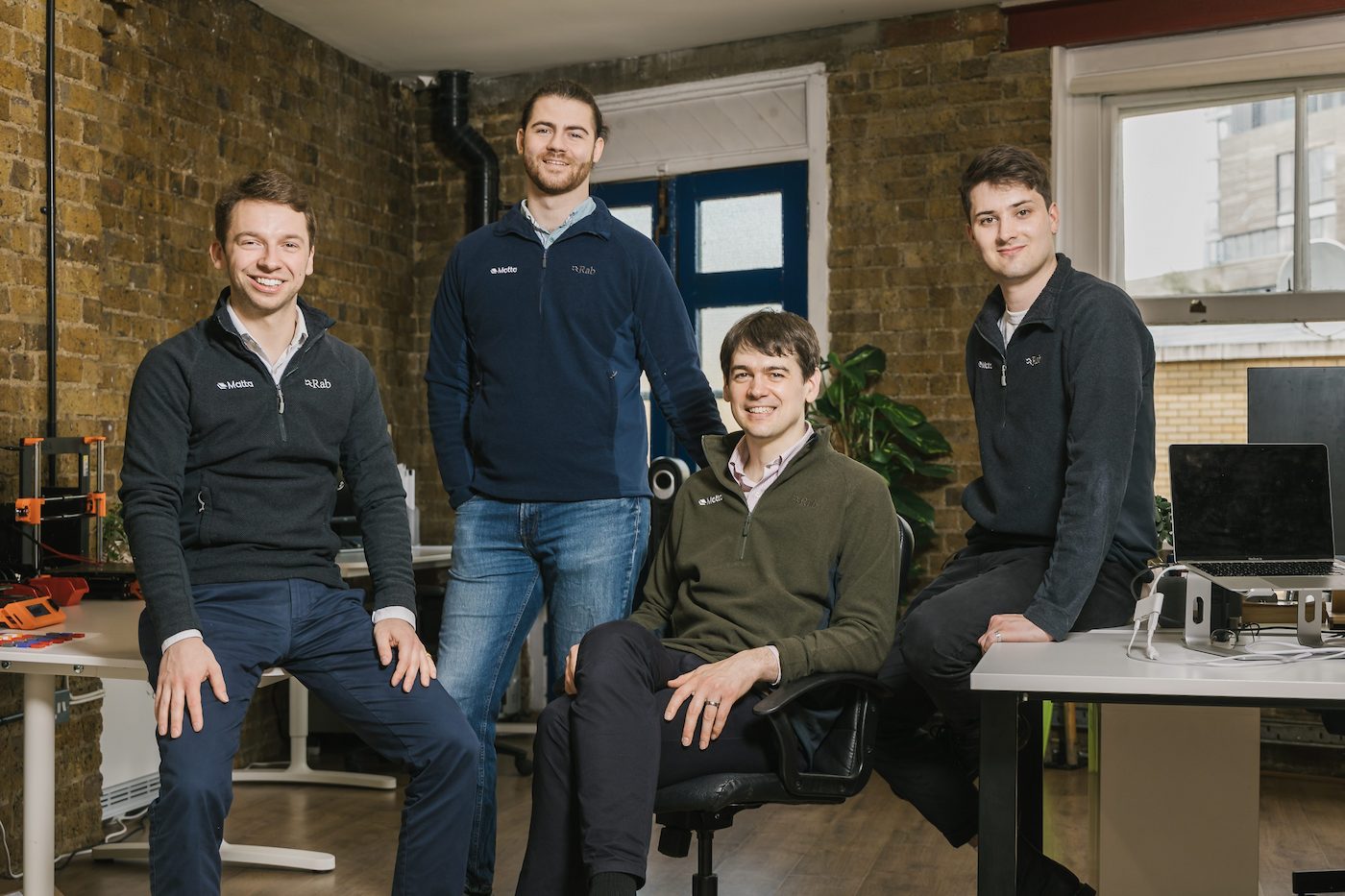
Matta, an industrial AI company spun out of the University of Cambridge, has raised $14m to expand its technology for automating and optimising manufacturing processes. This represents one of the most significant early-stage investments in UK industrial AI technology this year, highlighting the growing investor confidence in manufacturing automation solutions. The Matta AI funding round positions the company at the forefront of what industry experts call the “fourth industrial revolution.”
The Investment Landscape for Cambridge AI Spinout Funding
The seed round was led by Lakestar, with participation from Giant Ventures, RedSeed VC, InMotion Ventures, 1st Kind, Unruly Capital and Boost VC. Additional support came through grants from Innovate UK and the Royal Academy of Engineering. This diverse investor group reflects the broad appeal of Matta’s technology across multiple sectors.
The timing of this Matta AI funding couldn’t be more strategic. After decades of deindustrialisation, many factories are now exposed to geopolitical shocks and under pressure to deliver more with fewer resources. At the same time, energy costs are rising, supply chains remain fragile, and workforces are ageing. These pressures create an enormous opportunity for AI-powered solutions.
The firm seeks to invest in deep technology, digitalization, artificial intelligence, financial technology, and healthcare sectors. Lakestar’s investment thesis aligns perfectly with Matta’s mission, as the Cambridge AI spinout funding represents their continued focus on transformative industrial technologies.
What Makes This Lakestar AI Investment Special
The distinguishing factor in this UK deeptech startup investment lies in Matta’s unique approach to manufacturing intelligence. The company says its AI enables factories to “see, understand and improve themselves” in real time by learning any production line within days. This rapid deployment capability sets Matta apart from traditional industrial AI solutions that require months of configuration.
It identifies defects, traces their causes and helps teams resolve issues before they escalate. What’s remarkable is the speed of implementation—most deployments become operational within hours, with cameras inspecting automatically after a short learning period.
Lakestar’s Akis Bratsos said the firm was “thrilled” to back the team, praising their combination of “cutting-edge technology” and rapid value delivery. This endorsement from such a prominent venture capital firm validates Matta’s technological approach and market potential.
Revolutionary Technology Behind the Matta Seed Round
The technical foundation of this Matta AI funding success story revolves around breakthrough computer vision capabilities. Its first product uses unsupervised and self-supervised computer vision for automated quality control, anomaly detection, measurements, root-cause diagnosis and real-time corrective recommendations.
The system’s adaptability is truly impressive. Matta’s adaptable system works across sectors including electronics, automotive, defence and apparel, and on various types of production equipment such as manual inspection stations, conveyor lines and robot arms. This versatility explains why the Cambridge AI spinout funding attracted such diverse investors.
A central software platform allows manufacturers to monitor camera feeds, analyse results and trace parts throughout the factory. This comprehensive visibility gives manufacturers unprecedented insights into their operations. The system is delivered as a plug-and-play package combining hardware, integration support, AI research and software, with most installations going live within hours after a short learning phase.
Proven Results Driving UK Deeptech Startup Investment
The performance metrics behind this Matta AI funding are genuinely remarkable. In a polymer manufacturing case study, Matta achieved more than 99% defect-detection accuracy after analysing just ten minutes of data. This level of accuracy with minimal training data represents a significant breakthrough in industrial AI applications.
Other deployments include high-speed bottling inspection for a global drinks company and rapid measurement of speaker components for Bowers & Wilkins. These real-world implementations demonstrate the technology’s practical value across different manufacturing environments.
Matta claims to have a waiting list of more than 300 potential customers, and is completing a new installation every two weeks. This demand pipeline validates the strong market appetite for advanced manufacturing AI solutions.
The company’s success extends beyond detection capabilities. Matta is also partnering with OEMs to help machines to tune themselves. For example, the additive manufacturing specialist Caracol is using Matta’s vision AI for closed-loop control, linking real-time inspection to automatic parameter adjustments on industrial printers and large-format robot additive manufacturing cells.
Strategic Vision Behind the Lakestar AI Investment
Matta, founded in 2022 by Douglas Brion and Sebastian Pattinson, enters a sector grappling with rising energy costs, fragile supply chains, and a shrinking skilled workforce. The founders’ timing appears prescient, as manufacturers worldwide struggle with these exact challenges.
“Everyone talks about the glamorous side of manufacturing: generative design, material discovery, digital twins, but few spend time on the factory floor,” says Matta’s co-founder and CEO, Doug Brion. “Manufacturing still runs on human know-how, the kind that lets someone on the line kick a machine just right, or run a finger over a scratch, and say, ‘that’s thirty-four microns wide.’ We’re using AI to capture and scale that tacit knowledge, so engineers can design things that actually work in the real world.”
This philosophy drives the company’s approach to the Matta AI funding utilization. The company intends to use the new funding to accelerate customer adoption, advance its AI capabilities, expand self-service deployment options and grow its presence in key manufacturing regions in Europe and the United States.
Market Impact of This Cambridge AI Spinout Funding
The broader implications of this Matta AI funding extend far beyond a single company’s success. Madelene Larsson of Giant Ventures said Matta’s approach to training factory-ready AI with minimal data “has the potential to reshape how products are made”. This perspective reflects growing investor recognition that manufacturing AI represents a massive market opportunity.
Manufacturers are being asked to reshore, decarbonise, and operate with fewer skilled workers. Workforce gaps and increasing operational costs are becoming common across Europe, and the US. These trends create substantial demand for automation solutions like Matta’s technology.
The UK deeptech startup investment landscape benefits significantly from success stories like this one. With fresh funding, Matta plans to accelerate its rollout across Europe and the US, enhance its core capabilities, and expand self-serve deployment. This geographic expansion strategy positions the company for substantial growth.
Lakestar’s Strategic Portfolio Development
This Lakestar AI investment aligns with the firm’s broader strategy of backing transformative European technology companies. Founded in 2012, Lakestar is a venture capital firm based in Zurich, Switzerland. The firm intends to find, fund, and grow disruptive businesses that are enabled by technology and founded by exceptional entrepreneurs in Europe and beyond.
Revolut and Spotify-backer Lakestar has closed $600m to invest in European companies in deeptech, AI, healthcare, digitalisation and fintech. The capital will be split across two funds: with $280m for an early-stage fund for seed and Series A investments and $320m for Series B rounds and above. The Matta seed round represents exactly the type of investment Lakestar targets with their early-stage fund.
It manages an aggregated volume of over €2bn across four early-stage funds and two growth funds. The firm actively advises and supports portfolio companies in marketing, recruitment, technology, product development, and regulatory insight, accompanying founders from seed to early stage, growth stage, or exit.
Future Implications for Manufacturing AI
The success of this Cambridge AI spinout funding signals broader changes in manufacturing technology adoption. The company’s long-term vision is to enable increasingly autonomous, end-to-end manufacturing, bringing a new level of intelligence, adaptability, and reliability to global production.
The potential for machines to autonomously adjust settings is also an area of exploration. The company’s vision for increasingly autonomous and seamless production lines appears central to its strategy moving forward. This vision of self-regulating factories represents the next evolution in manufacturing technology.
Beyond defect detection, the company is working with OEM partners to enable machines to adjust their own parameters, marking a step toward self-regulating production lines. By learning how any production line behaves within days, Matta helps factories catch issues early, identify underlying causes, and reduce costly downtime.
The implications extend beyond individual factories. Its real-time insights support teams under pressure to deliver more with fewer skilled workers, making operations more resilient in uncertain economic and geopolitical conditions. This resilience becomes increasingly valuable as global supply chains face ongoing disruptions.
Investment Strategy and Market Positioning
This UK deeptech startup investment demonstrates the growing sophistication of European venture capital in identifying transformative technologies. In contrast, Matta provides a more unified and adaptable system, simplifying the integration of advanced AI capabilities with existing production infrastructure.
The competitive advantage driving this Matta AI funding success lies in the company’s ability to democratize advanced manufacturing AI. Factories implementing Matta’s technology can expect to operationalize the system within hours, achieving quick adaptation to new production lines. This ease of implementation removes traditional barriers to AI adoption in manufacturing.
This fresh investment is expected not only to refine Matta’s technological capabilities but also to facilitate expanded reach into critical manufacturing regions in Europe and the US. The geographic expansion strategy positions Matta to capitalize on the global trend toward manufacturing automation.
Conclusion: A Watershed Moment for Industrial AI
The successful completion of this Matta AI funding round represents more than just another venture capital investment—it signals a fundamental shift in how we approach manufacturing technology. The combination of proven results, scalable technology, and strong investor backing positions Matta as a leader in the next generation of industrial AI solutions.
Matta’s AI enables factories to monitor, analyse, and optimise their operations in real time, learning any production line within days. This capability, supported by the Cambridge AI spinout funding, promises to transform manufacturing efficiency across multiple industries.
The success of this Lakestar AI investment validates the growing importance of industrial AI in addressing modern manufacturing challenges. As factories worldwide grapple with workforce shortages, supply chain disruptions, and increasing quality demands, solutions like Matta’s become not just valuable but essential for competitive survival.
For investors and industry observers, this UK deeptech startup investment demonstrates the enormous potential of Cambridge’s technology ecosystem to produce world-changing innovations. The Matta seed round success story will likely inspire additional investment in similar technologies, further strengthening the UK’s position in the global AI landscape.
Frequently Asked Questions
What is Matta and why is this funding significant?
Matta is a Cambridge University spinout that develops AI technology for manufacturing automation. The $14M funding led by Lakestar is significant because it represents one of the largest early-stage investments in UK industrial AI, validating the technology’s potential to revolutionize manufacturing processes.
How does Matta’s AI technology work in factories?
Matta’s AI uses computer vision to enable factories to “see, understand and improve themselves” in real time. The system learns production lines within days, identifies defects, traces root causes, and provides corrective recommendations, achieving over 99% defect-detection accuracy with minimal data.
Who led the Matta AI funding round and which other investors participated?
The $14M seed round was led by Lakestar, with participation from Giant Ventures, RedSeed VC, InMotion Ventures, 1st Kind (Peugeot family), Unruly Capital, and Boost VC, plus grants from Innovate UK and the Royal Academy of Engineering.
What industries can benefit from Matta’s technology?
Matta’s adaptable system works across multiple sectors including electronics, automotive, defence, and apparel. It integrates with various production equipment including manual inspection stations, conveyor lines, and robot arms.
How quickly can Matta’s system be deployed in existing factories?
Matta delivers a plug-and-play system that can become operational within hours after a short learning phase. This rapid deployment capability sets it apart from traditional industrial AI solutions that require months of configuration.
What are Matta’s plans for the funding?
The company will use the funding to accelerate customer adoption, advance AI capabilities, expand self-service deployment options, and grow presence in key manufacturing regions across Europe and the United States.
What makes Lakestar’s investment strategy significant for this deal?
Lakestar manages over €2bn across multiple funds and focuses on deep technology, AI, and digitalization sectors. Their backing validates Matta’s potential and provides strategic support for scaling across European and US markets.