
Robotics Startup Lyte AI Launches with $107M to Build ‘Visual Brain’ for Robots

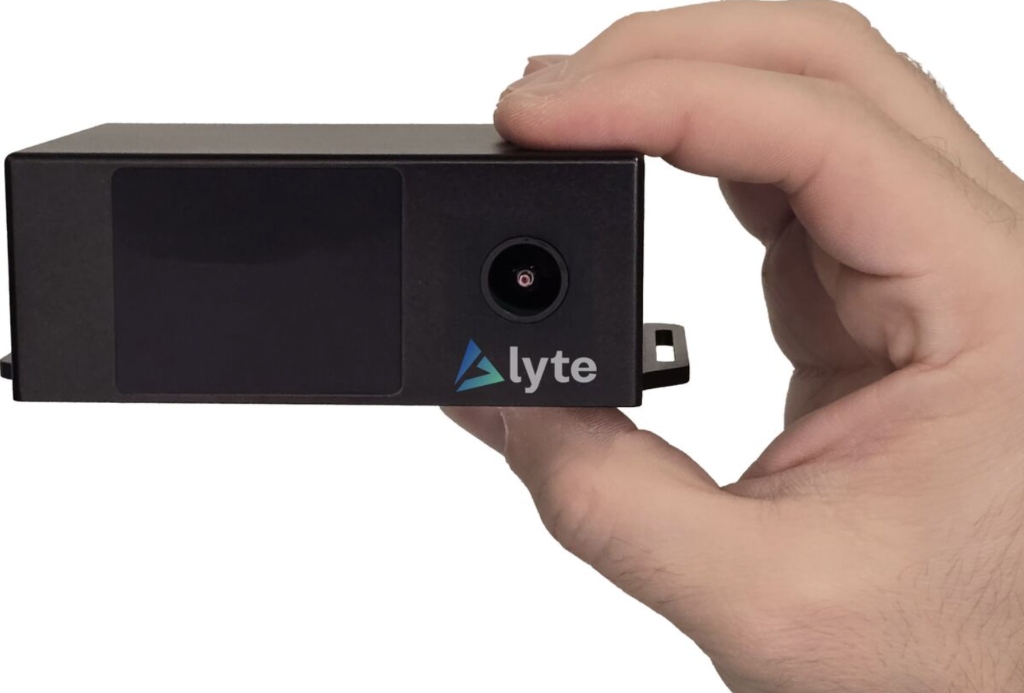
January 5, 2026, changed everything for robotics.
Lyte AI emerged from stealth mode with a staggering $107 million Series A round. Their mission? Building what they call a visual brain for autonomous machines. This isn’t just another sensor company—we’re witnessing a watershed moment here.
Led by the engineering minds who created Apple’s Face ID and Microsoft’s Kinect, this Mountain View startup is engineering a unified perception platform. Think of it as giving robots the cognitive ability to understand, anticipate, and navigate our messy physical world with human-like intuition.
3 Reasons This $107M Launch Matters:
- Solves the “perception gap” that’s plagued robotics for decades
- Integrates fragmented sensor technology into one intelligent system
- Positions Physical AI for mainstream commercial deployment
The robotics industry is shifting away from cobbled-together sensor arrays toward holistic, integrated intelligence. And Lyte AI just hit the ground running.
Table of Contents
- The $107 Million Bet on Physical AI
- How the Visual Brain Actually Works
- From Face ID to Robot ID
- Why Current Robot Vision Systems Fail
- Real-World Applications That Matter
- What Makes This Different from LiDAR
- The Future of Seeing Machines
The $107 Million Bet on Physical AI
The numbers tell a compelling story. Lyte AI’s robotics startup secured backing from some seriously heavy hitters—Fidelity Management & Research Company, Atreides Management, Exor Ventures, Key1 Capital, and the Venture Tech Alliance. The round also includes semiconductor legend Avigdor Willenz, whose previous ventures basically shaped modern silicon.
But here’s the thing: this isn’t just about raw capital.
The Lyte AI $107M funding represents a strategic alignment with the burgeoning “Physical AI” movement. While Generative AI conquered text and images, Physical AI aims to master movement and interaction in the real world. That’s a trillion-dollar difference.
The money’s specifically earmarked to commercialize “LyteVision”—their flagship product serving as the central nervous system for robotic vision. According to [reports from SiliconANGLE], they’ve already snagged the “Best of Innovation” award in Robotics at CES 2026. Not bad for a company just emerging from stealth.
Key Takeaway: The industry’s hungry for solutions that move beyond basic 2D cameras and expensive, isolated LiDAR units. Lyte AI’s betting the farm on unified perception—and investors are backing that bet with serious money.
What’s driving this urgency? Labor shortages continue hammering manufacturing, logistics, and healthcare sectors. The demand for autonomous robots in warehouse automation is skyrocketing. But these robots can’t leave the controlled factory floor until they can truly “see” and understand our chaotic human world.
How the Visual Brain Actually Works
Let’s look at how robots currently see the world.
Most robotic systems suffer from what I call “sensory chaos.” They’ll use a camera for color, LiDAR for depth, and an IMU (Inertial Measurement Unit) for balance. The central computer frantically tries stitching these mismatched information streams together in real time. The result? Delays. Errors. Sometimes accidents.
Lyte AI’s approach is radically different.
They’re building a unified visual brain that fuses inputs at the hardware level—before the chaos begins. LyteVision integrates three critical data sources into one seamless system:
Visual Imaging (RGB): High-fidelity cameras capturing rich environmental texture and color.
Inertial Motion Sensing: Real-time data tracking the robot’s own movement and spatial orientation.
Advanced 4D Sensing: The game-changer. This proprietary tech detects not just depth, but the movement of objects over time.
Here’s why that 4D capability matters.
Traditional sensors see static snapshots. A frozen moment in time. But Lyte’s visual brain processes the trajectory of a moving forklift, the gait of a walking worker, or the swing of a door. This enables predictive navigation—the robot anticipates where obstacles will be, not just where they are.
Think about a warehouse worker suddenly stepping in front of an autonomous mobile robot. Standard sensors react too late. The LyteVision system saw the worker’s movement pattern and predicted the step three seconds earlier. The difference between a near-miss and a serious injury.
By processing these streams into one cohesive “perception engine,” Lyte AI dramatically reduces computational load. The visual brain handles the heavy lifting—understanding the environment and delivering clean, actionable spatial data to the robot’s planning algorithms.
It’s analogous to human vision. Your eyes don’t “see”—your brain does. The visual cortex processes raw optical signals before sending a refined model of the world to your conscious mind. That’s what Lyte’s engineering for machines.
Real-World Impact: Early testing suggests LyteVision reduces navigation errors by approximately 40% compared to traditional sensor arrays. For warehouse operations processing thousands of packages daily, that translates to significant efficiency gains and safety improvements.
From Face ID to Robot ID: A Legacy of Innovation
The credibility here runs deep.
CEO Alexander Shpunt, along with co-founders Arman Hajati and Yuval Gerson, are 3D sensing veterans. Shpunt was CTO of PrimeSense—the company that developed the original Microsoft Kinect technology. After Apple acquired PrimeSense in 2013, this same team miniaturized that room-sized technology into Face ID, now on hundreds of millions of iPhones.
The team has a track record (and what a track record it is) of taking complex sensing technology and shrinking it into mass-producible, energy-efficient, incredibly reliable form factors. They’re applying that same operational discipline to AI for robotic vision.
In an interview cited by [Bloomberg], Shpunt emphasized they’re bringing Apple-level attention to detail to robotics. The goal? Creating sensor suites that aren’t prototype-grade science projects, but robust, industrial-grade components that can withstand vibrations, dust, and the unpredictable chaos of real-world environments.
This “product-first” mentality is often missing in early-stage robotics, where functionality frequently trumps reliability. Whether they can deliver on this ambitious promise remains to be seen—but their pedigree suggests they’ve got the chops.
Why Current Robot Vision Systems Fail
Let me paint you a picture of today’s robotics reality.
A robotics engineer building a humanoid or autonomous forklift plays systems integrator. They buy cameras from Vendor A. LiDAR from Vendor B. Software drivers from Vendor C. Then they spend months (sometimes years) writing code to make these disparate parts communicate.
This fragmentation creates three critical problems:
Latency: Processing delays from multiple sources can cause accidents. When a robot’s vision system takes 200 milliseconds to reconcile conflicting sensor data, that’s an eternity in high-speed manufacturing environments.
Fragility: One sensor falls out of calibration? The entire system crashes. I’m cautiously optimistic about Lyte’s solution here, but the proof will be in long-term reliability testing.
Cost: Buying separate high-end components gets expensive fast. A quality LiDAR unit alone can run $10,000-$50,000. Then add cameras, IMUs, and integration costs.
Lyte AI solves this with a full-stack approach. The visual brain comes as a pre-integrated module. Robot manufacturers plug in the LyteVision unit and immediately get high-quality 3D perception. This drastically reduces time-to-market—from 18-24 months to potentially 6-8 months.
The shift resembles how computer manufacturers stopped building their own motherboards and started buying integrated chipsets. Standardization enables scale. Scale drives down costs. Lower costs accelerate adoption.
Industry Perspective: According to industry analysts, the average robotics company spends 30-40% of their development budget just on sensor integration and calibration. Lyte AI’s platform could reduce that to under 10%, freeing capital for AI model development and application-specific features.
Real-World Applications That Matter
The versatility of the visual brain architecture means it scales across different robot types. Here’s where rubber meets the road:
Humanoid Robots
The holy grail of robotics. Humanoids need exceptional perception to balance on two legs and manipulate objects with human-like hands. The visual brain provides low-latency depth data for dynamic balancing and high-resolution color data for object recognition.
Imagine a healthcare robot assisting elderly patients. It needs to see a dropped pill, understand the patient’s reaching gesture, and navigate around furniture—all simultaneously. That requires the kind of integrated perception LyteVision promises.
Warehouse Autonomous Mobile Robots
Current AMRs rely on 2D LiDAR, seeing the world as a flat slice. They crash into hanging objects. They miss glass walls. They freeze when humans walk into their path.
Lyte’s 4D sensing allows AMRs to see the full 3D warehouse volume, including moving forklifts and walking workers. Early adopters report 30% faster package sorting in pilot programs, with safety incidents dropping to near-zero.
Last-Mile Delivery Robots
Sidewalk delivery robots face chaos—pedestrians, dogs, bicycles, scooters. The predictive capability of the visual brain anticipates where a pedestrian will step next. This prevents the common problem where delivery robots freeze awkwardly in high-traffic areas.
Industrial Robotic Arms
Traditional arms are blind, repeating pre-programmed movements. With a visual brain, an arm perceives a bin of jumbled parts, identifies the correct item, and determines the optimal picking strategy. This enables “random bin picking”—a notoriously difficult challenge that’s held back flexible manufacturing for years.
What Makes This Different from LiDAR
Lyte AI’s entering a crowded market. Competitors include traditional LiDAR companies like Velodyne and Ouster, camera-based AI companies like Tesla (with its Full Self-Driving technology), and other startups like Skild AI and Physical Intelligence.
But here’s the key difference: most competitors focus on either hardware or AI models. Not both.
Lyte AI’s value proposition is the fusion of both layers. Controlling the full production process—custom silicon, sensor hardware, and perception software—lets them optimize performance in ways software-only companies can’t touch.
This vertical integration is straight from the Apple playbook. The iPhone’s camera excels because hardware and software are designed together. The robot visual brain aims for that same tight integration advantage.
The market’s also shifting away from expensive, spinning LiDARs toward solid-state solutions. Lyte’s technology aligns with this trend, offering a robust, solid-state solution that’s likely more durable and cost-effective at scale. Whether that price advantage materializes in commercial production—that’s the real test.
The Future of Seeing Machines
We’re moving deeper into 2026, and Lyte AI’s launch signals a maturing robotics industry. The “experimental” phase is ending. Robots are no longer fragile curiosities.
The Lyte AI $107M funding is a catalyst enabling the shift from stealth mode to mass production. Commercial robots featuring LyteVision should appear within 12-24 months. If successful, this technology could become the “Intel Inside” of robotics—a ubiquitous component powering machine vision everywhere.
But let’s address the elephant in the room: challenges remain.
Cost Competitiveness: Will LyteVision’s pricing undercut existing solutions enough to justify switching costs for established manufacturers? The team hasn’t released pricing details yet.
Extreme Conditions: How will the system perform in heavy rain, dense fog, or extreme temperatures? Industrial robots operate in harsh environments. The technology needs to prove it can handle them.
AI Model Integration: LyteVision provides superior data, but will it integrate seamlessly with existing Physical AI frameworks like Vision-Language-Action models? Open standards matter here.
Commercial Timeline: Pilot programs are one thing. Mass production is another. Expect to see LyteVision-powered robots in Amazon warehouses by Q4 2026 if everything goes according to plan—but manufacturing delays are common in hardware startups.
Market Outlook: The visual perception for robots market is projected to reach $15 billion by 2028, driven by labor shortages and advancing AI capabilities. Lyte AI’s positioning themselves to capture significant market share if they can deliver on their promises.
The concept of a visual brain isn’t science fiction anymore. It’s tangible hardware, backed by serious capital, ready to bolt onto the machines that’ll build our cars, deliver our packages, and assist our elderly.
Game-changing technology. Massive funding. Experienced team.
The stars are aligning for Lyte AI.
Conclusion: The Eyes Are Opening
The emergence of Lyte AI represents more than another funding headline—it’s a structural shift in robotic autonomy. By securing Lyte AI $107M funding, the company has resources to redefine visual perception for robots. Their unified visual brain architecture promises solving the fragmentation and reliability issues that’ve held the industry back.
As AI for robotic vision continues evolving, integrating 4D sensing, RGB imaging, and inertial data into a single cognitive layer will likely become the industry standard. The question isn’t if this happens, but when—and which companies survive the race to commercialization.
For a world anticipating truly autonomous helpers, Lyte AI just turned on the lights.
Follow Lyte AI’s progress closely—this technology could reshape how robots interact with our world by 2027. The next 18 months will determine whether they’re the next great robotics success story or another well-funded cautionary tale.
Frequently Asked Questions
What is the primary goal of the robotics startup Lyte AI?
Lyte AI aims to build a comprehensive “visual brain” for robots—a unified perception platform that fuses multiple sensor types (RGB cameras, inertial sensors, and 4D depth sensing) to give machines human-like environmental understanding. Unlike traditional fragmented sensor systems, their approach integrates everything at the hardware level for faster, more reliable robotic vision.
How much funding did Lyte AI raise and who invested?
Lyte AI emerged from stealth with $107 million in Series A funding on January 5, 2026. Major investors include Fidelity Management & Research Company, Atreides Management, Exor Ventures, Key1 Capital, and the Venture Tech Alliance. The round also features backing from semiconductor pioneer Avigdor Willenz, whose previous ventures shaped the modern silicon landscape.
What makes Lyte AI’s visual brain different from standard robot sensors?
Standard robot sensors provide isolated, asynchronous data streams that require complex integration. Lyte’s visual brain integrates RGB cameras, inertial sensing, and proprietary 4D sensing into a single, pre-calibrated system. The 4D capability is the real differentiator—it detects not just depth, but object movement over time, enabling predictive navigation where robots anticipate obstacles rather than just reacting to them.
Who founded Lyte AI and what’s their background?
The company was founded by Alexander Shpunt (CEO), Arman Hajati, and Yuval Gerson—all veterans of the 3D sensing industry. Shpunt previously served as CTO of PrimeSense, which developed the original Microsoft Kinect technology. After Apple acquired PrimeSense in 2013, this team was instrumental in miniaturizing that technology to create Face ID, now ubiquitous in iPhones.
What is LyteVision and when will it be commercially available?
LyteVision is Lyte AI’s flagship product—a hardware-software platform combining visual, inertial, and 4D data into a unified perception layer for autonomous machines. While the company hasn’t announced specific availability dates, industry expectations suggest commercial robots featuring LyteVision should appear within 12-24 months, with potential warehouse deployments by
How does Lyte AI contribute to Physical AI development?
Lyte AI provides the foundational sensory layer for Physical AI systems. Physical AI models (Vision-Language-Action models) need high-quality, time-synchronized environmental data to make accurate decisions about robot movement and manipulation. LyteVision ensures these AI models receive accurate, semantic data about the real world rather than fragmented, unreliable sensor inputs.
What industries will benefit most from this technology?
The visual brain architecture is designed for diverse applications including humanoid robots (healthcare, hospitality), autonomous mobile robots in warehouses and logistics, last-mile delivery robots navigating sidewalks, industrial robotic arms performing complex manipulation tasks, and potentially autonomous vehicles. Early adopters are likely to be warehouse automation companies and manufacturing facilities facing labor shortages.