
Loft Orbital’s AI Powered Satellites Launch Is Set to Redefine Defense Intelligence in 2026

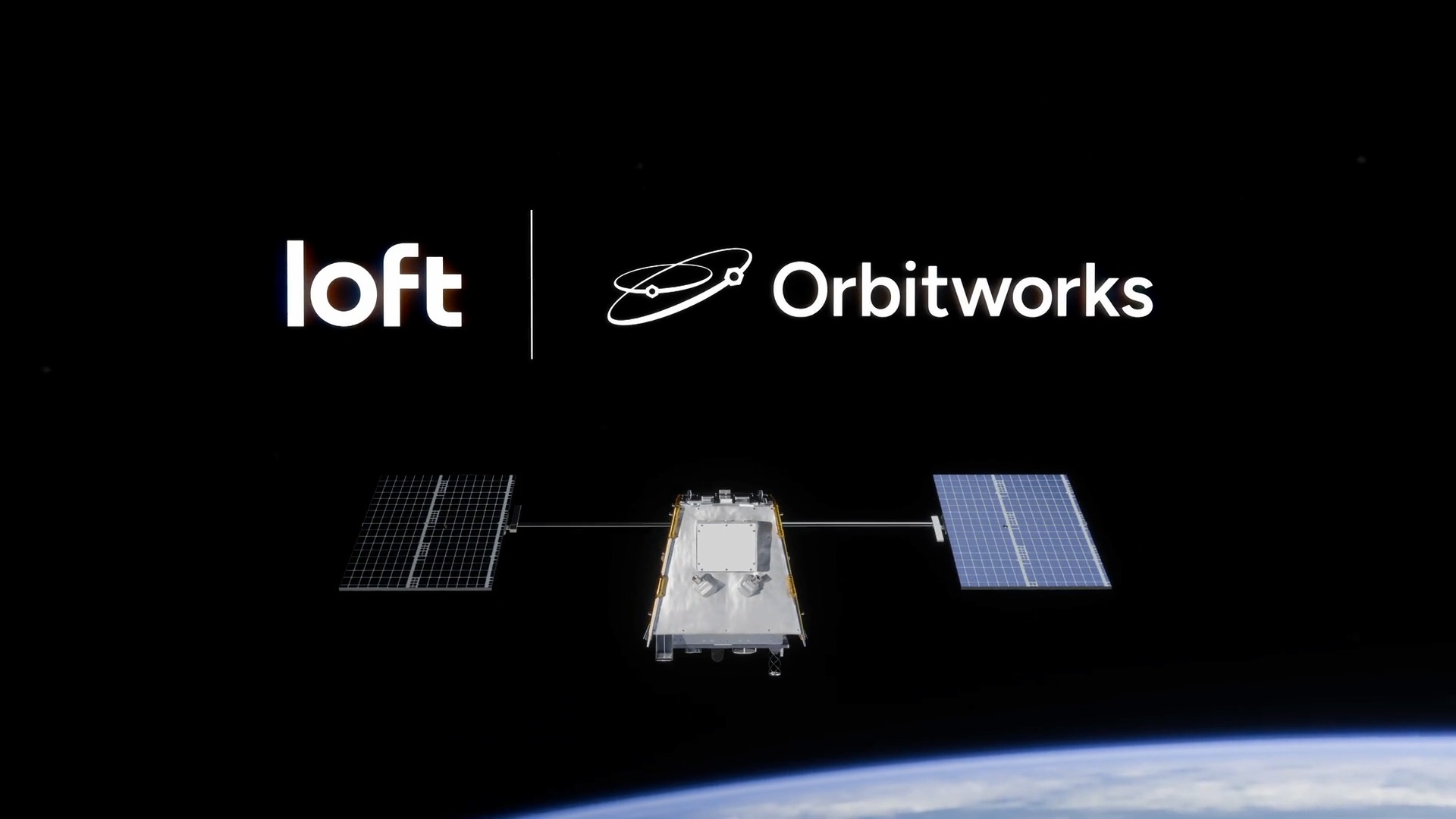
With satellite buses already under production and launch slots secured, the satellites are scheduled for liftoff in 2026 — and the scope of what Loft Orbital is building makes this one of the most consequential AI powered satellites launch campaigns of the decade. The Franco-American space infrastructure startup has partnered with Helsing, Europe’s leading defense AI company, to deploy a multi-sensor satellite constellation delivering real-time situational awareness for governmental and military customers. This isn’t a distant roadmap. Hardware is on the production floor, and the mission mandate — border surveillance, troop tracking, and infrastructure protection — signals a pivotal new era for both orbital AI systems and European defense autonomy.
The timing is no accident either. The space economy hit a record $613 billion in value in 2024, with McKinsey estimating it could grow to $1.8 trillion by 2035. The race for AI satellites launch dominance is intensifying across continents, and Loft Orbital has just planted its flag right at the center of it.
What’s Behind Loft Orbital’s AI Powered Satellites Launch With Helsing
Loft Orbital was founded in 2017 to address the challenge of speed-to-orbit in the space industry. Over nearly a decade, it has built something unusual: a shared satellite infrastructure model that functions less like a traditional operator and more like a cloud provider for space. Customers don’t build their own spacecraft. They plug into Loft’s platform, deploy payloads or software applications, and pay for the service.
That model now powers a major strategic bet. Helsing, the leading European defence technology company, and Loft Orbital, a pioneer in satellite infrastructure, announced a strategic partnership to jointly develop and deploy a cutting-edge multi-sensor satellite constellation — one designed to harness AI-driven capabilities to deliver real-time intelligence and situational awareness to European defense and security stakeholders.
Unlike traditional satellite intelligence systems that rely on post-mission data processing, this constellation will deliver immediate insights through onboard AI processing. The intelligence reaches decision-makers faster. Way faster. For anyone monitoring the AI satellites launch ecosystem, this is a meaningful architectural departure from the norm.
Next Generation Satellite Tech: Inside the Constellation’s Hardware
The physical backbone of this constellation is worth a close look. Loft Orbital’s platform is centered around a modular payload adapter that standardizes how payloads connect to satellite buses from vendors such as Airbus and BlackSky, as well as mission operations software designed to manage hybrid fleets and constellations at scale. This makes the hardware extraordinarily flexible — Loft doesn’t design bespoke spacecraft per customer. It configures off-the-shelf, flight-ready vehicles and ships.
The constellation will consist of multiple Loft satellites carrying state-of-the-art multi-sensor payloads, including a comprehensive suite of cameras and RF sensors. These payloads will leverage Helsing’s on-orbit AI processing to detect, identify, and classify military assets worldwide from Low Earth Orbit in real-time. That’s next generation satellite tech — not because of old fashioned propulsion, but because of what runs on top: edge-computing AI that never sleeps and never waits on a downlink window.
High revisit rates ensure continuous monitoring of key areas, while short response times and real-time alerts give military decision-makers an operational advantage.
AI Satellite Applications Space Forces Can Actually Use
The defense use cases are immediate and concrete. Helsing’s on-orbit AI processing allows for near-instant detection and classification, supporting critical missions such as border surveillance, troop movement tracking, and infrastructure protection — and unlike traditional satellite intelligence systems that rely on post-mission data analysis, this constellation will process data onboard, delivering immediate insights to military decision-makers.
But AI satellite applications space can stretch well beyond the battlefield. Additional commercial users of Loft’s platform include SkyServe, which deployed its STORM edge computing platform onboard Loft satellites to deliver insights in wildfire tracking and carbon monitoring; Little Place Labs, which partnered with Loft on a maritime domain awareness application; and Wyvern, which accesses hyperspectral imagery on demand via Loft’s shared infrastructure. The platform is versatile by design — and that versatility is a competitive moat.
Satellite AI Technology Trends Driving the 2026 Space Race
Loft and Helsing aren’t operating in a vacuum. Across the industry, satellite AI technology trends are converging around one core idea: data processed in space is worth exponentially more than data processed on the ground. Latency kills intelligence value.
According to the European Space Agency, satellites can provide over 150 terabytes of data per day — and AI would reduce costs, extend mission and battery life, and produce higher-quality environmental image data. Moving that volume to Earth for analysis creates bottlenecks that are increasingly untenable for time-critical applications. Onboard AI solves this directly.
On-board AI and edge computing, including in-orbit neural networks for real-time modeling as well as fault detection and recovery, are transforming the way satellites operate — by processing data directly in space, these capabilities reduce latency, enable faster decision-making, and improve resilience. These satellite AI technology trends also enable deeper autonomy. Autonomous operations and intelligent fleet management systems are enabling satellites to independently perform critical functions such as station-keeping, collision avoidance, and power or thermal regulation — reducing the need for constant ground intervention and allowing constellations to adapt dynamically to changing orbital conditions.
Competitors aren’t standing still. Tomorrow.io raised $175 million to develop its AI-powered DeepSky weather satellite constellation, aiming to provide faster and more precise forecasting. The pace of space AI innovation 2026 is being set by capital flowing aggressively into Earth observation, defense intelligence, and orbital edge computing simultaneously.
Space AI Innovation 2026: A Global Race for Orbital Intelligence
The Loft-Helsing program doesn’t exist in isolation — it’s part of a much larger pattern of space AI innovation 2026 that spans continents and sectors.
Consider Orbitworks, the joint venture Loft formed with UAE-based Marlan Space. Orbitworks unveiled Altair, a 10-satellite AI-enabled Earth observation fleet that will be assembled and integrated in Abu Dhabi. Each satellite features a multi-sensor payload — including sub-meter optical, shortwave infrared, thermal, hyperspectral, and RF sensors — paired with edge computing for real-time in-orbit data processing, built on Loft Orbital’s Longbow platform which itself derives from the flight-proven Airbus Arrow bus with over 650 missions in orbit.
Geopolitically, the stakes are rising sharply. As geopolitical tensions escalate, nations are pouring billions into the space sector — from Europe’s €800 billion defense push to the US Golden Dome initiative — and sovereign satellite constellations, space-enabled communication systems, and orbital ISR systems are no longer optional; they are essential.
The number of satellites in orbit is approximately 15,000 but is projected to reach 100,000 by 2030 — and if all current FCC filings for planned LEO satellites launch, the number could reach half a million satellites by the end of the 2030s. That trajectory means the satellite AI technology trends of 2026 are really just the opening act.
The Business Model: Orbital AI Systems as a Service
Loft’s biggest differentiator isn’t the AI alone. It’s the delivery model for orbital AI systems. Most satellite companies engineer bespoke spacecraft per customer — a slow, expensive process that throttles innovation. Loft treats its satellites like configurable data centers. Standard hardware. Flexible software. Fast deployment.
Loft Orbital raised $170 million to expand manufacturing facilities and streamline operations with more artificial intelligence, with Tikehau Capital and Axial Partners co-leading the Series C funding round and bringing total capital raised to around $325 million.
YAM-6, launched on a SpaceX Falcon 9 rideshare mission, is Loft Orbital’s first satellite dedicated to running AI in space, enabling customers to customize satellite use for various imaging applications — and improving the ability for customers to seamlessly deploy software applications to a satellite is currently the biggest challenge Loft is focused on solving.
Loft envisions a model where a customer could log onto its website, pick satellites or sensors they want to use for a virtual mission, upload their application, and then pay for the service without interacting with an employee. That vision makes Loft’s AI powered satellites launch strategy fundamentally different from legacy operators — and it explains why defense agencies and commercial Earth observation firms alike are queuing up.
Challenges, Ethics, and What Critics Are Saying
Any honest assessment must engage with the risks. Helsing and Loft Orbital will launch a multisensor satellite constellation by 2026, embedding AI for real-time border surveillance, troop-movement tracking, and infrastructure protection — and the ethical questions around this are real. The OECD AI Incidents Database flagged the program as a credible AI hazard given its military and surveillance applications in conflict zones.
With commercial satellites supporting military and defense intelligence, new avenues of cyberattacks are becoming more common — including GPS jamming in Europe, attacks against space agencies in Japan and Poland, and ransomware attacks across 25 different space-sector organizations in 2024 alone.
Recent United Nations Office for Outer Space Affairs recommendations call for “human-in-the-loop for low-latency operations, and human-on-the-loop with robust safeguards for deep-space missions,” supporting governance frameworks that pre-authorize AI decisions within defined parameters. The AI powered satellites future is technically exhilarating. The regulatory infrastructure governing it still has serious catching up to do.
Conclusion
Loft Orbital’s 2026 constellation launch is more than a product announcement. It’s a signal that the AI powered satellites launch era has arrived — not as speculation, but as operational hardware with secured launch windows and fully stacked customer rosters. The Loft-Helsing defense constellation, the Orbitworks Altair program, and $325 million in cumulative funding all point to a decisive inflection point for space AI innovation 2026 and the decade that follows.
For defense planners, commercial Earth observation customers, and sovereign governments seeking orbital capability without the cost and timeline of building from scratch, Loft Orbital’s platform offers something increasingly rare: speed, flexibility, and embedded AI from mission day one. The race for orbital AI systems leadership is fully underway. And 2026 is just the opening lap.
Frequently Asked Questions
What exactly is Loft Orbital’s business model?
Loft Orbital operates as a space-as-a-service provider. Rather than building bespoke satellites per customer, it uses standardized satellite buses with a modular payload adapter called the Hub. Customers integrate their own payloads or software applications, and Loft handles manufacturing, launch, and on-orbit operations — dramatically cutting the cost and time required to reach orbit.
Who is Helsing, and why are they partnering with Loft Orbital?
Helsing is Europe’s leading defense AI company, with experience deploying AI on drones in active conflict zones. Their partnership with Loft Orbital targets the deployment of Europe’s first AI-powered multi-sensor satellite constellation, combining Helsing’s on-orbit inference capabilities with Loft’s proven satellite infrastructure to deliver real-time military intelligence.
When is the Loft-Helsing satellite constellation expected to launch?
Satellite production is already underway and launch slots have been secured. The first satellites in the constellation are targeted for orbit in 2026, with no material delays publicly announced as of early 2026.
What are the primary AI satellite applications this constellation will support?
The primary applications are defense-focused: border surveillance, troop movement tracking, and critical infrastructure protection. More broadly, Loft’s platform also supports wildfire detection, carbon monitoring, maritime domain awareness, and on-demand hyperspectral imaging for commercial and government customers.
How does this differ from traditional satellite intelligence systems?
Traditional systems downlink raw data to Earth for post-mission processing, introducing significant latency. The Loft-Helsing constellation runs Helsing’s AI models directly onboard in orbit, producing actionable insights in near real-time — a decisive advantage for time-sensitive military and security operations.
Are there ethical or security concerns surrounding this technology?
Yes. The OECD AI Incidents Database has flagged the program as a credible AI hazard due to its military surveillance applications and potential use in conflict zones. Cybersecurity is also a concern, with the broader satellite sector experiencing increasing ransomware and jamming attacks. The UN has called for stronger international governance frameworks for AI in space.
What is the broader market context for AI-powered satellite constellations in 2026?
The global space economy reached $613 billion in 2024 and could hit $1.8 trillion by 2035. The satellite count in orbit is expected to grow from roughly 15,000 today to 100,000 by 2030. Investment is flowing into AI-integrated Earth observation, defense intelligence, and edge computing in orbit, making 2026 a pivotal inflection point for the entire sector.